Figure 1From “What is willingness to pay?”
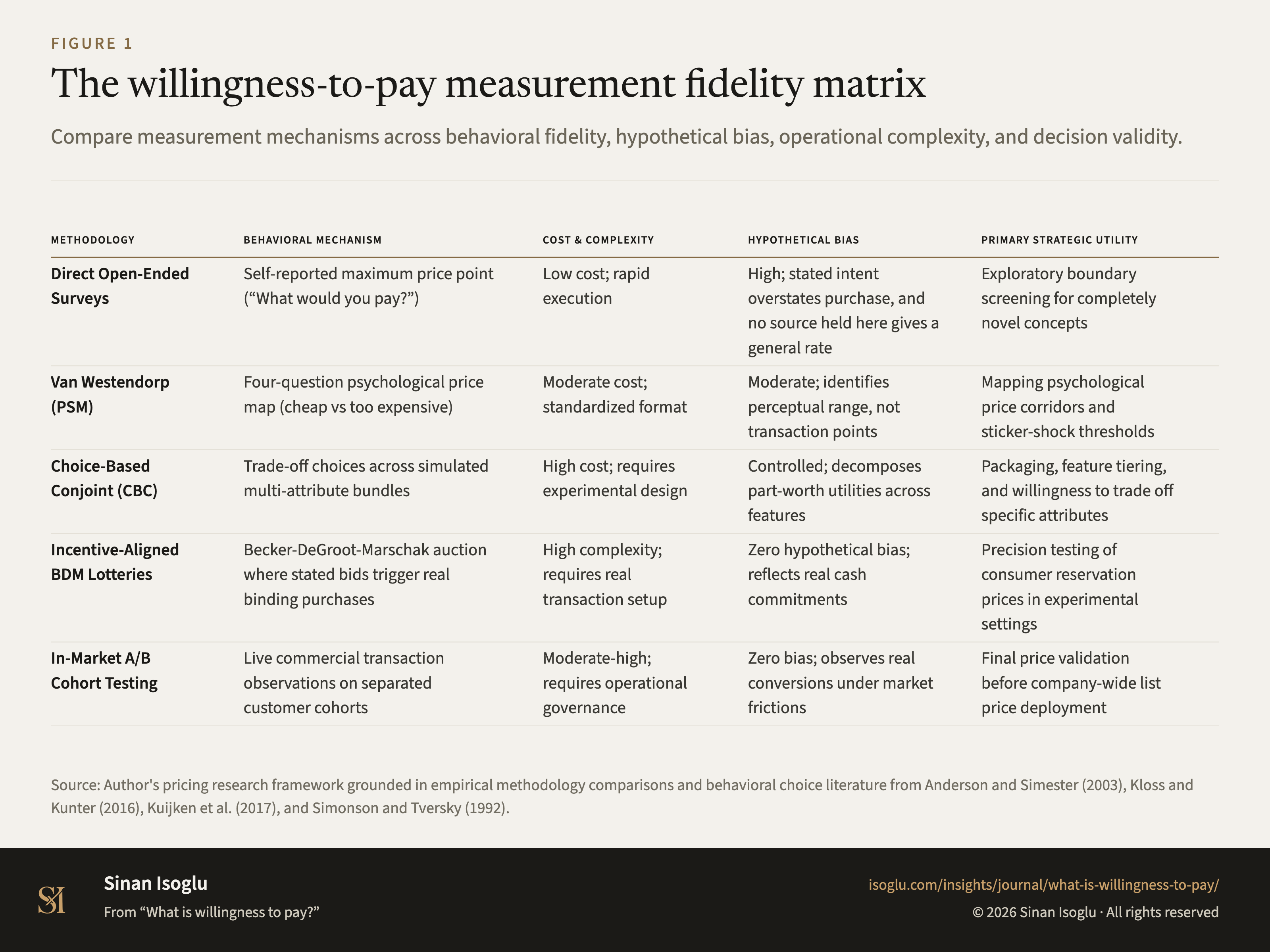
The willingness-to-pay measurement fidelity matrix
Compare measurement mechanisms across behavioral fidelity, hypothetical bias, operational complexity, and decision validity.
Figure 1The willingness-to-pay measurement fidelity matrix
| Methodology | Behavioral mechanism | Cost & complexity | Hypothetical bias | Primary strategic utility |
|---|---|---|---|---|
| Direct Open-Ended Surveys | Self-reported maximum price point ("What would you pay?") | Low cost; rapid execution | High; stated intent overstates purchase, and no source held here gives a general rate | Exploratory boundary screening for completely novel concepts |
| Van Westendorp (PSM) | Four-question psychological price map (cheap vs too expensive) | Moderate cost; standardized format | Moderate; identifies perceptual range, not transaction points | Mapping psychological price corridors and sticker-shock thresholds |
| Choice-Based Conjoint (CBC) | Trade-off choices across simulated multi-attribute bundles | High cost; requires experimental design | Controlled; decomposes part-worth utilities across features | Packaging, feature tiering, and willingness to trade off specific attributes |
| Incentive-Aligned BDM Lotteries | Becker-DeGroot-Marschak auction where stated bids trigger real binding purchases | High complexity; requires real transaction setup | Zero hypothetical bias; reflects real cash commitments | Precision testing of consumer reservation prices in experimental settings |
| In-Market A/B Cohort Testing | Live commercial transaction observations on separated customer cohorts | Moderate-high; requires operational governance | Zero bias; observes real conversions under market frictions | Final price validation before company-wide list price deployment |
Swipe or scroll horizontally if the table is wider than your screen.
Source: Author's pricing research framework grounded in empirical methodology comparisons and behavioral choice literature from Anderson and Simester (2003), Kloss and Kunter (2016), Kuijken et al. (2017), and Simonson and Tversky (1992).
Source and evidence
Each line names a claim related to this exhibit, its source, and how it was checked.
- B ST92-C1 Tradeoff contrast, in the authors' words: "the tendency to prefer an alternative is enhanced or hindered depending on whether the tradeoffs within the set under" consideration are favourable or unfavourable to that option. Checked against the PDF, because the extract warns that it mangles hyphenationsimonson-tversky-1992-choice-in-context
Grades: A, verified against the printed page of the primary source · B, primary source, text layer only · C, authoritative secondary · D, reported.
From the essay
Pricing & revenue architecture
What is willingness to pay?
Willingness to pay measures the maximum monetary sacrifice a buyer will exchange for an offering, bounding pricing power, surplus, and conversion.
Read the essayThis exhibit belongs to an essay: the numbers live here, the argument lives there.
Cite or embed
Related exhibits
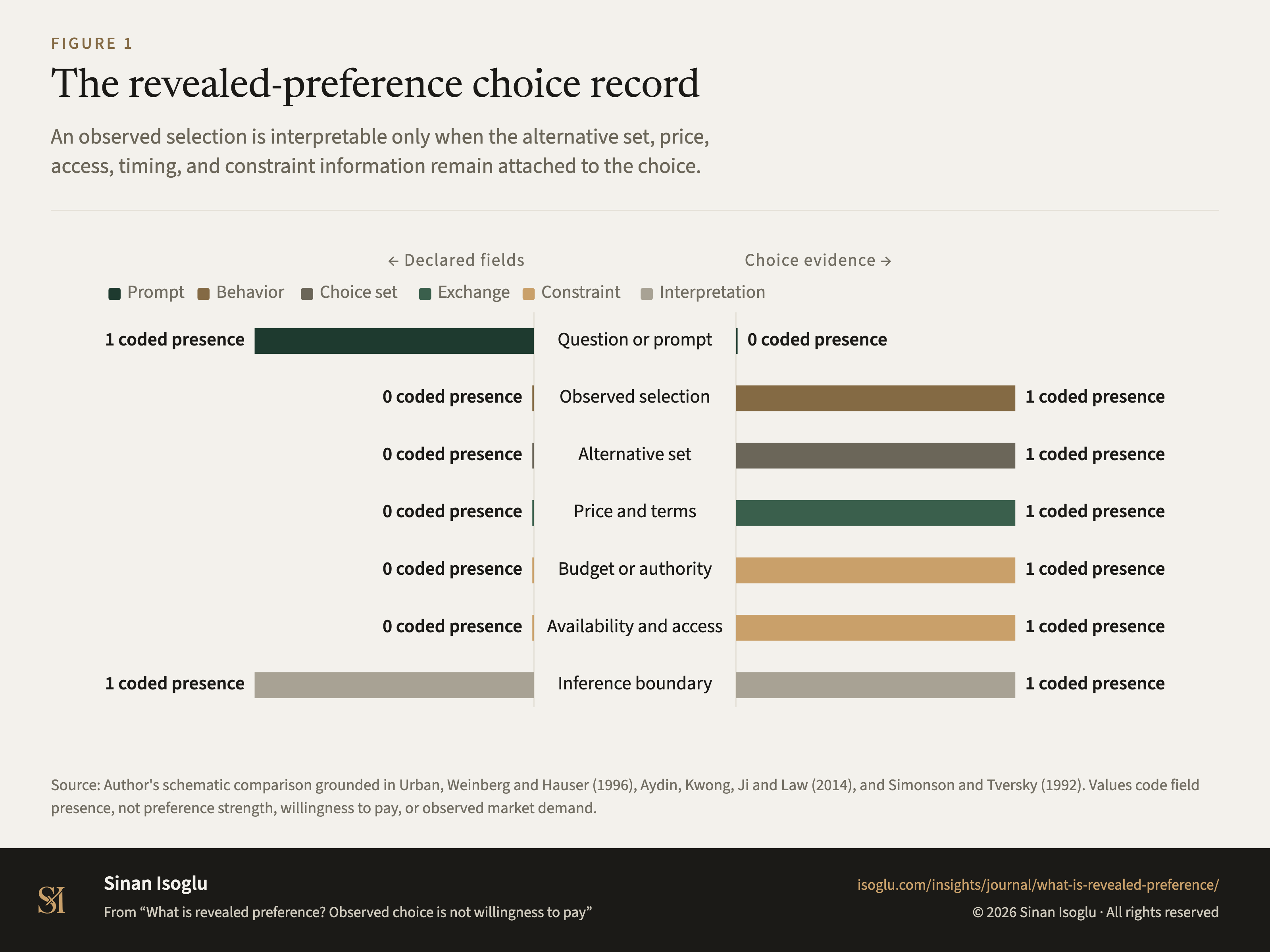
Figure 1Figure
The revealed-preference choice record
What is revealed preference? Observed choice is not willingness to pay
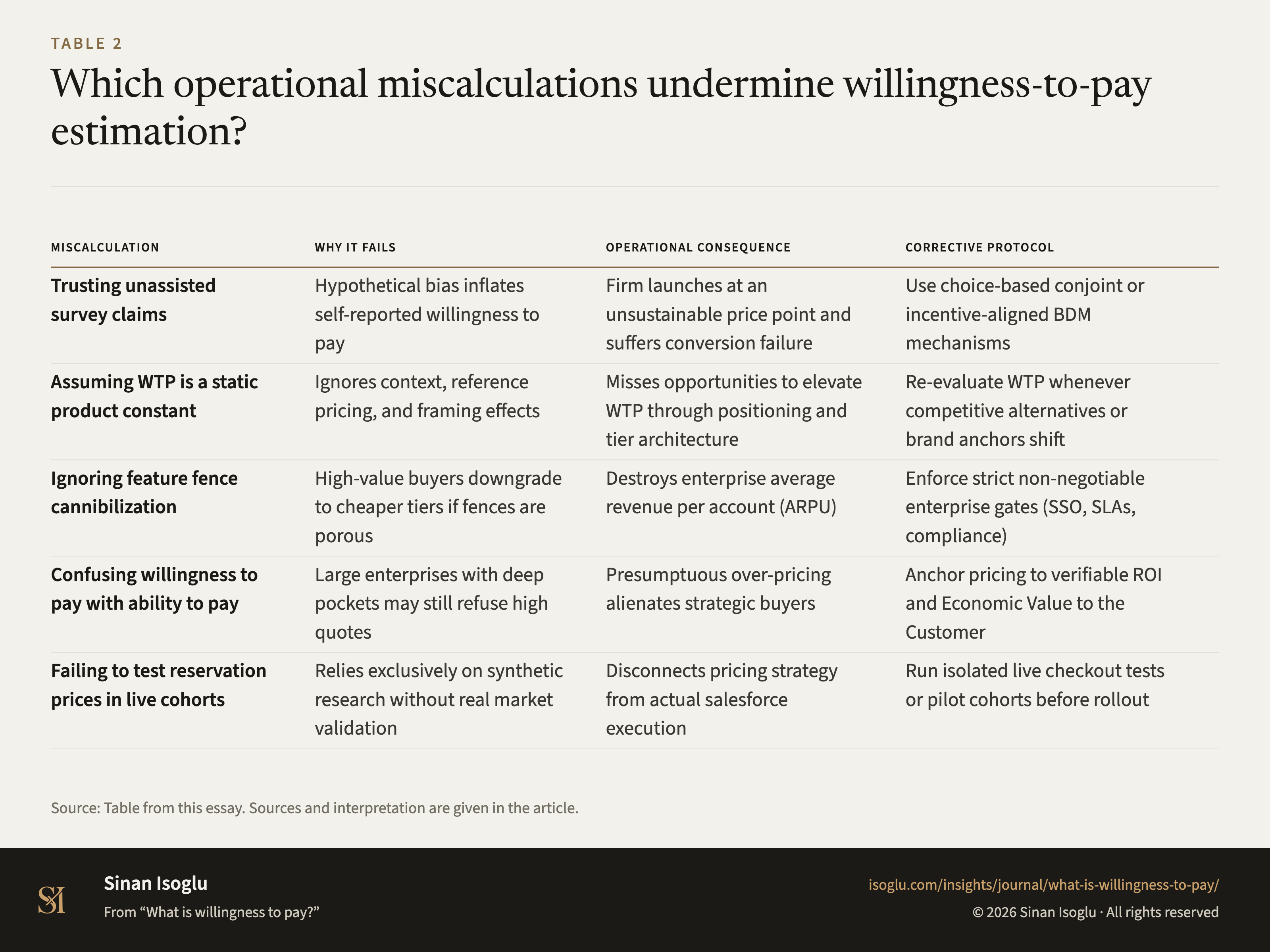
Table 1Table
Which operational miscalculations undermine willingness-to-pay estimation?
What is willingness to pay?
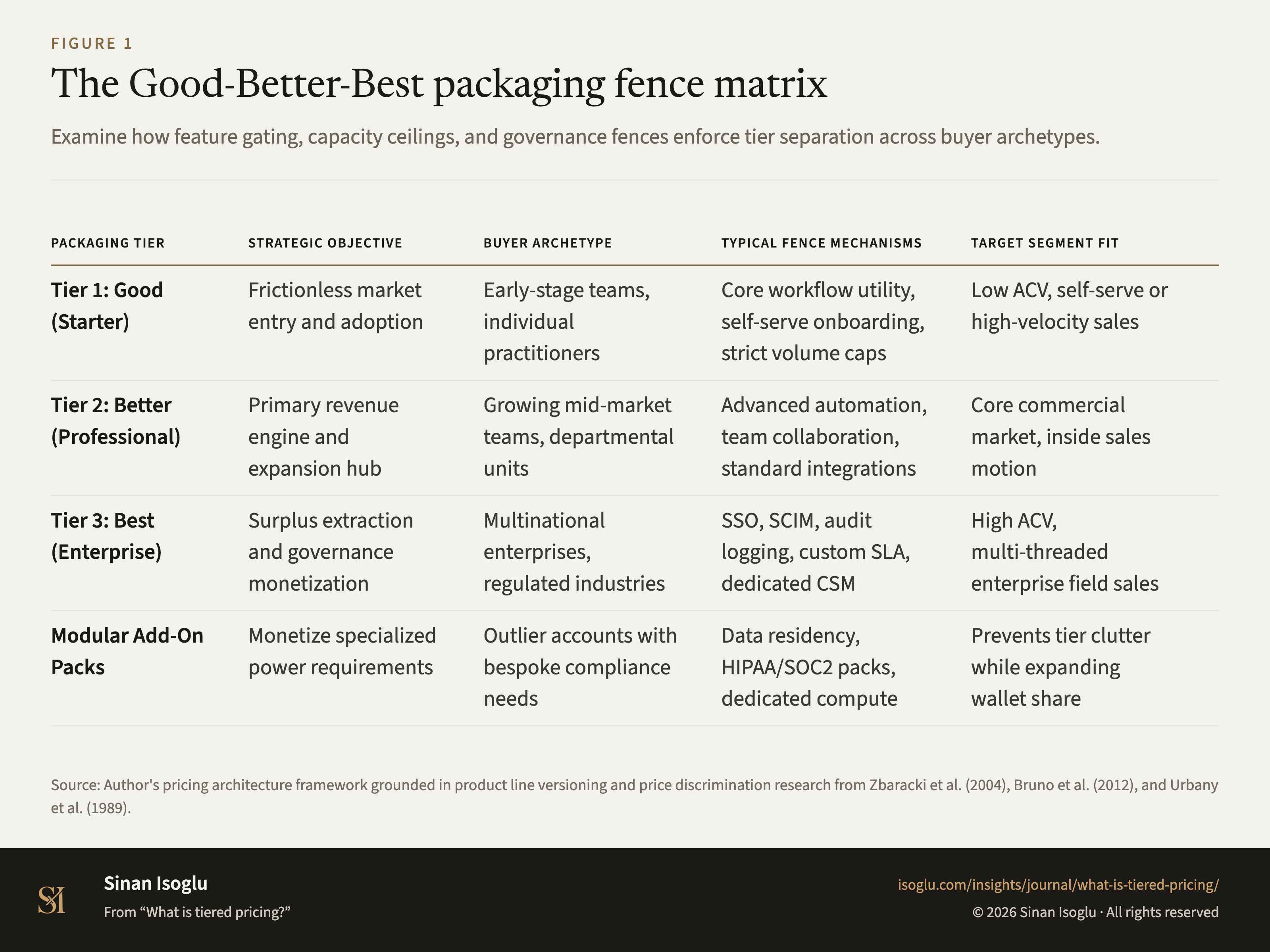
Figure 1Figure
The Good-Better-Best packaging fence matrix
What is tiered pricing?
Contact
Bring the question you're working on.
Research, a guest lecture, or a commercial question.