Table 2From “What is price-volume-mix analysis? Separate price from what was sold”
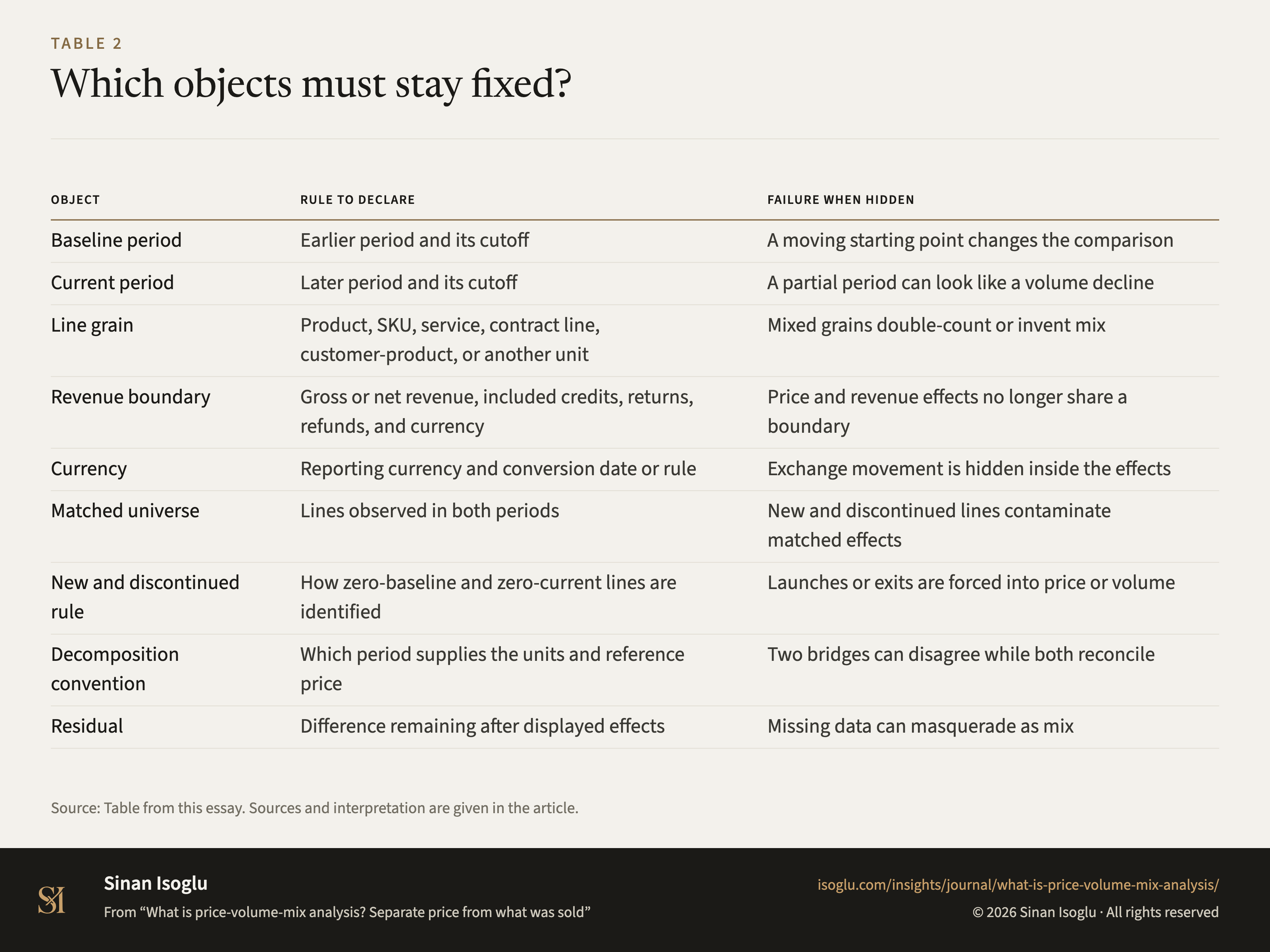
Which objects must stay fixed?
Table 2Which objects must stay fixed?
| Object | Rule to declare | Failure when hidden |
|---|---|---|
| Baseline period | Earlier period and its cutoff | A moving starting point changes the comparison |
| Current period | Later period and its cutoff | A partial period can look like a volume decline |
| Line grain | Product, SKU, service, contract line, customer-product, or another unit | Mixed grains double-count or invent mix |
| Revenue boundary | Gross or net revenue, included credits, returns, refunds, and currency | Price and revenue effects no longer share a boundary |
| Currency | Reporting currency and conversion date or rule | Exchange movement is hidden inside the effects |
| Matched universe | Lines observed in both periods | New and discontinued lines contaminate matched effects |
| New and discontinued rule | How zero-baseline and zero-current lines are identified | Launches or exits are forced into price or volume |
| Decomposition convention | Which period supplies the units and reference price | Two bridges can disagree while both reconcile |
| Residual | Difference remaining after displayed effects | Missing data can masquerade as mix |
Swipe or scroll horizontally if the table is wider than your screen.
Source: Table from this essay. Sources and interpretation are given in the article.
From the essay
Pricing & revenue architecture
What is price-volume-mix analysis? Separate price from what was sold
Price-volume-mix analysis reconciles a period change into price, volume, mix, new, and discontinued lines before a team assigns an explanation.
Read the essayThis exhibit belongs to an essay: the numbers live here, the argument lives there.
Cite or embed
Related exhibits
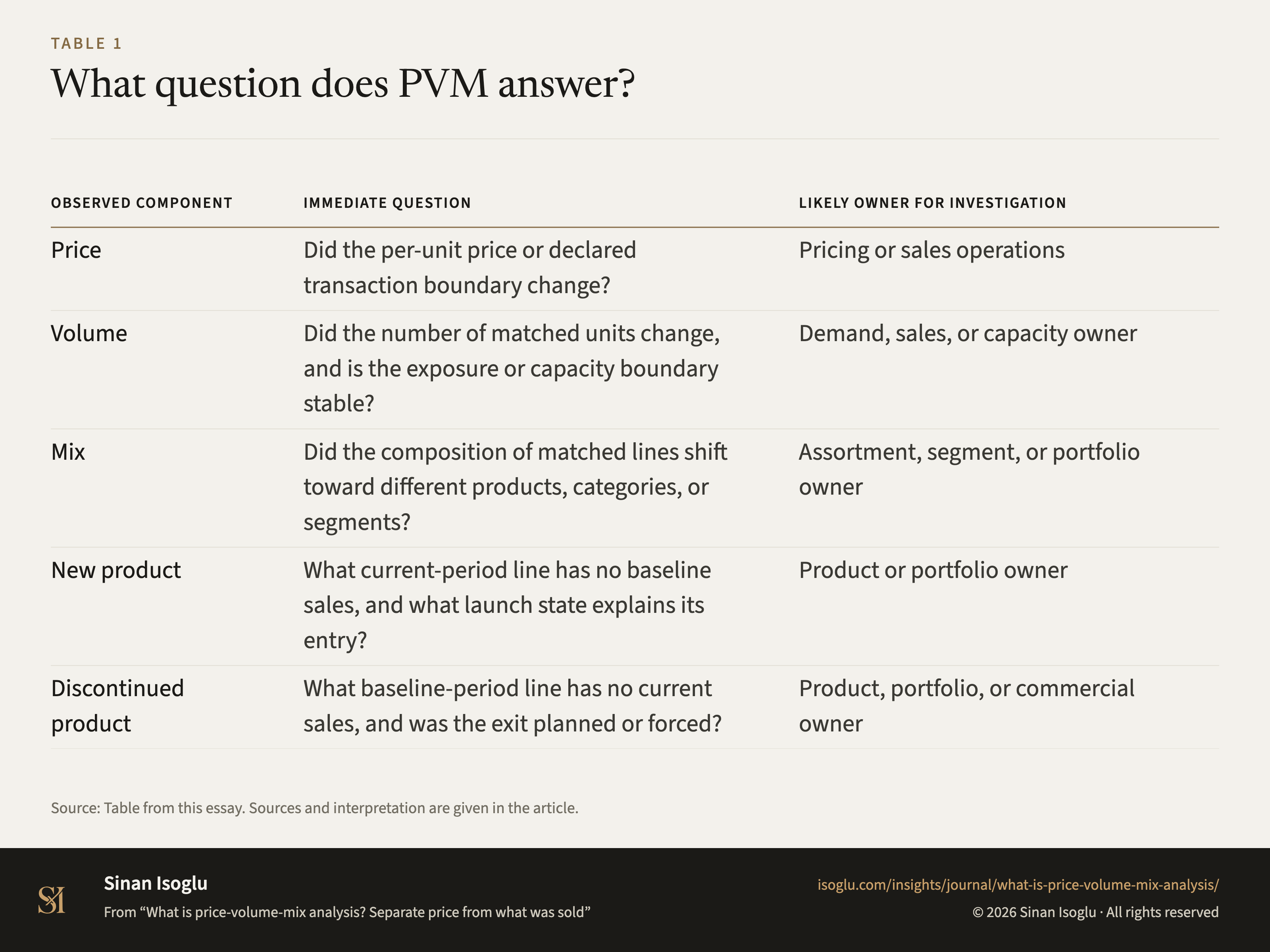
Table 1Table
What question does PVM answer?
What is price-volume-mix analysis? Separate price from what was sold
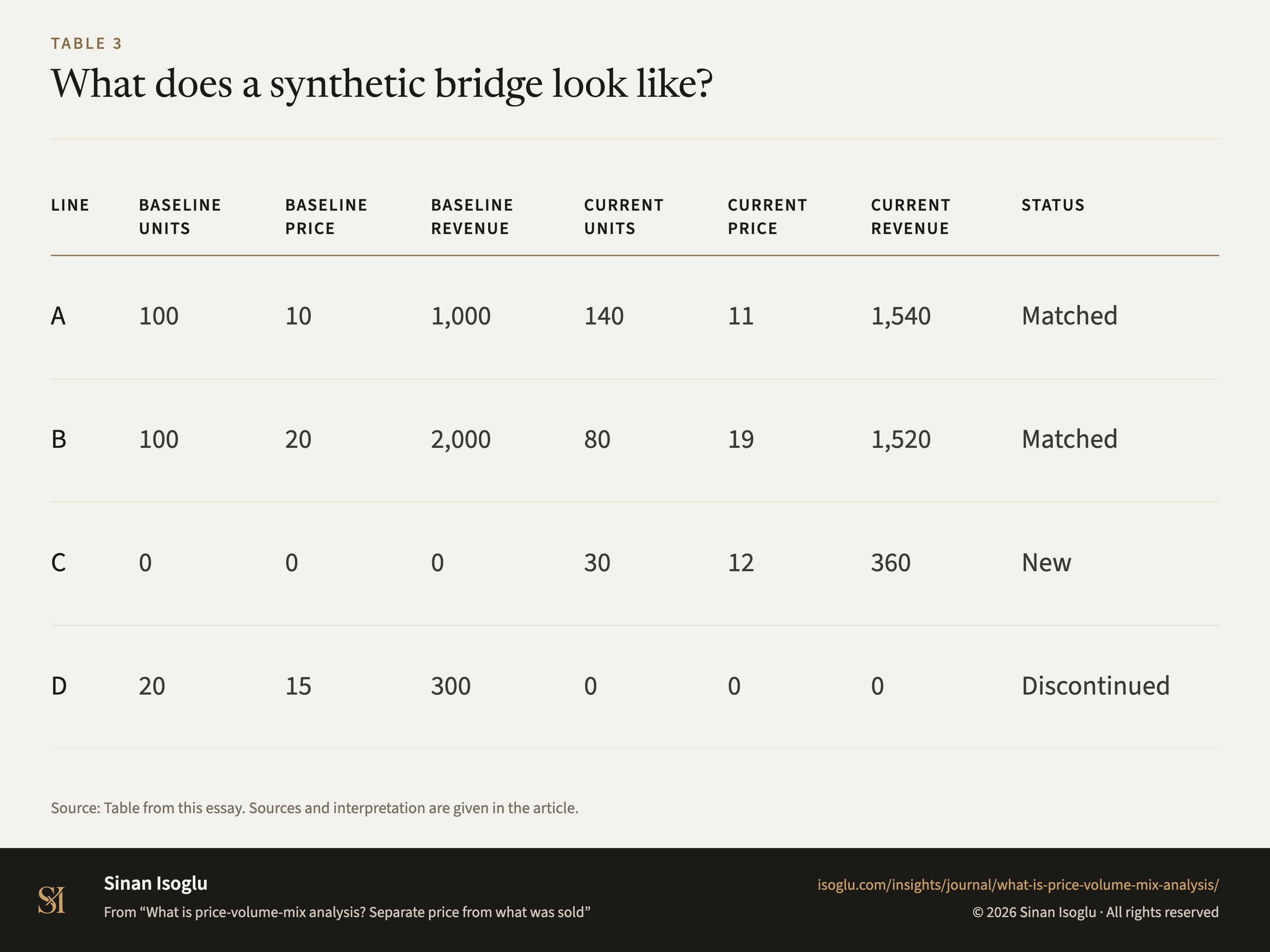
Table 3Table
What does a synthetic bridge look like?
What is price-volume-mix analysis? Separate price from what was sold
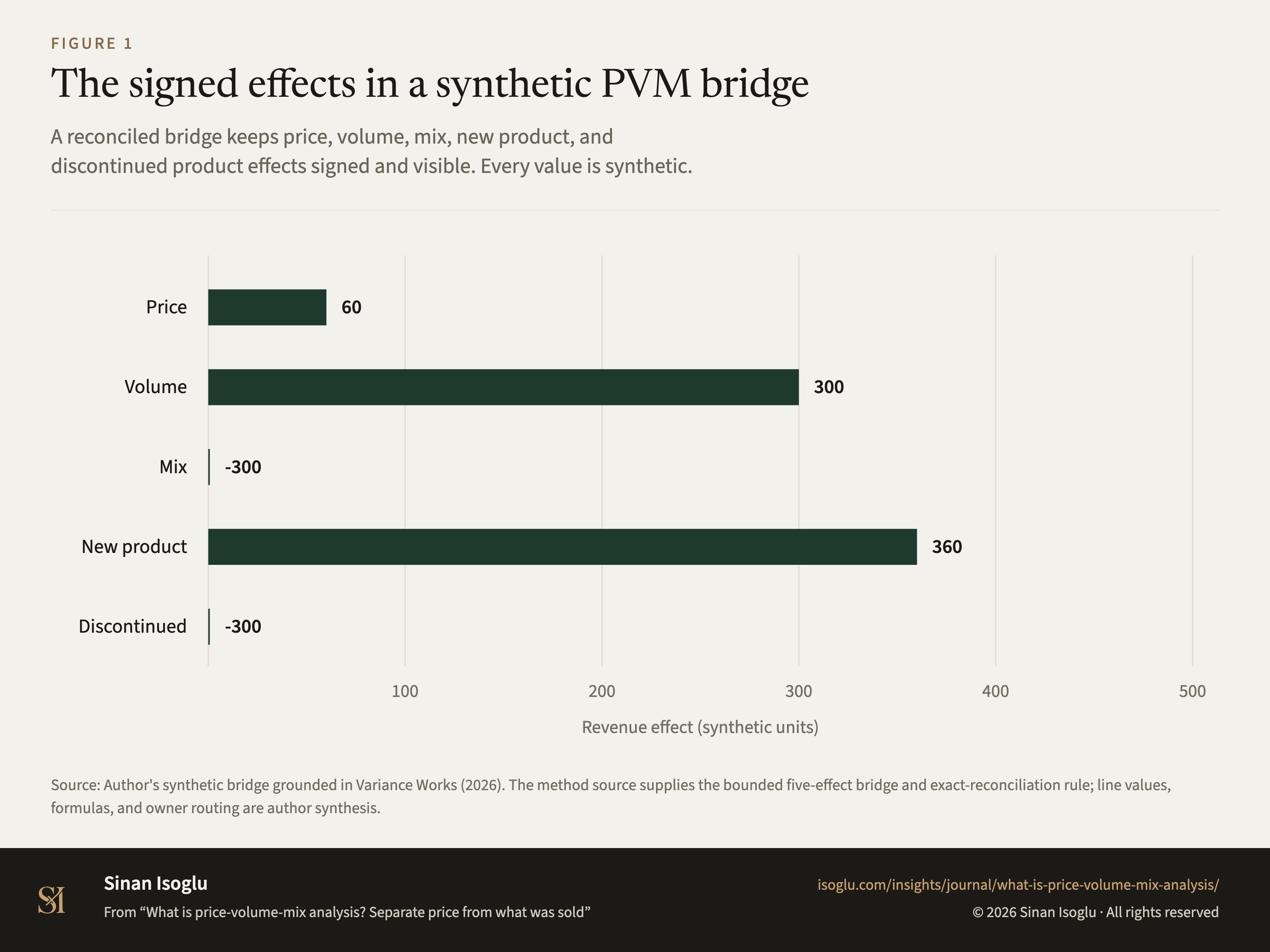
Figure 1Figure
The signed effects in a synthetic PVM bridge
What is price-volume-mix analysis? Separate price from what was sold
Contact
Bring the question you're working on.
Research, a guest lecture, or a commercial question.