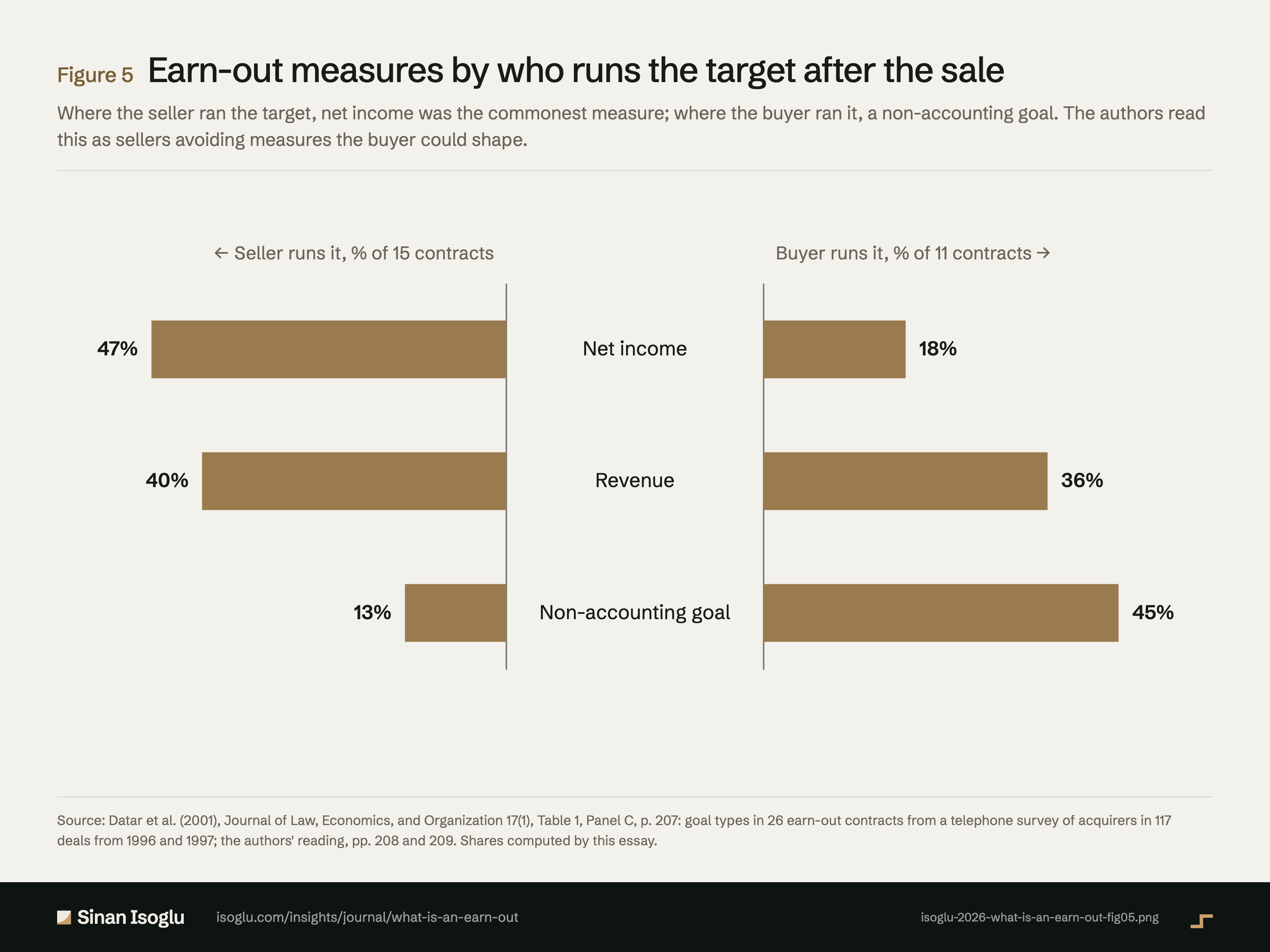
Figure 5From “What is an earn-out? The part of the price that waits for proof”
Earn-out measures by who runs the target after the sale
Where the seller ran the target, net income was the commonest measure; where the buyer ran it, a non-accounting goal. The authors read this as sellers avoiding measures the buyer could shape.
Figure 5Earn-out measures by who runs the target after the sale
Source: Datar et al. (2001), Journal of Law, Economics, and Organization 17(1), Table 1, Panel C, p. 207: goal types in 26 earn-out contracts from a telephone survey of acquirers in 117 deals from 1996 and 1997; the authors' reading, pp. 208 and 209. Shares computed by this essay.
Source and evidence
Each line names a claim related to this exhibit, its source, and how it was checked.
- A A verified against the printed page of the primary sourceB primary source, text layer onlyC authoritative secondaryD reported Survey of 117 earn-out deals from 1996 and 1997: of 27 acquirers who knew and would reveal the motive, 14 cited valuation differences, 7 retaining the owner, 6 both; seller-managed earn-outs used net income in 7 of 15 cases against 2 of 11 buyer-managed, which used nonaccounting goals in 5 of 11 (Table 1, Panel C, p. 207: revenue 6 of 15 and 4 of 11; the essay's Figure 5 shares 46.7, 40.0 and 13.3% against 18.2, 36.4 and 45.5%); the authors read this as sellers avoiding measures the buyer could manipulate (pp. 206 to 209): "a sample of 117 earnout transactions occurring in 1996 and 1997 was randomly selected"; "27 acquirers had specific knowledge of the reasons for the use of the earnout"; "Of these, 14 said that earnouts were used primarily to overcome valuation disagreements"; "Seven acquirers said that the earnout was used primarily to make sure"; "The remaining six acquirers said that the earnouts were used for both valuation and incentive reasons"; "a value that depended heavily on future growth"; "put his money where his mouth was"; "These potential conflicts may make sellers reluctant to accept earnout provisions unless they can stay with the firm and monitor the computation of the earnout targets"; "we would expect fewer net-income-based targets in buyer-managed cases"; "7 (47%) of the seller-managed earnouts were based on net income, compared to only 2 (18%) of the buyer-managed earnouts"; "These nonaccounting goals were used in 5 (45%) of the buyer-managed acquisitions"Datar, Frankel and Wolfson (2001)
From the essay
Go-to-market strategy
What is an earn-out? The part of the price that waits for proof
An earn-out pays part of the price only if the acquired business hits agreed targets. Studies find it in hard-to-value deals; integration can strain it.
Read the essayThis exhibit belongs to an essay: the numbers live here, the argument lives there.
Cite or embed
Related exhibits
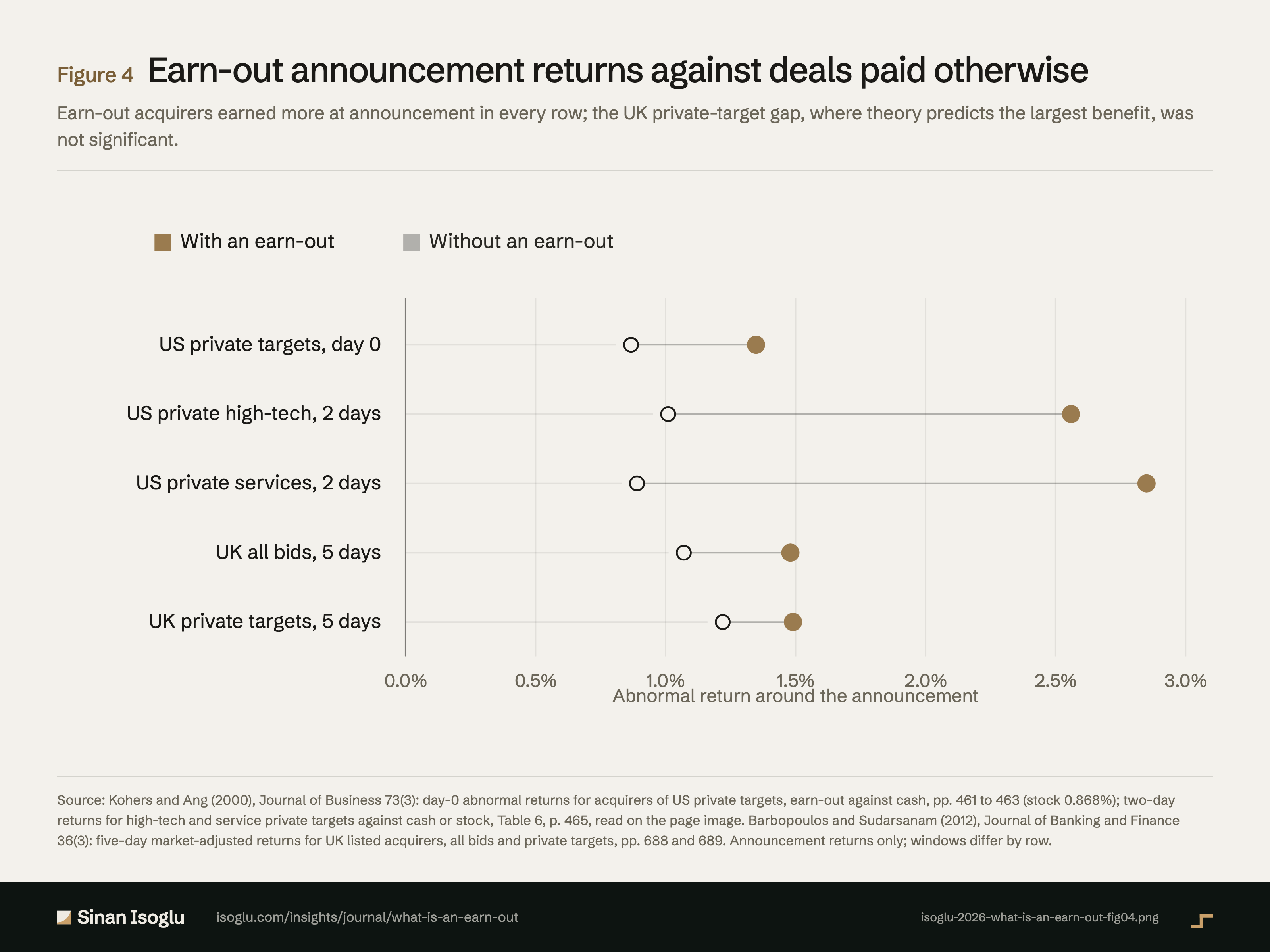
Figure 4Figure
Earn-out announcement returns against deals paid otherwise
What is an earn-out? The part of the price that waits for proof
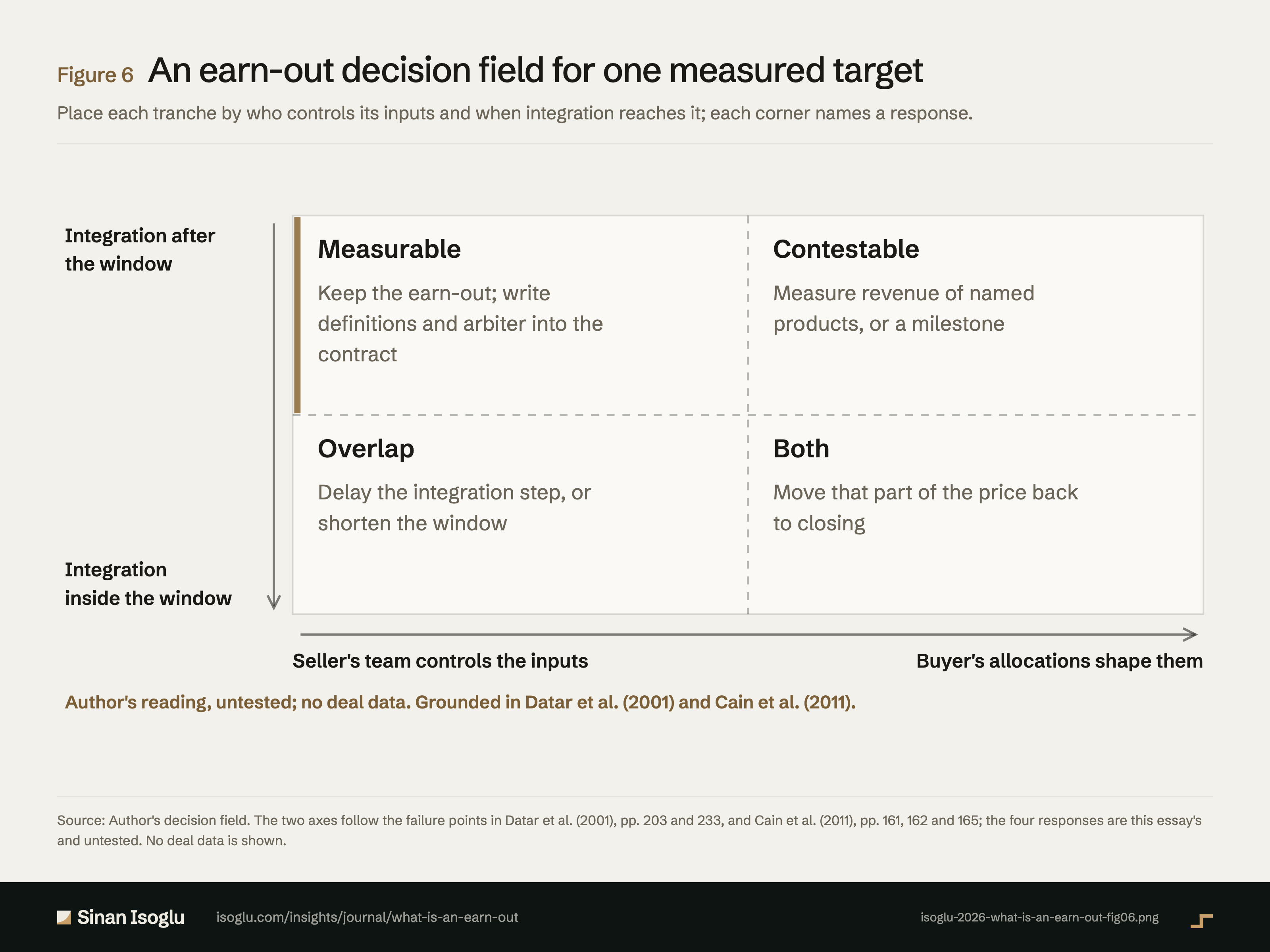
Figure 6Figure
An earn-out decision field for one measured target
What is an earn-out? The part of the price that waits for proof
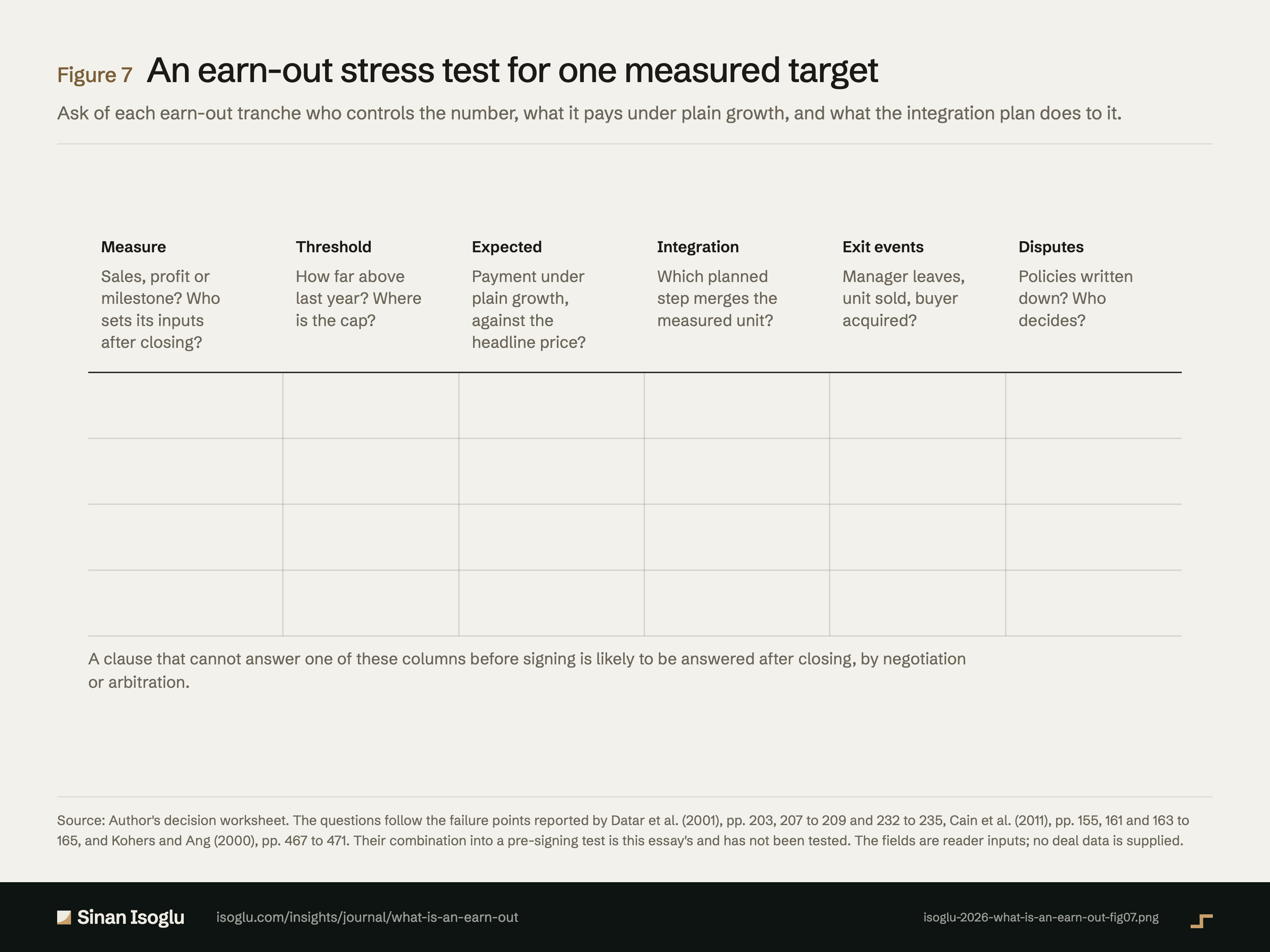
Figure 7Figure
An earn-out stress test for one measured target
What is an earn-out? The part of the price that waits for proof
Contact
Bring the question you're working on.
Research, a guest lecture, or a commercial question.