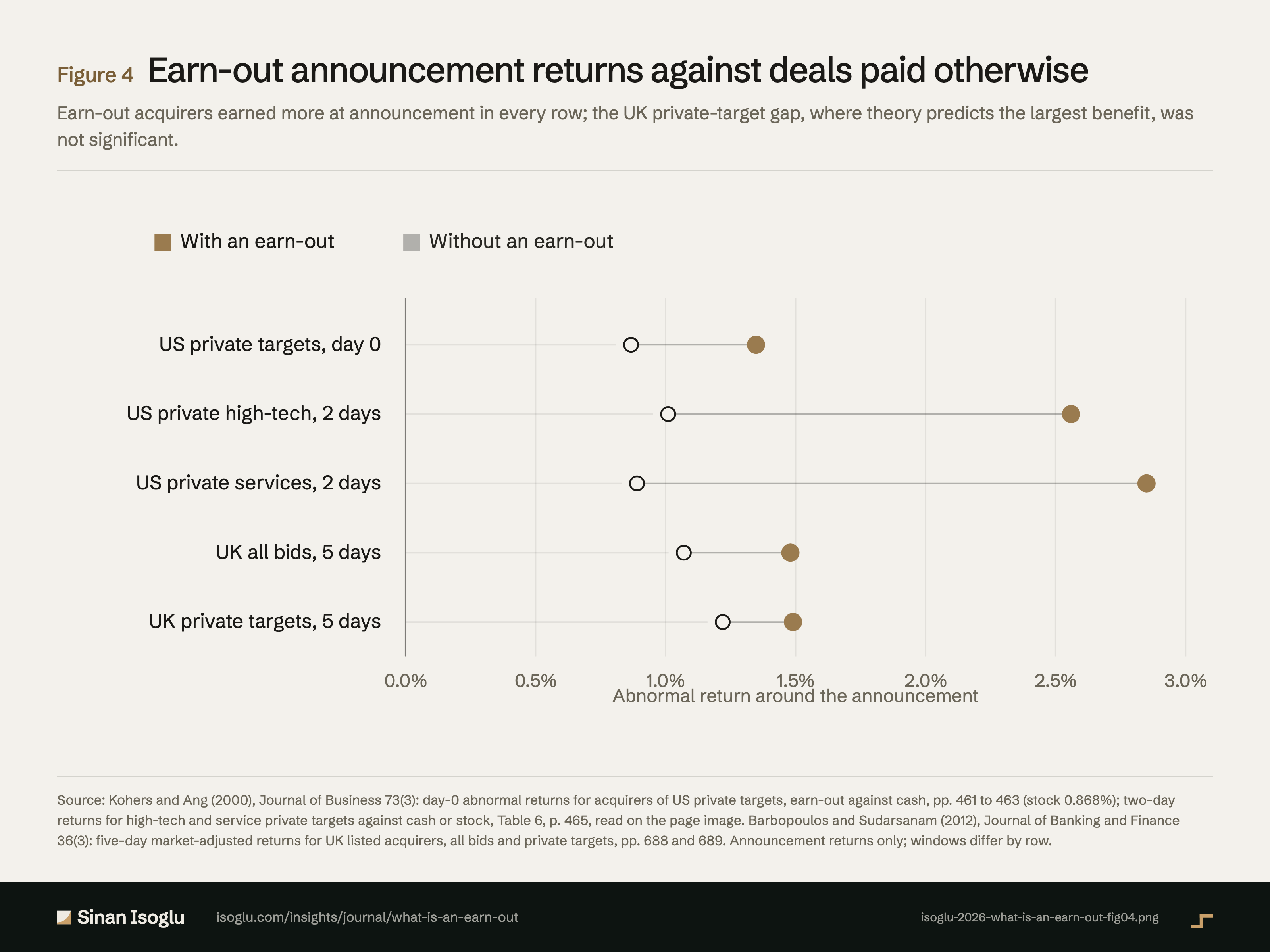
Figure 4From “What is an earn-out? The part of the price that waits for proof”
Earn-out announcement returns against deals paid otherwise
Earn-out acquirers earned more at announcement in every row; the UK private-target gap, where theory predicts the largest benefit, was not significant.
Figure 4Earn-out announcement returns against deals paid otherwise
Source: Kohers and Ang (2000), Journal of Business 73(3): day-0 abnormal returns for acquirers of US private targets, earn-out against cash, pp. 461 to 463 (stock 0.868%); two-day returns for high-tech and service private targets against cash or stock, Table 6, p. 465, read on the page image. Barbopoulos and Sudarsanam (2012), Journal of Banking and Finance 36(3): five-day market-adjusted returns for UK listed acquirers, all bids and private targets, pp. 688 and 689. Announcement returns only; windows differ by row.
Source and evidence
Each line names a claim related to this exhibit, its source, and how it was checked.
- A A verified against the printed page of the primary sourceB primary source, text layer onlyC authoritative secondaryD reported Announcement returns: 1.356% on day 0 for 449 bidders; for private targets 1.348% with an earn-out against 0.867% for cash and 0.868% for stock, significant at the 10% level against cash (p = .0727) and the 5% level against stock (p = .0493) (the difference tests carry no stated sidedness; the one-sided note to Table 4, p. 463, covers each group's own t-statistics); larger for earn-outs in high-asymmetry private deals over two days (Table 6, p. 465, read on the page image: high-tech 2.56% against 1.01%, service 2.85% against 0.89%); no difference for divested subsidiaries (pp. 461 to 466): "the average abnormal return on day 0, the original merger announcement date, is 1.356%"; "the average abnormal return for the earnout subsample is 1.348%"; "significantly greater than the reaction to cash offers at the 10% level"; "significantly larger than that for stock offers at the 5% level"; "in high-tech takeovers, bidders using earnouts experience larger abnormal returns than bidders that chose either cash or stock"; "show no differences in the CARs for mergers using earnout contracts as opposed to cash or stock"Kohers and Ang (2000)
- A A verified against the printed page of the primary sourceB primary source, text layer onlyC authoritative secondaryD reported Five-day announcement returns: 1.48% for earn-out bids against 1.07%, significant; for private targets 1.49% against 1.22%, not significant, at the median earn-out bids beat cash bids (0.87% against 0.40%) and marginally trailed mixed offers (0.87% against 1.01%); no incremental value in cross-border deals (pp. 688 to 690): "overall earnout bids yield significantly higher returns than non-earnout bids, i.e. 1.48% versus 1.07%"; "earnout bids perform better than non-earnout bids (mean of 1.49% vs. 1.22%) but the difference is"; "earnout bids significantly outperform cash bids (median of 0.87% vs. 0.40%)"; "marginally underperform mixed offers (median of 0.87% vs. 1.01%)"; "in CBA, the use of earnout generates no incremental value relative to non-earnout"Barbopoulos and Sudarsanam (2012)
From the essay
Go-to-market strategy
What is an earn-out? The part of the price that waits for proof
An earn-out pays part of the price only if the acquired business hits agreed targets. Studies find it in hard-to-value deals; integration can strain it.
Read the essayThis exhibit belongs to an essay: the numbers live here, the argument lives there.
Cite or embed
Related exhibits
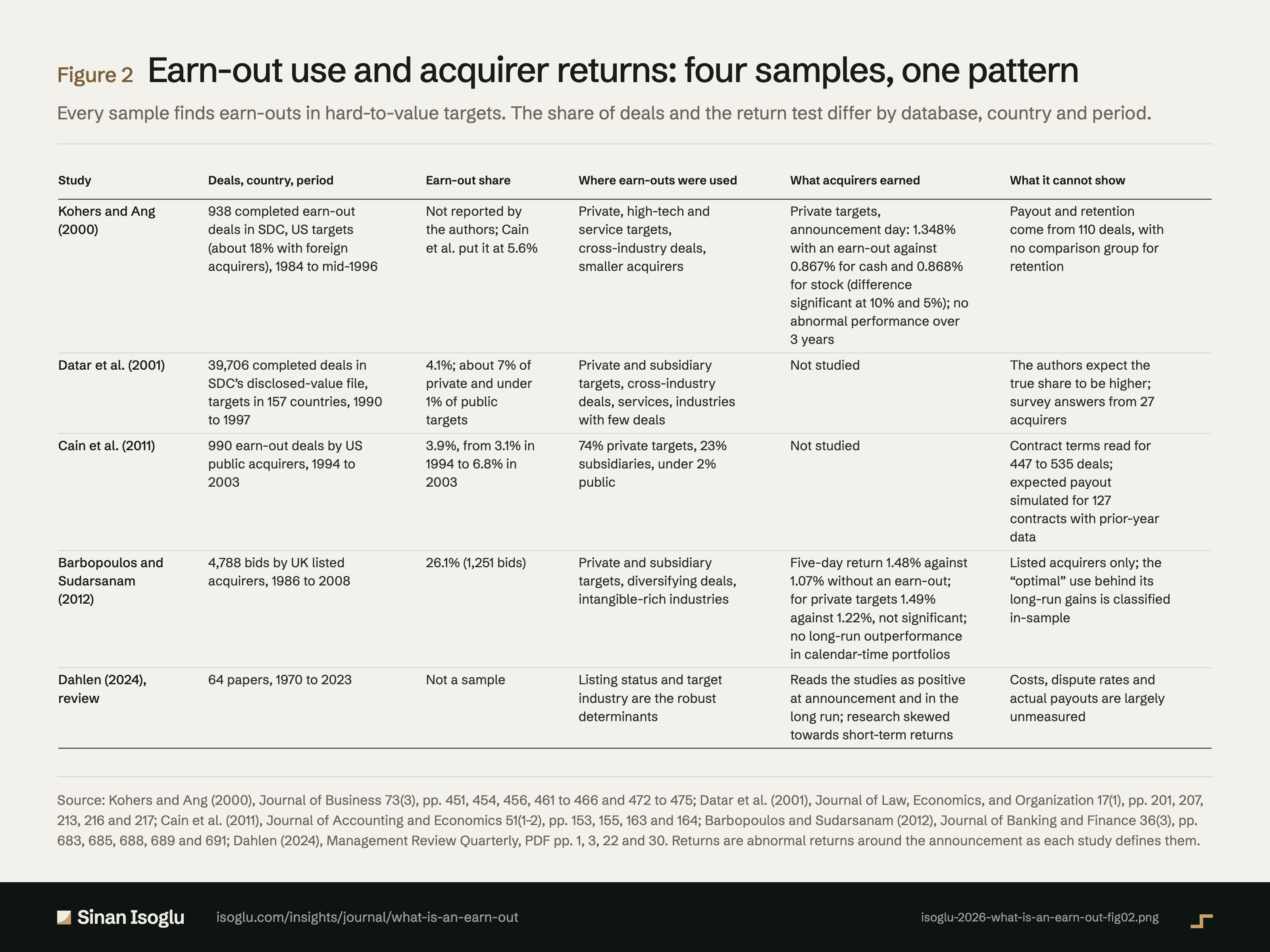
Figure 2Figure
Earn-out use and acquirer returns: four samples, one pattern
What is an earn-out? The part of the price that waits for proof
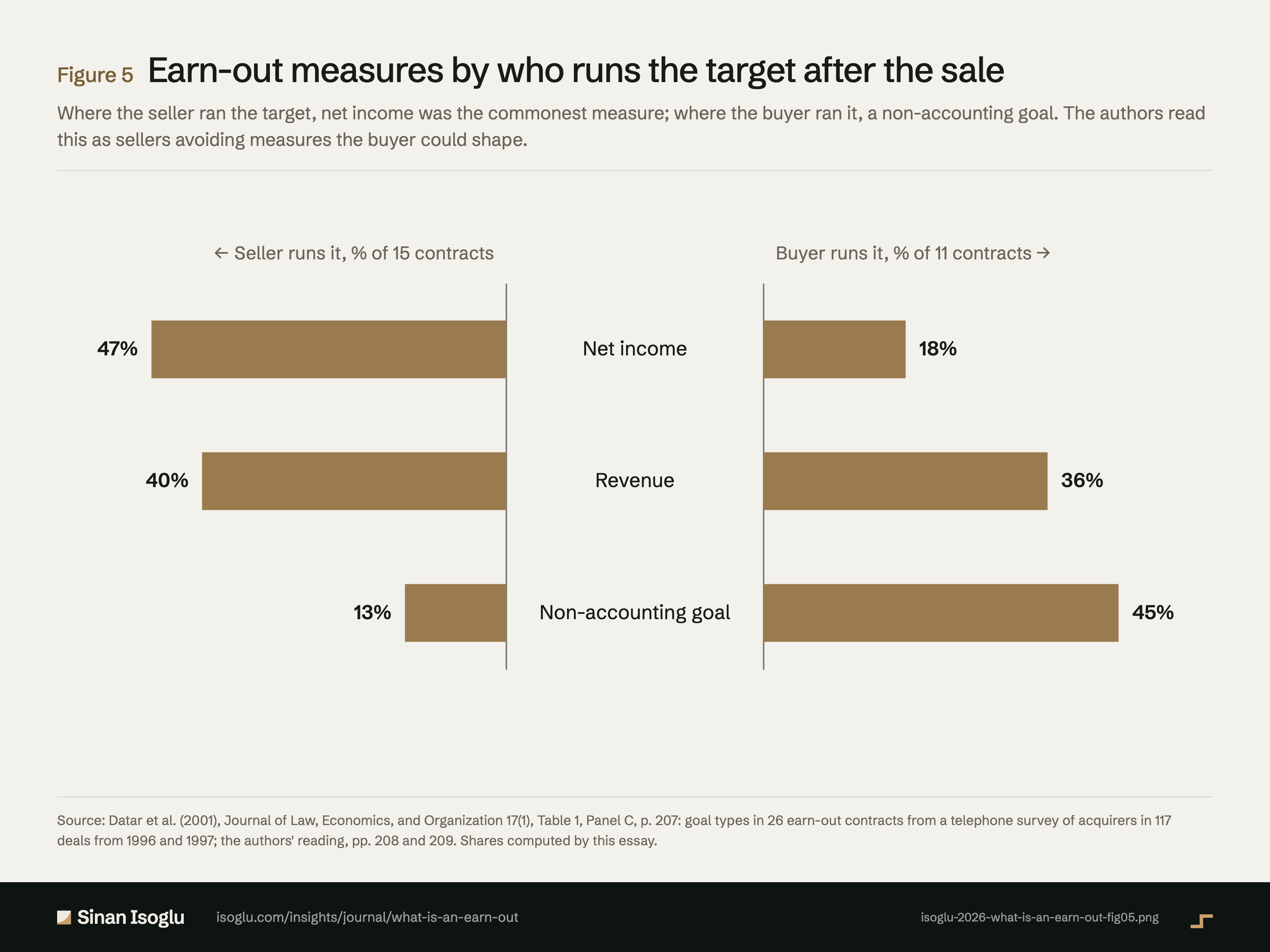
Figure 5Figure
Earn-out measures by who runs the target after the sale
What is an earn-out? The part of the price that waits for proof
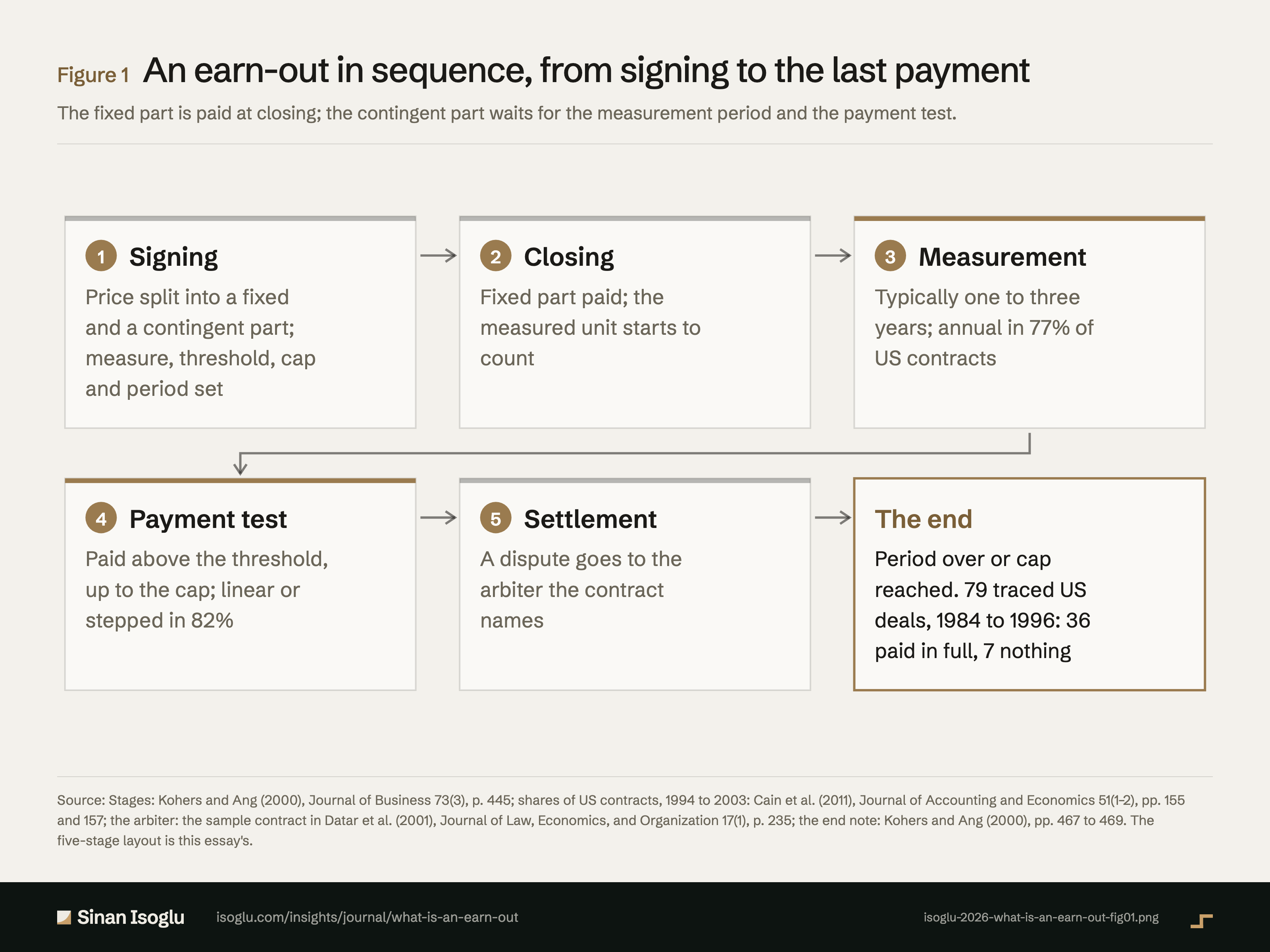
Figure 1Figure
An earn-out in sequence, from signing to the last payment
What is an earn-out? The part of the price that waits for proof
Contact
Bring the question you're working on.
Research, a guest lecture, or a commercial question.