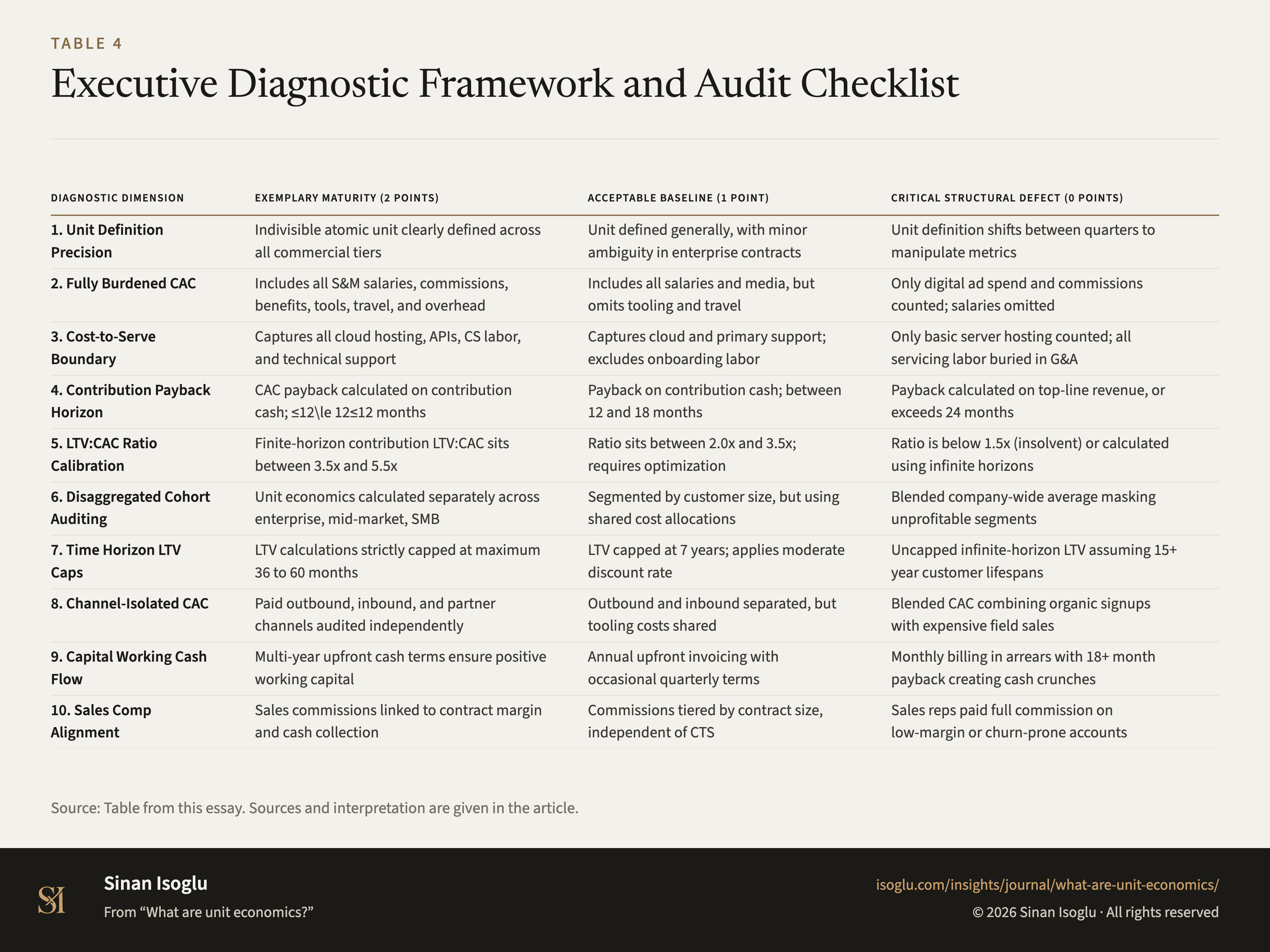
Table 3How do you audit your own unit economics?
| Diagnostic Dimension | Exemplary Maturity (2 Points) | Acceptable Baseline (1 Point) | Critical Structural Defect (0 Points) |
|---|---|---|---|
| 1. Unit Definition Precision | Indivisible atomic unit clearly defined across all commercial tiers | Unit defined generally, with minor ambiguity in enterprise contracts | Unit definition shifts between quarters to manipulate metrics |
| 2. Fully Burdened CAC | Includes all S&M salaries, commissions, benefits, tools, travel, and overhead | Includes all salaries and media, but omits tooling and travel | Only digital ad spend and commissions counted; salaries omitted |
| 3. Cost-to-Serve Boundary | Captures all cloud hosting, APIs, CS labor, and technical support | Captures cloud and primary support; excludes onboarding labor | Only basic server hosting counted; all servicing labor buried in G&A |
| 4. Contribution Payback Horizon | CAC payback calculated on contribution cash; $\le 12$ months | Payback on contribution cash; between 12 and 18 months | Payback calculated on top-line revenue, or exceeds 24 months |
| 5. LTV:CAC Ratio Calibration | Finite-horizon contribution LTV:CAC sits between 3.5x and 5.5x | Ratio sits between 2.0x and 3.5x; requires optimization | Ratio is below 1.5x (insolvent) or calculated using infinite horizons |
| 6. Disaggregated Cohort Auditing | Unit economics calculated separately across enterprise, mid-market, SMB | Segmented by customer size, but using shared cost allocations | Blended company-wide average masking unprofitable segments |
| 7. Time Horizon LTV Caps | LTV calculations strictly capped at maximum 36 to 60 months | LTV capped at 7 years; applies moderate discount rate | Uncapped infinite-horizon LTV assuming 15+ year customer lifespans |
| 8. Channel-Isolated CAC | Paid outbound, inbound, and partner channels audited independently | Outbound and inbound separated, but tooling costs shared | Blended CAC combining organic signups with expensive field sales |
| 9. Capital Working Cash Flow | Multi-year upfront cash terms ensure positive working capital | Annual upfront invoicing with occasional quarterly terms | Monthly billing in arrears with 18+ month payback creating cash crunches |
| 10. Sales Comp Alignment | Sales commissions linked to contract margin and cash collection | Commissions tiered by contract size, independent of CTS | Sales reps paid full commission on low-margin or churn-prone accounts |
Swipe or scroll horizontally if the table is wider than your screen.
Source: Table from this essay. Sources and interpretation are given in the article.
PNG4:3, 1600 × 1200, with the title, the source line and the attribution set in the image isoglu-2026-what-are-unit-economics-fig04.png
From the essay
Growth that compounds
What are unit economics?
Unit economics evaluate direct revenue and variable costs per fundamental business unit. Define the unit, contribution margin, CAC and payback horizon.
Read the essayThis exhibit belongs to an essay: the numbers live here, the argument lives there.
Cite or embed
Contact
Bring the question you're working on.
Research, a guest lecture, or a commercial question.