Figure 2From “The price increase is judged before it is paid.”
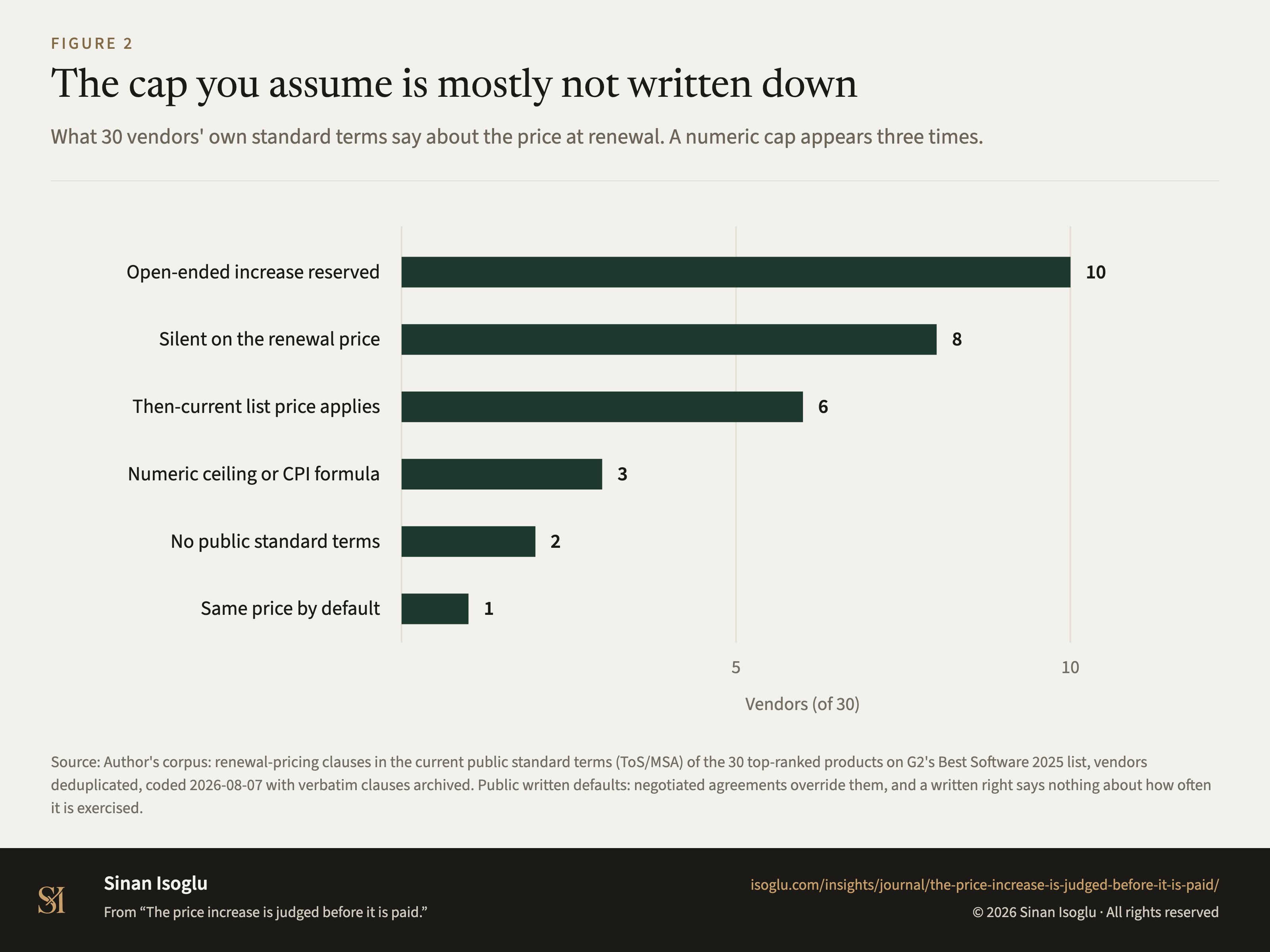
The cap you assume is mostly not written down
What 30 vendors' own standard terms say about the price at renewal. A numeric cap appears three times.
Figure 2The cap you assume is mostly not written down
Source: Author's corpus: renewal-pricing clauses in the current public standard terms (ToS/MSA) of the 30 top-ranked products on G2's Best Software 2025 list, vendors deduplicated, coded 2026-08-07 with verbatim clauses archived. Public written defaults: negotiated agreements override them, and a written right says nothing about how often it is exercised.
Source and evidence
Each line names a claim related to this exhibit, its source, and how it was checked.
- A DFS-UPLIFT-C1 3 of 30 top-ranked vendors' public standard terms carry a numeric renewal cap; 10 discretionary, 8 silent, 6 then-current, 2 none, 1 same-pricedataset-uplift-clauses-2026-08
- A DFS-UPLIFT-C2 Notice numbers exist in 10 of 30 (0–90 days); promos stripped at renewal by 5, honored by 1dataset-uplift-clauses-2026-08
Grades: A, verified against the printed page of the primary source · B, primary source, text layer only · C, authoritative secondary · D, reported.
From the essay
Pricing & revenue architecture
The price increase is judged before it is paid.
The fairness rules license the cost-justified raise; the one exit test crowned another story. What is measured, what splits, what your contract says.
Read the essayThis exhibit belongs to an essay: the numbers live here, the argument lives there.
Cite or embed
Related exhibits
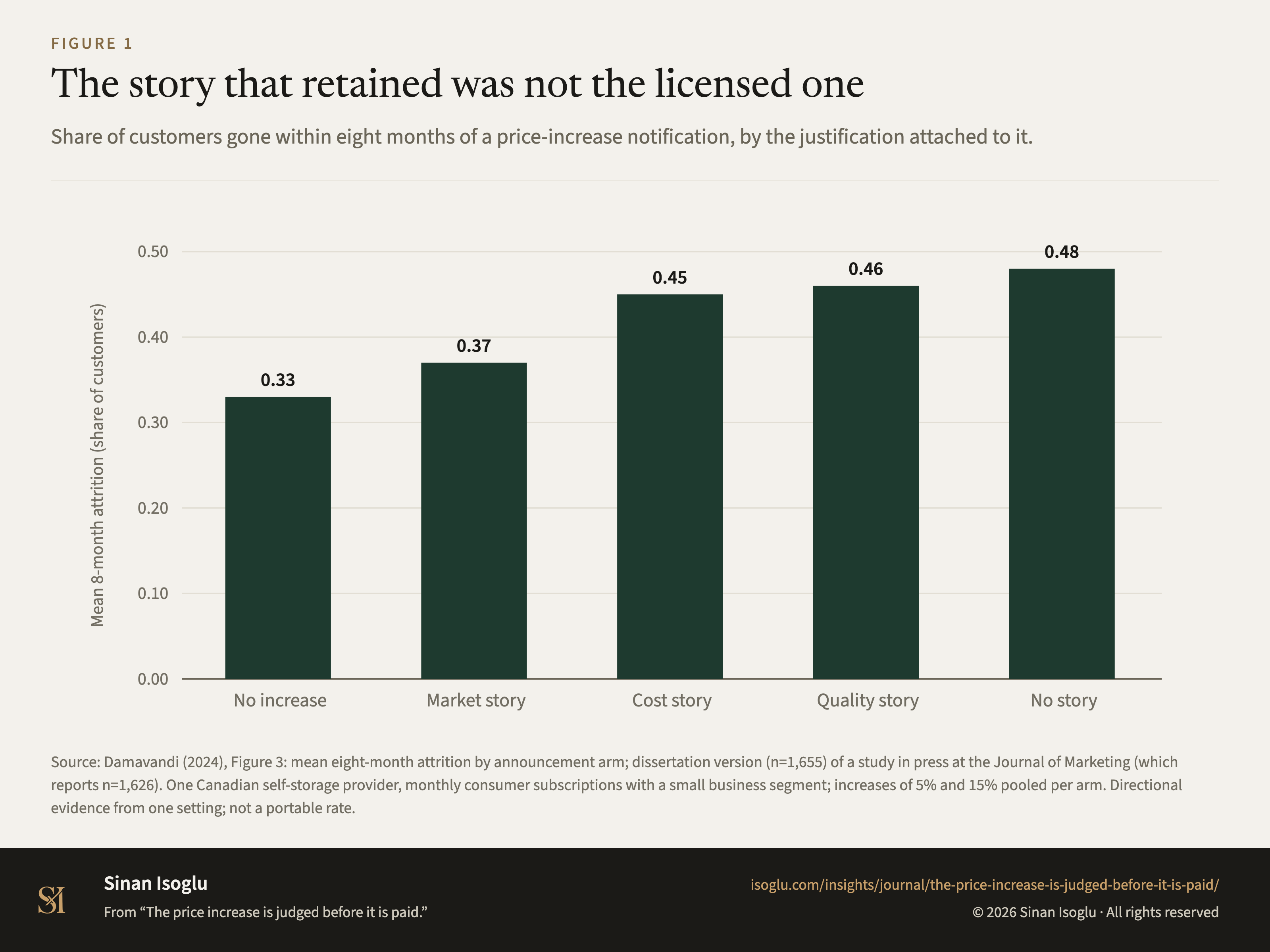
Figure 1Figure
The story that retained was not the licensed one
The price increase is judged before it is paid.
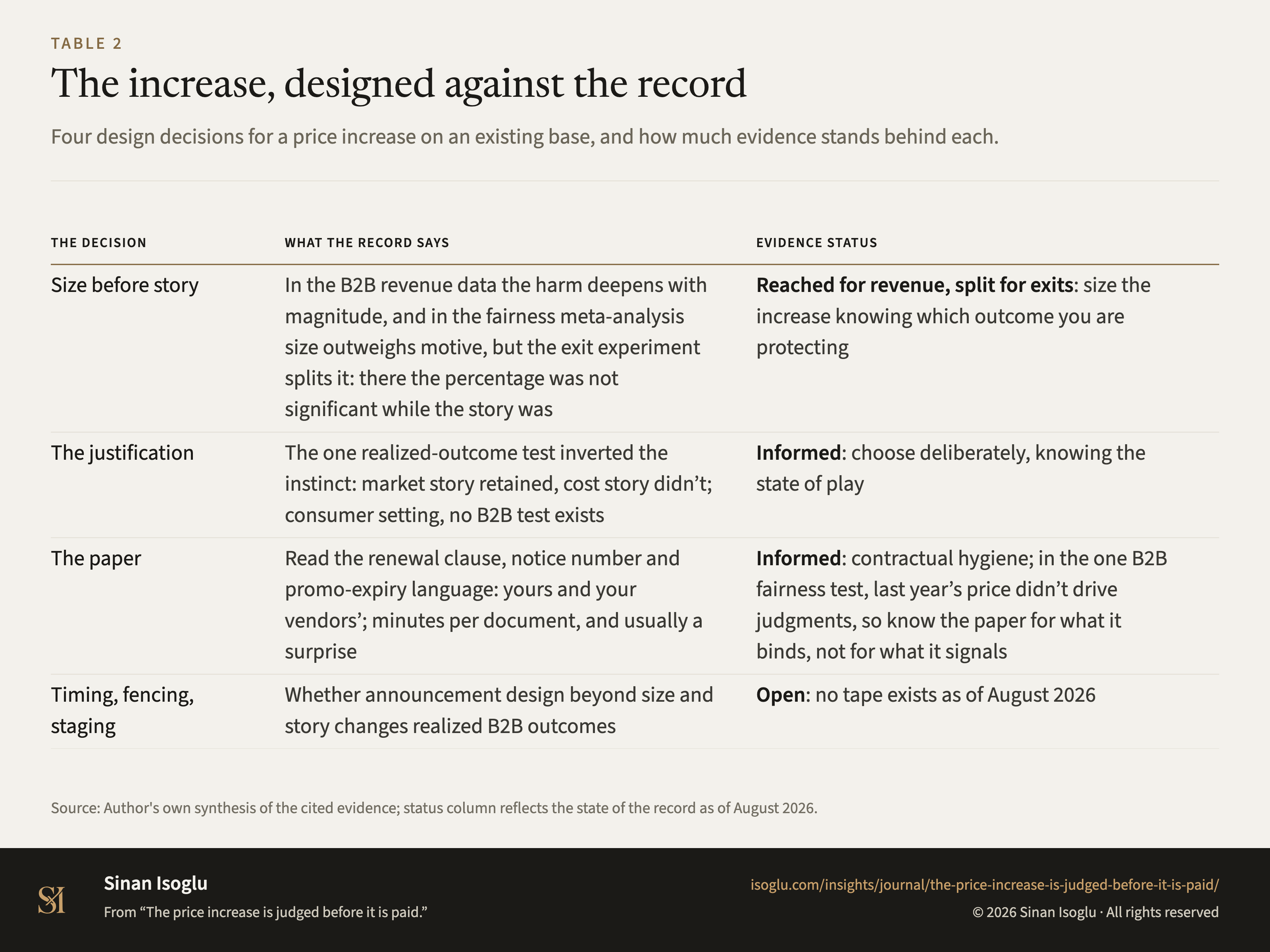
Table 2Table
The increase, designed against the record
The price increase is judged before it is paid.
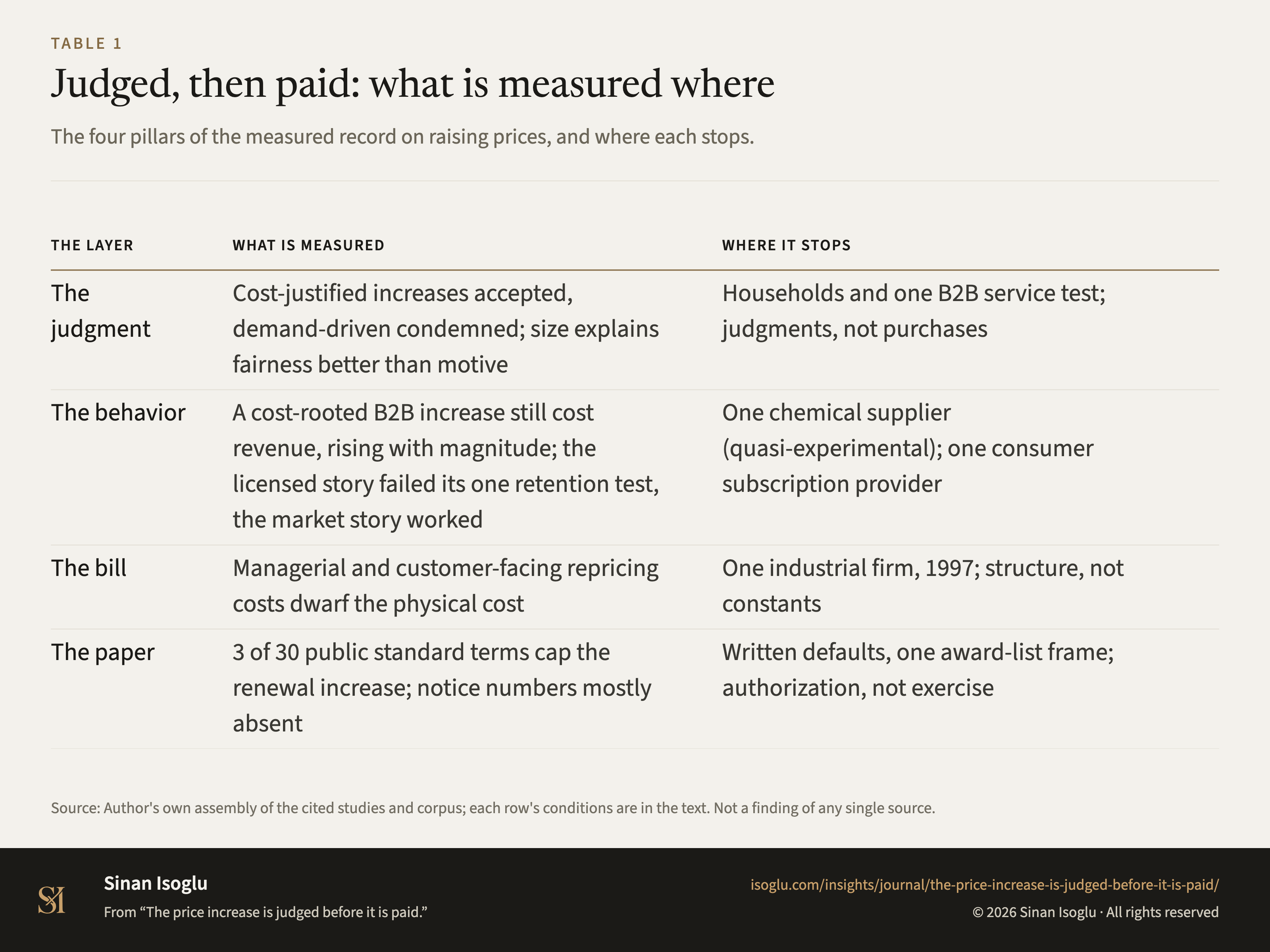
Table 1Table
Judged, then paid: what is measured where
The price increase is judged before it is paid.
Contact
Bring the question you're working on.
Research, a guest lecture, or a commercial question.