Table 1From “The price increase is judged before it is paid.”
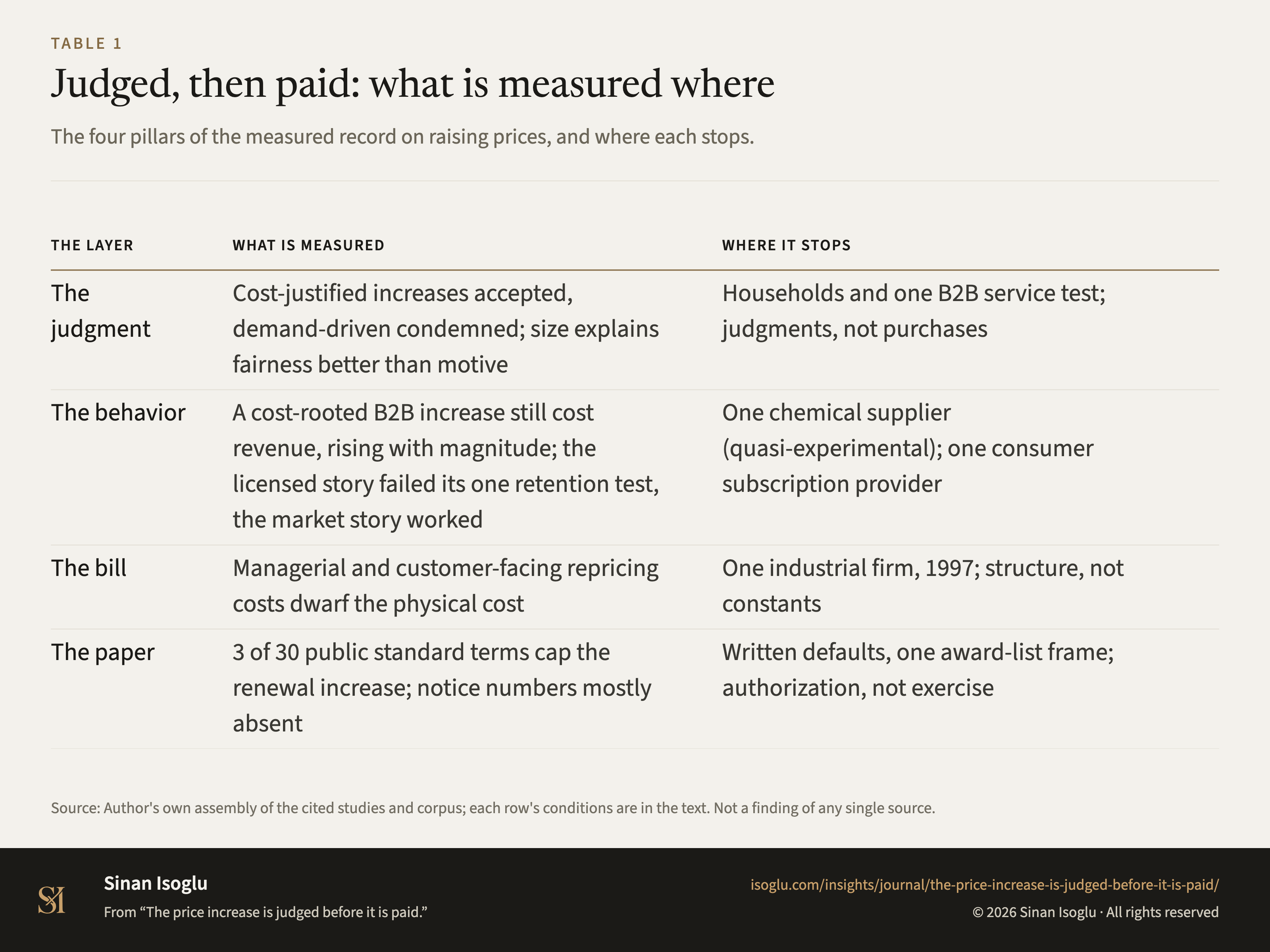
Judged, then paid: what is measured where
The four pillars of the measured record on raising prices, and where each stops.
Table 1Judged, then paid: what is measured where
| The layer | What is measured | Where it stops |
|---|---|---|
| The judgment | Cost-justified increases accepted, demand-driven condemned; size explains fairness better than motive | Households and one B2B service test; judgments, not purchases |
| The behavior | A cost-rooted B2B increase still cost revenue, rising with magnitude; the licensed story failed its one retention test, the market story worked | One chemical supplier (quasi-experimental); one consumer subscription provider |
| The bill | Managerial and customer-facing repricing costs dwarf the physical cost | One industrial firm, 1997; structure, not constants |
| The paper | 3 of 30 public standard terms cap the renewal increase; notice numbers mostly absent | Written defaults, one award-list frame; authorization, not exercise |
Swipe or scroll horizontally if the table is wider than your screen.
Source: Author's own assembly of the cited studies and corpus; each row's conditions are in the text. Not a finding of any single source.
From the essay
Pricing & revenue architecture
The price increase is judged before it is paid.
The fairness rules license the cost-justified raise; the one exit test crowned another story. What is measured, what splits, what your contract says.
Read the essayThis exhibit belongs to an essay: the numbers live here, the argument lives there.
Cite or embed
Related exhibits
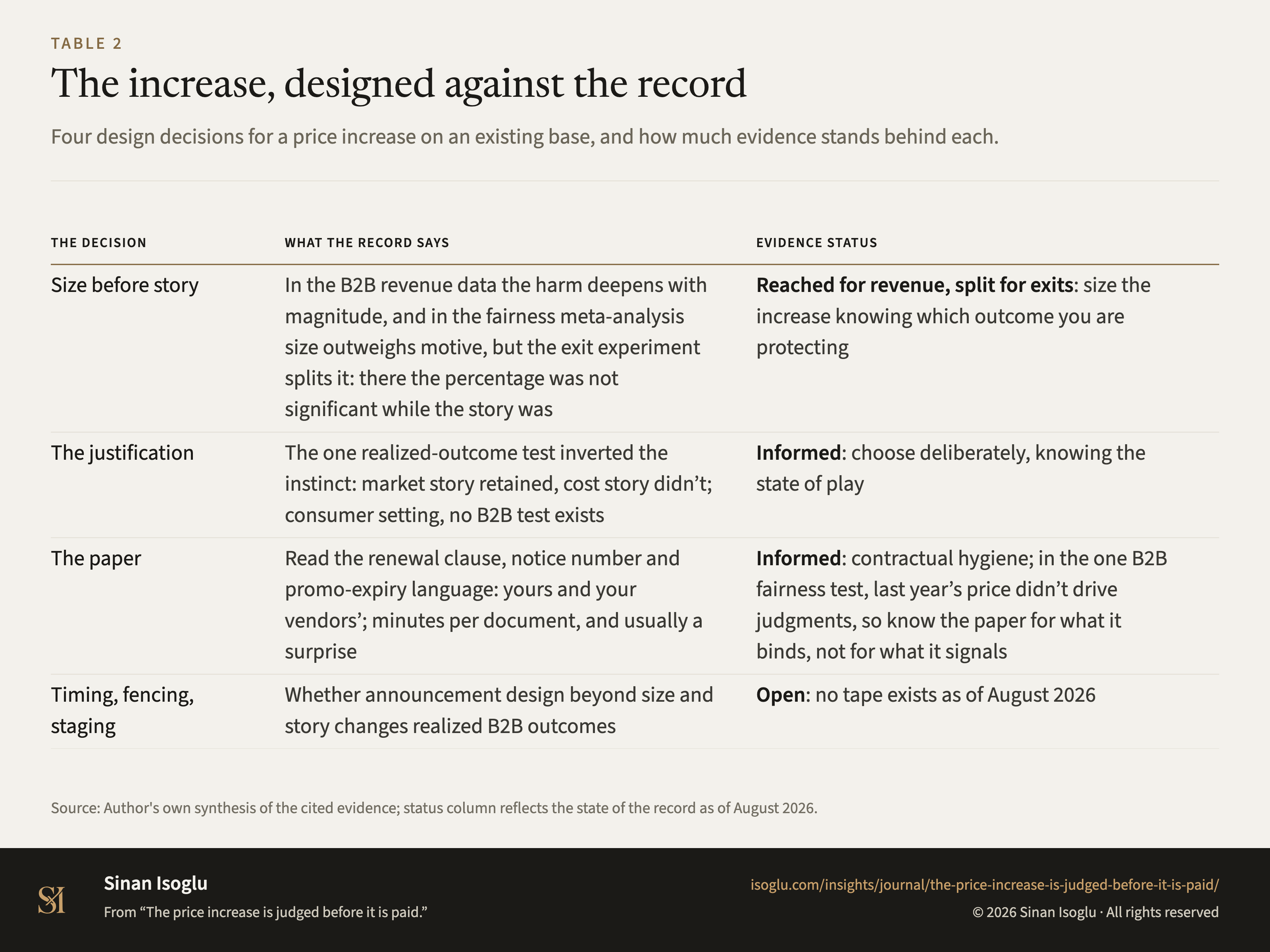
Table 2Table
The increase, designed against the record
The price increase is judged before it is paid.
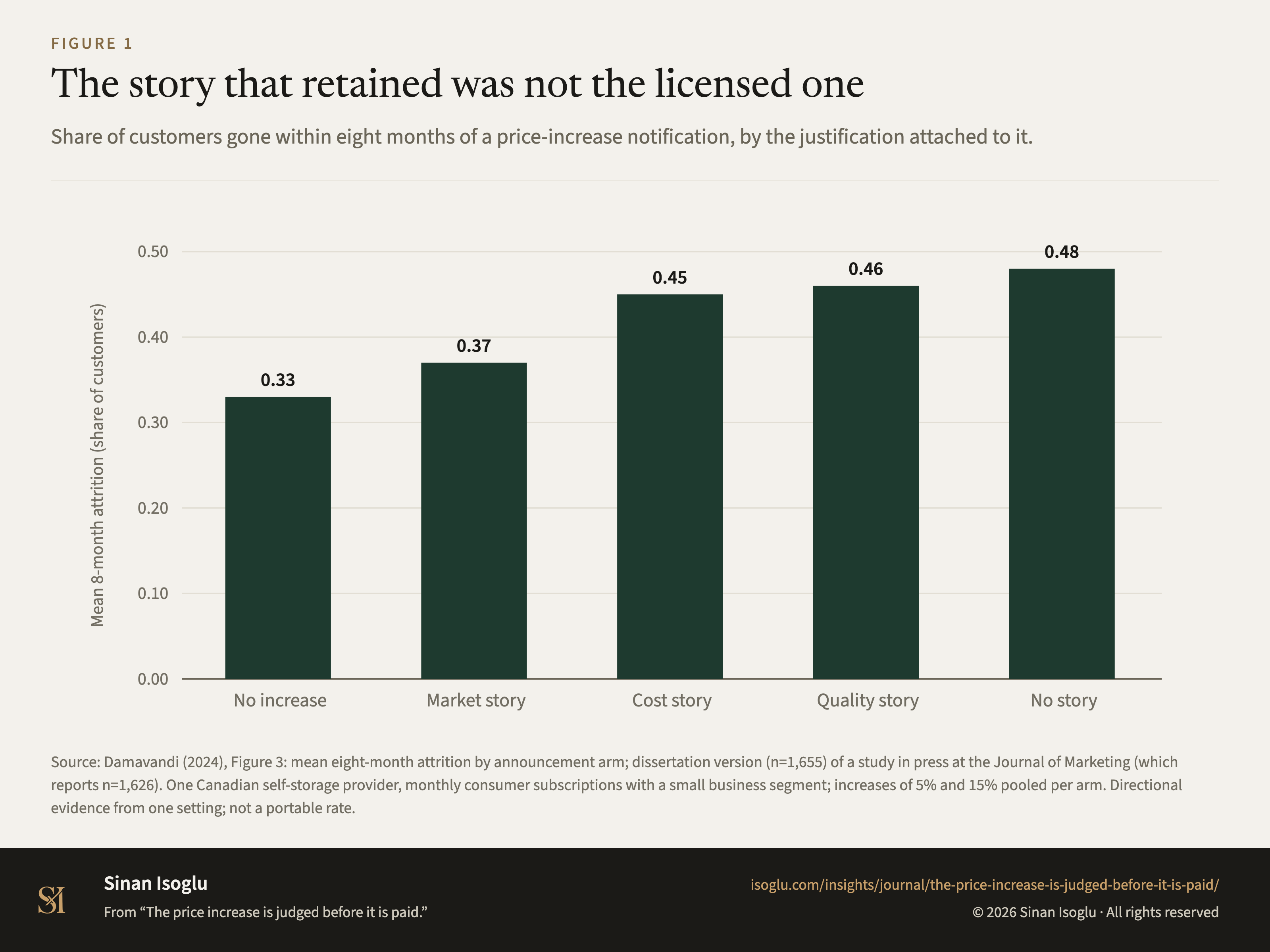
Figure 1Figure
The story that retained was not the licensed one
The price increase is judged before it is paid.
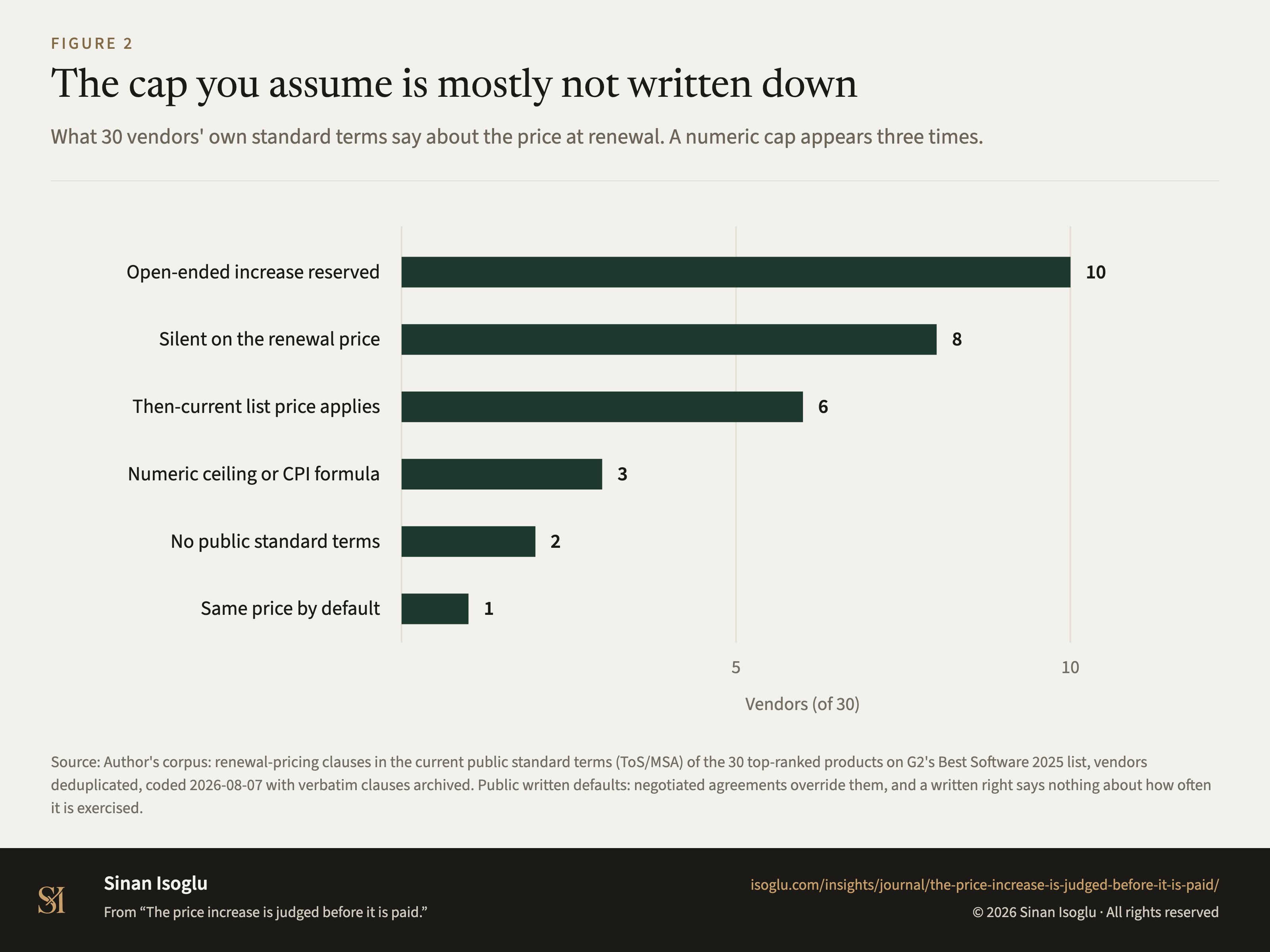
Figure 2Figure
The cap you assume is mostly not written down
The price increase is judged before it is paid.
Contact
Bring the question you're working on.
Research, a guest lecture, or a commercial question.