Table 2From “Price elasticity is not a property of your market”
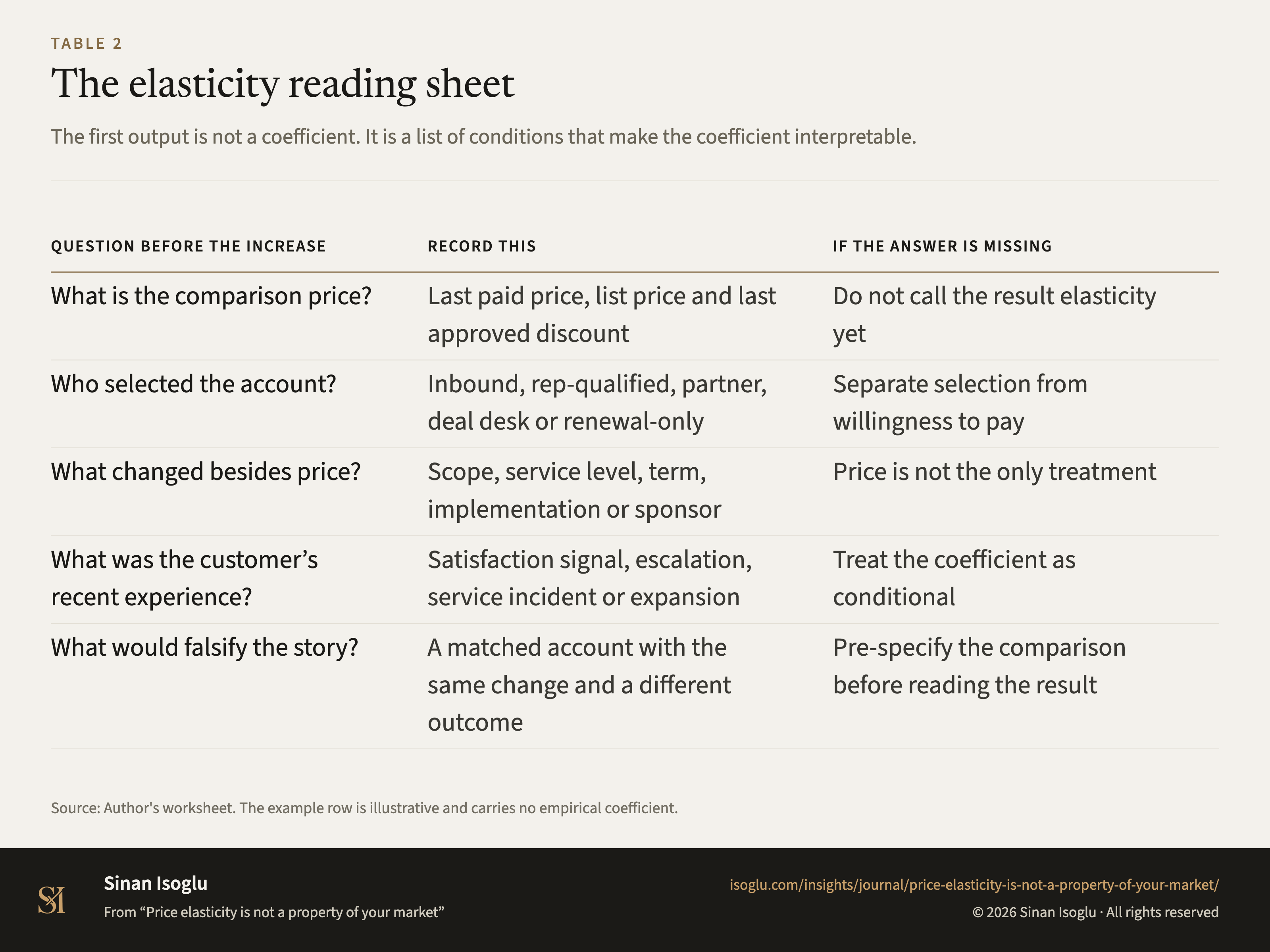
The elasticity reading sheet
The first output is not a coefficient. It is a list of conditions that make the coefficient interpretable.
Table 2The elasticity reading sheet
| Question before the increase | Record this | If the answer is missing |
|---|---|---|
| What is the comparison price? | Last paid price, list price and last approved discount | Do not call the result elasticity yet |
| Who selected the account? | Inbound, rep-qualified, partner, deal desk or renewal-only | Separate selection from willingness to pay |
| What changed besides price? | Scope, service level, term, implementation or sponsor | Price is not the only treatment |
| What was the customer's recent experience? | Satisfaction signal, escalation, service incident or expansion | Treat the coefficient as conditional |
| What would falsify the story? | A matched account with the same change and a different outcome | Pre-specify the comparison before reading the result |
Swipe or scroll horizontally if the table is wider than your screen.
Source: Author's worksheet. The example row is illustrative and carries no empirical coefficient.
From the essay
Pricing & revenue architecture
Price elasticity is not a property of your market
Price elasticity changes with satisfaction, reference prices, incentives and time. Read the conditions around the number before making a pricing decision.
Read the essayThis exhibit belongs to an essay: the numbers live here, the argument lives there.
Cite or embed
Related exhibits
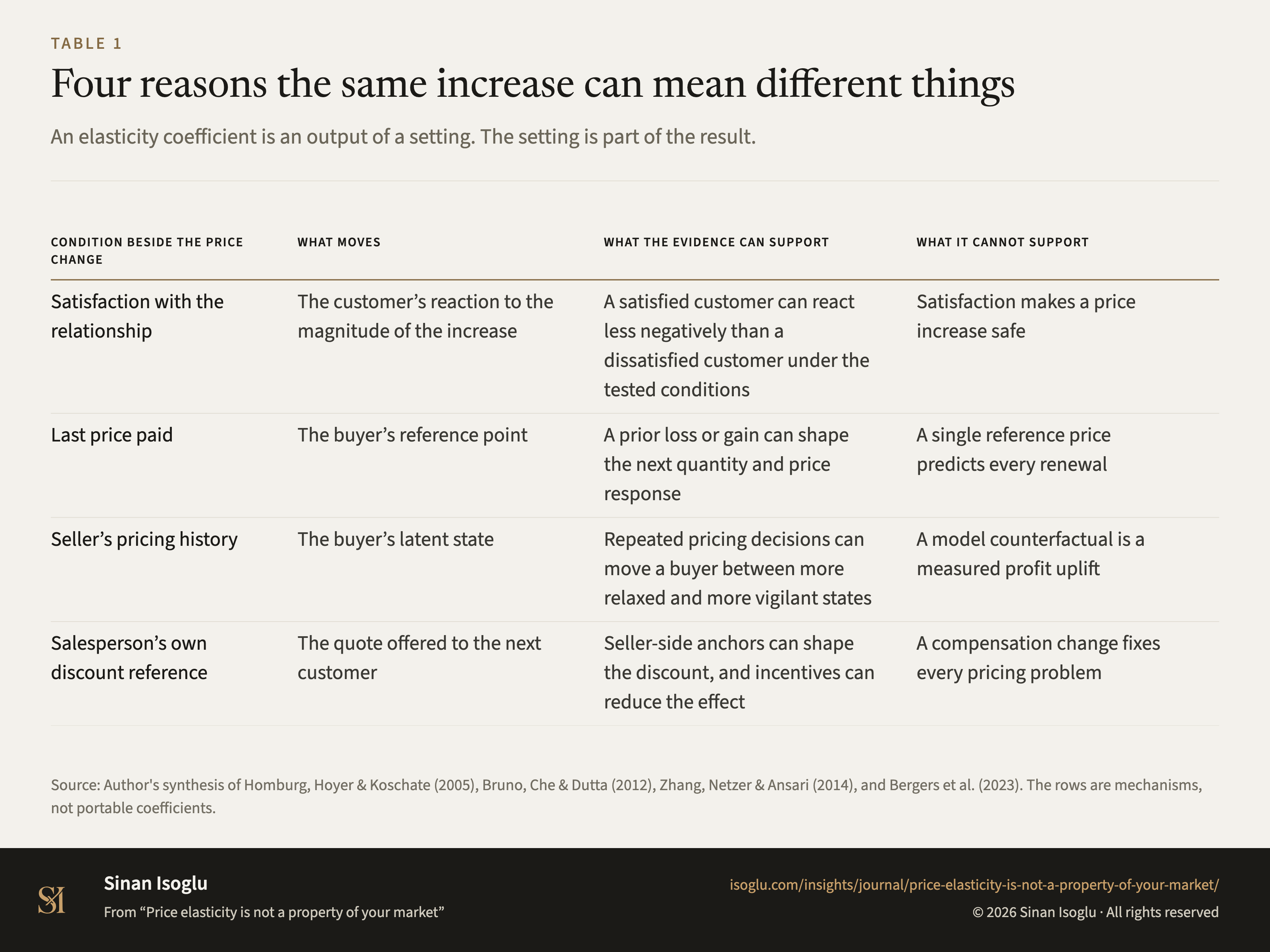
Table 1Table
Four reasons the same increase can mean different things
Price elasticity is not a property of your market
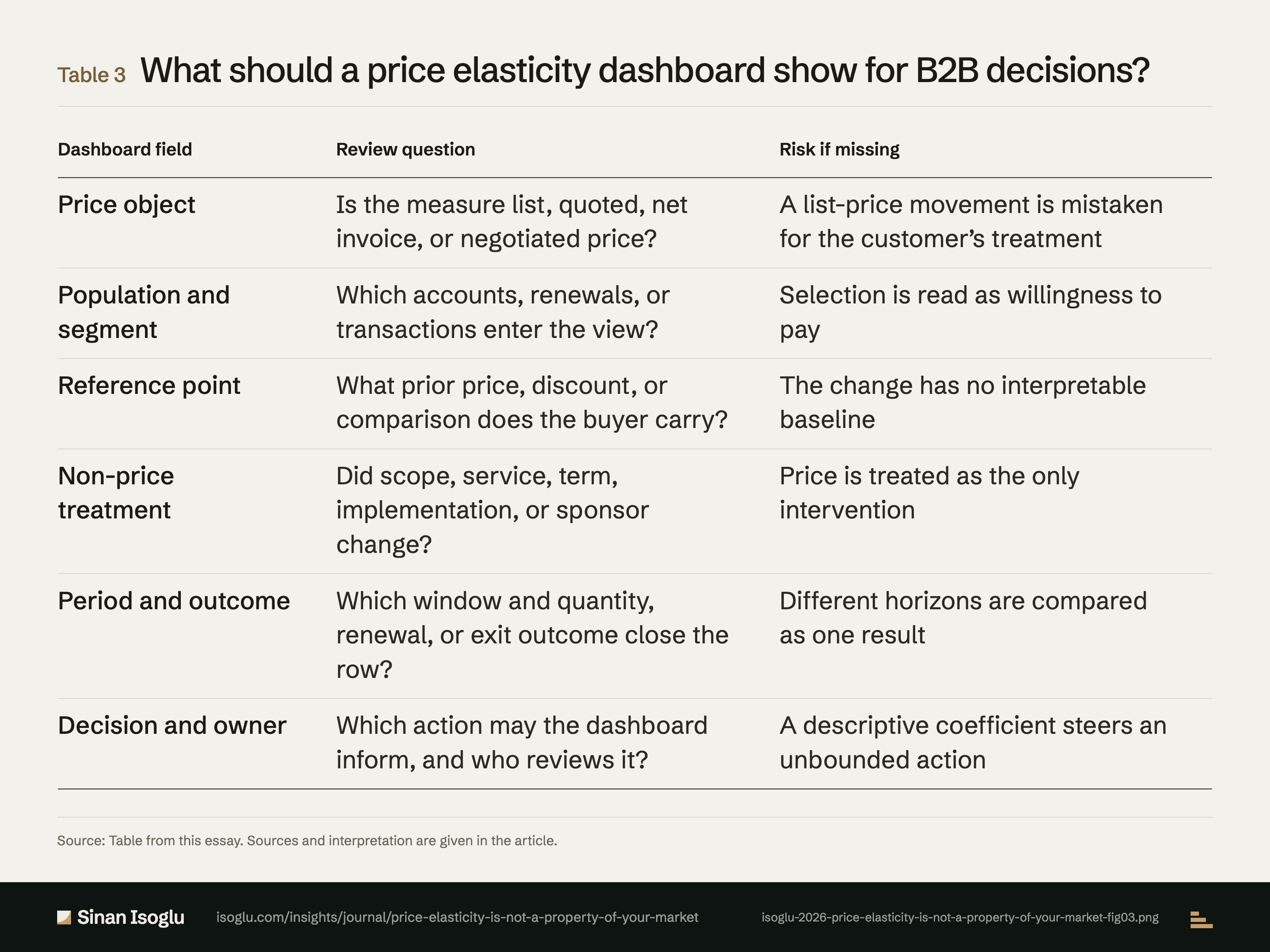
Table 3Table
What should a price elasticity dashboard show for B2B decisions?
Price elasticity is not a property of your market
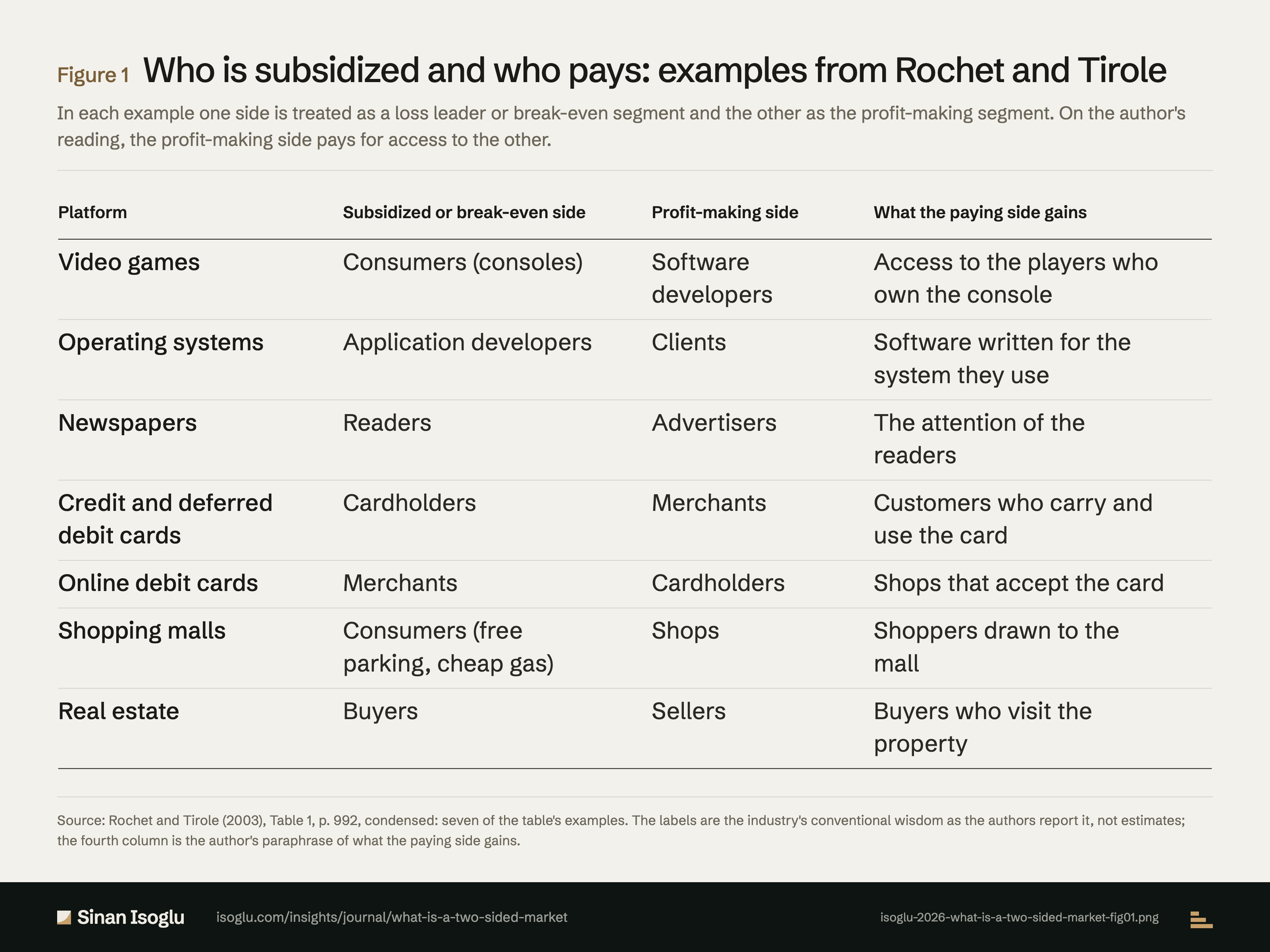
Figure 1Figure
Who is subsidized and who pays: examples from Rochet and Tirole
What is a two-sided market?
Contact
Bring the question you're working on.
Research, a guest lecture, or a commercial question.