Table 1From “Dynamic capabilities are routines, not magic”
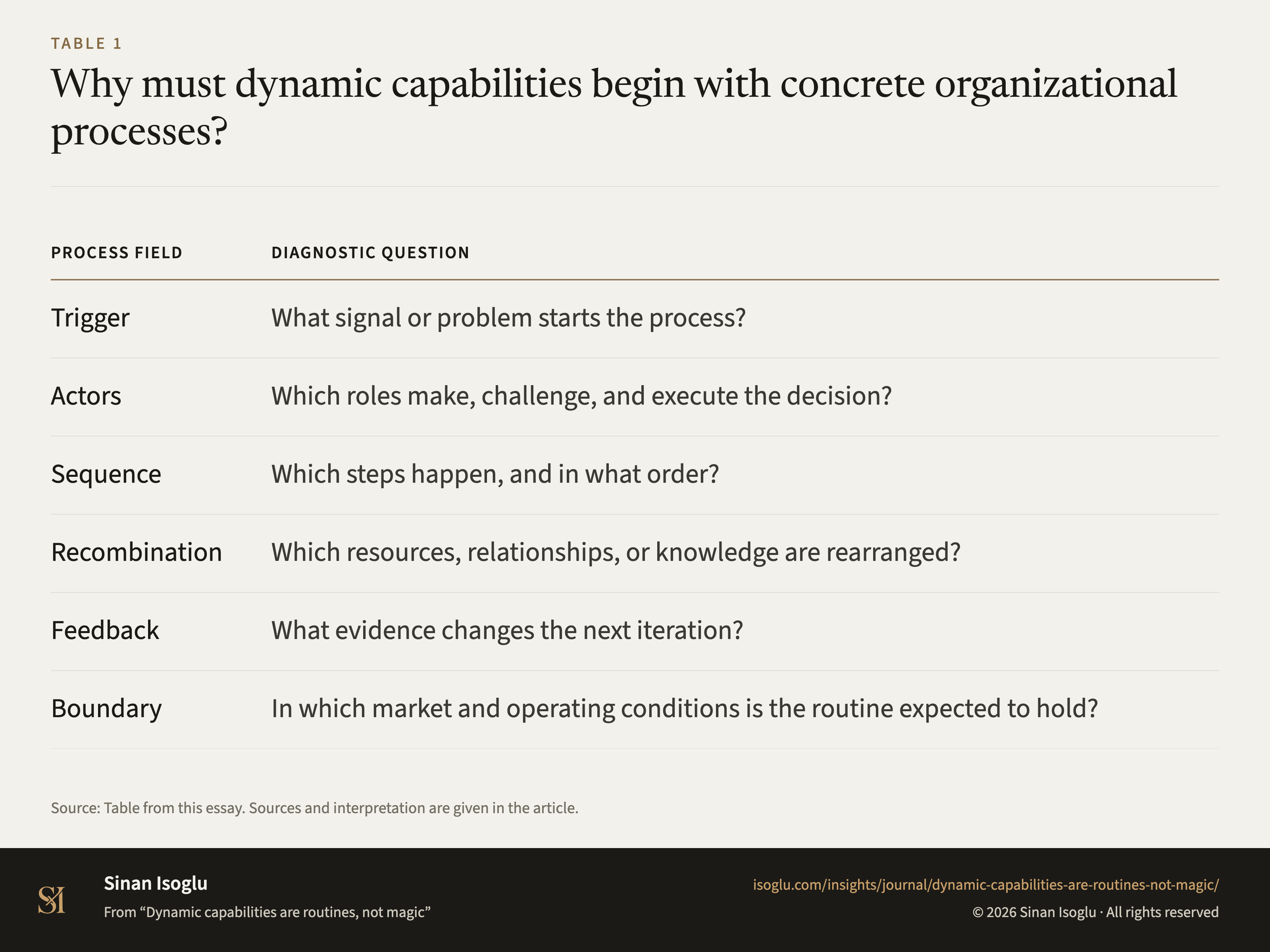
Why must dynamic capabilities begin with concrete organizational processes?
Table 1Why must dynamic capabilities begin with concrete organizational processes?
| Process field | Diagnostic question |
|---|---|
| Trigger | What signal or problem starts the process? |
| Actors | Which roles make, challenge, and execute the decision? |
| Sequence | Which steps happen, and in what order? |
| Recombination | Which resources, relationships, or knowledge are rearranged? |
| Feedback | What evidence changes the next iteration? |
| Boundary | In which market and operating conditions is the routine expected to hold? |
Swipe or scroll horizontally if the table is wider than your screen.
Source: Table from this essay. Sources and interpretation are given in the article.
From the essay
Growth that compounds
Dynamic capabilities are routines, not magic
Dynamic capabilities are identifiable processes, not a synonym for success: test routines, path dependence, and market velocity first.
Read the essayThis exhibit belongs to an essay: the numbers live here, the argument lives there.
Cite or embed
Related exhibits
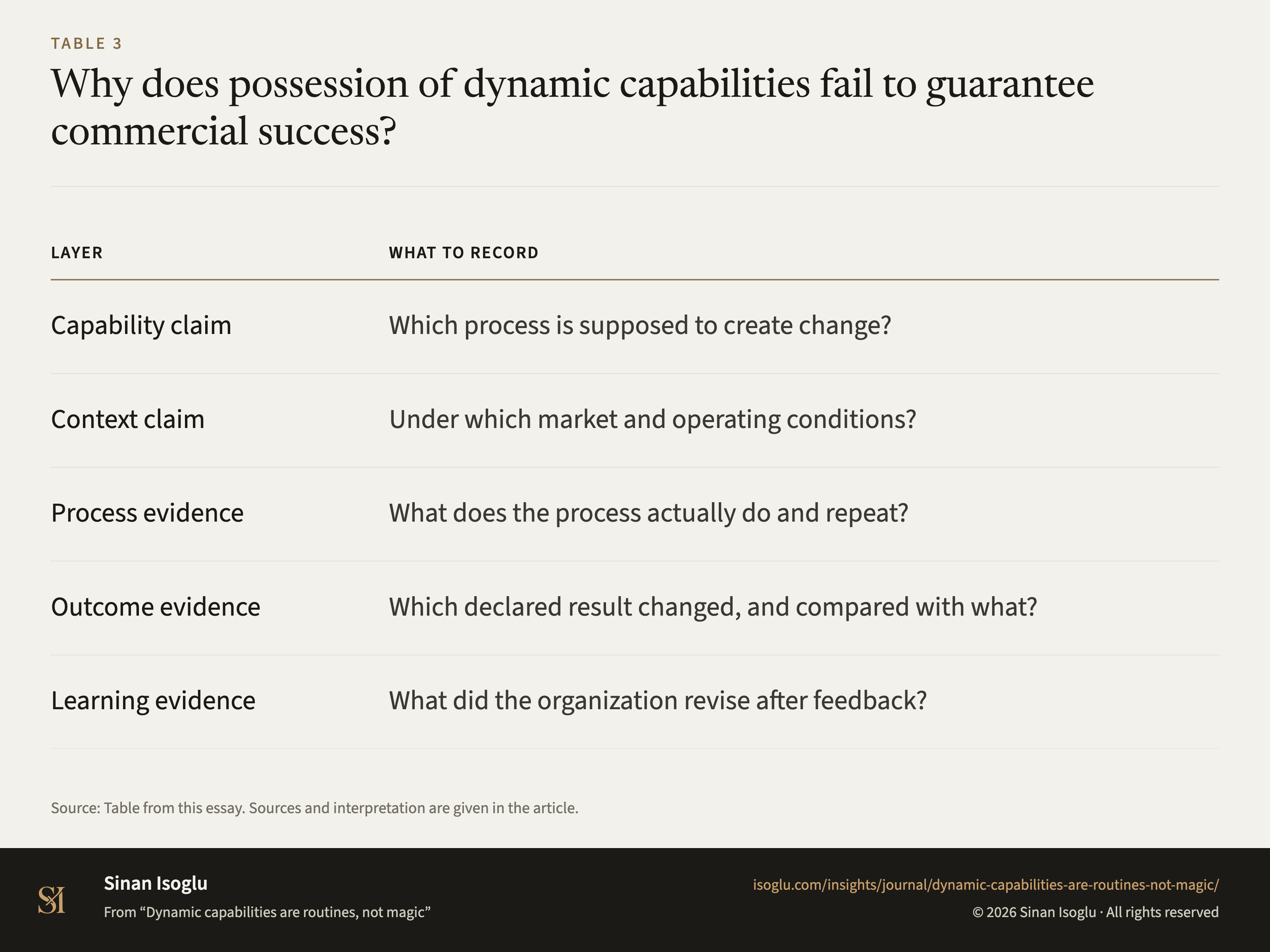
Table 3Table
Why does possession of dynamic capabilities fail to guarantee commercial success?
Dynamic capabilities are routines, not magic
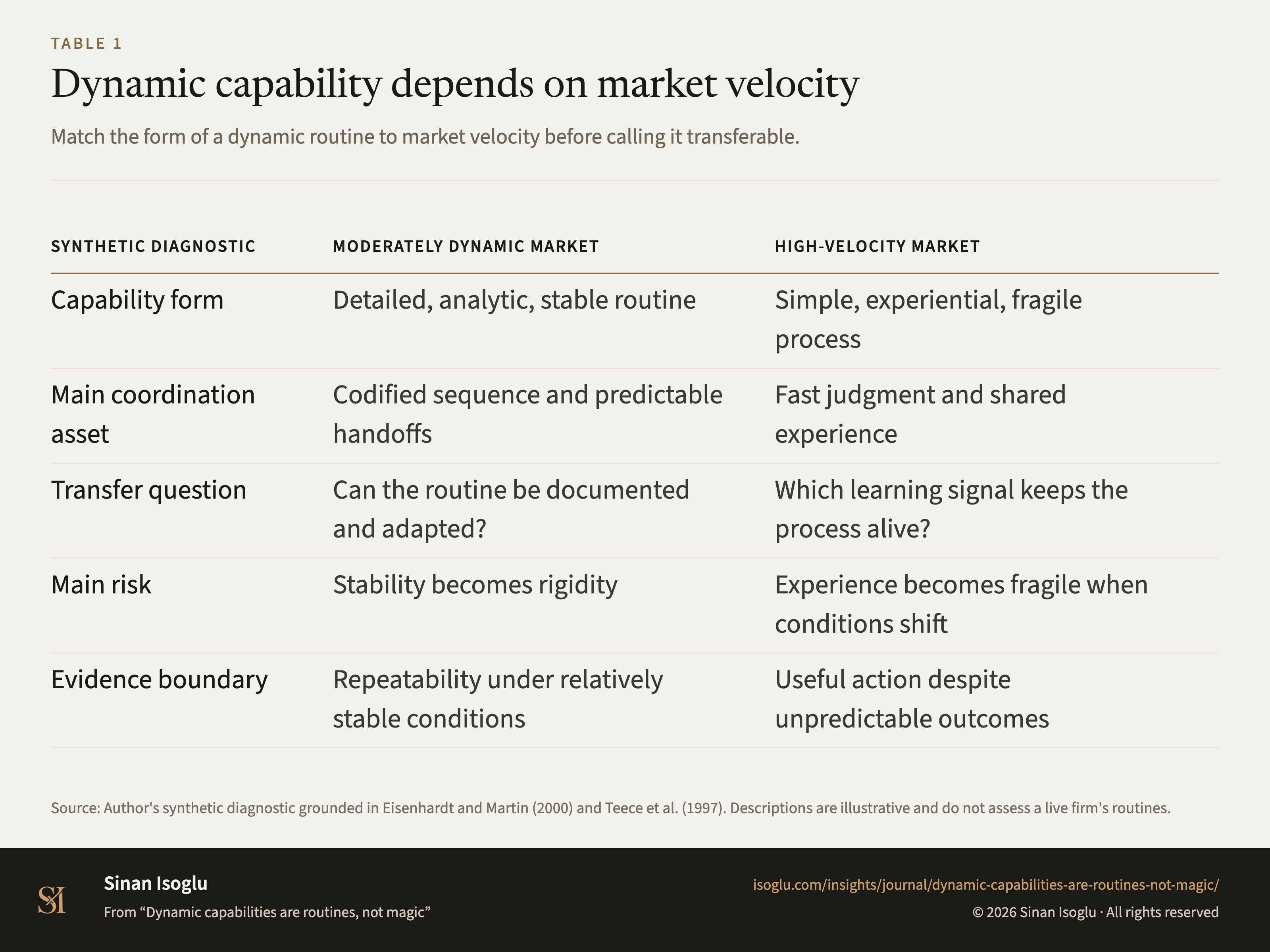
Table 1Table
Dynamic capability depends on market velocity
Dynamic capabilities are routines, not magic
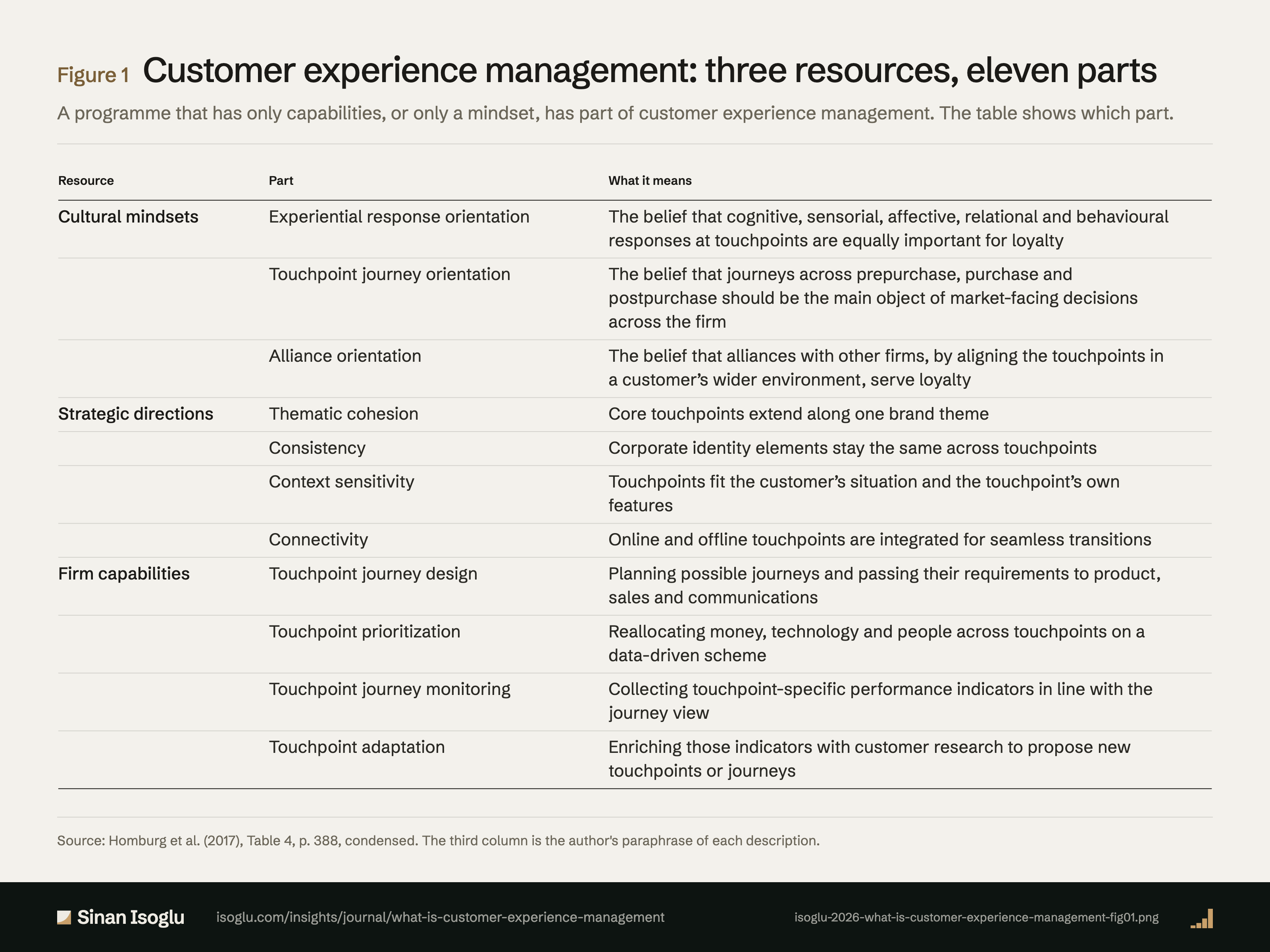
Figure 1Figure
Customer experience management: three resources, eleven parts
What is customer experience management?
Contact
Bring the question you're working on.
Research, a guest lecture, or a commercial question.