Table 3From “Cultural distance is not a universal entry-mode rule”
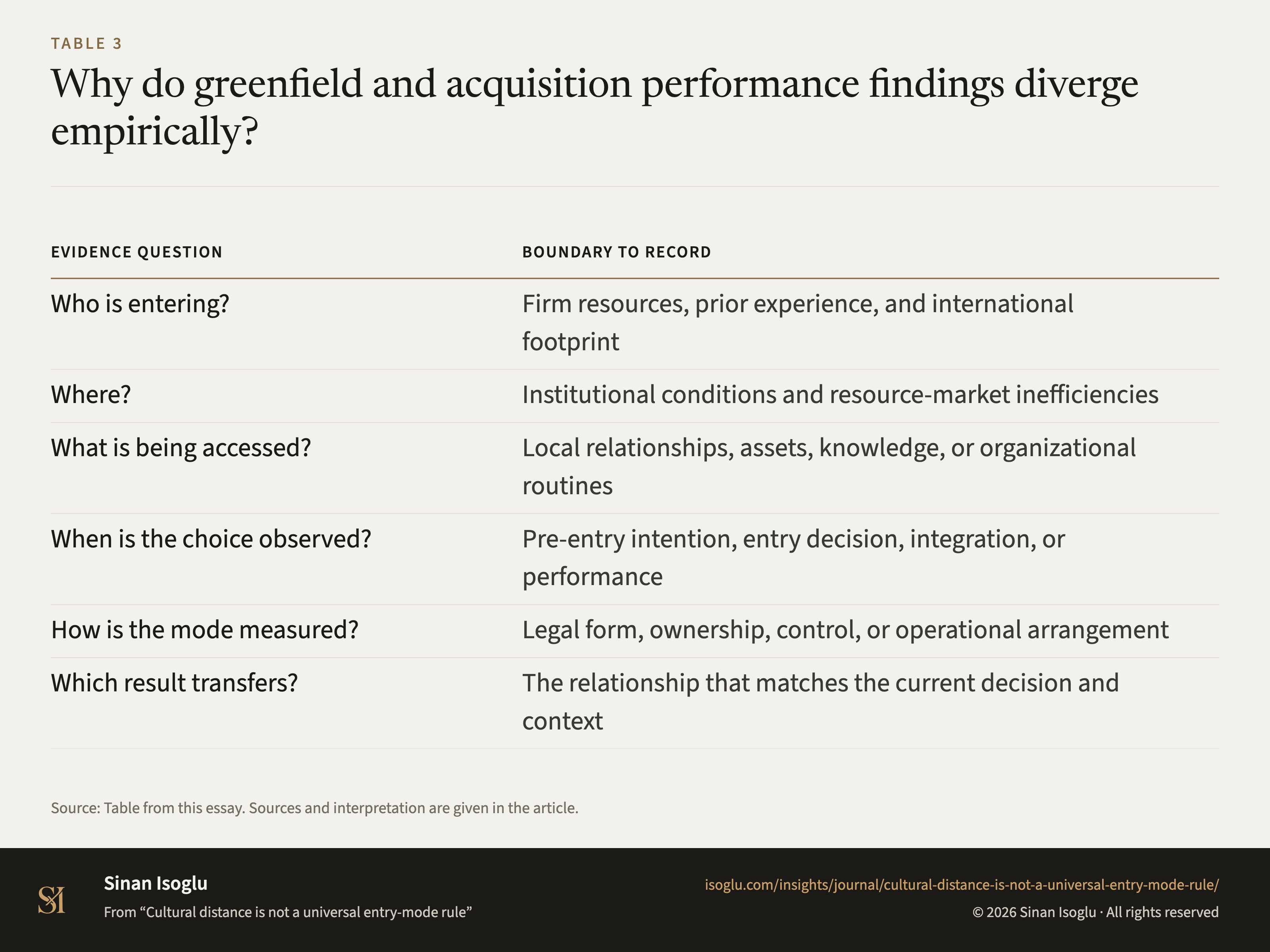
Why do greenfield and acquisition performance findings diverge empirically?
Table 3Why do greenfield and acquisition performance findings diverge empirically?
| Evidence question | Boundary to record |
|---|---|
| Who is entering? | Firm resources, prior experience, and international footprint |
| Where? | Institutional conditions and resource-market inefficiencies |
| What is being accessed? | Local relationships, assets, knowledge, or organizational routines |
| When is the choice observed? | Pre-entry intention, entry decision, integration, or performance |
| How is the mode measured? | Legal form, ownership, control, or operational arrangement |
| Which result transfers? | The relationship that matches the current decision and context |
Swipe or scroll horizontally if the table is wider than your screen.
Source: Table from this essay. Sources and interpretation are given in the article.
From the essay
Growth that compounds
Cultural distance is not a universal entry-mode rule
Cultural distance does not choose an entry mode: fit depends on institutions, resources, mode, sample, and the moderator behind the estimate.
Read the essayThis exhibit belongs to an essay: the numbers live here, the argument lives there.
Cite or embed
Related exhibits
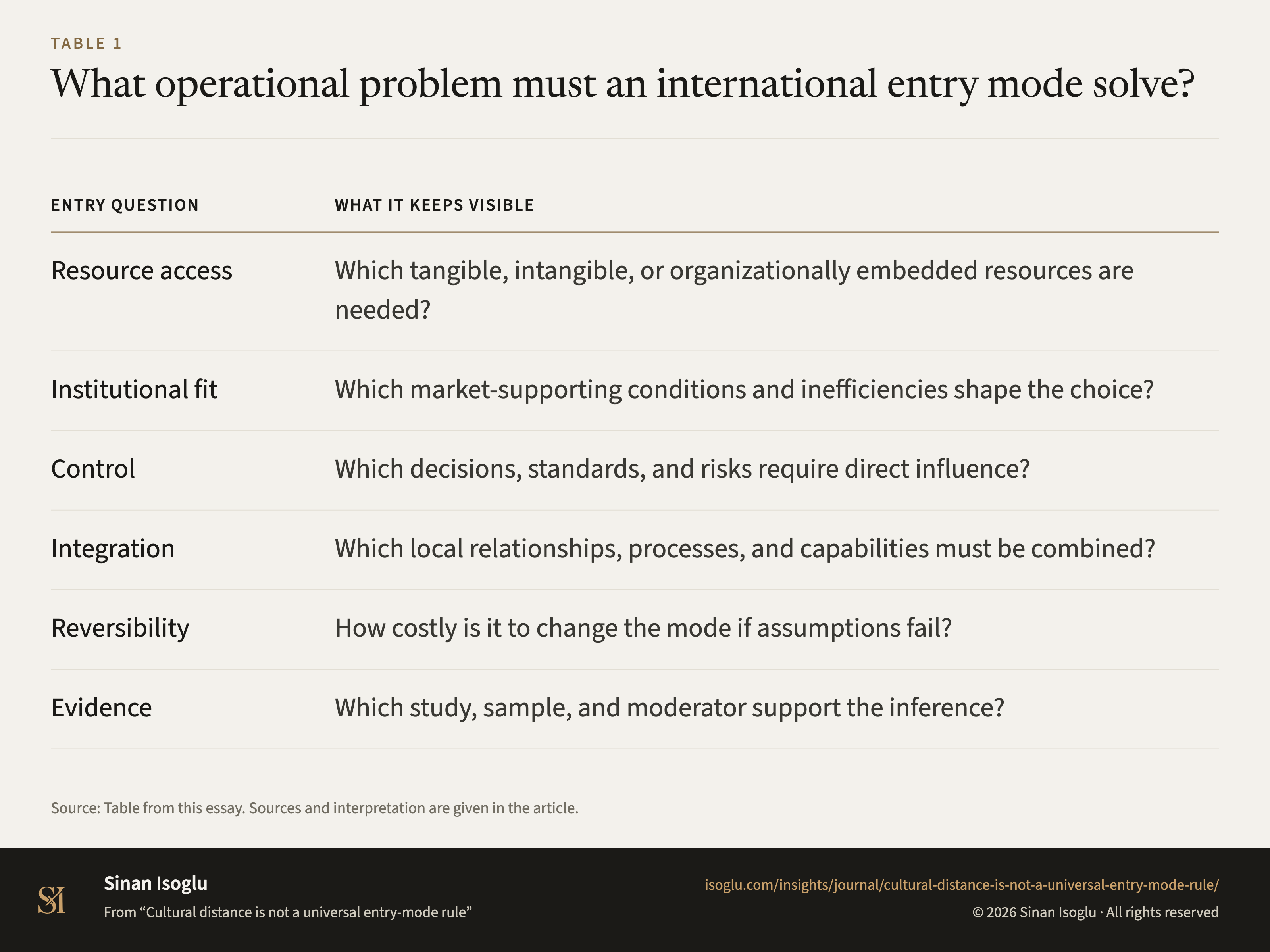
Table 1Table
What operational problem must an international entry mode solve?
Cultural distance is not a universal entry-mode rule
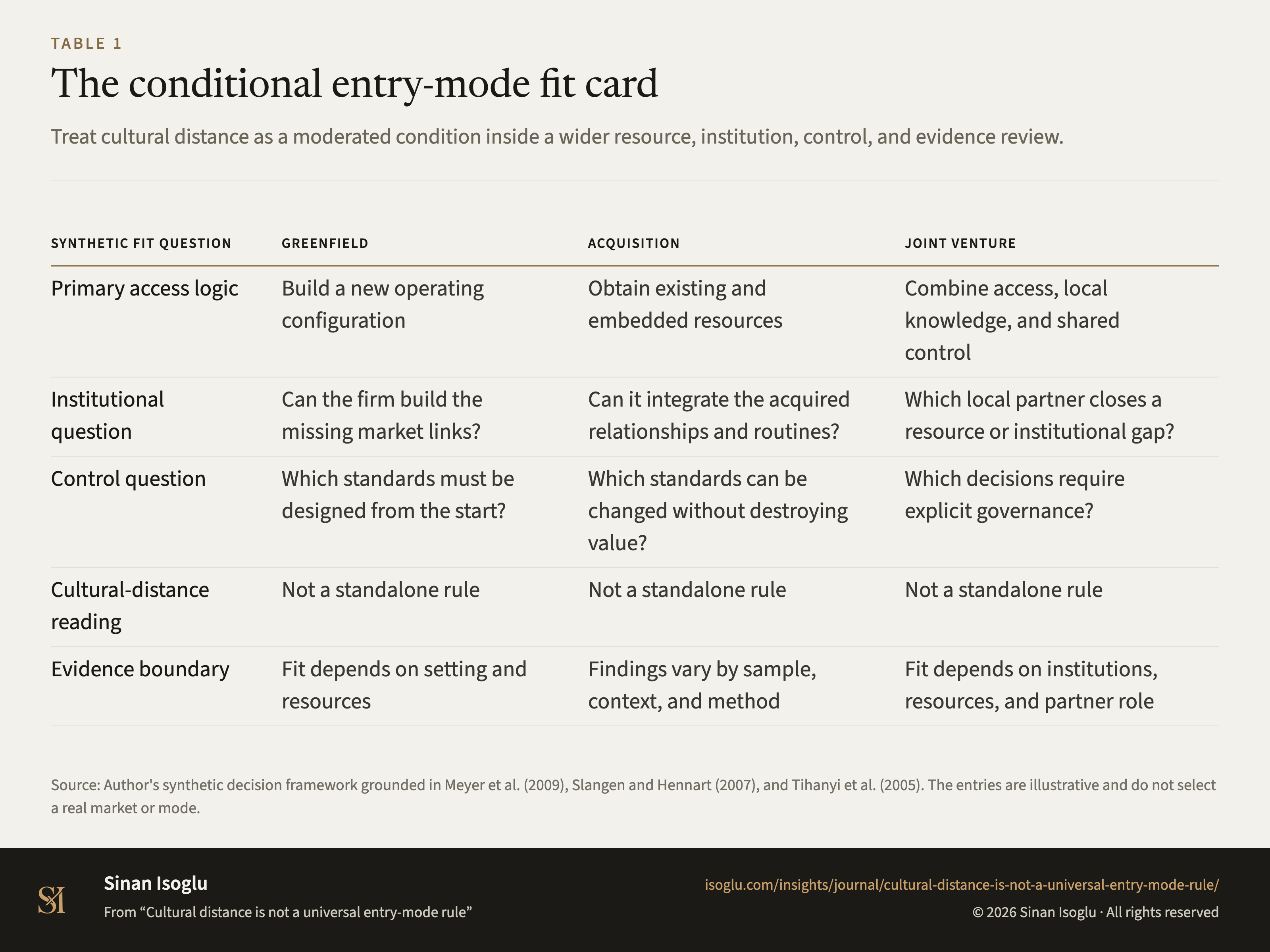
Table 1Table
The conditional entry-mode fit card
Cultural distance is not a universal entry-mode rule
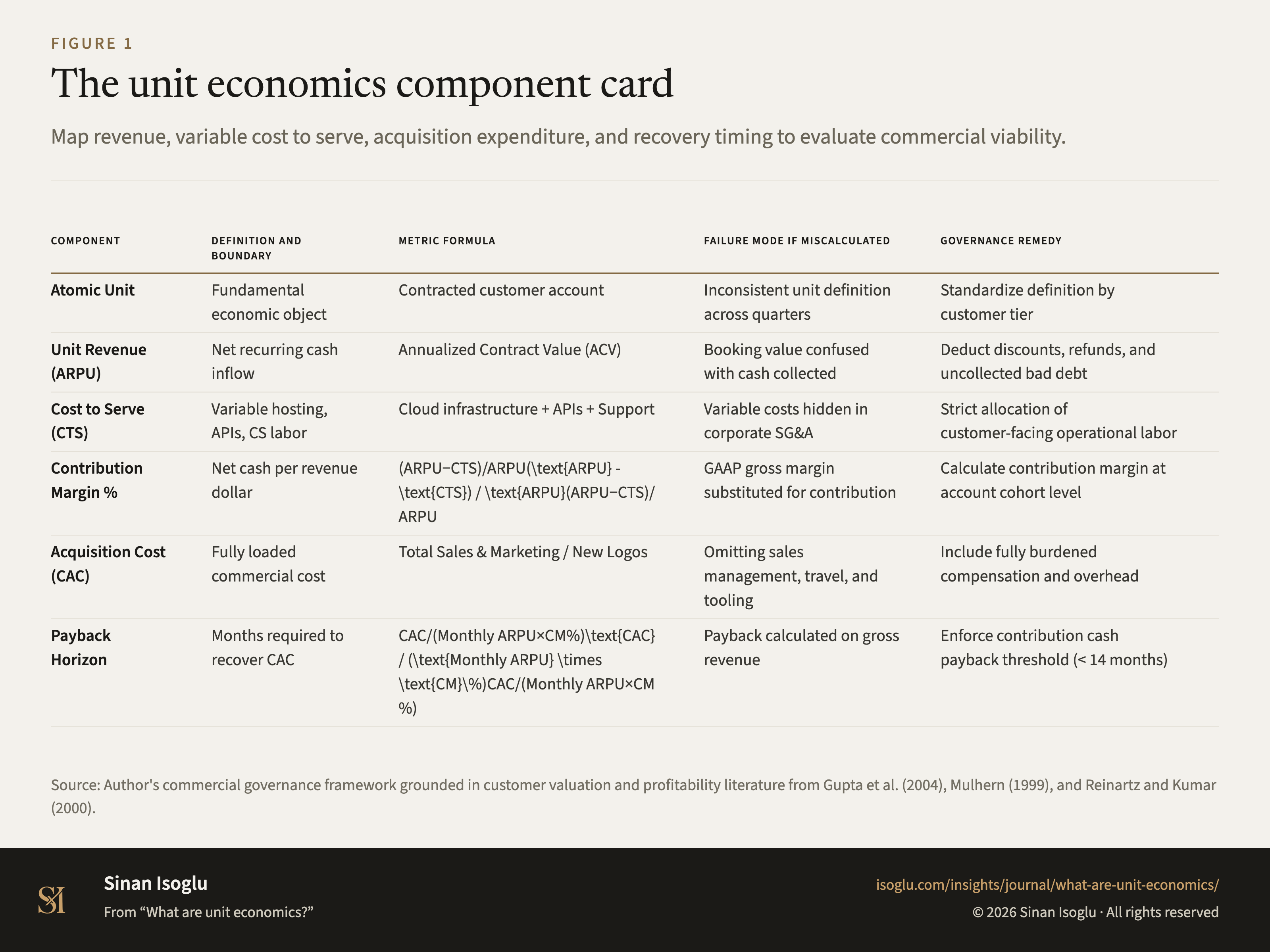
Figure 1Figure
The unit economics component card
What are unit economics?
Contact
Bring the question you're working on.
Research, a guest lecture, or a commercial question.