Table 1From “Cultural distance is not a universal entry-mode rule”
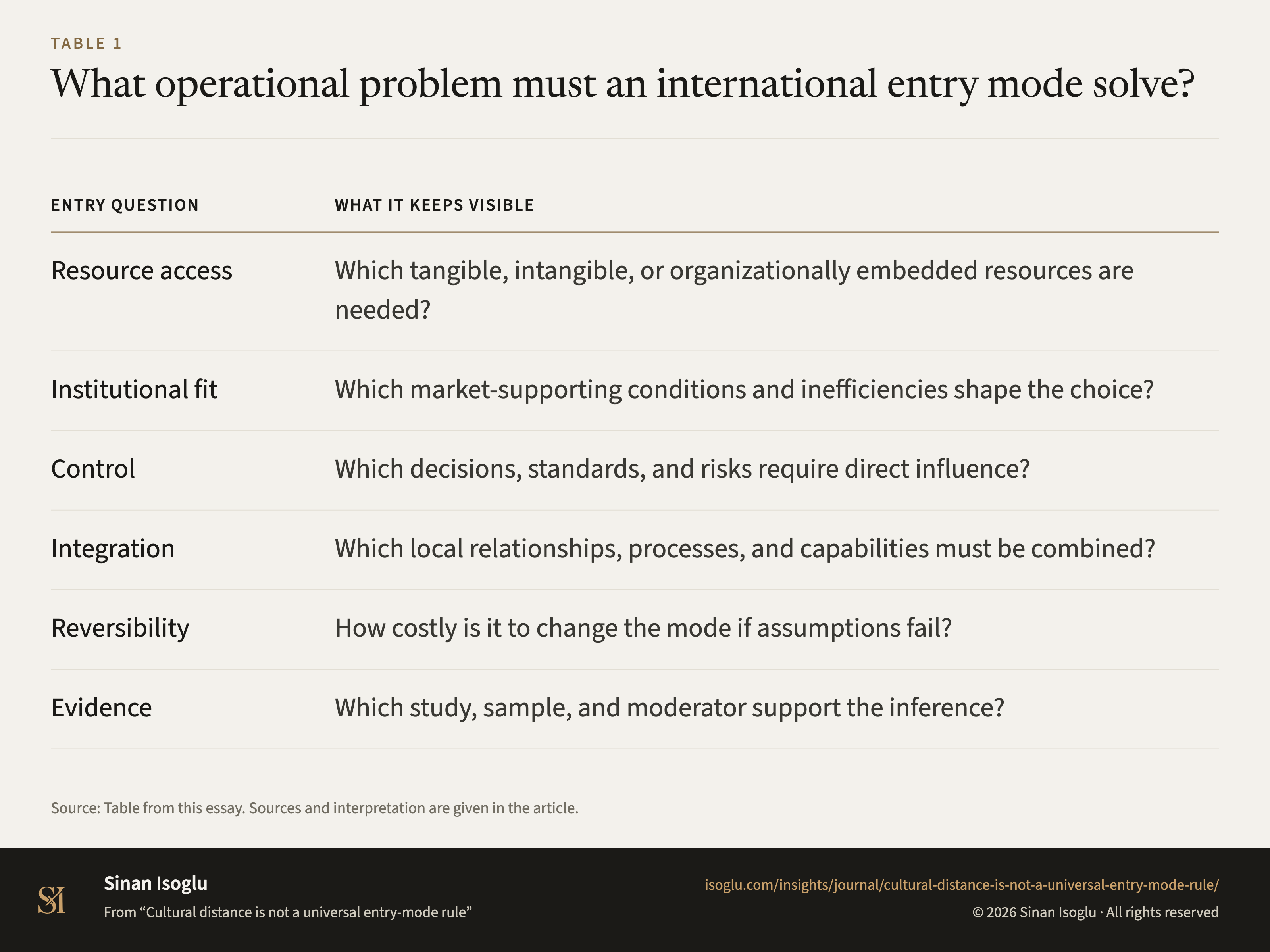
What operational problem must an international entry mode solve?
Table 1What operational problem must an international entry mode solve?
| Entry question | What it keeps visible |
|---|---|
| Resource access | Which tangible, intangible, or organizationally embedded resources are needed? |
| Institutional fit | Which market-supporting conditions and inefficiencies shape the choice? |
| Control | Which decisions, standards, and risks require direct influence? |
| Integration | Which local relationships, processes, and capabilities must be combined? |
| Reversibility | How costly is it to change the mode if assumptions fail? |
| Evidence | Which study, sample, and moderator support the inference? |
Swipe or scroll horizontally if the table is wider than your screen.
Source: Table from this essay. Sources and interpretation are given in the article.
From the essay
Growth that compounds
Cultural distance is not a universal entry-mode rule
Cultural distance does not choose an entry mode: fit depends on institutions, resources, mode, sample, and the moderator behind the estimate.
Read the essayThis exhibit belongs to an essay: the numbers live here, the argument lives there.
Cite or embed
Related exhibits
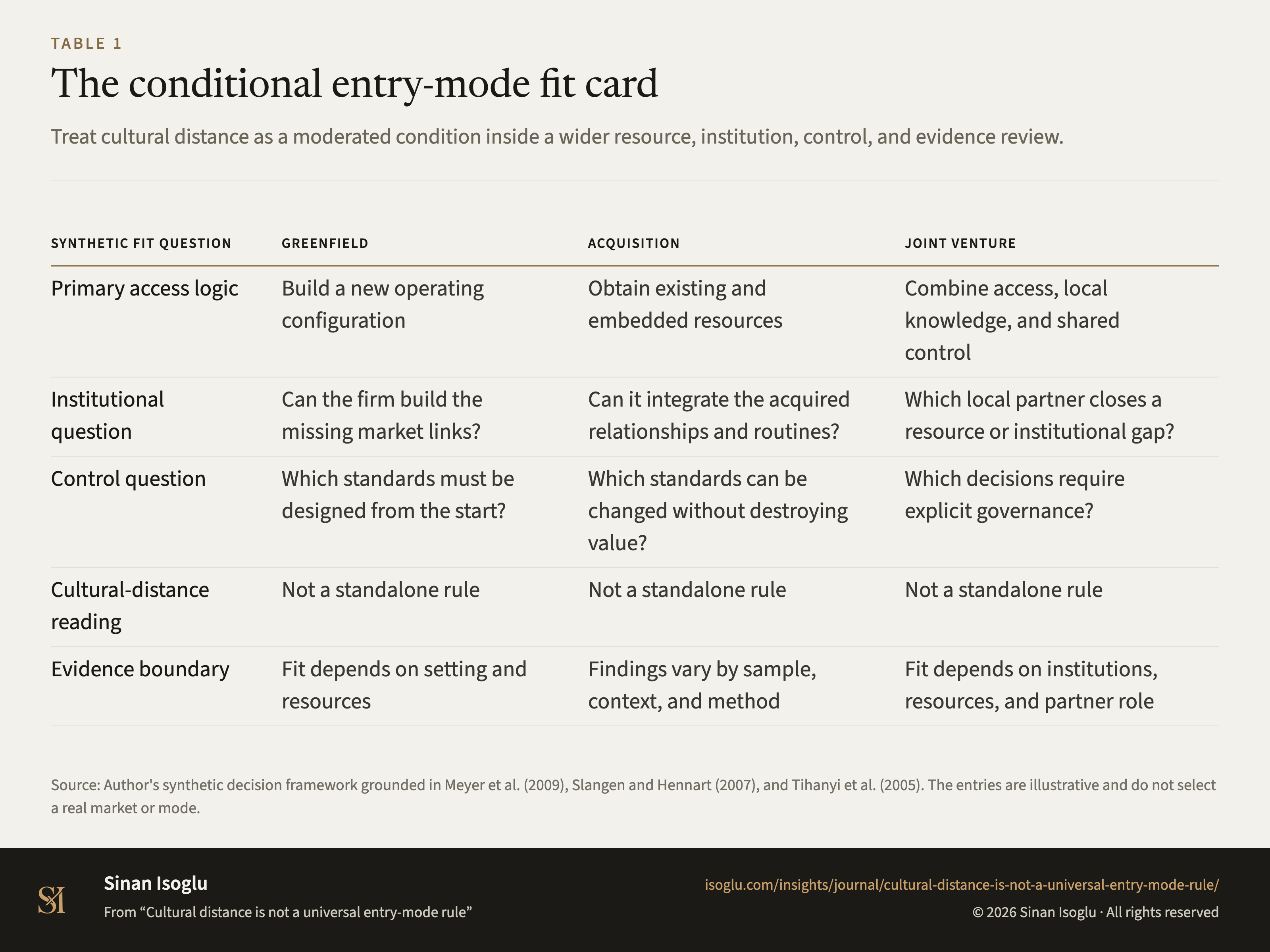
Table 1Table
The conditional entry-mode fit card
Cultural distance is not a universal entry-mode rule
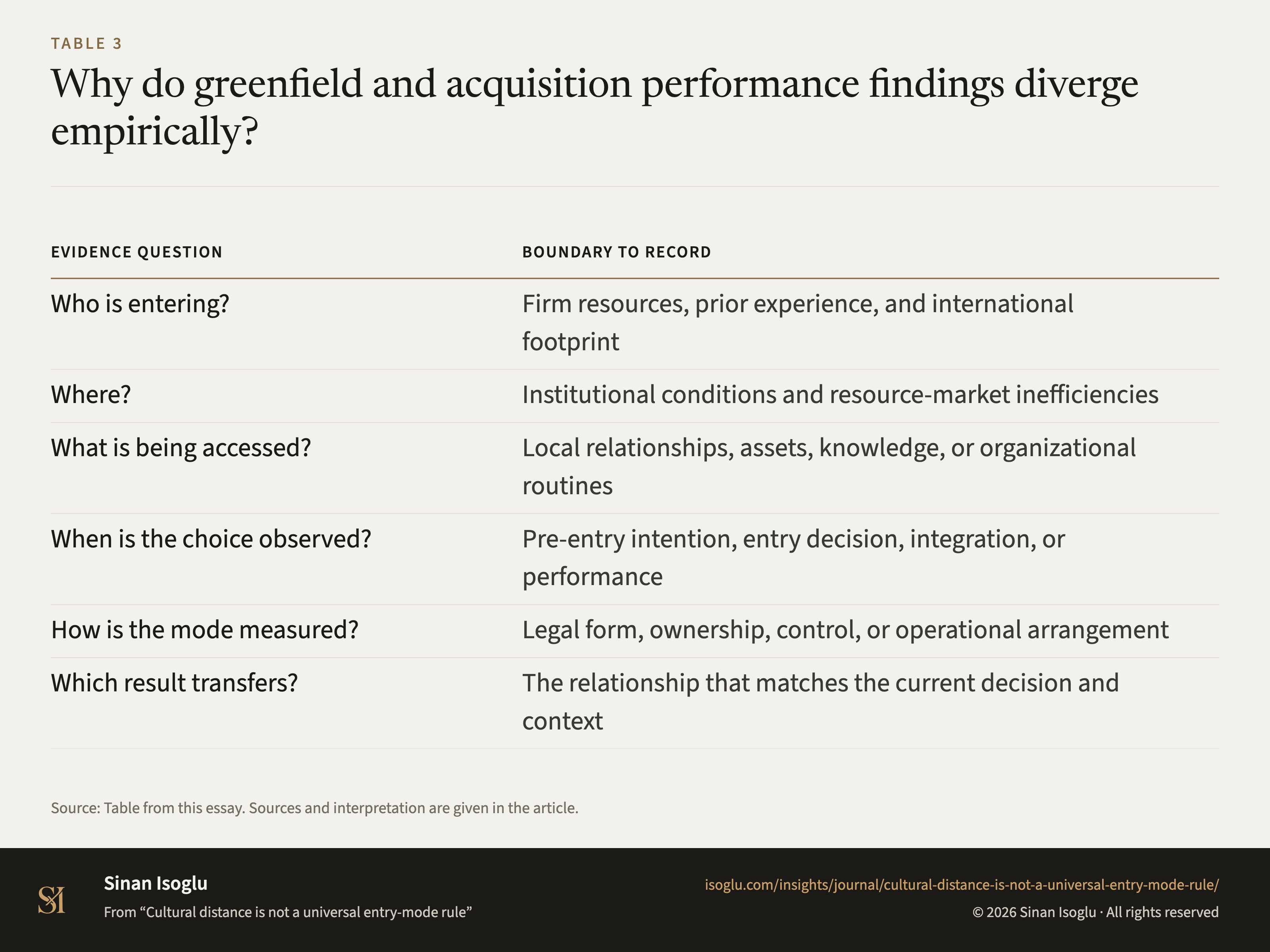
Table 3Table
Why do greenfield and acquisition performance findings diverge empirically?
Cultural distance is not a universal entry-mode rule
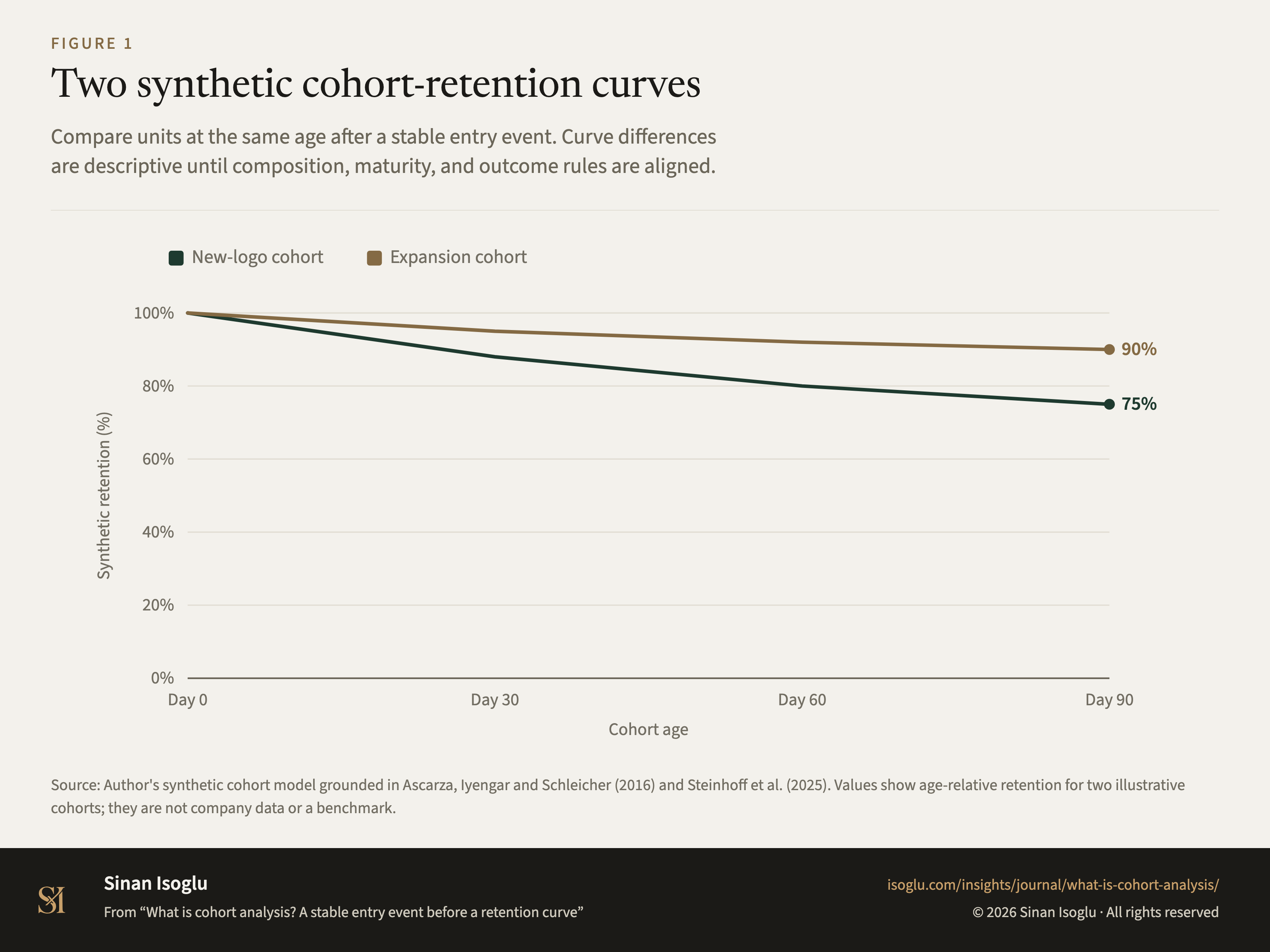
Figure 1Figure
Two synthetic cohort-retention curves
What is cohort analysis? A stable entry event before a retention curve
Contact
Bring the question you're working on.
Research, a guest lecture, or a commercial question.