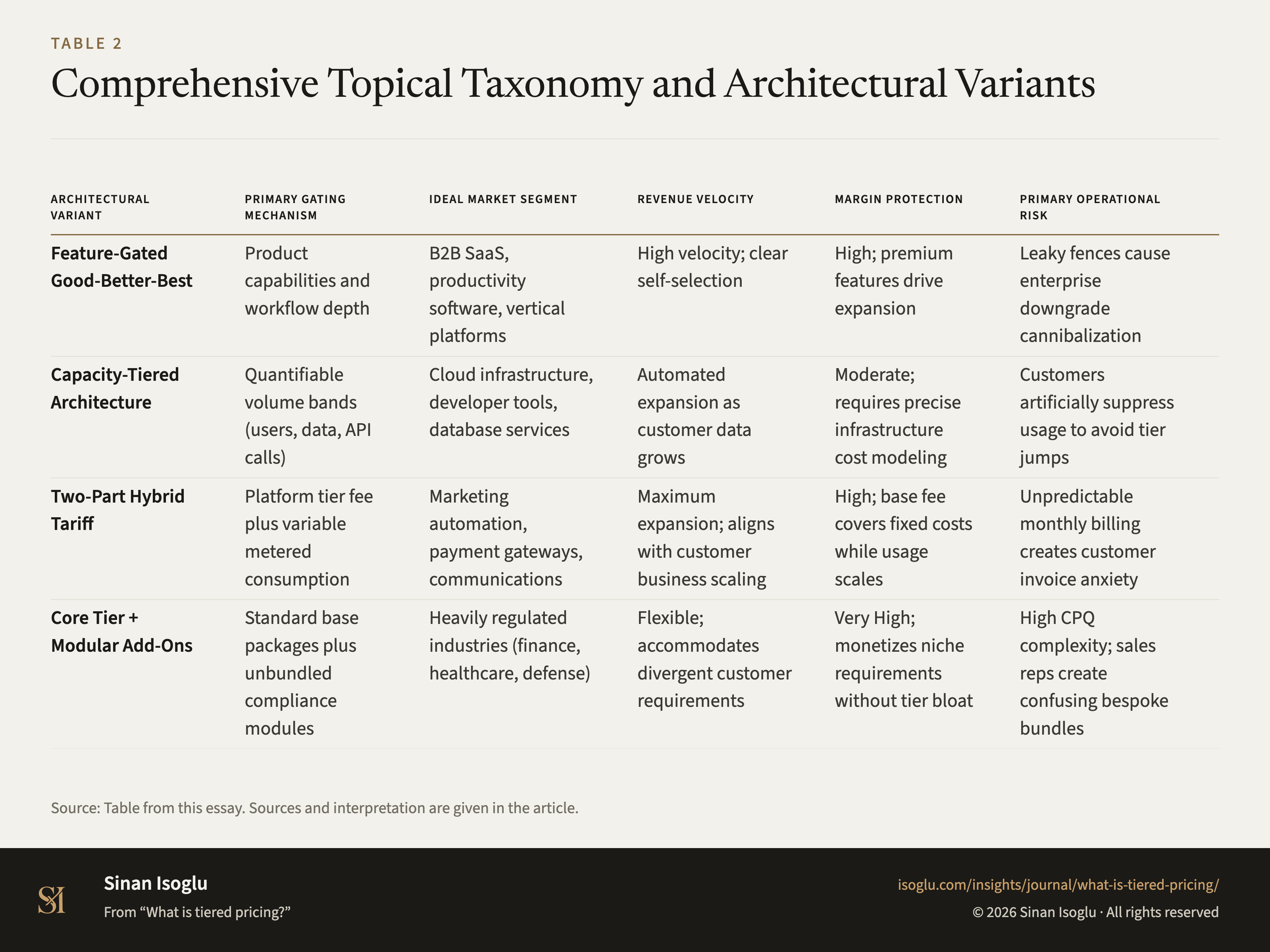
Table 1What are the four tiering architectures?
| Architectural Variant | Primary Gating Mechanism | Ideal Market Segment | Revenue Velocity | Margin Protection | Primary Operational Risk |
|---|---|---|---|---|---|
| Feature-Gated Good-Better-Best | Product capabilities and workflow depth | B2B SaaS, productivity software, vertical platforms | High velocity; clear self-selection | High; premium features drive expansion | Leaky fences cause enterprise downgrade cannibalization |
| Capacity-Tiered Architecture | Quantifiable volume bands (users, data, API calls) | Cloud infrastructure, developer tools, database services | Automated expansion as customer data grows | Moderate; requires precise infrastructure cost modeling | Customers artificially suppress usage to avoid tier jumps |
| Two-Part Hybrid Tariff | Platform tier fee plus variable metered consumption | Marketing automation, payment gateways, communications | Maximum expansion; aligns with customer business scaling | High; base fee covers fixed costs while usage scales | Unpredictable monthly billing creates customer invoice anxiety |
| Core Tier + Modular Add-Ons | Standard base packages plus unbundled compliance modules | Heavily regulated industries (finance, healthcare, defense) | Flexible; accommodates divergent customer requirements | Very High; monetizes niche requirements without tier bloat | High CPQ complexity; sales reps create confusing bespoke bundles |
Swipe or scroll horizontally if the table is wider than your screen.
Source: Table from this essay. Sources and interpretation are given in the article.
PNG4:3, 1600 × 1200, with the title, the source line and the attribution set in the image isoglu-2026-what-is-tiered-pricing-fig02.png
From the essay
Pricing & revenue architecture
What is tiered pricing?
Tiered pricing bundles features into distinct packages with clear boundaries. Design fences that prevent downgrades and protect willingness to pay.
Read the essayThis exhibit belongs to an essay: the numbers live here, the argument lives there.
Cite or embed
Contact
Bring the question you're working on.
Research, a guest lecture, or a commercial question.