Table 1From “What is price fairness? A reference and process problem”
What determines perceived price fairness?
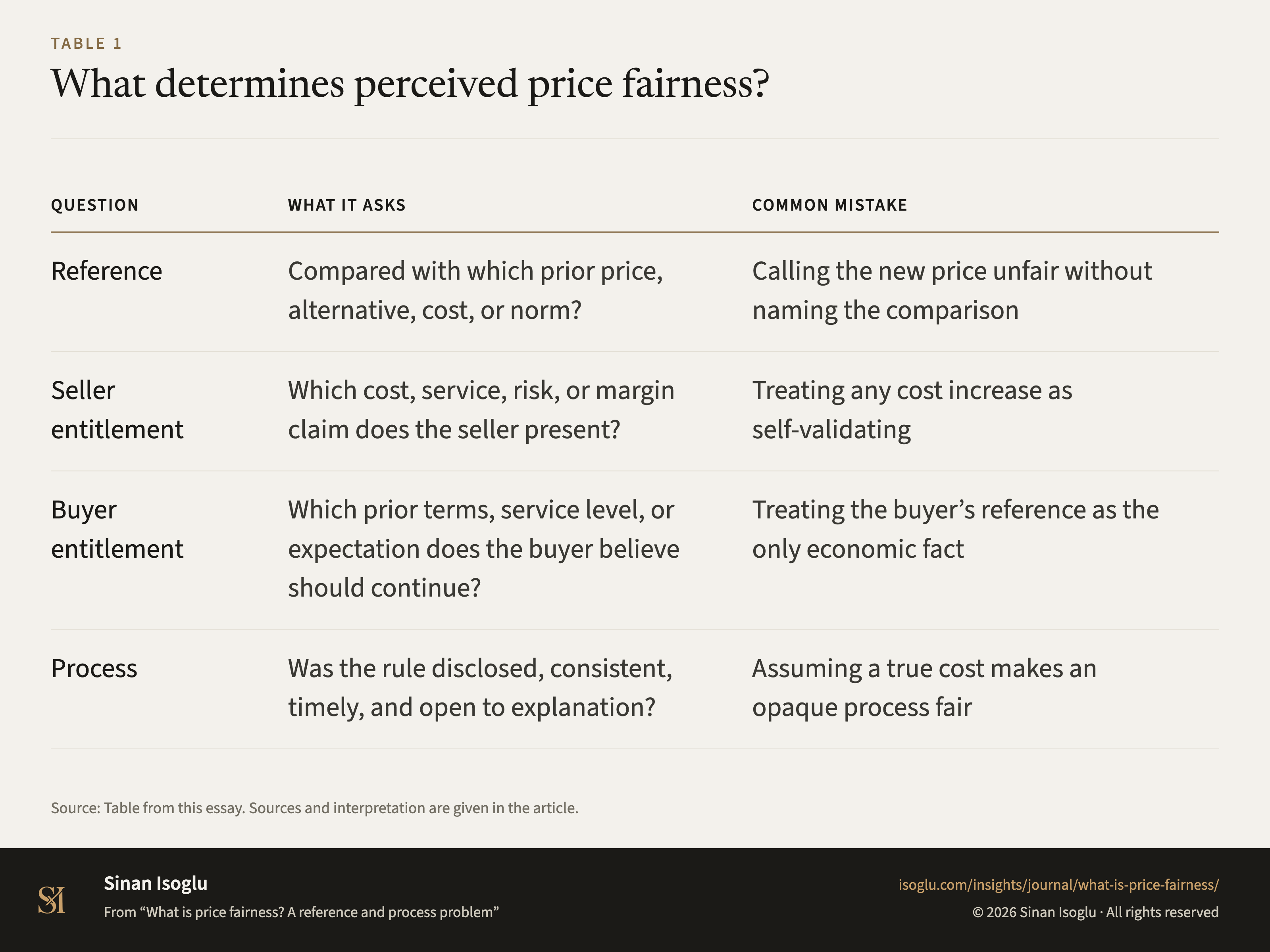
Table 1What determines perceived price fairness?
| Question | What it asks | Common mistake |
|---|---|---|
| Reference | Compared with which prior price, alternative, cost, or norm? | Calling the new price unfair without naming the comparison |
| Seller entitlement | Which cost, service, risk, or margin claim does the seller present? | Treating any cost increase as self-validating |
| Buyer entitlement | Which prior terms, service level, or expectation does the buyer believe should continue? | Treating the buyer's reference as the only economic fact |
| Process | Was the rule disclosed, consistent, timely, and open to explanation? | Assuming a true cost makes an opaque process fair |
Swipe or scroll horizontally if the table is wider than your screen.
Source: Table from this essay. Sources and interpretation are given in the article.
From the essay
Pricing & revenue architecture
What is price fairness? A reference and process problem
Price fairness depends on reference, cost or value explanation, process, and treatment. It is a perception object, not a legal verdict.
Read the essayThis exhibit belongs to an essay: the numbers live here, the argument lives there.
Cite or embed
Related exhibits
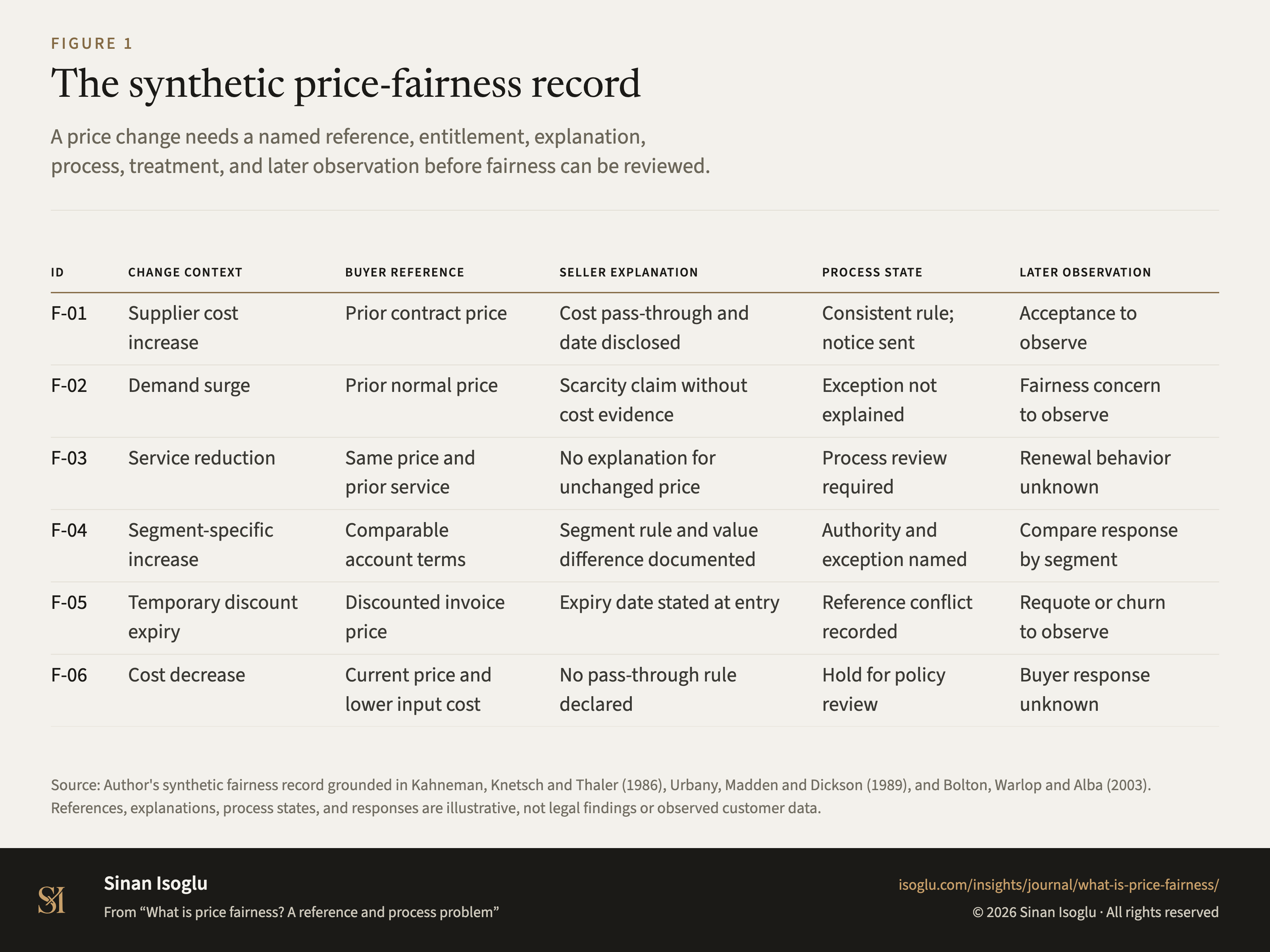
Figure 1Figure
The synthetic price-fairness record
What is price fairness? A reference and process problem
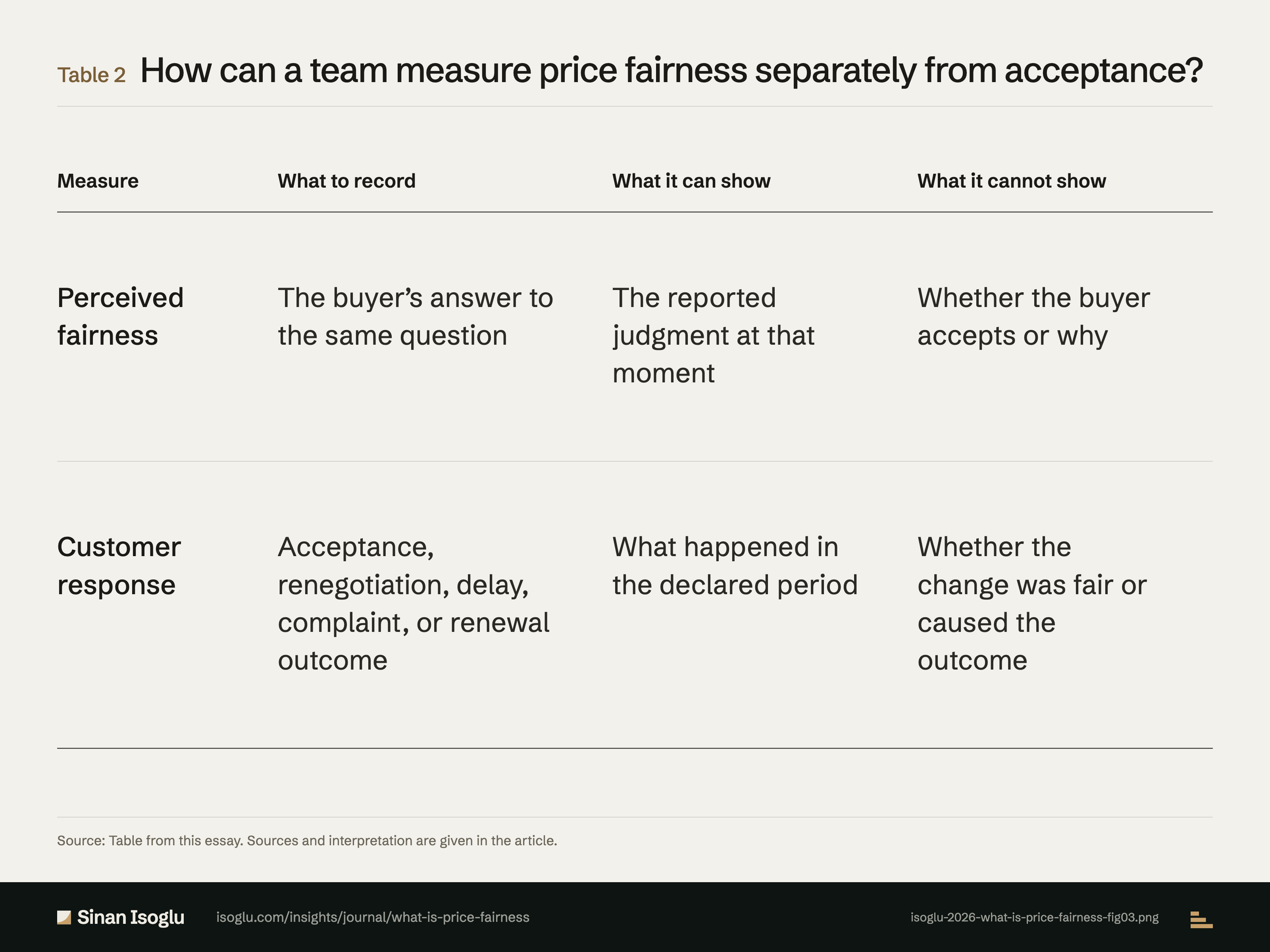
Table 2Table
How can a team measure price fairness separately from acceptance?
What is price fairness? A reference and process problem
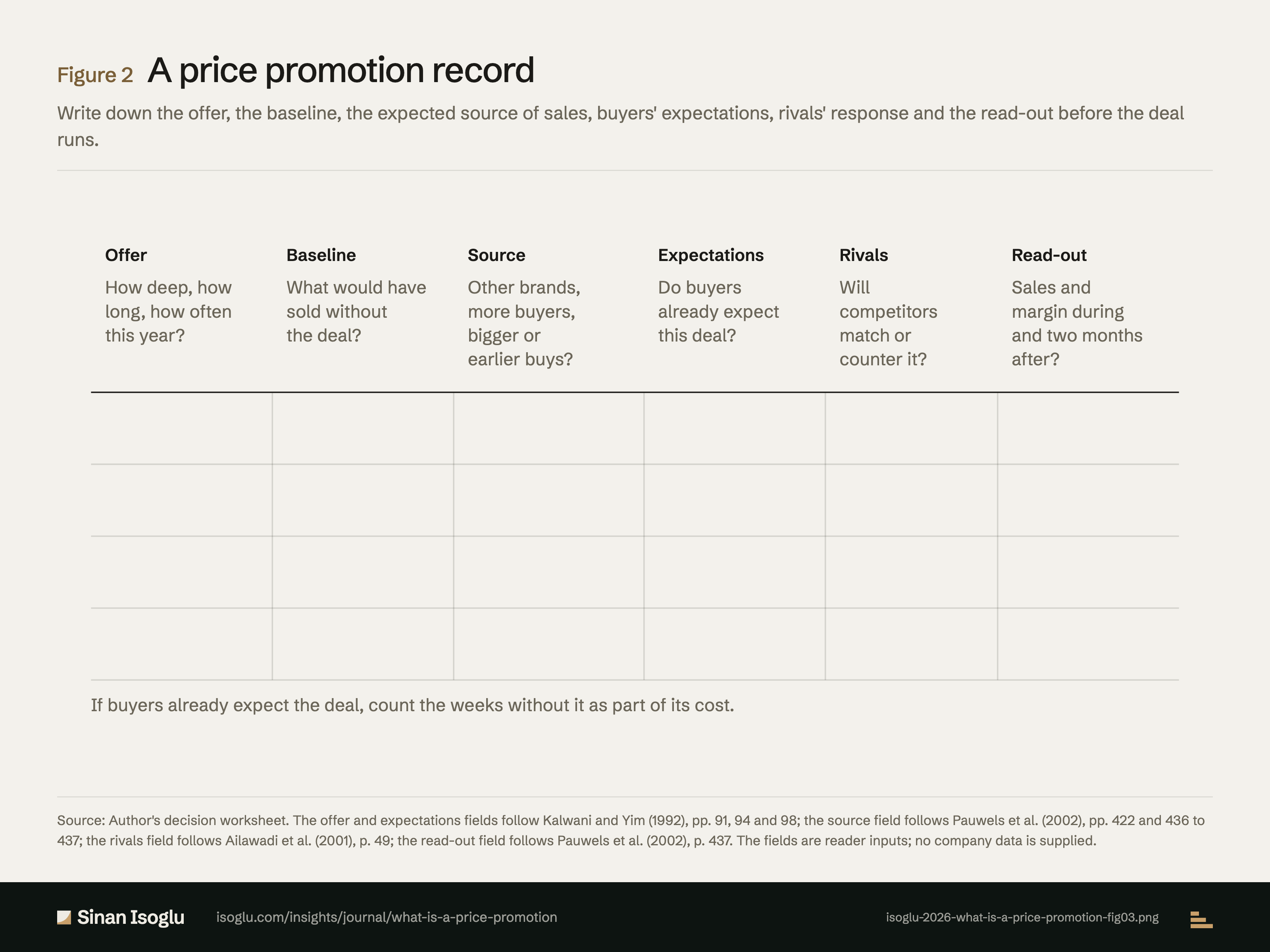
Figure 2Figure
A price promotion record
What is a price promotion?
Contact
Bring the question you're working on.
Research, a guest lecture, or a commercial question.