Figure 1From “What is growth accounting? Separate new, retained, expanded, and lost revenue”
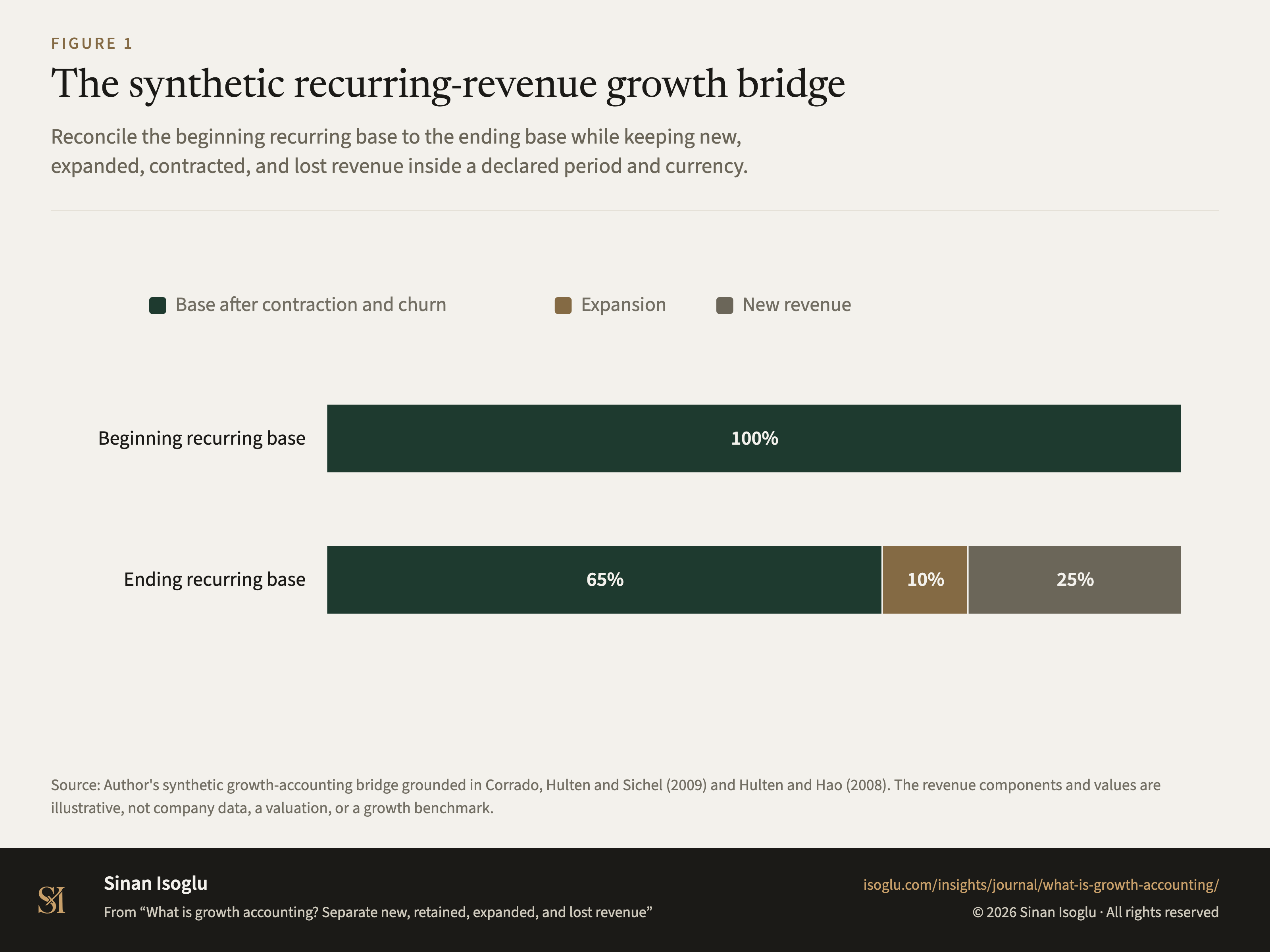
The synthetic recurring-revenue growth bridge
Reconcile the beginning recurring base to the ending base while keeping new, expanded, contracted, and lost revenue inside a declared period and currency.
Figure 1The synthetic recurring-revenue growth bridge
Source: Author's synthetic growth-accounting bridge grounded in Corrado, Hulten and Sichel (2009) and Hulten and Hao (2008). The revenue components and values are illustrative, not company data, a valuation, or a growth benchmark.
Source and evidence
Each line names a claim related to this exhibit, its source, and how it was checked.
- B G04-OWN-C1 Growth accounting reconciles a beginning recurring-revenue base to an ending base through new, expansion, contraction, and churnAuthor framework grounded in CHS09-C1 and CHS09-C2
- B G04-OWN-C2 New, retained, expanded, contracted, and lost revenue are separate components under a declared period, currency, unit, and revenue boundaryAuthor taxonomy
- B G04-OWN-C3 Ending recurring revenue equals beginning revenue plus new and expansion minus contraction and churn under the declared boundaryAuthor identity
Grades: A, verified against the printed page of the primary source · B, primary source, text layer only · C, authoritative secondary · D, reported.
From the essay
Growth that compounds
What is growth accounting? Separate new, retained, expanded, and lost revenue
Growth accounting reconciles recurring revenue through new, expanded, contracted, and lost components. Keep revenue and customer counts separate.
Read the essayThis exhibit belongs to an essay: the numbers live here, the argument lives there.
Cite or embed
Related exhibits
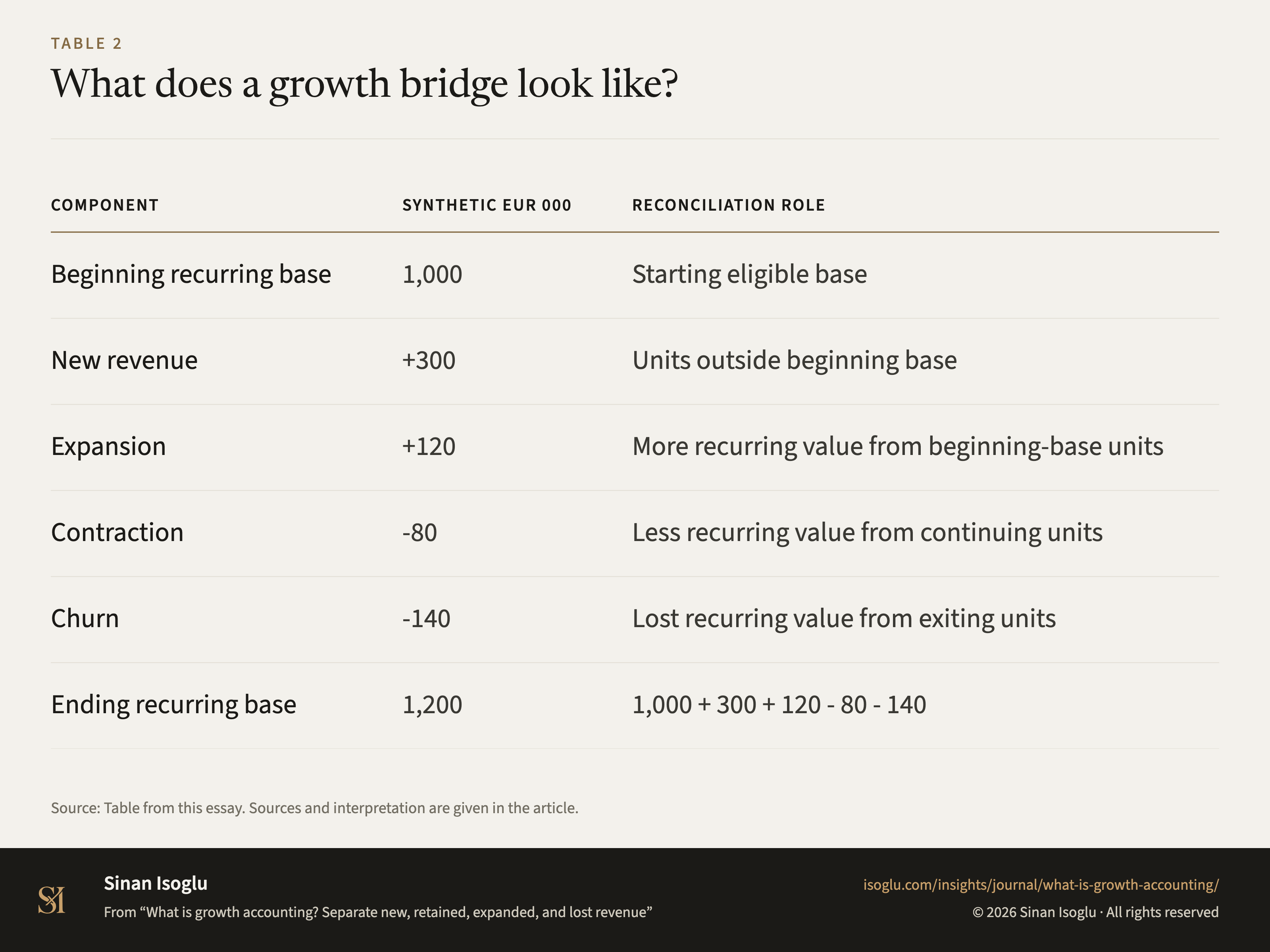
Table 2Table
What does a growth bridge look like?
What is growth accounting? Separate new, retained, expanded, and lost revenue
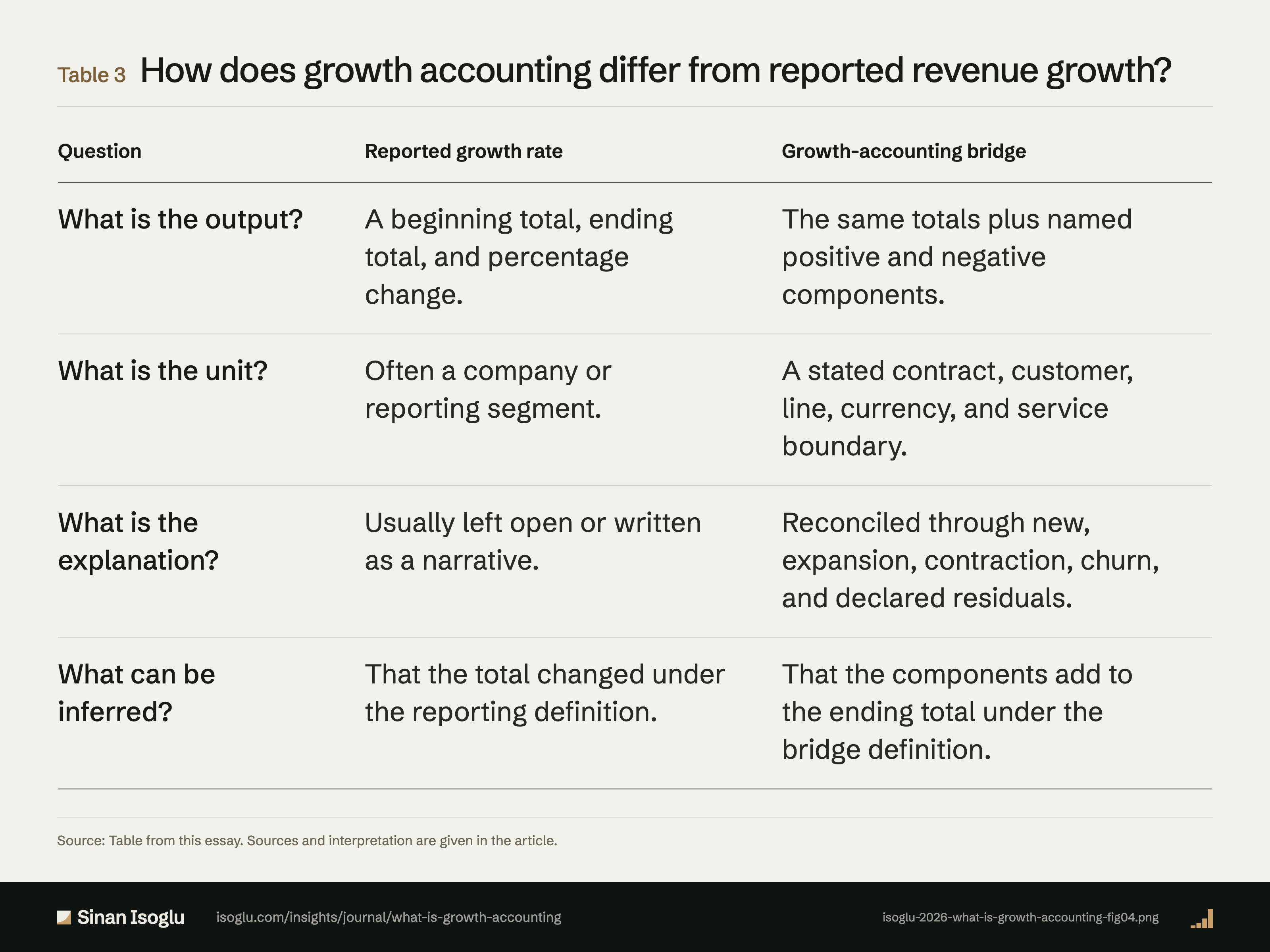
Table 3Table
How does growth accounting differ from reported revenue growth?
What is growth accounting? Separate new, retained, expanded, and lost revenue
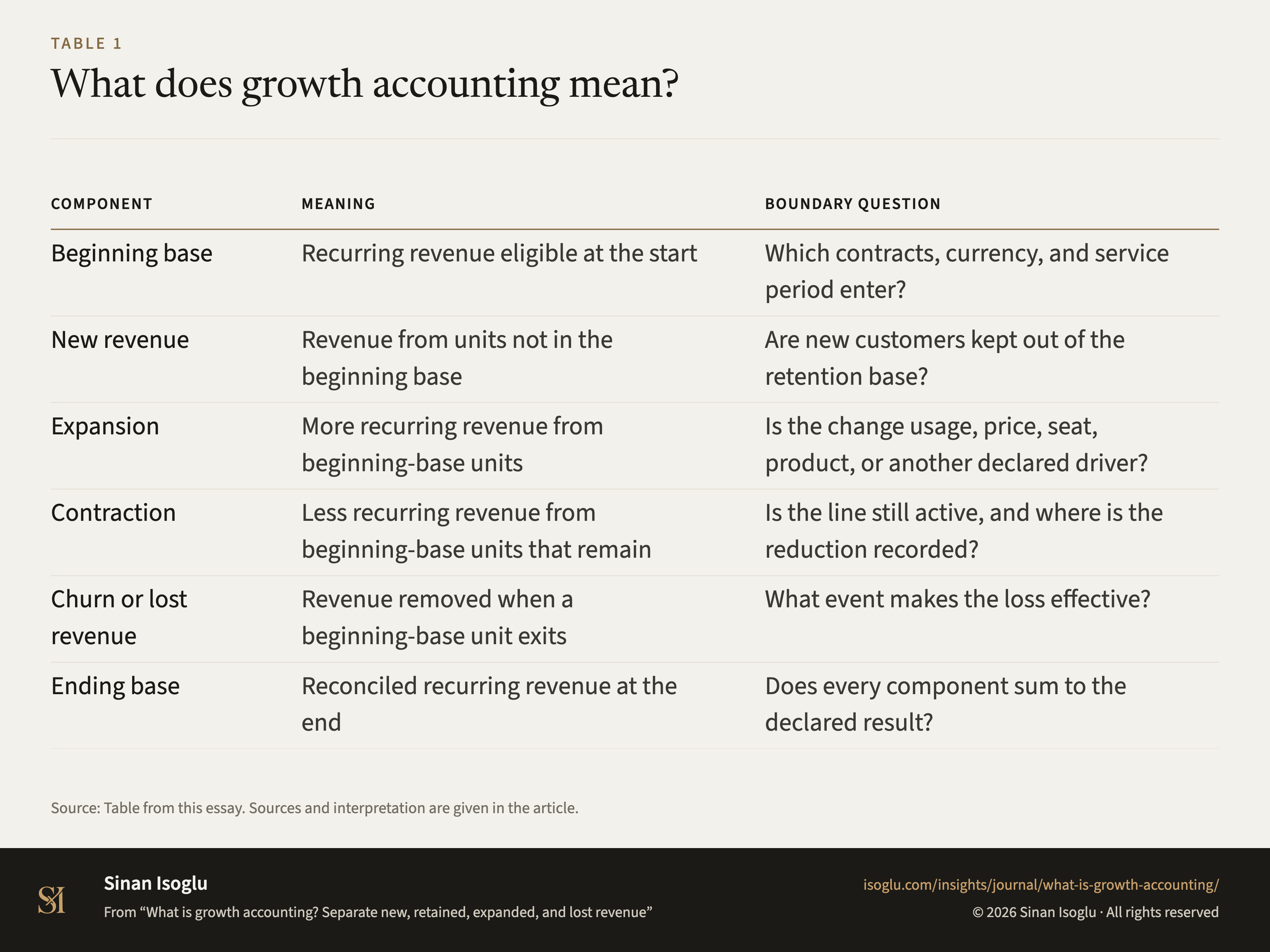
Table 1Table
What does growth accounting mean?
What is growth accounting? Separate new, retained, expanded, and lost revenue
Contact
Bring the question you're working on.
Research, a guest lecture, or a commercial question.