Table 1From “What is growth accounting? Separate new, retained, expanded, and lost revenue”
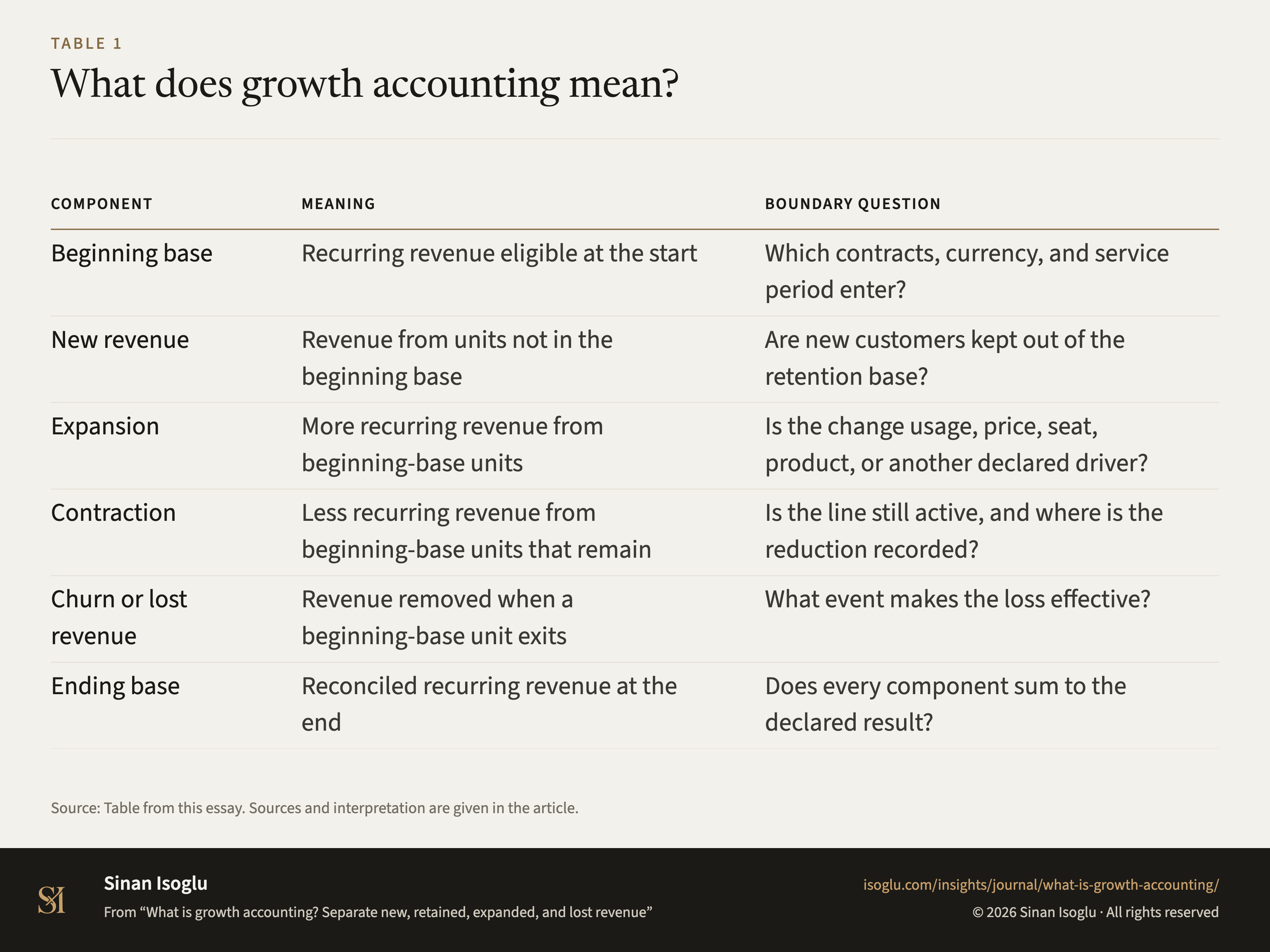
What does growth accounting mean?
Table 1What does growth accounting mean?
| Component | Meaning | Boundary question |
|---|---|---|
| Beginning base | Recurring revenue eligible at the start | Which contracts, currency, and service period enter? |
| New revenue | Revenue from units not in the beginning base | Are new customers kept out of the retention base? |
| Expansion | More recurring revenue from beginning-base units | Is the change usage, price, seat, product, or another declared driver? |
| Contraction | Less recurring revenue from beginning-base units that remain | Is the line still active, and where is the reduction recorded? |
| Churn or lost revenue | Revenue removed when a beginning-base unit exits | What event makes the loss effective? |
| Ending base | Reconciled recurring revenue at the end | Does every component sum to the declared result? |
Swipe or scroll horizontally if the table is wider than your screen.
Source: Table from this essay. Sources and interpretation are given in the article.
From the essay
Growth that compounds
What is growth accounting? Separate new, retained, expanded, and lost revenue
Growth accounting reconciles recurring revenue through new, expanded, contracted, and lost components. Keep revenue and customer counts separate.
Read the essayThis exhibit belongs to an essay: the numbers live here, the argument lives there.
Cite or embed
Related exhibits
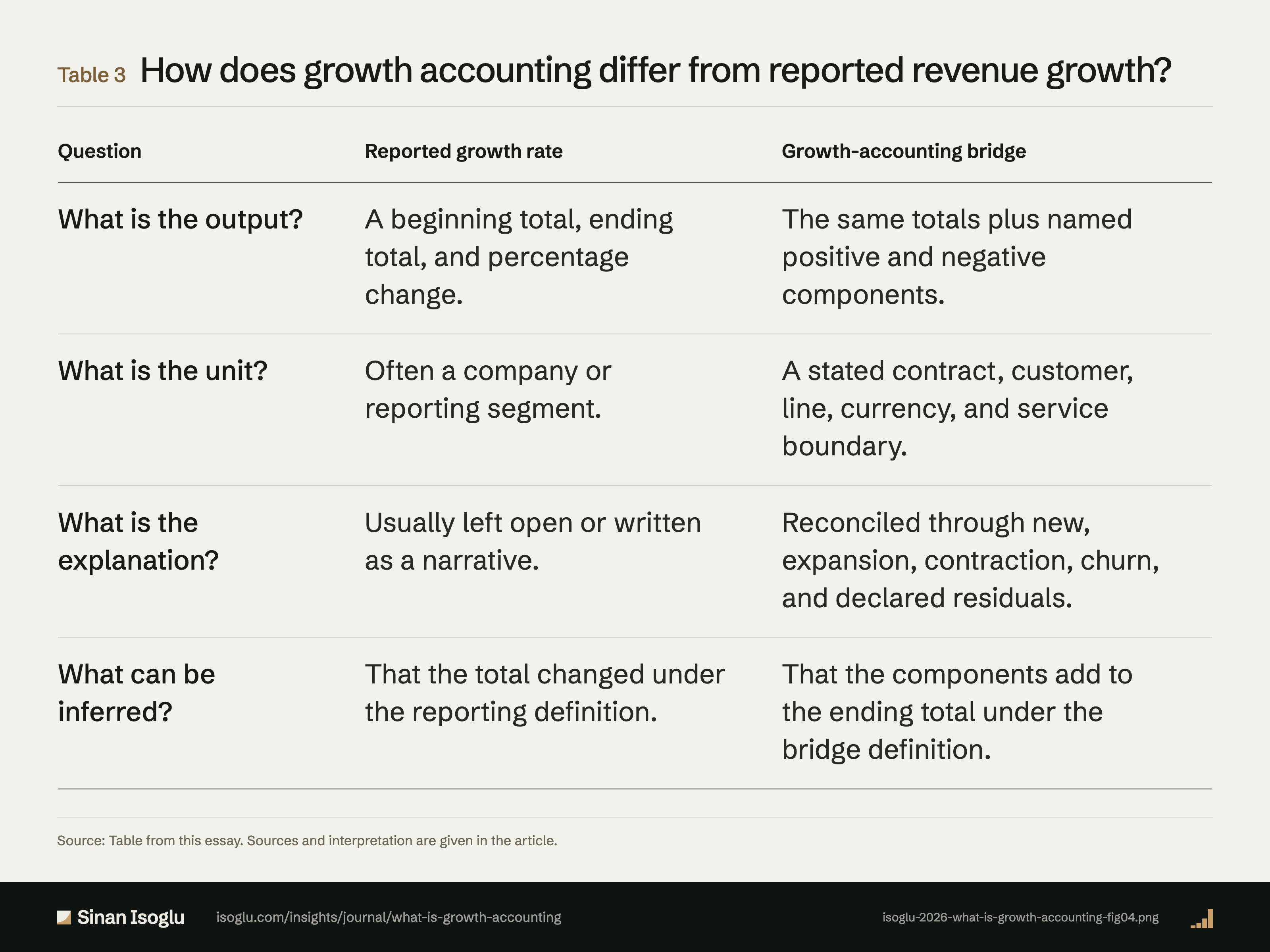
Table 3Table
How does growth accounting differ from reported revenue growth?
What is growth accounting? Separate new, retained, expanded, and lost revenue
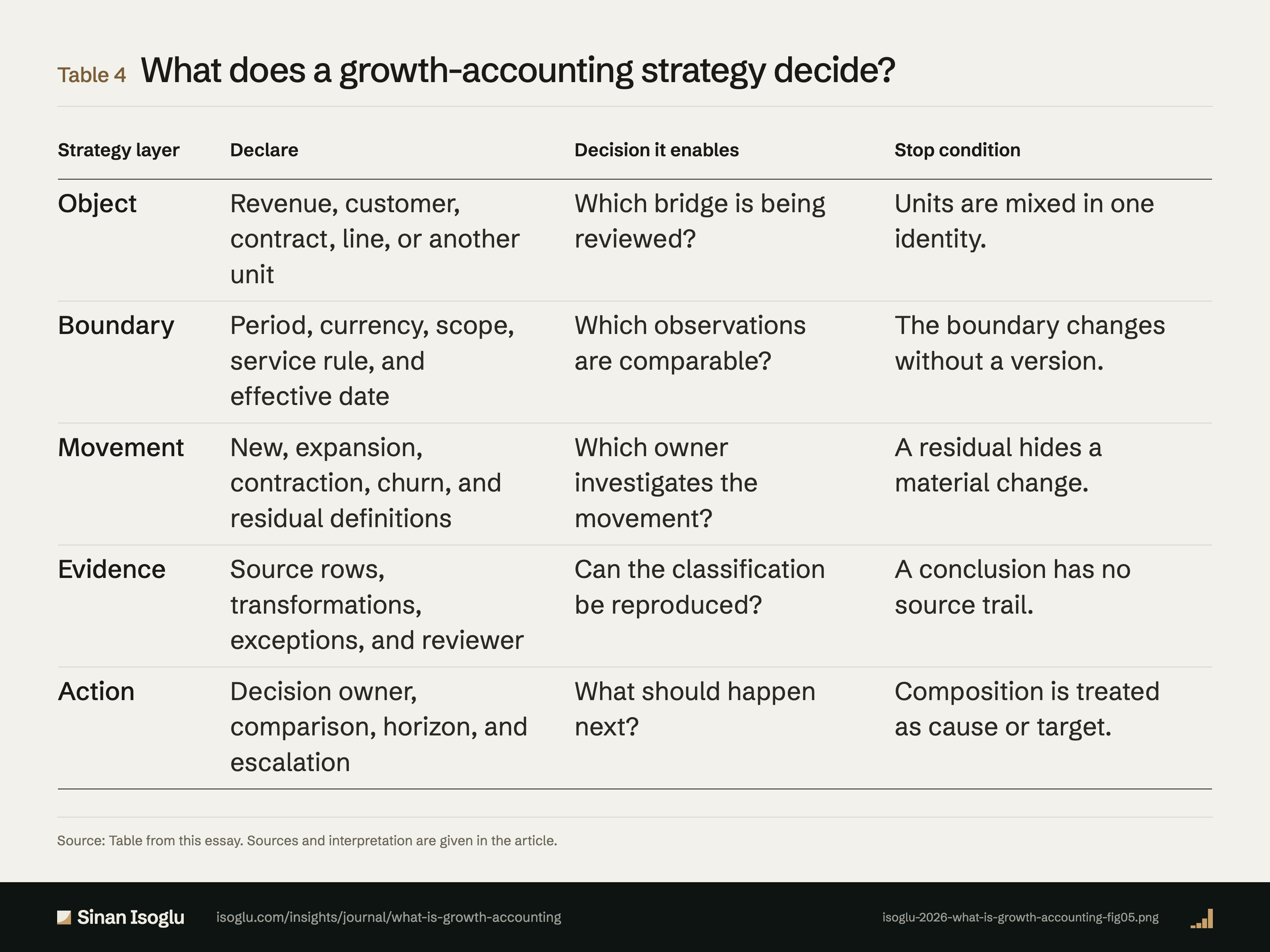
Table 4Table
What does a growth-accounting strategy decide?
What is growth accounting? Separate new, retained, expanded, and lost revenue
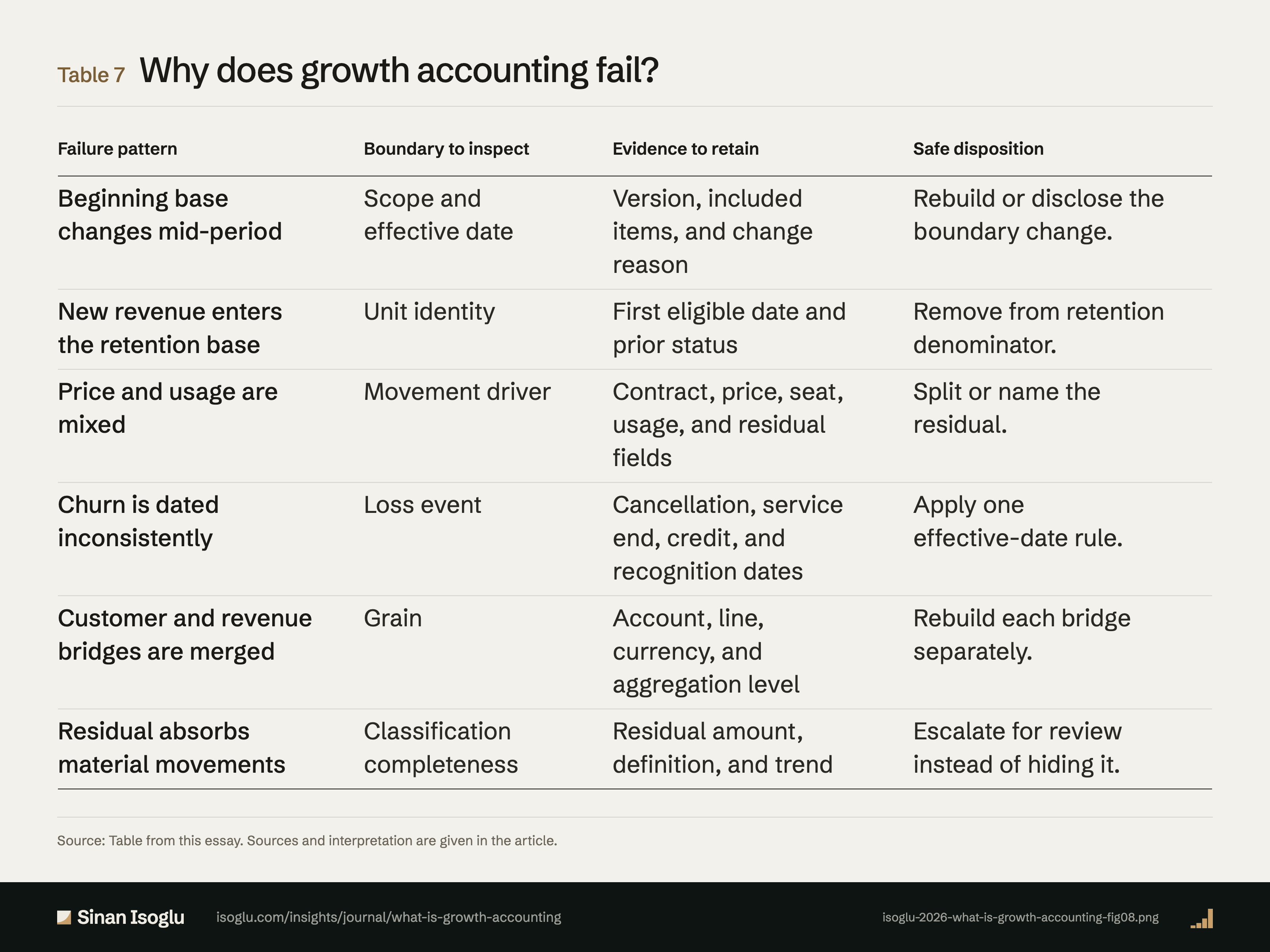
Table 7Table
Why does growth accounting fail?
What is growth accounting? Separate new, retained, expanded, and lost revenue
Contact
Bring the question you're working on.
Research, a guest lecture, or a commercial question.