Table 1From “Van Westendorp is a survey boundary, not a price”
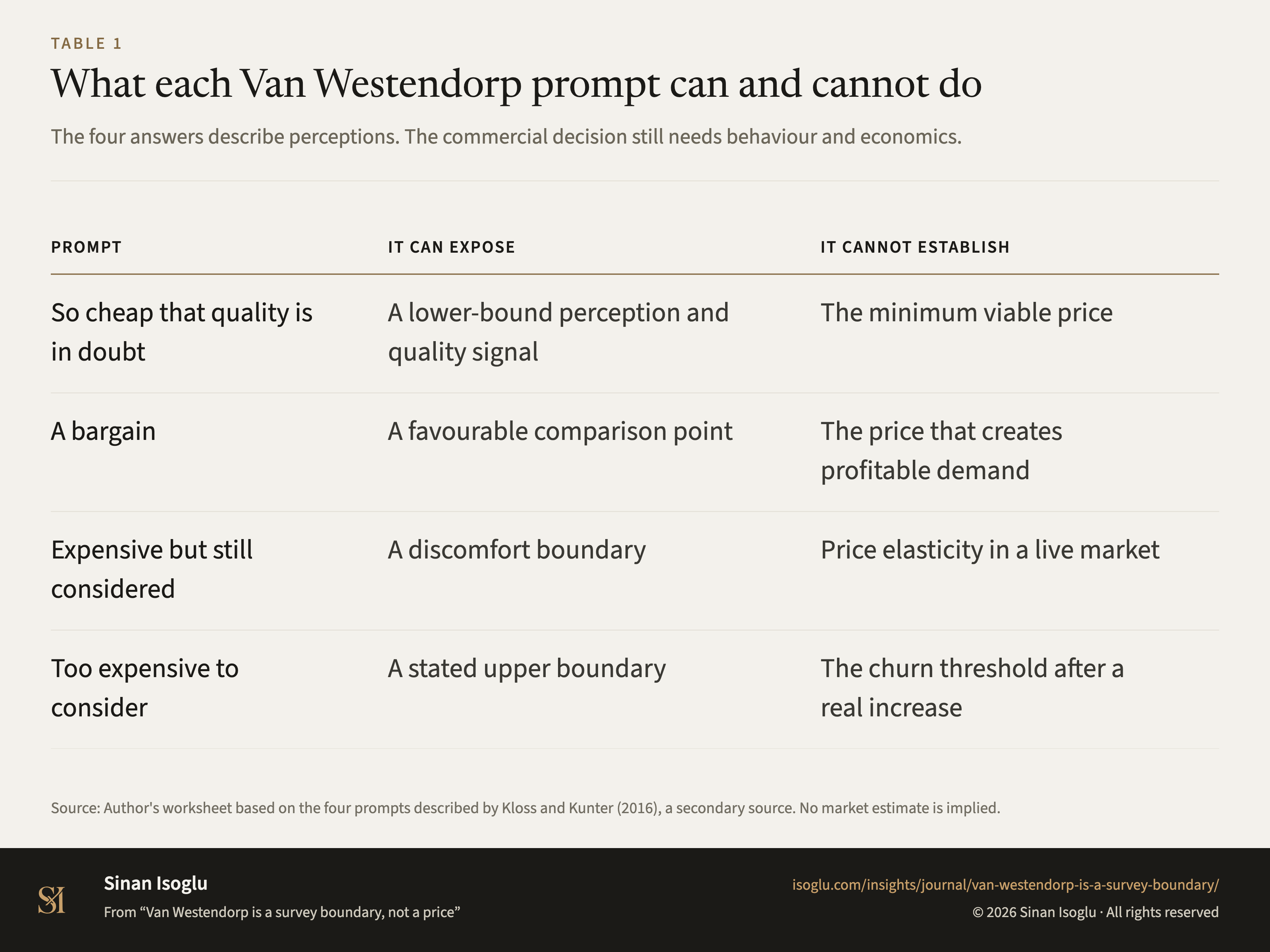
What each Van Westendorp prompt can and cannot do
The four answers describe perceptions. The commercial decision still needs behaviour and economics.
Table 1What each Van Westendorp prompt can and cannot do
| Prompt | It can expose | It cannot establish |
|---|---|---|
| So cheap that quality is in doubt | A lower-bound perception and quality signal | The minimum viable price |
| A bargain | A favourable comparison point | The price that creates profitable demand |
| Expensive but still considered | A discomfort boundary | Price elasticity in a live market |
| Too expensive to consider | A stated upper boundary | The churn threshold after a real increase |
Swipe or scroll horizontally if the table is wider than your screen.
Source: Author's worksheet based on the four prompts described by Kloss and Kunter (2016), a secondary source. No market estimate is implied.
From the essay
Pricing & revenue architecture
Van Westendorp is a survey boundary, not a price
Van Westendorp can map how respondents describe price discomfort. It cannot replace observed demand, a reference-price record or a decision about value.
Read the essayThis exhibit belongs to an essay: the numbers live here, the argument lives there.
Cite or embed
Related exhibits
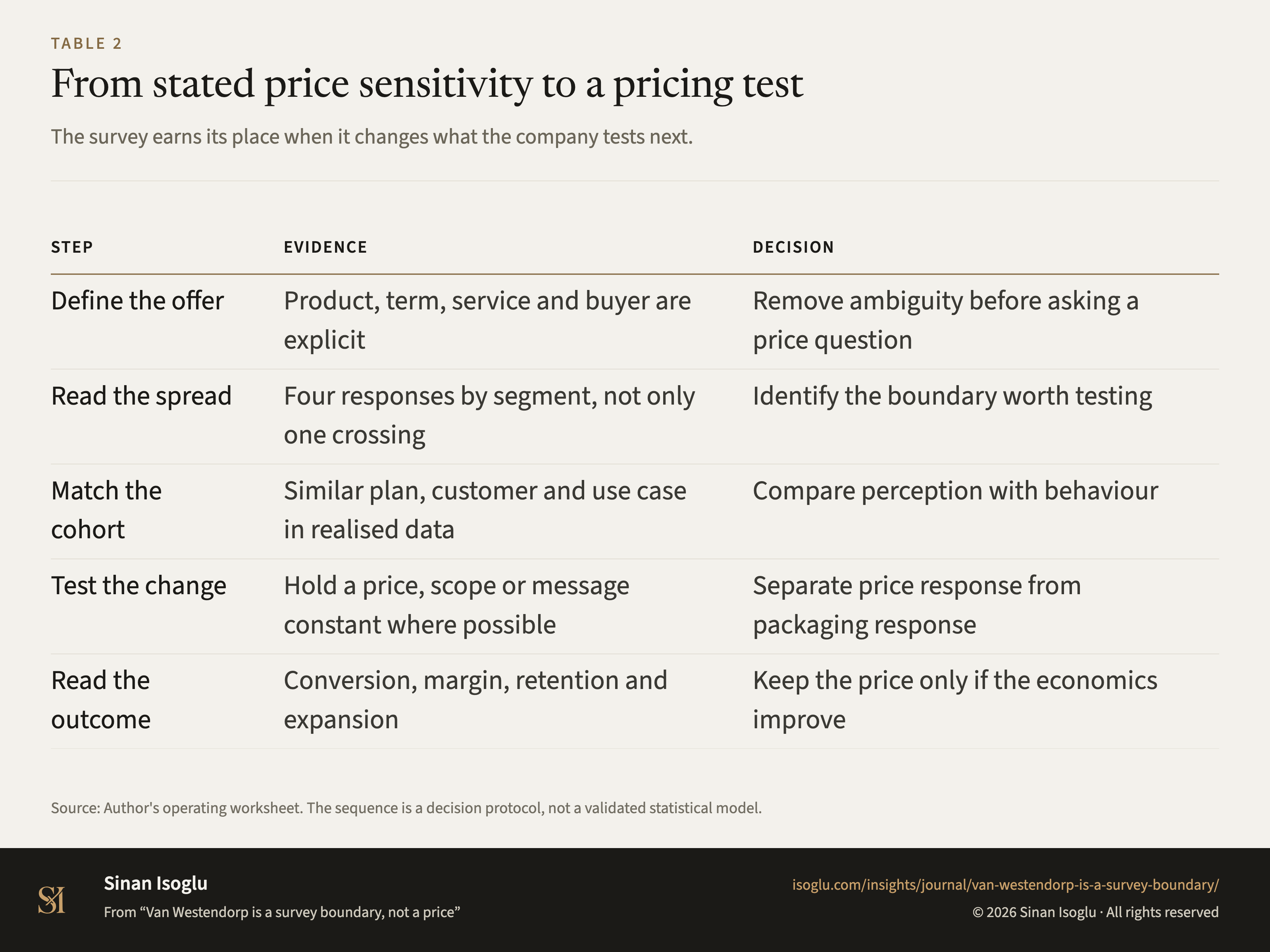
Table 2Table
From stated price sensitivity to a pricing test
Van Westendorp is a survey boundary, not a price
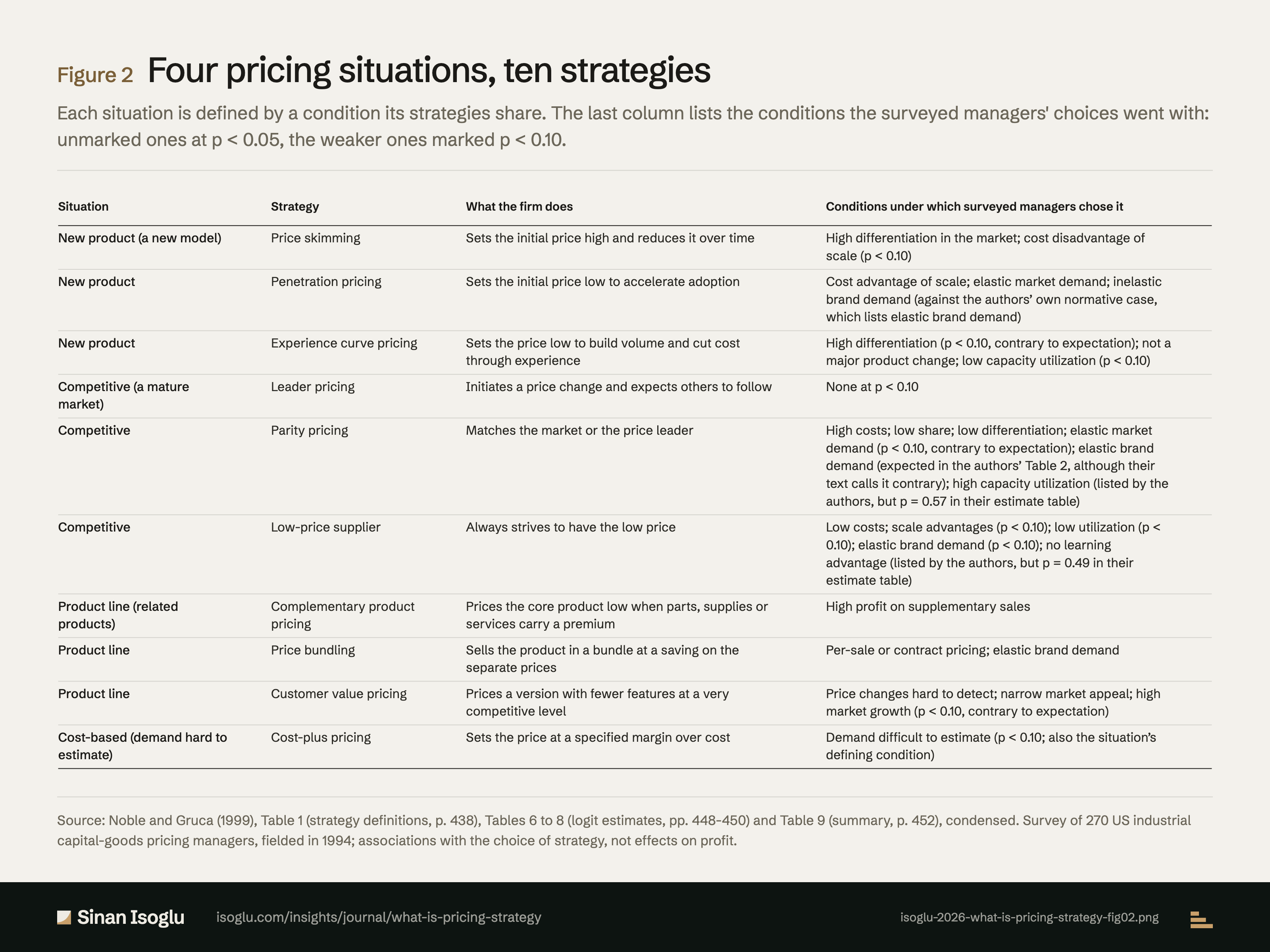
Figure 2Figure
Four pricing situations, ten strategies
What is pricing strategy?
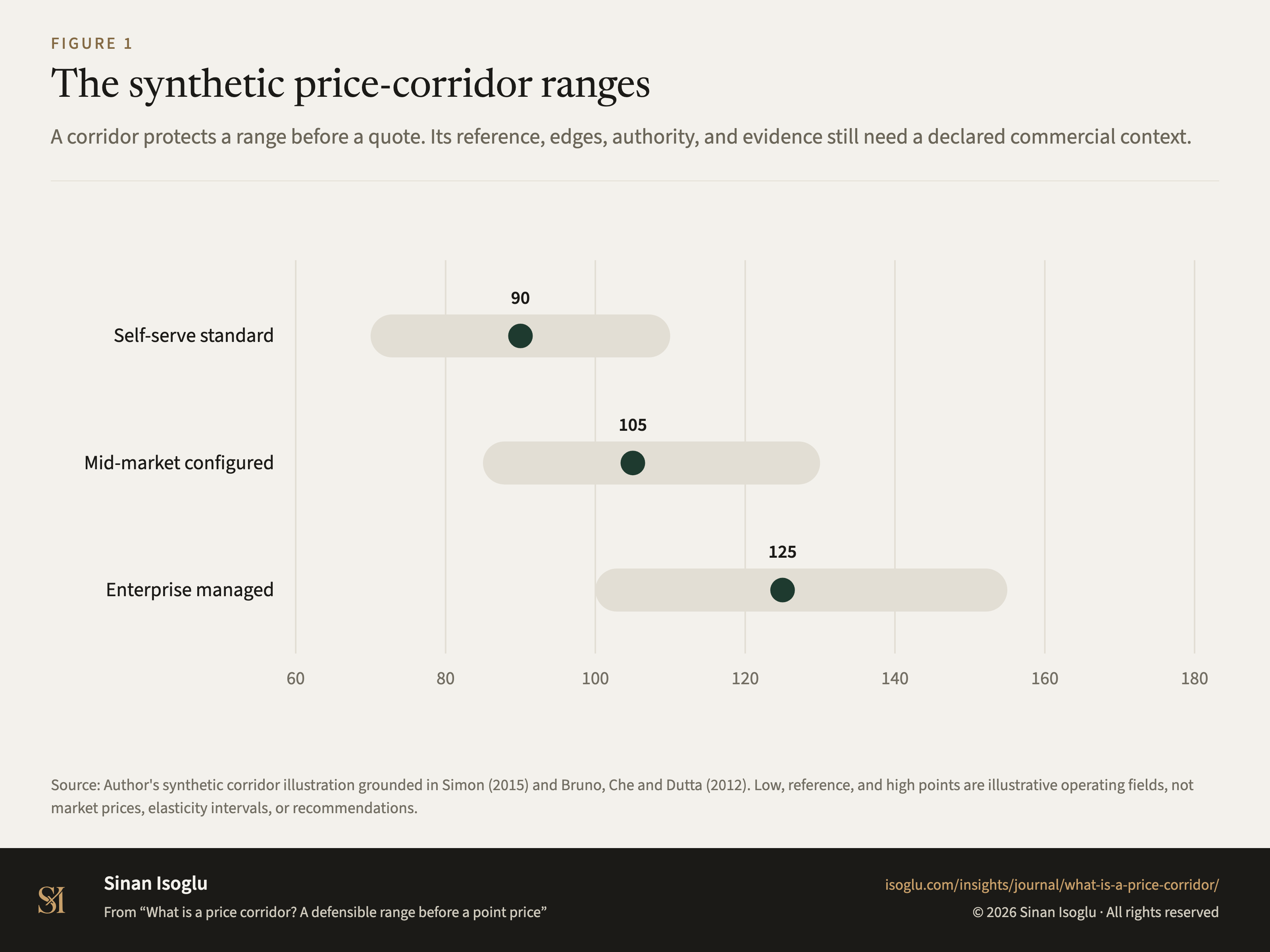
Figure 1Figure
The synthetic price-corridor ranges
What is a price corridor? A defensible range before a point price
Contact
Bring the question you're working on.
Research, a guest lecture, or a commercial question.