Table 1From “When a proven playbook meets a new market.”
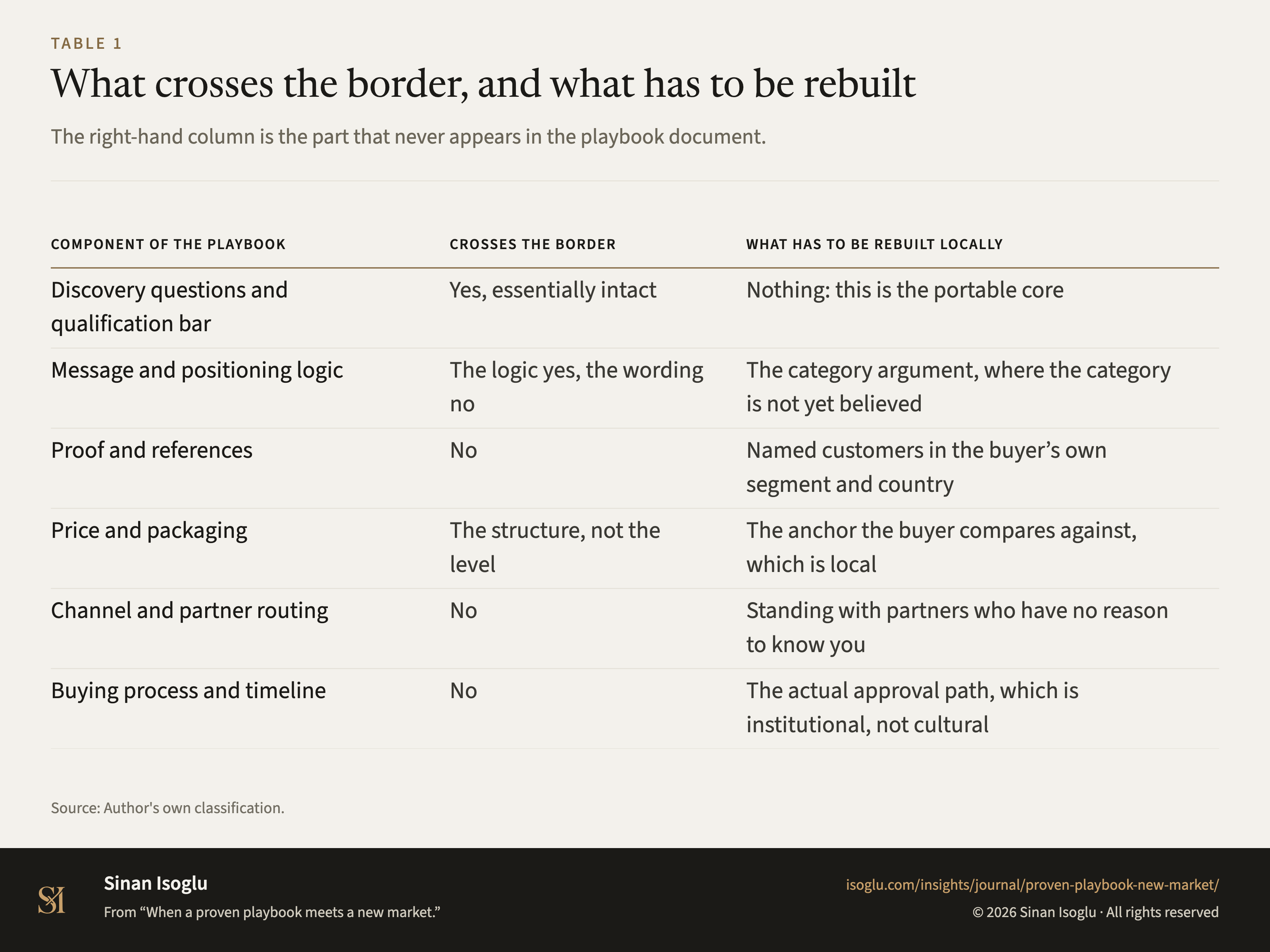
What crosses the border, and what has to be rebuilt
The right-hand column is the part that never appears in the playbook document.
Table 1What crosses the border, and what has to be rebuilt
| Component of the playbook | Crosses the border | What has to be rebuilt locally |
|---|---|---|
| Discovery questions and qualification bar | Yes, essentially intact | Nothing: this is the portable core |
| Message and positioning logic | The logic yes, the wording no | The category argument, where the category is not yet believed |
| Proof and references | No | Named customers in the buyer's own segment and country |
| Price and packaging | The structure, not the level | The anchor the buyer compares against, which is local |
| Channel and partner routing | No | Standing with partners who have no reason to know you |
| Buying process and timeline | No | The actual approval path, which is institutional, not cultural |
Swipe or scroll horizontally if the table is wider than your screen.
Source: Author's own classification.
From the essay
Go-to-market strategy
When a proven playbook meets a new market.
The motion that worked at home crosses the border intact. The market position it was quietly standing on does not, and that is the whole problem.
Read the essayThis exhibit belongs to an essay: the numbers live here, the argument lives there.
Cite or embed
Related exhibits
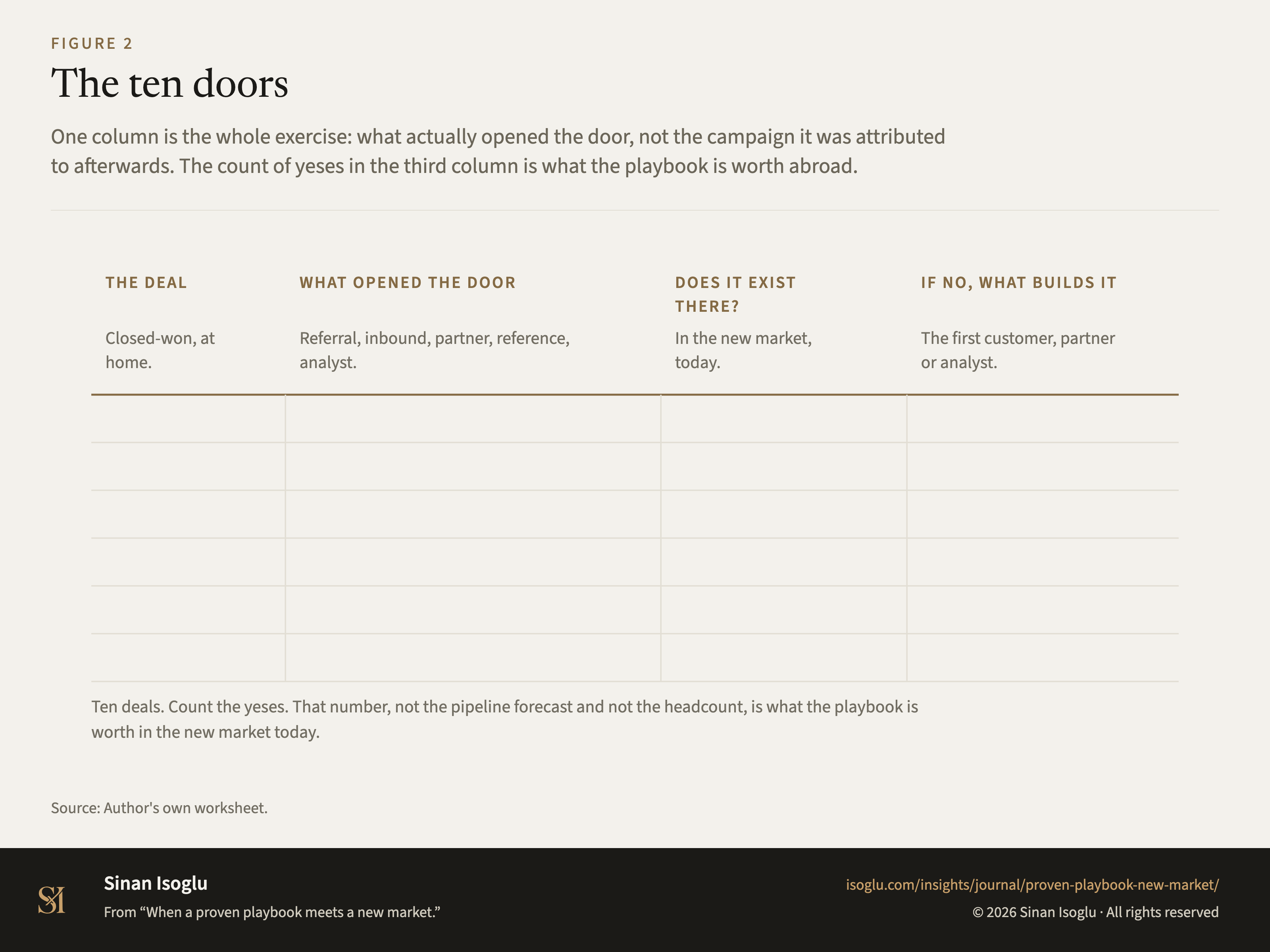
Figure 2Figure
The ten doors
When a proven playbook meets a new market.
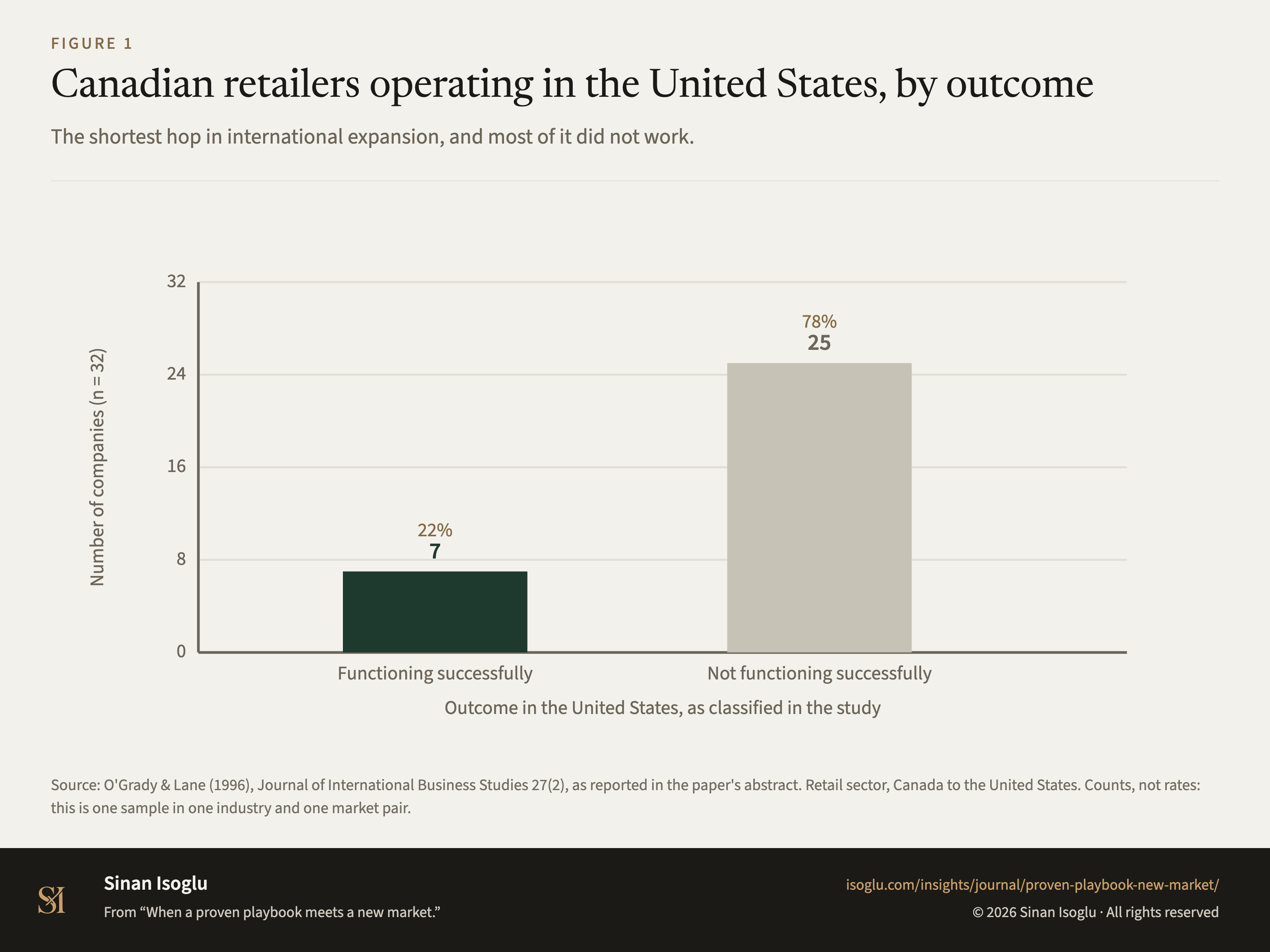
Figure 1Figure
Canadian retailers operating in the United States, by outcome
When a proven playbook meets a new market.
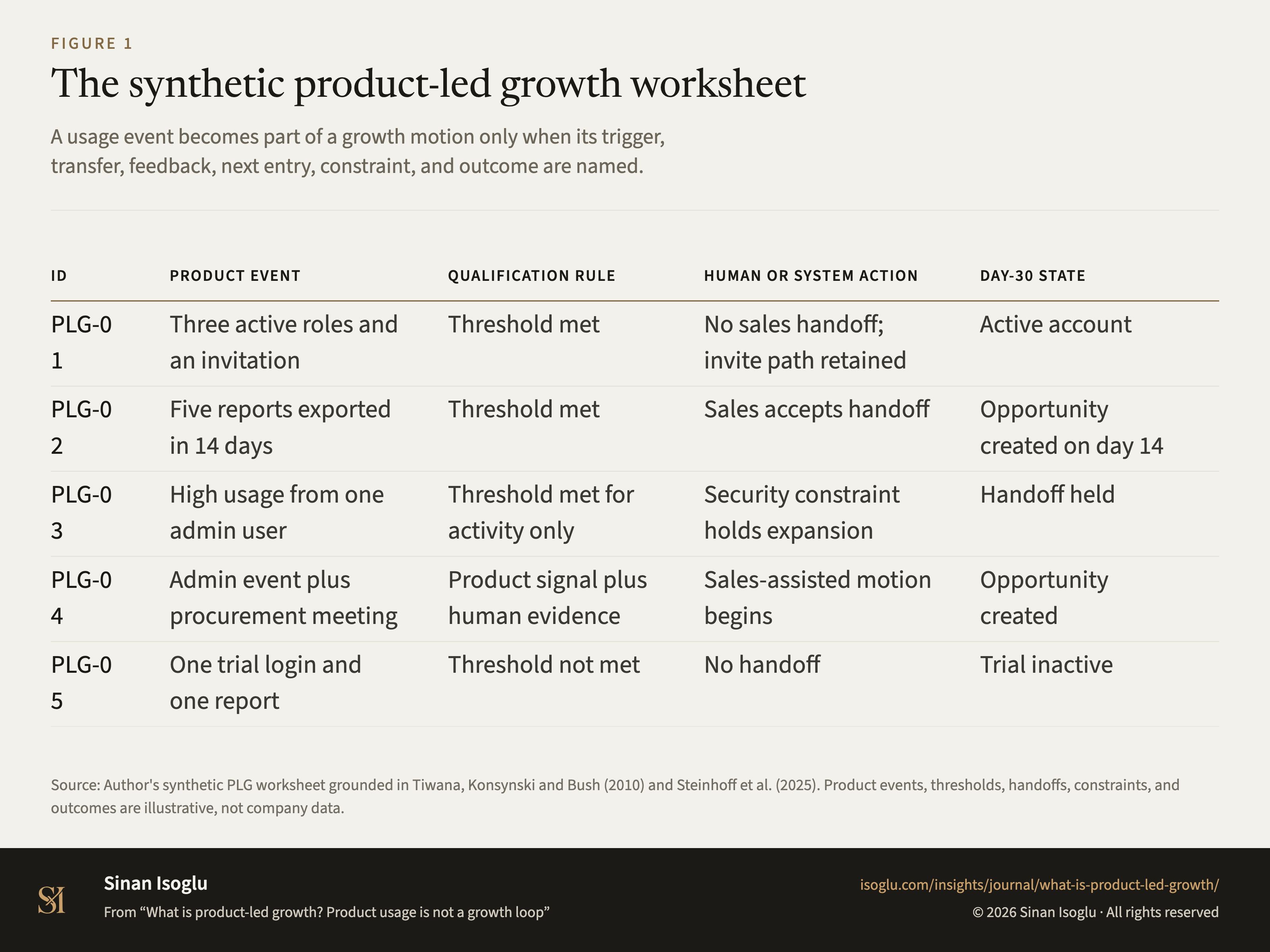
Figure 1Figure
The synthetic product-led growth worksheet
What is product-led growth? Product usage is not a growth loop
Contact
Bring the question you're working on.
Research, a guest lecture, or a commercial question.