Table 1From “One intangible-assets system, two useful views”
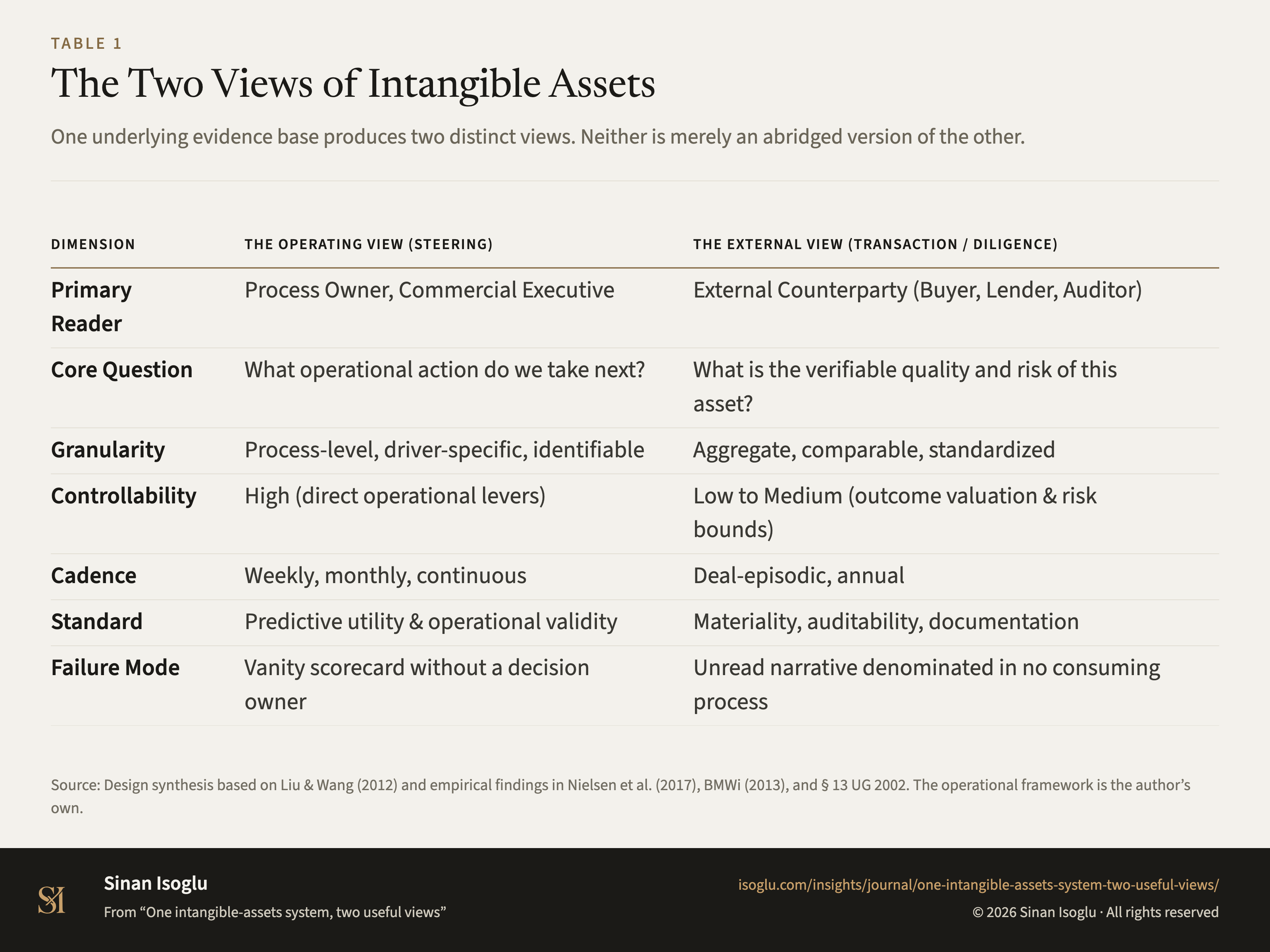
The Two Views of Intangible Assets
One underlying evidence base produces two distinct views. Neither is merely an abridged version of the other.
Table 1The Two Views of Intangible Assets
| Dimension | The Operating View (Steering) | The External View (Transaction / Diligence) |
|---|---|---|
| Primary Reader | Process Owner, Commercial Executive | External Counterparty (Buyer, Lender, Auditor) |
| Core Question | What operational action do we take next? | What is the verifiable quality and risk of this asset? |
| Granularity | Process-level, driver-specific, identifiable | Aggregate, comparable, standardized |
| Controllability | High (direct operational levers) | Low to Medium (outcome valuation & risk bounds) |
| Cadence | Weekly, monthly, continuous | Deal-episodic, annual |
| Standard | Predictive utility & operational validity | Materiality, auditability, documentation |
| Failure Mode | Vanity scorecard without a decision owner | Unread narrative denominated in no consuming process |
Swipe or scroll horizontally if the table is wider than your screen.
Source: Design synthesis based on Liu & Wang (2012) and empirical findings in Nielsen et al. (2017), BMWi (2013), and § 13 UG 2002. The operational framework is the author’s own.
From the essay
From the research bench
One intangible-assets system, two useful views
Voluntary reporting of intangible assets decays without a decision owner. Build one evidence system, then produce two views only when two readers differ.
Read the essayThis exhibit belongs to an essay: the numbers live here, the argument lives there.
Cite or embed
Related exhibits
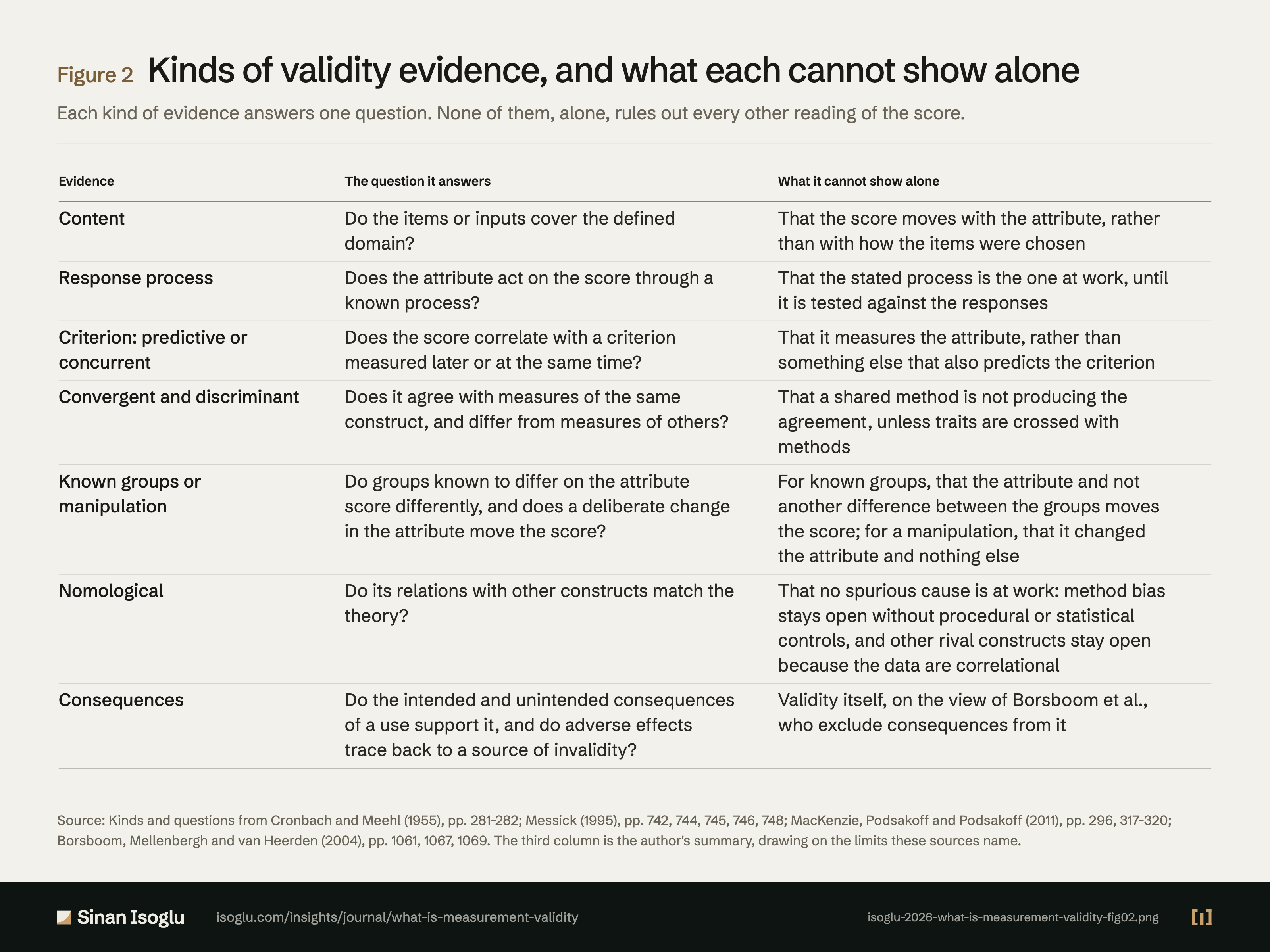
Figure 2Figure
Kinds of validity evidence, and what each cannot show alone
What is measurement validity?
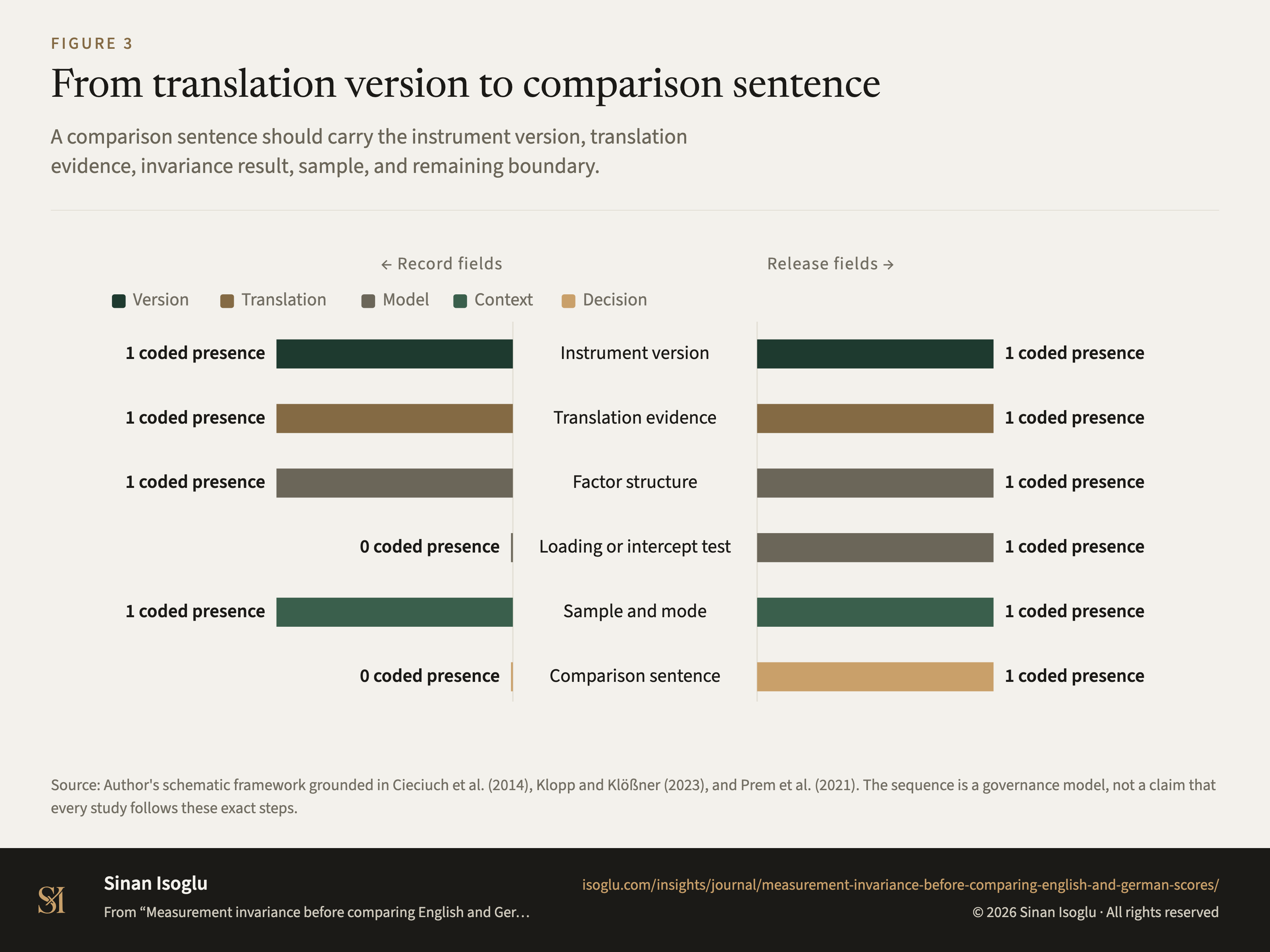
Figure 3Figure
From translation version to comparison sentence
Measurement invariance before comparing English and German scores
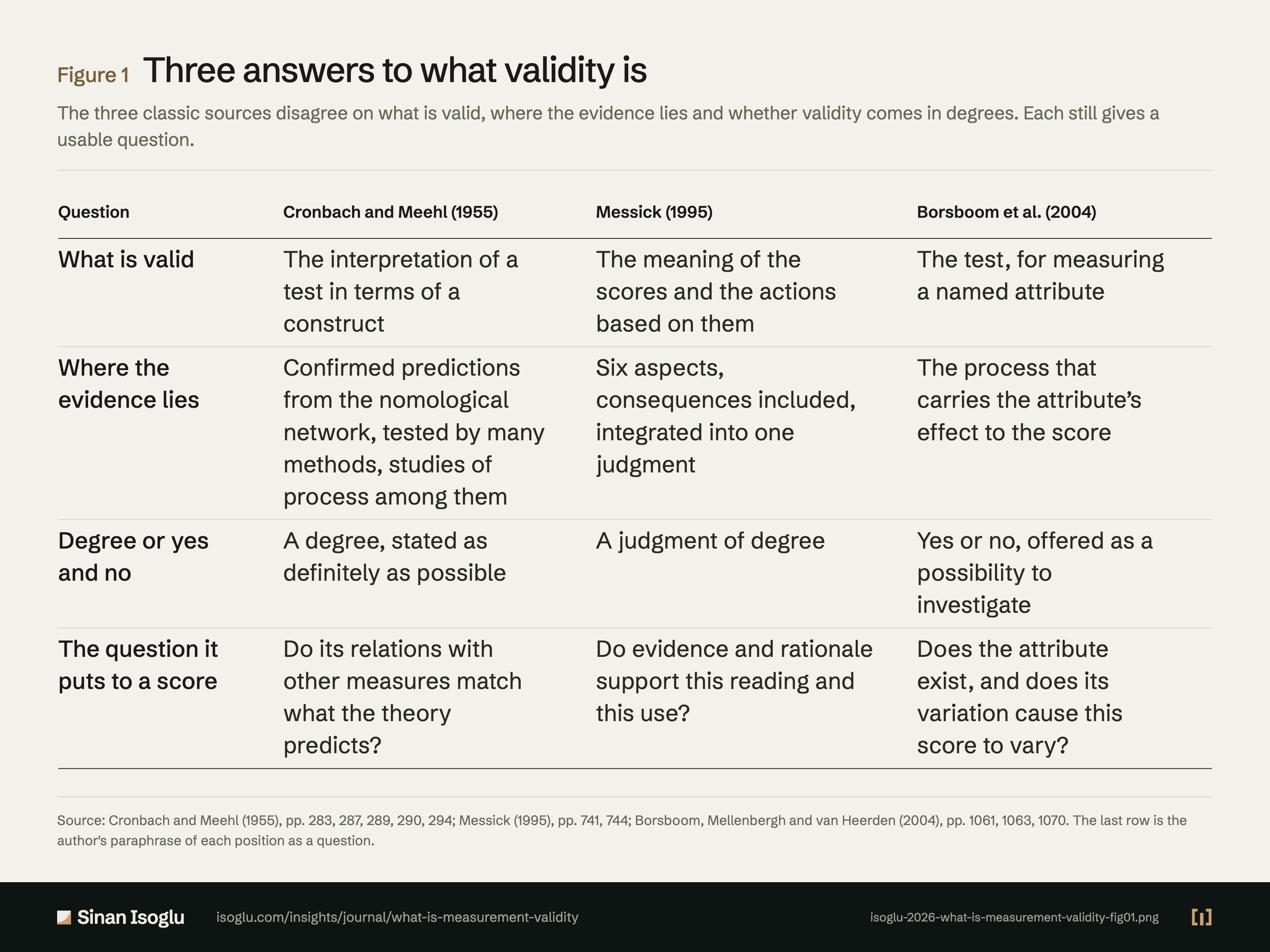
Figure 1Figure
Three answers to what validity is
What is measurement validity?
Contact
Bring the question you're working on.
Research, a guest lecture, or a commercial question.