Table 1From “New-product success factors are context-dependent”
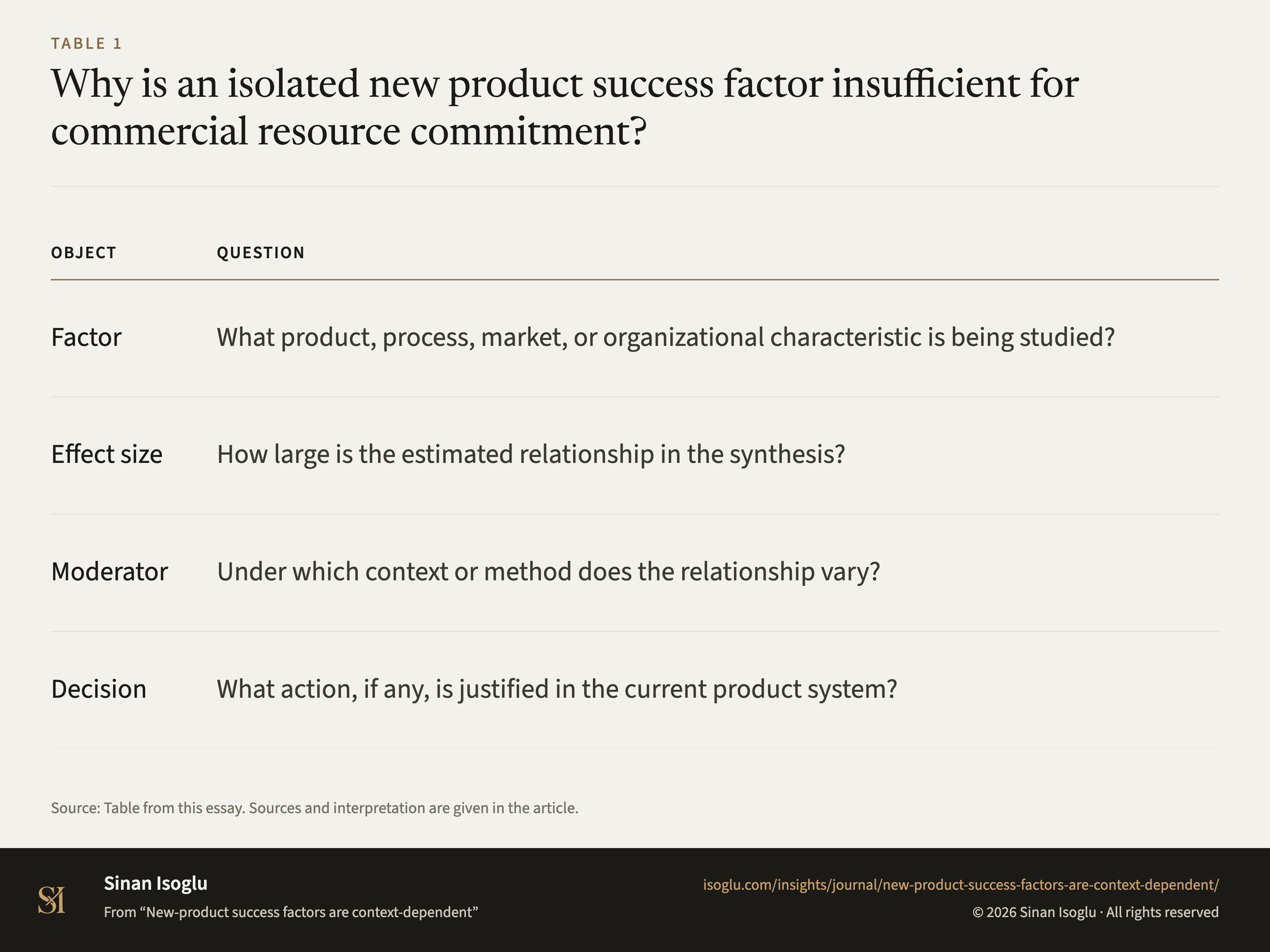
Why is an isolated new product success factor insufficient for commercial resource commitment?
Table 1Why is an isolated new product success factor insufficient for commercial resource commitment?
| Object | Question |
|---|---|
| Factor | What product, process, market, or organizational characteristic is being studied? |
| Effect size | How large is the estimated relationship in the synthesis? |
| Moderator | Under which context or method does the relationship vary? |
| Decision | What action, if any, is justified in the current product system? |
Swipe or scroll horizontally if the table is wider than your screen.
Source: Table from this essay. Sources and interpretation are given in the article.
From the essay
Growth that compounds
New-product success factors are context-dependent
New-product success factors are not permanent coefficients: updated meta-analysis shows weaker effects and context and method moderators.
Read the essayThis exhibit belongs to an essay: the numbers live here, the argument lives there.
Cite or embed
Related exhibits

Table 1Table
The updated-success-factor transfer card
New-product success factors are context-dependent
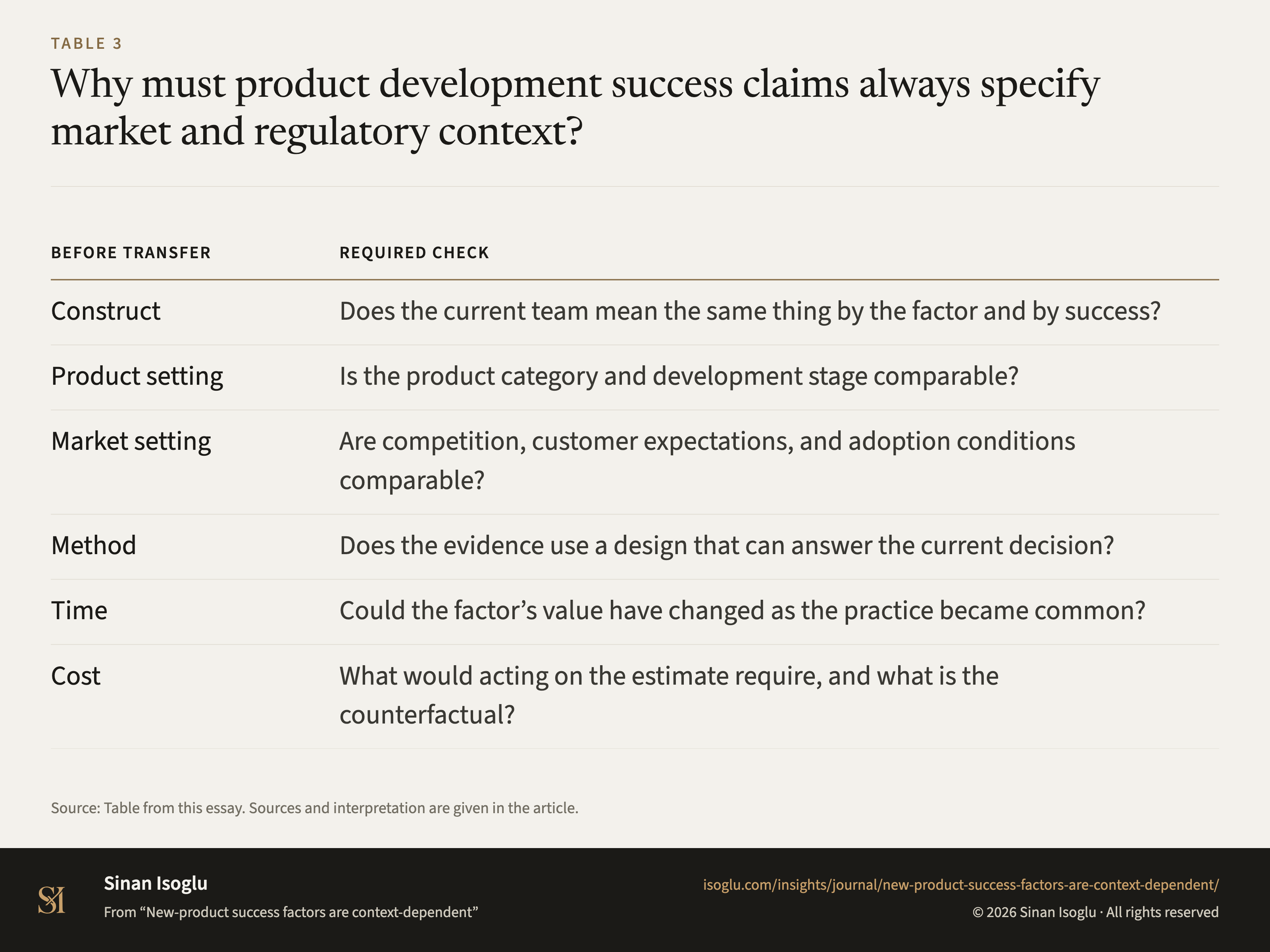
Table 3Table
Why must product development success claims always specify market and regulatory context?
New-product success factors are context-dependent
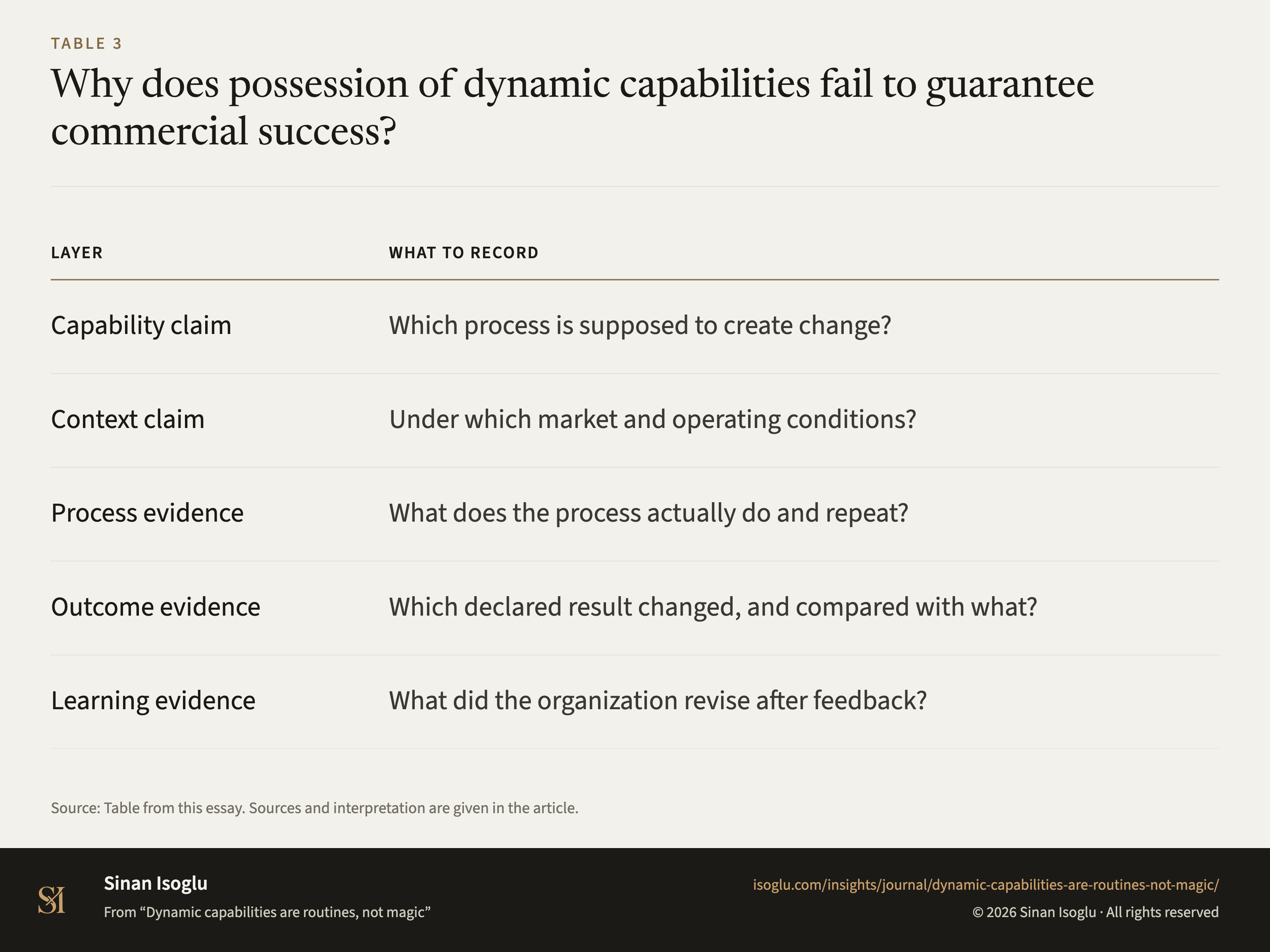
Table 3Table
Why does possession of dynamic capabilities fail to guarantee commercial success?
Dynamic capabilities are routines, not magic
Contact
Bring the question you're working on.
Research, a guest lecture, or a commercial question.