Table 3From “New-product success factors are context-dependent”
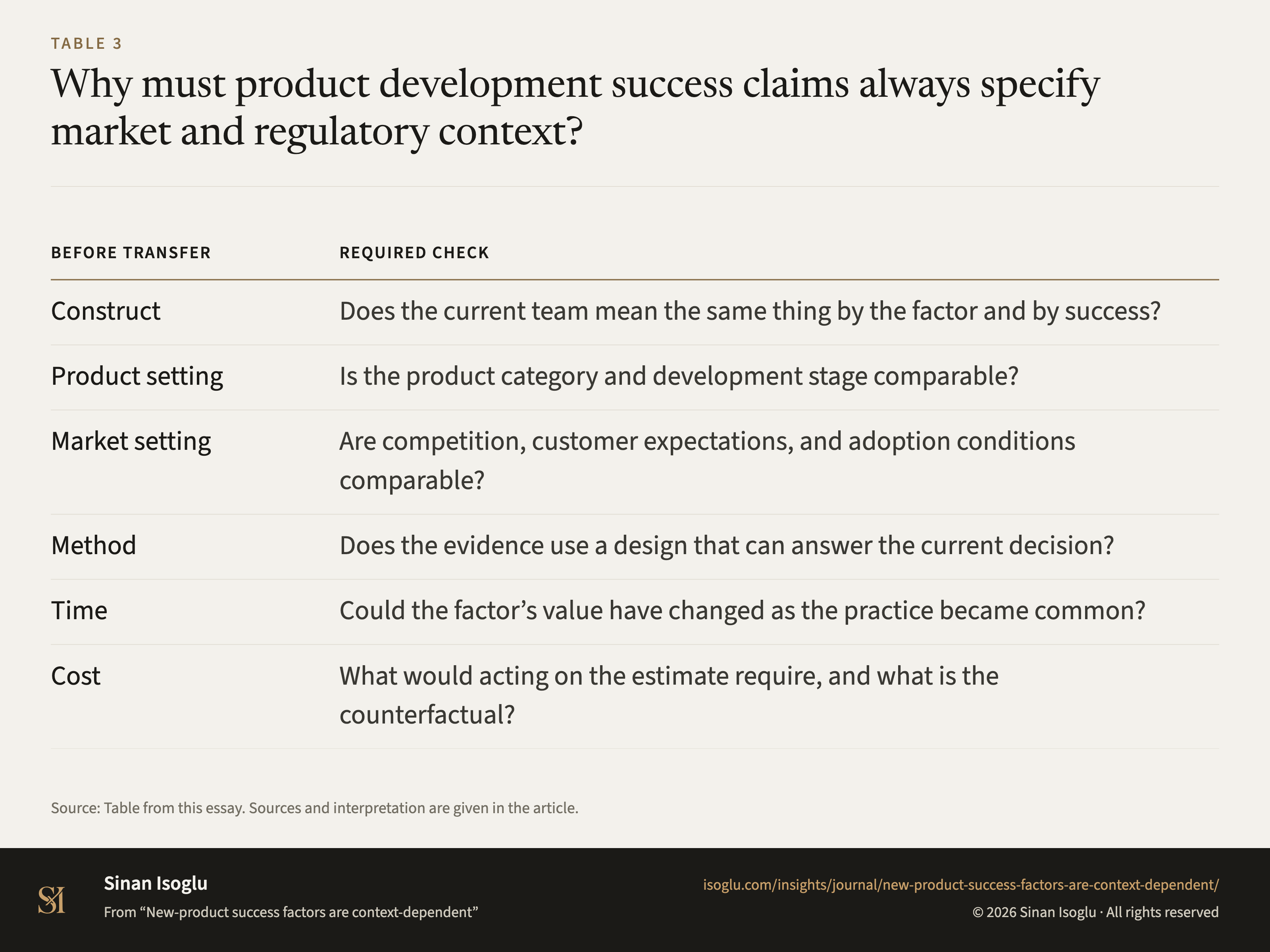
Why must product development success claims always specify market and regulatory context?
Table 3Why must product development success claims always specify market and regulatory context?
| Before transfer | Required check |
|---|---|
| Construct | Does the current team mean the same thing by the factor and by success? |
| Product setting | Is the product category and development stage comparable? |
| Market setting | Are competition, customer expectations, and adoption conditions comparable? |
| Method | Does the evidence use a design that can answer the current decision? |
| Time | Could the factor's value have changed as the practice became common? |
| Cost | What would acting on the estimate require, and what is the counterfactual? |
Swipe or scroll horizontally if the table is wider than your screen.
Source: Table from this essay. Sources and interpretation are given in the article.
From the essay
Growth that compounds
New-product success factors are context-dependent
New-product success factors are not permanent coefficients: updated meta-analysis shows weaker effects and context and method moderators.
Read the essayThis exhibit belongs to an essay: the numbers live here, the argument lives there.
Cite or embed
Related exhibits
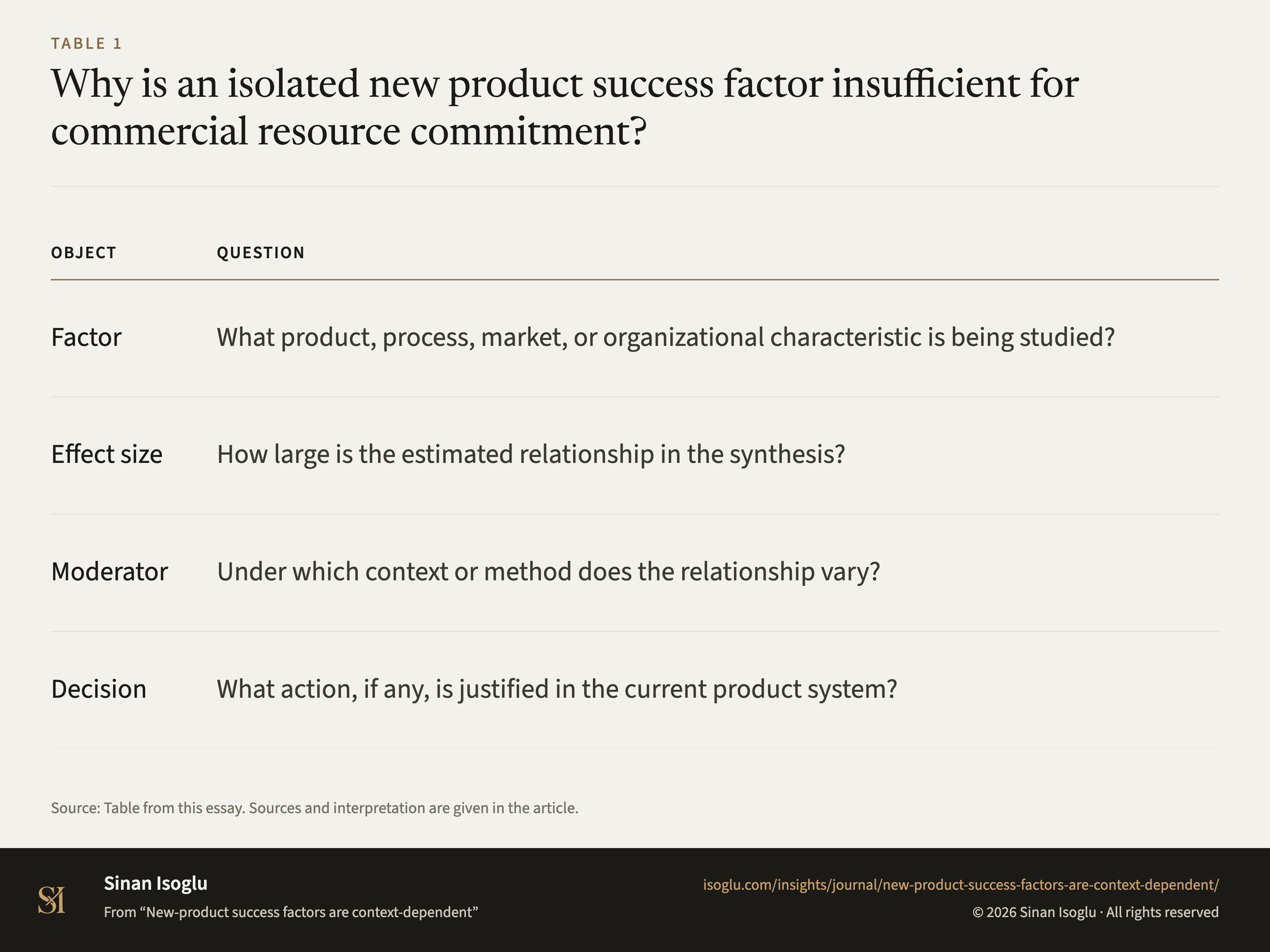
Table 1Table
Why is an isolated new product success factor insufficient for commercial resource commitment?
New-product success factors are context-dependent

Table 1Table
The updated-success-factor transfer card
New-product success factors are context-dependent
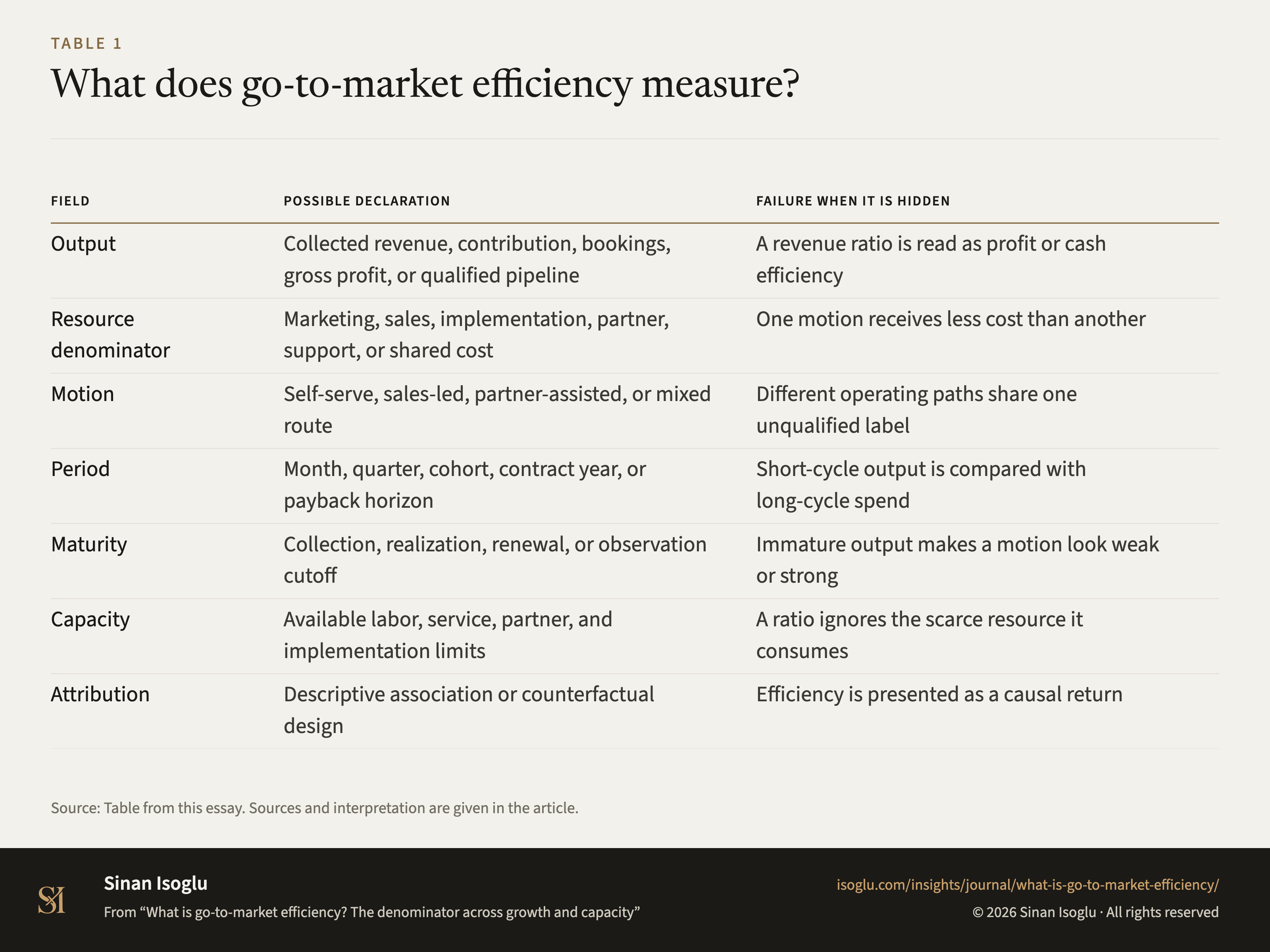
Table 1Table
What does go-to-market efficiency measure?
What is go-to-market efficiency? The denominator across growth and capacity
Contact
Bring the question you're working on.
Research, a guest lecture, or a commercial question.