Table 2From “A marketing attribution model needs a counterfactual”
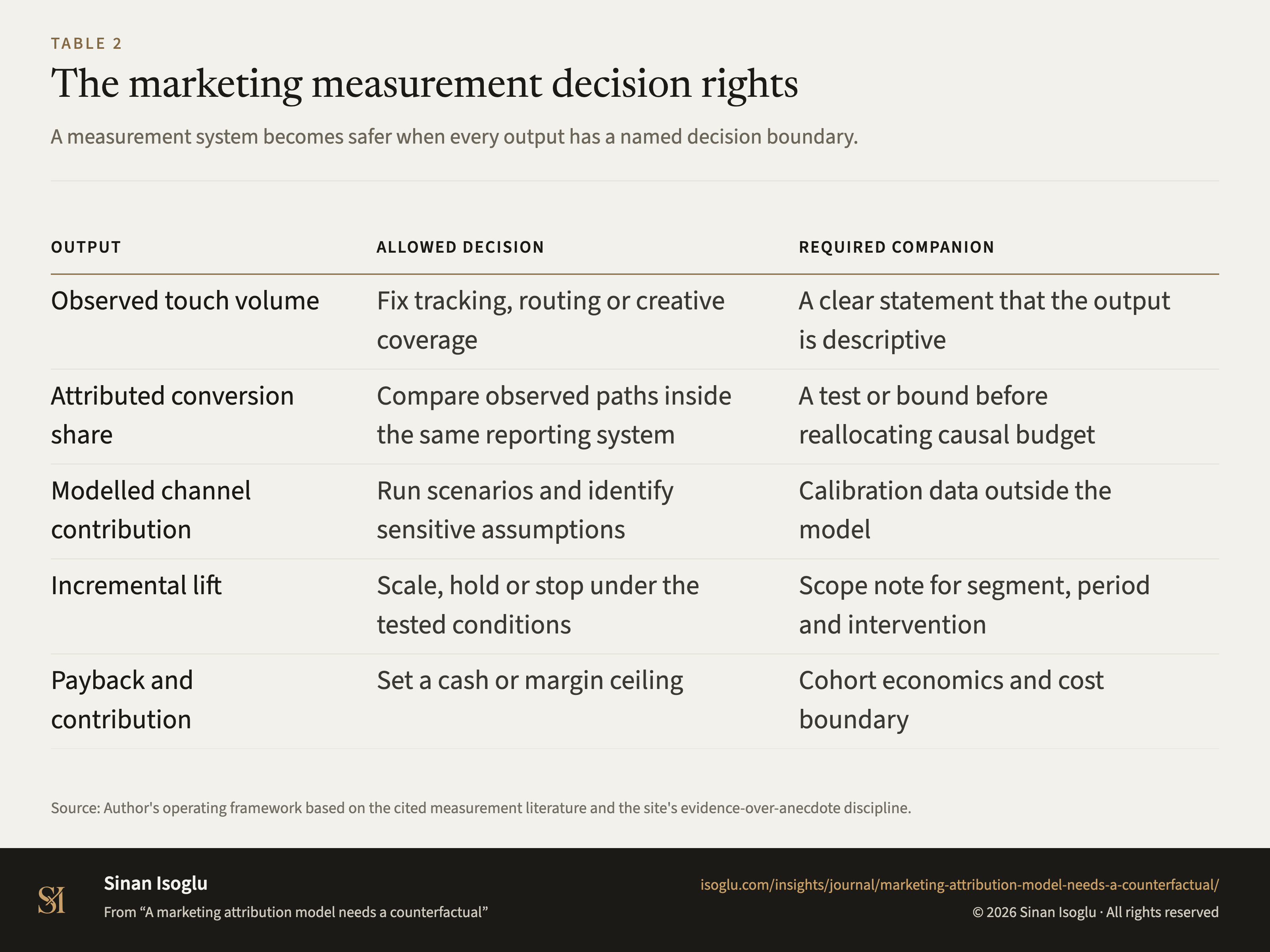
The marketing measurement decision rights
A measurement system becomes safer when every output has a named decision boundary.
Table 2The marketing measurement decision rights
| Output | Allowed decision | Required companion |
|---|---|---|
| Observed touch volume | Fix tracking, routing or creative coverage | A clear statement that the output is descriptive |
| Attributed conversion share | Compare observed paths inside the same reporting system | A test or bound before reallocating causal budget |
| Modelled channel contribution | Run scenarios and identify sensitive assumptions | Calibration data outside the model |
| Incremental lift | Scale, hold or stop under the tested conditions | Scope note for segment, period and intervention |
| Payback and contribution | Set a cash or margin ceiling | Cohort economics and cost boundary |
Swipe or scroll horizontally if the table is wider than your screen.
Source: Author's operating framework based on the cited measurement literature and the site's evidence-over-anecdote discipline.
From the essay
Growth that compounds
A marketing attribution model needs a counterfactual
A marketing attribution model can describe observed touches. It cannot prove incremental demand unless the decision includes a credible counterfactual.
Read the essayThis exhibit belongs to an essay: the numbers live here, the argument lives there.
Cite or embed
Related exhibits
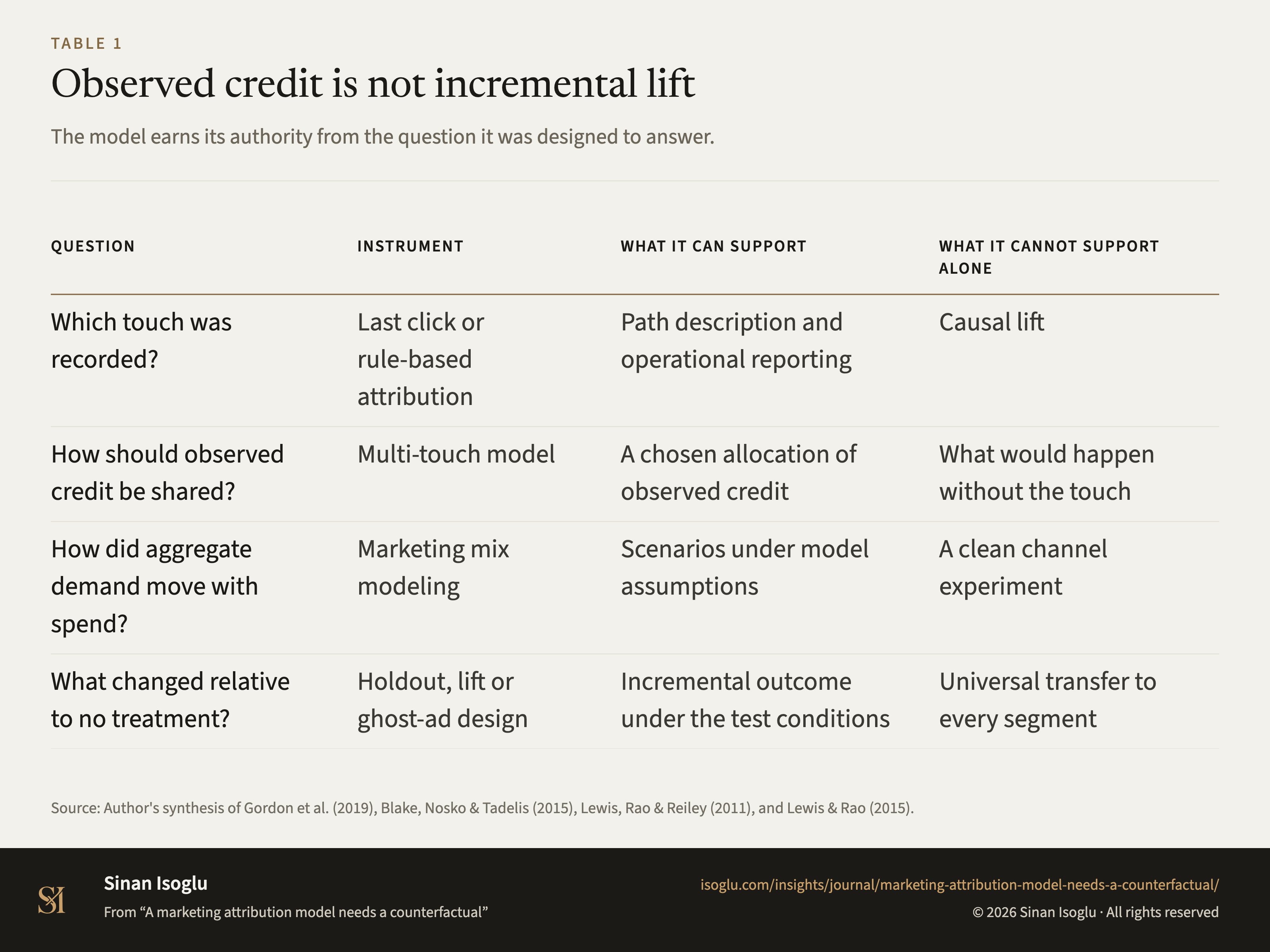
Table 1Table
Observed credit is not incremental lift
A marketing attribution model needs a counterfactual
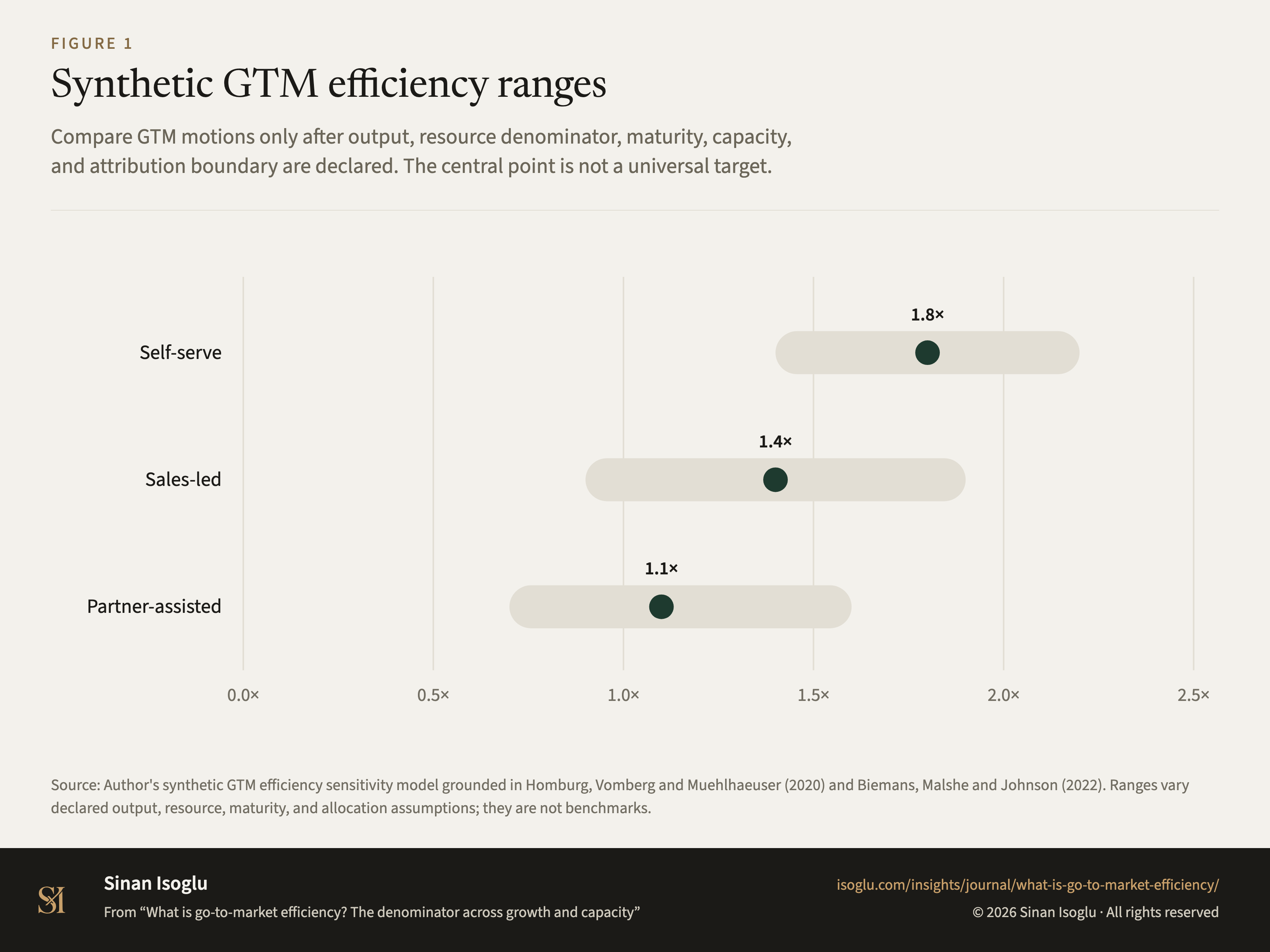
Figure 1Figure
Synthetic GTM efficiency ranges
What is go-to-market efficiency? The denominator across growth and capacity
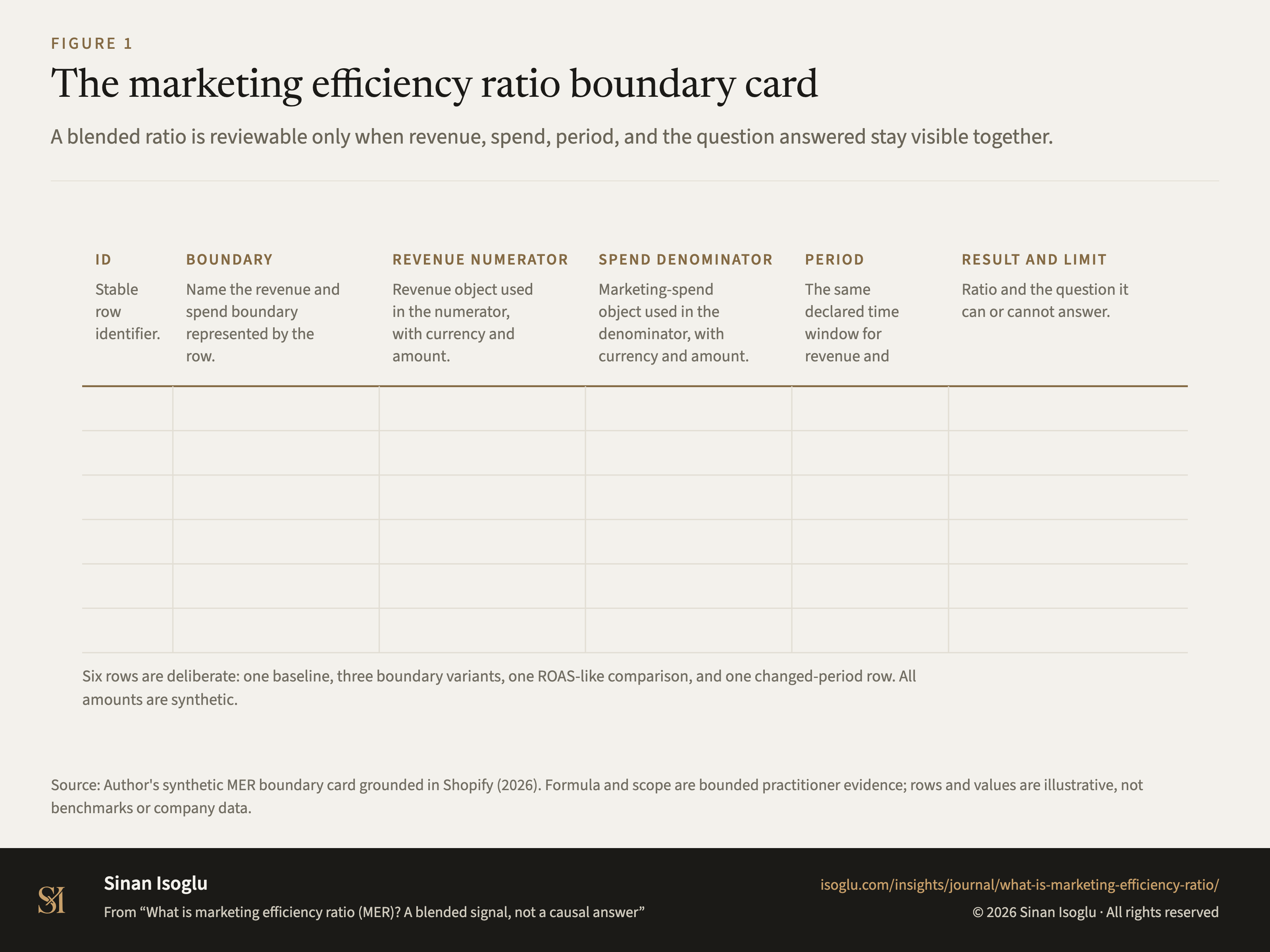
Figure 1Figure
The marketing efficiency ratio boundary card
What is marketing efficiency ratio (MER)? A blended signal, not a causal answer
Contact
Bring the question you're working on.
Research, a guest lecture, or a commercial question.