Table 1From “Long customer relationships can be low-profit”
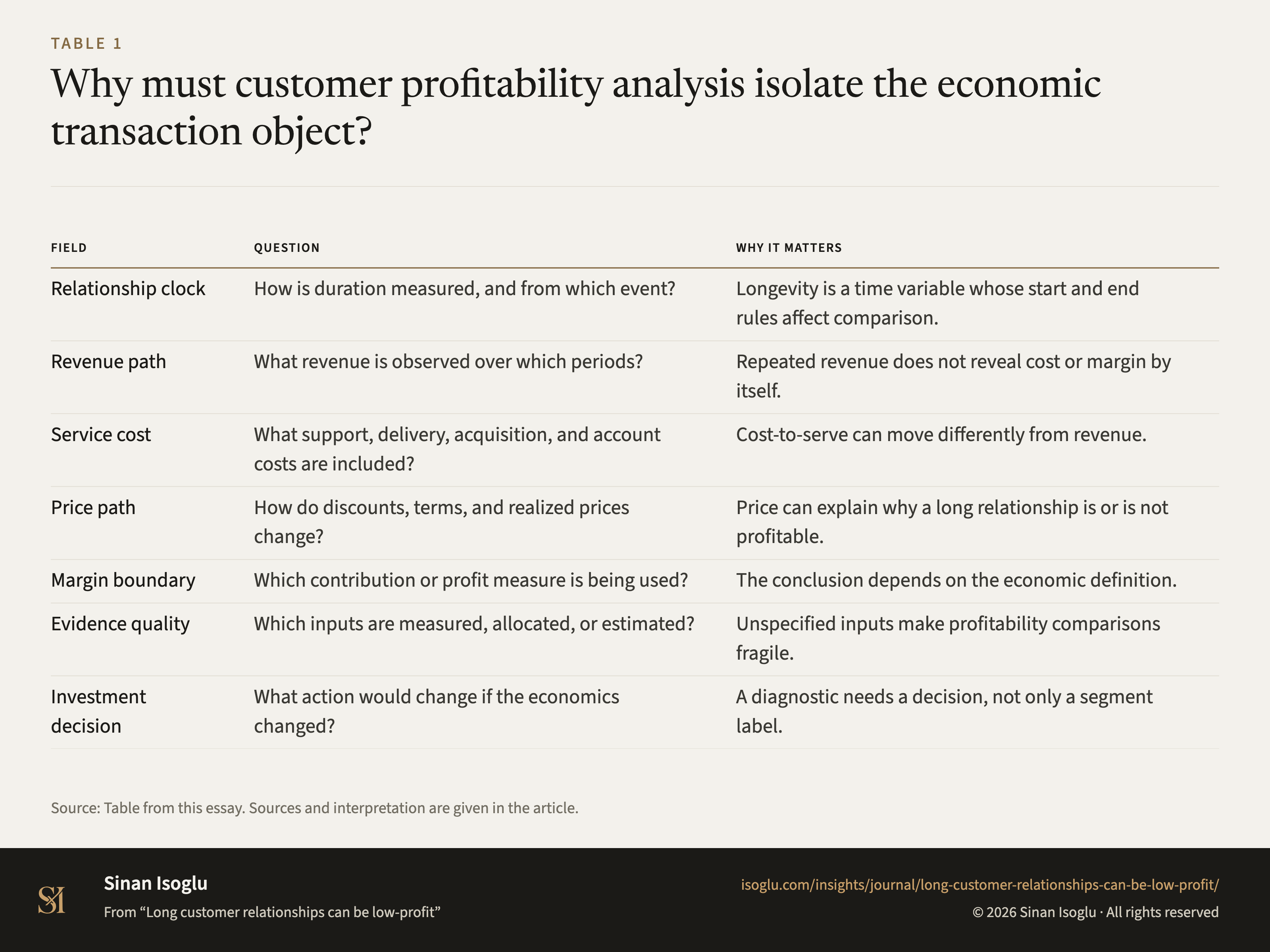
Why must customer profitability analysis isolate the economic transaction object?
Table 1Why must customer profitability analysis isolate the economic transaction object?
| Field | Question | Why it matters |
|---|---|---|
| Relationship clock | How is duration measured, and from which event? | Longevity is a time variable whose start and end rules affect comparison. |
| Revenue path | What revenue is observed over which periods? | Repeated revenue does not reveal cost or margin by itself. |
| Service cost | What support, delivery, acquisition, and account costs are included? | Cost-to-serve can move differently from revenue. |
| Price path | How do discounts, terms, and realized prices change? | Price can explain why a long relationship is or is not profitable. |
| Margin boundary | Which contribution or profit measure is being used? | The conclusion depends on the economic definition. |
| Evidence quality | Which inputs are measured, allocated, or estimated? | Unspecified inputs make profitability comparisons fragile. |
| Investment decision | What action would change if the economics changed? | A diagnostic needs a decision, not only a segment label. |
Swipe or scroll horizontally if the table is wider than your screen.
Source: Table from this essay. Sources and interpretation are given in the article.
From the essay
Growth that compounds
Long customer relationships can be low-profit
Longevity is a time variable, not proof of profit: review revenue, service cost, price, margin, measurement quality, and investment together.
Read the essayThis exhibit belongs to an essay: the numbers live here, the argument lives there.
Cite or embed
Related exhibits
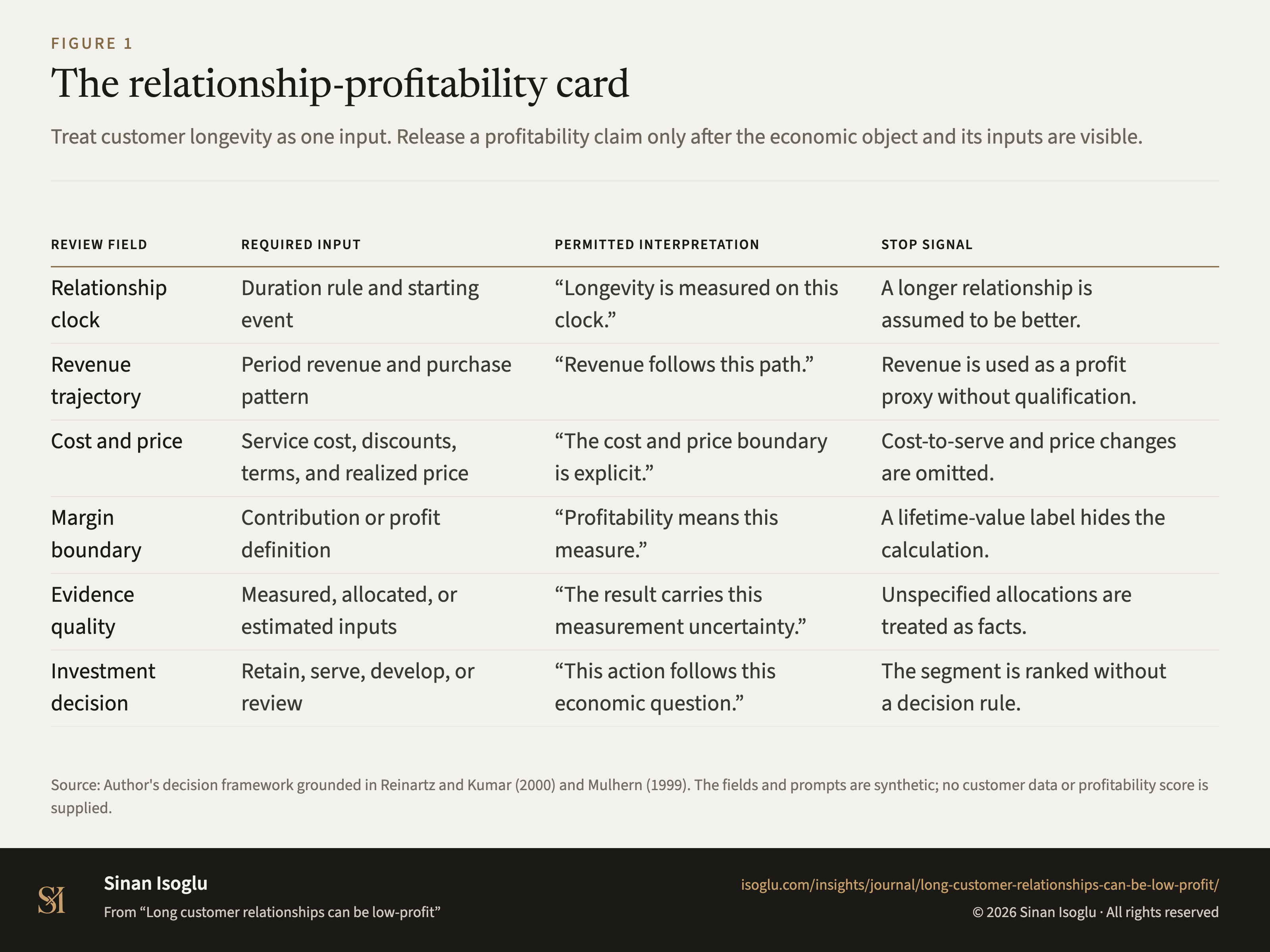
Figure 1Figure
The relationship-profitability card
Long customer relationships can be low-profit
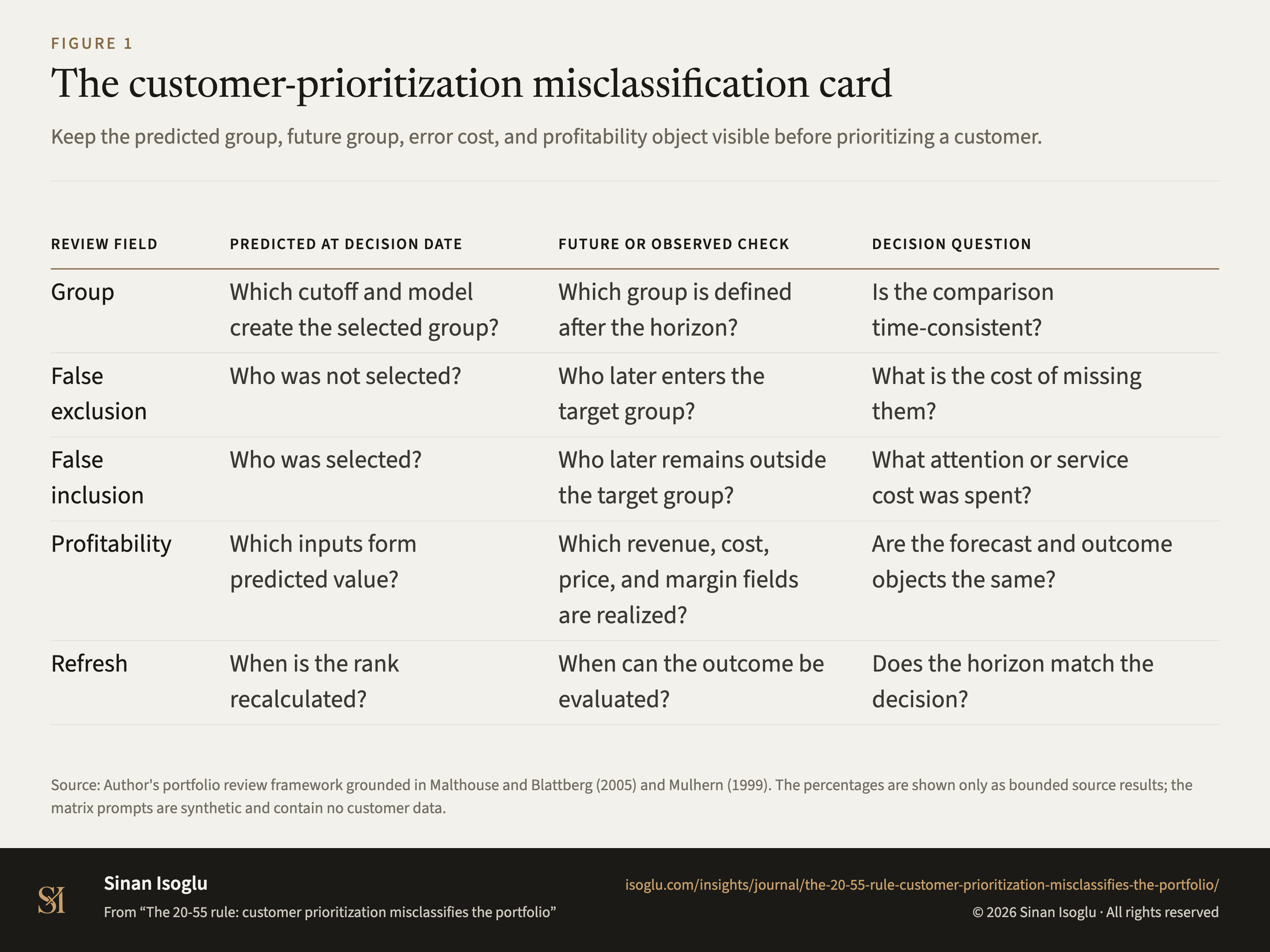
Figure 1Figure
The customer-prioritization misclassification card
The 20-55 rule: customer prioritization misclassifies the portfolio
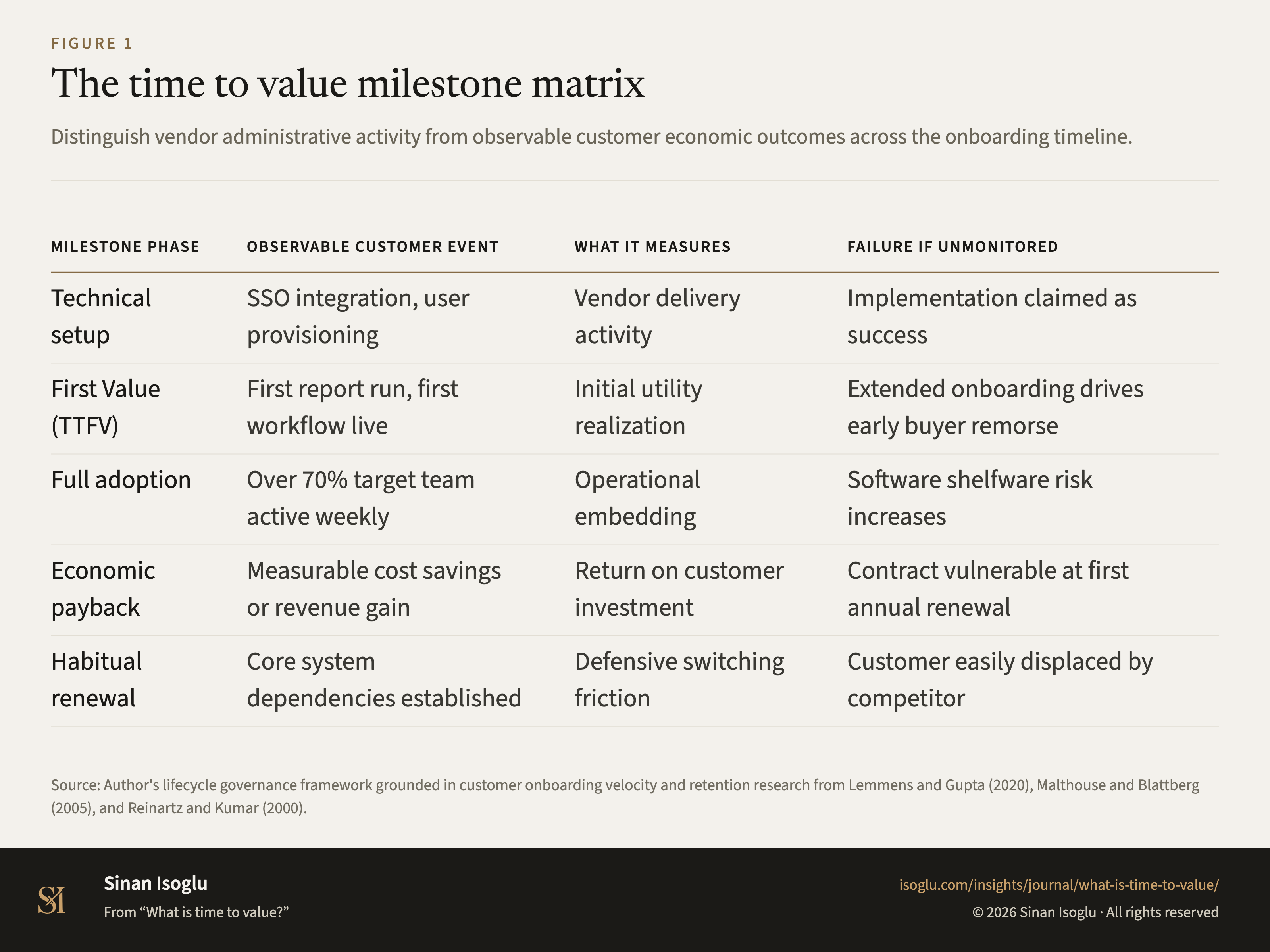
Figure 1Figure
The time to value milestone matrix
What is time to value?
Contact
Bring the question you're working on.
Research, a guest lecture, or a commercial question.