Table 1From “The integration plan spends what the deal bought.”
The sign is a decision: the tested splits
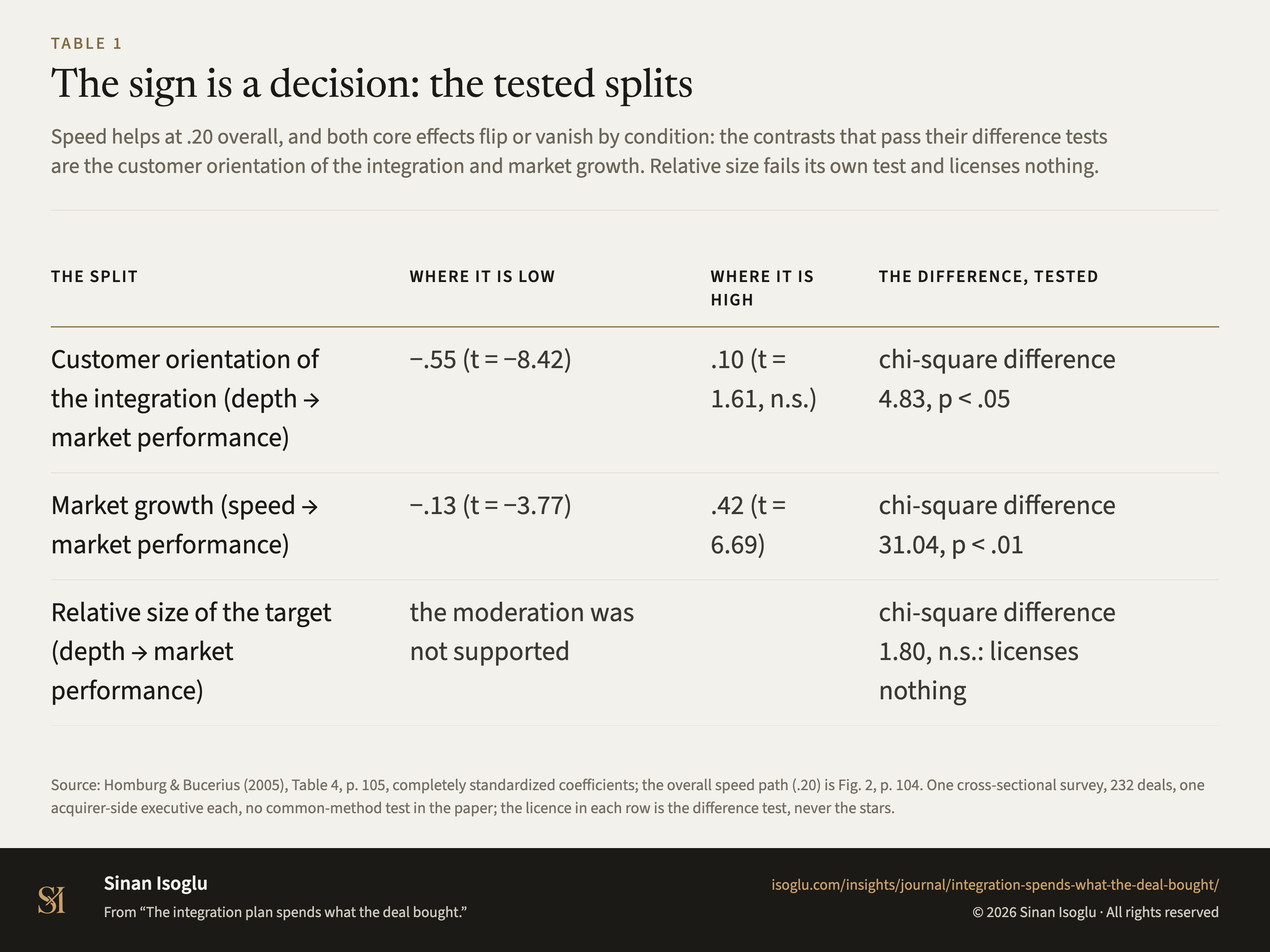
Speed helps at .20 overall, and both core effects flip or vanish by condition: the contrasts that pass their difference tests are the customer orientation of the integration and market growth. Relative size fails its own test and licenses nothing.
Table 1The sign is a decision: the tested splits
| The split | Where it is low | Where it is high | The difference, tested |
|---|---|---|---|
| Customer orientation of the integration (depth → market performance) | −.55 (t = −8.42) | .10 (t = 1.61, n.s.) | chi-square difference 4.83, p < .05 |
| Market growth (speed → market performance) | −.13 (t = −3.77) | .42 (t = 6.69) | chi-square difference 31.04, p < .01 |
| Relative size of the target (depth → market performance) | the moderation was not supported | chi-square difference 1.80, n.s.: licenses nothing |
Swipe or scroll horizontally if the table is wider than your screen.
Source: Homburg & Bucerius (2005), Table 4, p. 105, completely standardized coefficients; the overall speed path (.20) is Fig. 2, p. 104. One cross-sectional survey, 232 deals, one acquirer-side executive each, no common-method test in the paper; the licence in each row is the difference test, never the stars.
Source and evidence
Each line names a claim related to this exhibit, its source, and how it was checked.
- A HB05-C5 Speed of integration helps market-related performance in the main model: γ22 = .20\\ (Fig. 2, p. 104). The hypothesis it confirms is the paper's own: "H3: The speed of integration is positively associated with market-related performance after the merger or" acquisitionHomburg & Bucerius (2005) · VoR held, page images pp. 104–105
- A HB05-C6 The extent→market damage is conditional on the customer orientation of the integration, and the contrast is tested: low COI γ21 = −.55 (t = −8.42), high COI .10 (t = 1.26); Δχ² = 39.60\\ (Table 4, p. 105). The moderator is hypothesised in the paper: "H7: In the case of high rather than low customer orientation of integration, the effect of the (a) extent of integration on cost savings is less positive, (b) extent of integration on market-related performance after the merger or acquisi"tion is less negativeHomburg & Bucerius (2005) · VoR held, page images pp. 104–105
- A HB05-C7 Speed reverses sign by market growth, and the contrast is tested: low growth γ22 = −.13 (t = −3.77), high growth .42 (t = 6.69); Δχ² = 31.04\\ (Table 4, p. 105). The moderator is hypothesised in the paper: "H10: In the case of high rather than low market growth before the merger or acquisition, the effect of the (a) extent of integration on cost savings is less positive", and "and (c) speed of integration on market-related performance after the merger or acquisition is more positive"Homburg & Bucerius (2005) · VoR held, page images pp. 104–105
- A HB05-C9 The relative-size moderation of the market damage was NOT supported: Δχ² = 1.80, n.s. (Table 4, p. 105). The hypothesis that failed reads "H9: In the case of high rather than low relative size of the acquired firm, the effect of the (a) extent of integration on cost savings is more positive"Homburg & Bucerius (2005) · VoR held, page images pp. 104–105
Grades: A, verified against the printed page of the primary source · B, primary source, text layer only · C, authoritative secondary · D, reported.
From the essay
Go-to-market strategy
The integration plan spends what the deal bought.
Integration depth buys cost savings by spending market position. The measured record prices that trade, and says its sign is not fixed.
Read the essayThis exhibit belongs to an essay: the numbers live here, the argument lives there.
Cite or embed
Related exhibits
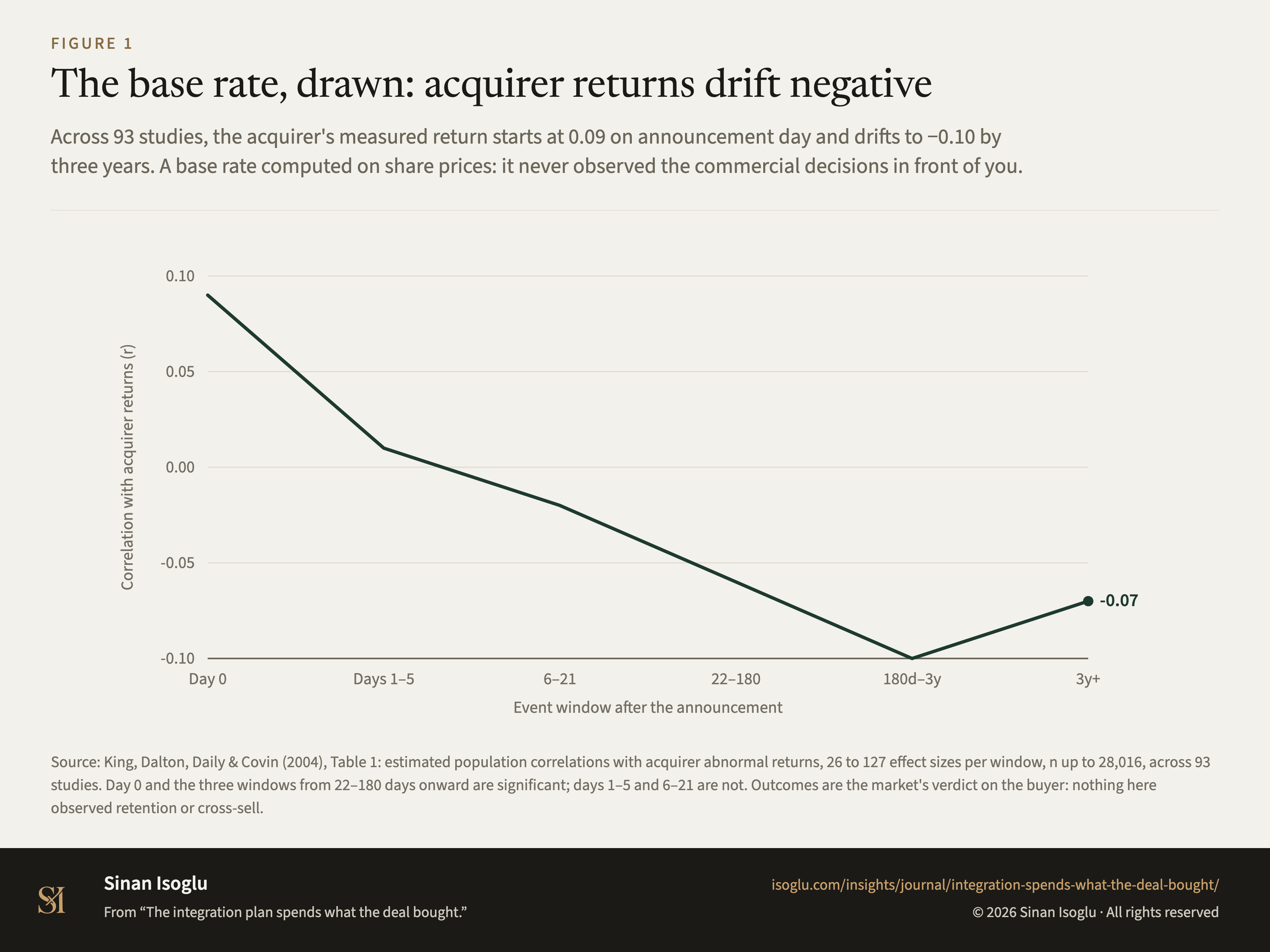
Figure 1Figure
The base rate, drawn: acquirer returns drift negative
The integration plan spends what the deal bought.
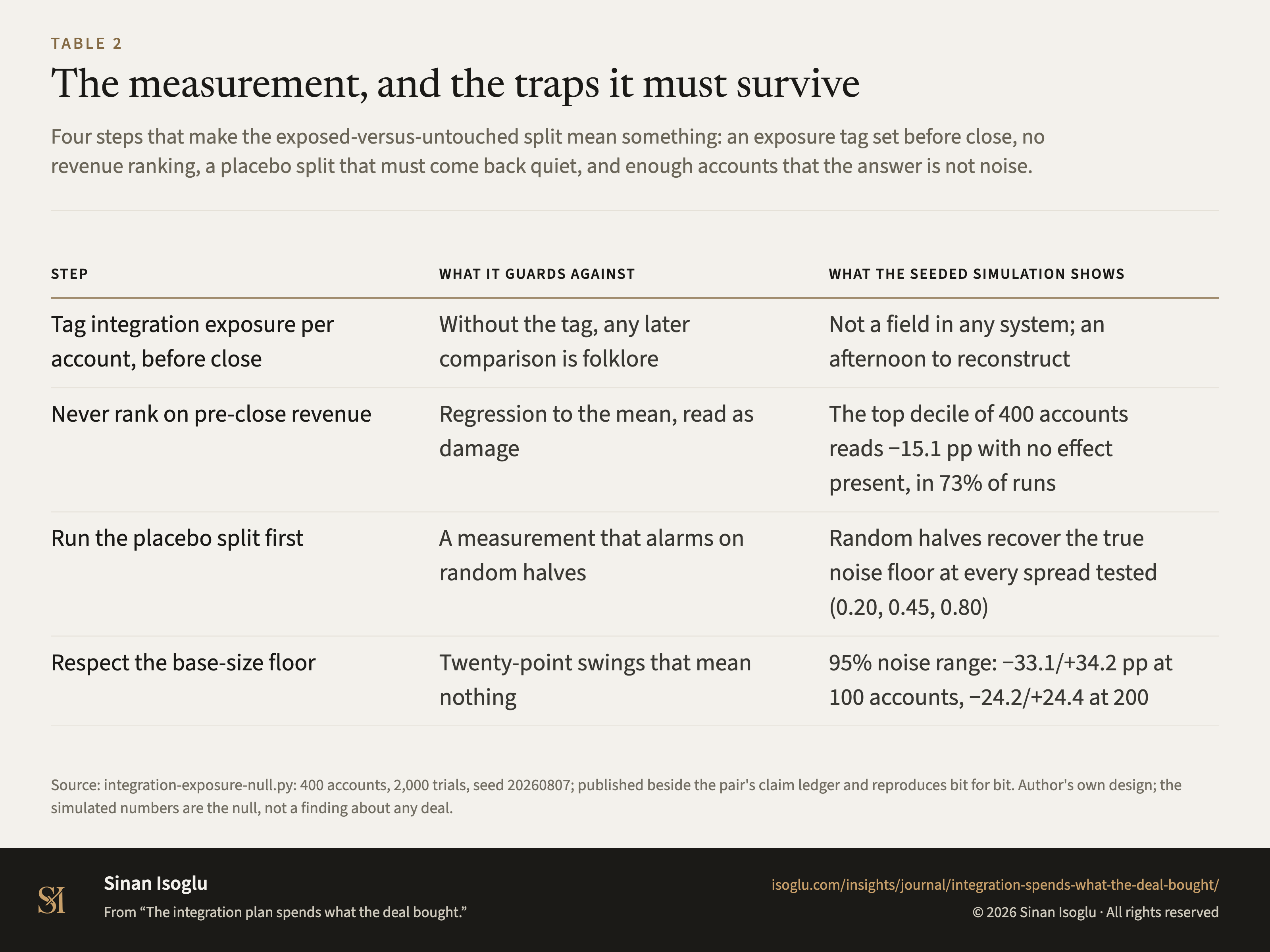
Table 2Table
The measurement, and the traps it must survive
The integration plan spends what the deal bought.
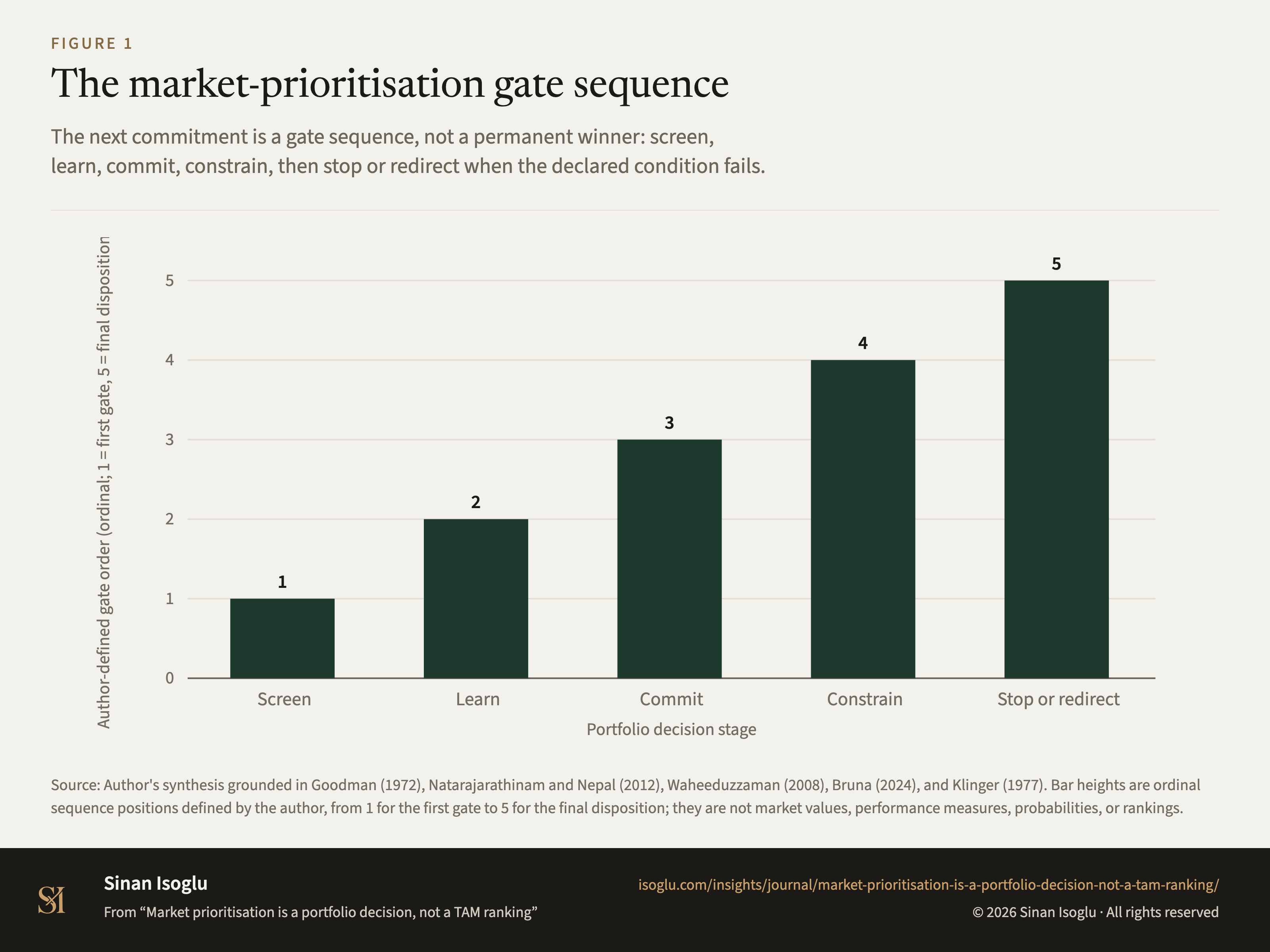
Figure 1Figure
The market-prioritisation gate sequence
Market prioritisation is a portfolio decision, not a TAM ranking
Contact
Bring the question you're working on.
Research, a guest lecture, or a commercial question.