Table 1From “An ecosystem strategy is an alignment structure, not a partner list”
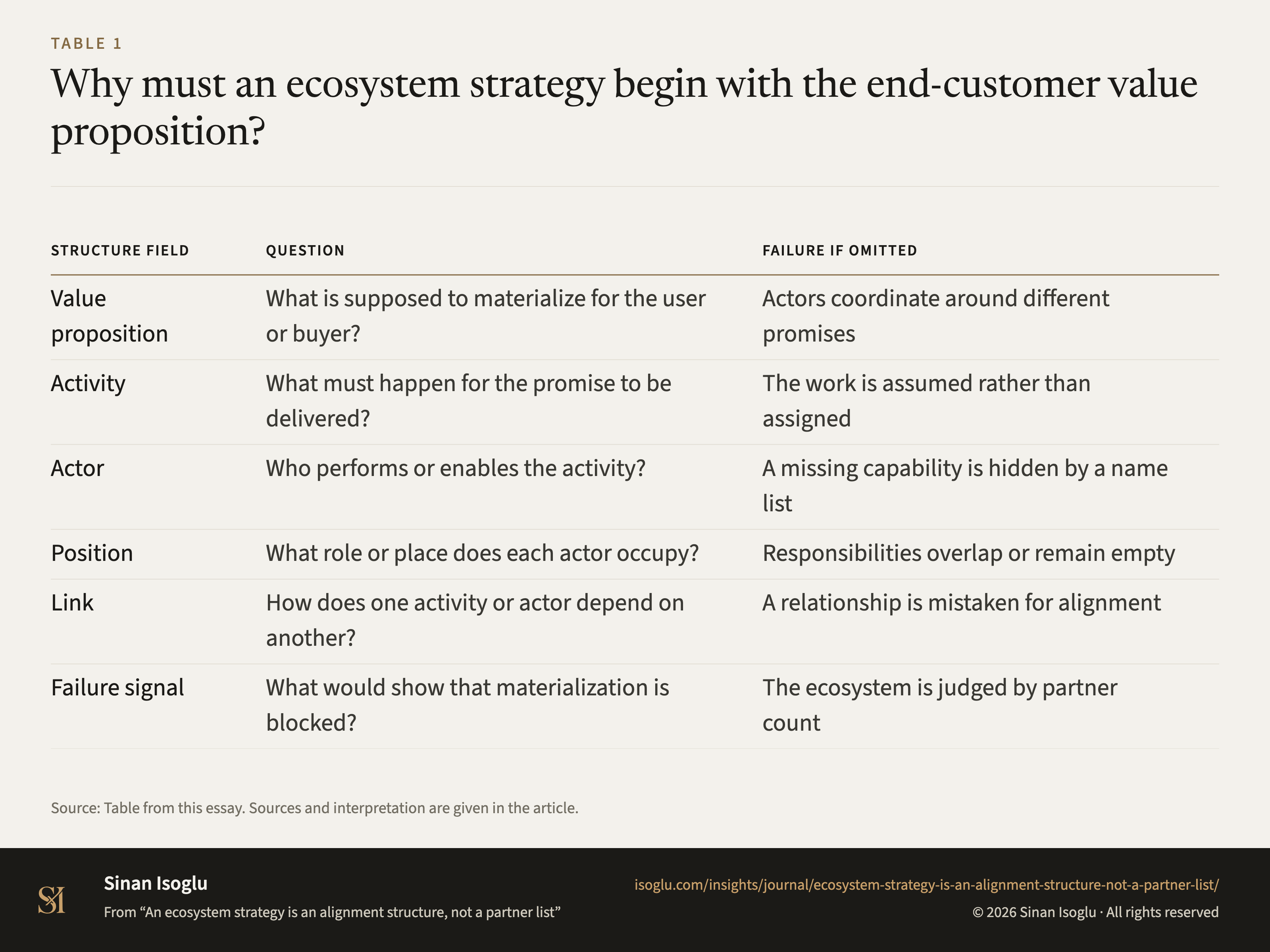
Why must an ecosystem strategy begin with the end-customer value proposition?
Table 1Why must an ecosystem strategy begin with the end-customer value proposition?
| Structure field | Question | Failure if omitted |
|---|---|---|
| Value proposition | What is supposed to materialize for the user or buyer? | Actors coordinate around different promises |
| Activity | What must happen for the promise to be delivered? | The work is assumed rather than assigned |
| Actor | Who performs or enables the activity? | A missing capability is hidden by a name list |
| Position | What role or place does each actor occupy? | Responsibilities overlap or remain empty |
| Link | How does one activity or actor depend on another? | A relationship is mistaken for alignment |
| Failure signal | What would show that materialization is blocked? | The ecosystem is judged by partner count |
Swipe or scroll horizontally if the table is wider than your screen.
Source: Table from this essay. Sources and interpretation are given in the article.
From the essay
Go-to-market strategy
An ecosystem strategy is an alignment structure, not a partner list
An ecosystem strategy maps the actors, activities, positions, links, and dependencies required for a focal value proposition to materialize.
Read the essayThis exhibit belongs to an essay: the numbers live here, the argument lives there.
Cite or embed
Related exhibits
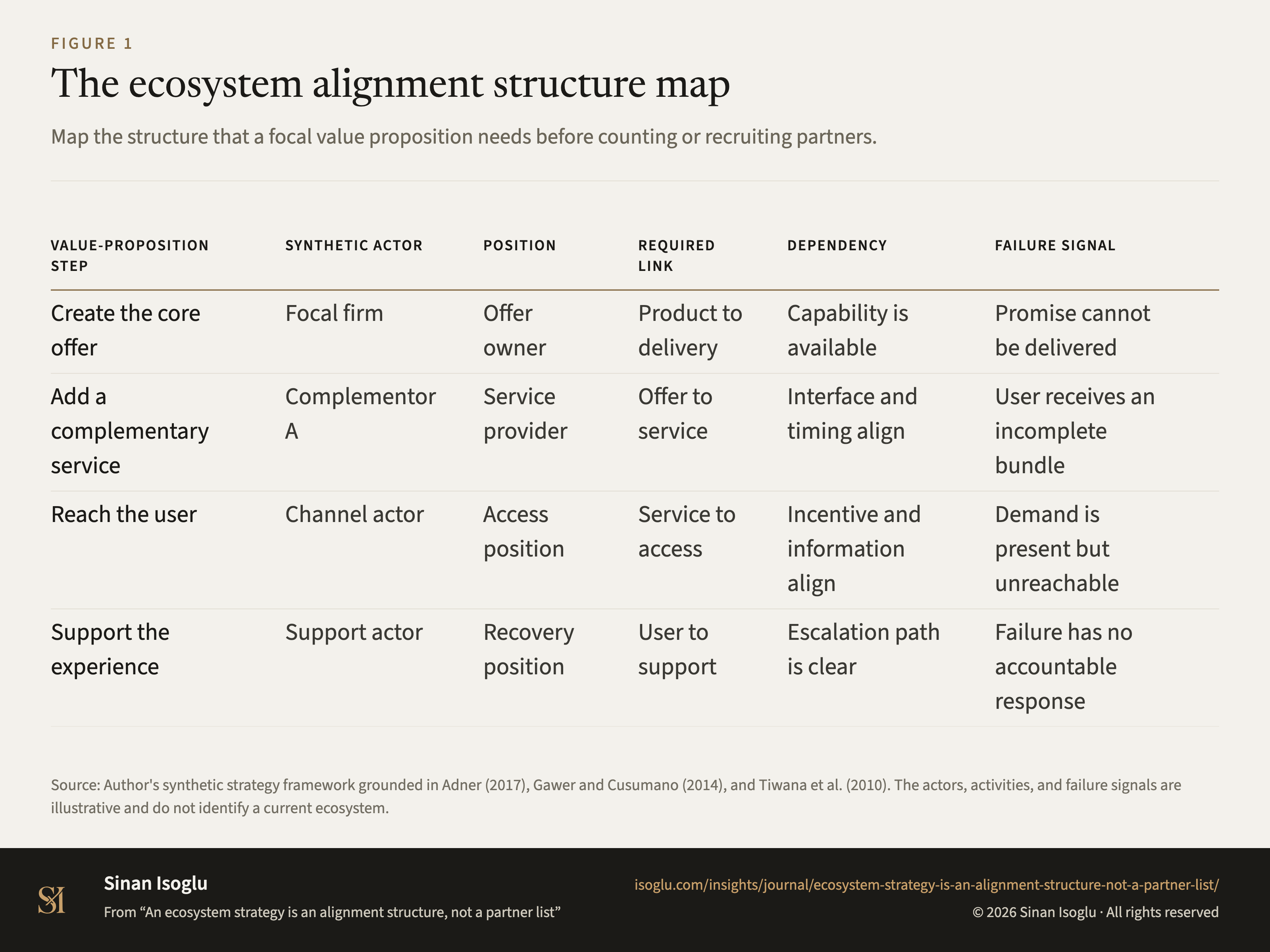
Figure 1Figure
The ecosystem alignment structure map
An ecosystem strategy is an alignment structure, not a partner list
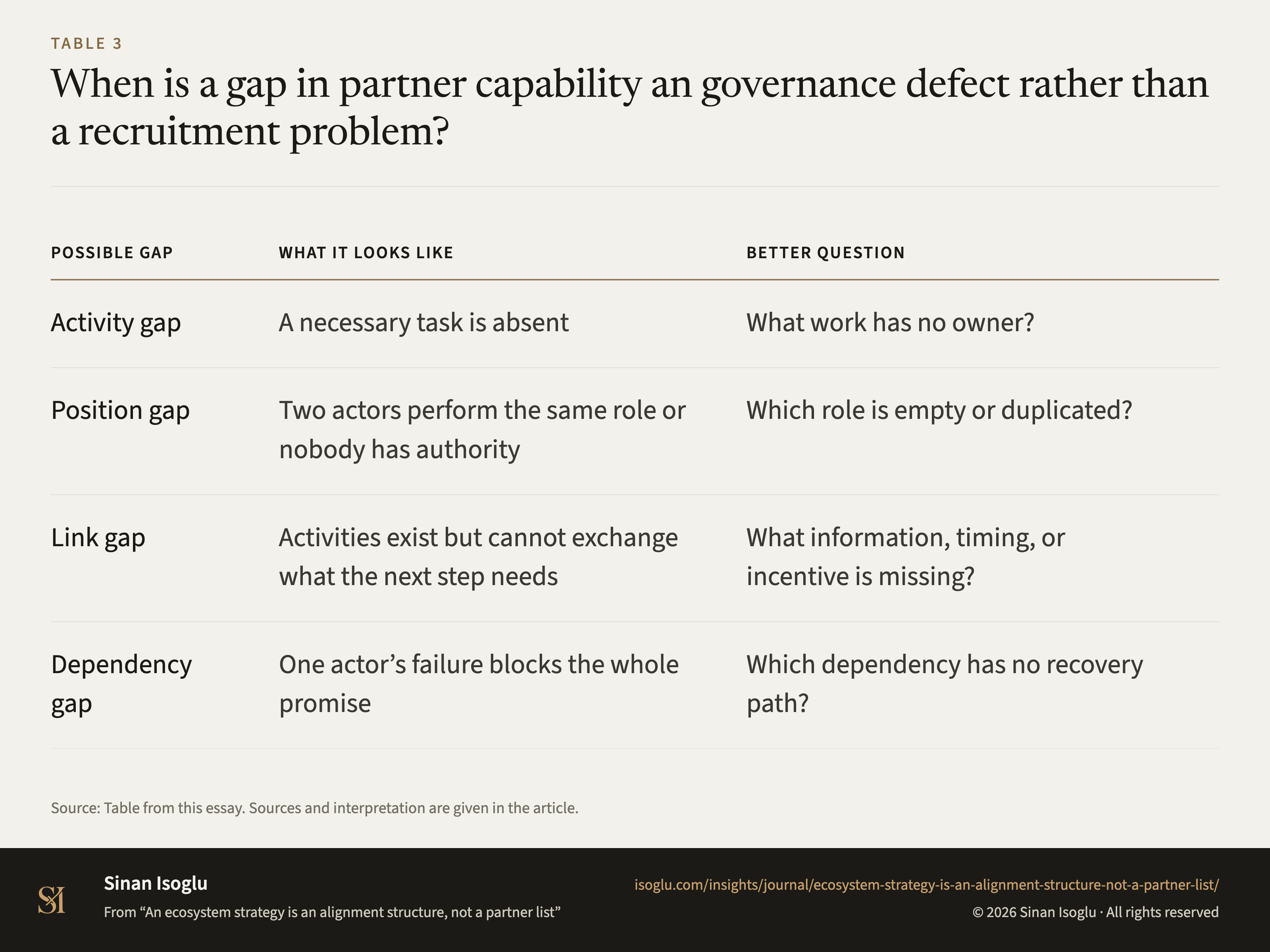
Table 2Table
Why can a value proposition fail even when the partner map looks complete?
An ecosystem strategy is an alignment structure, not a partner list
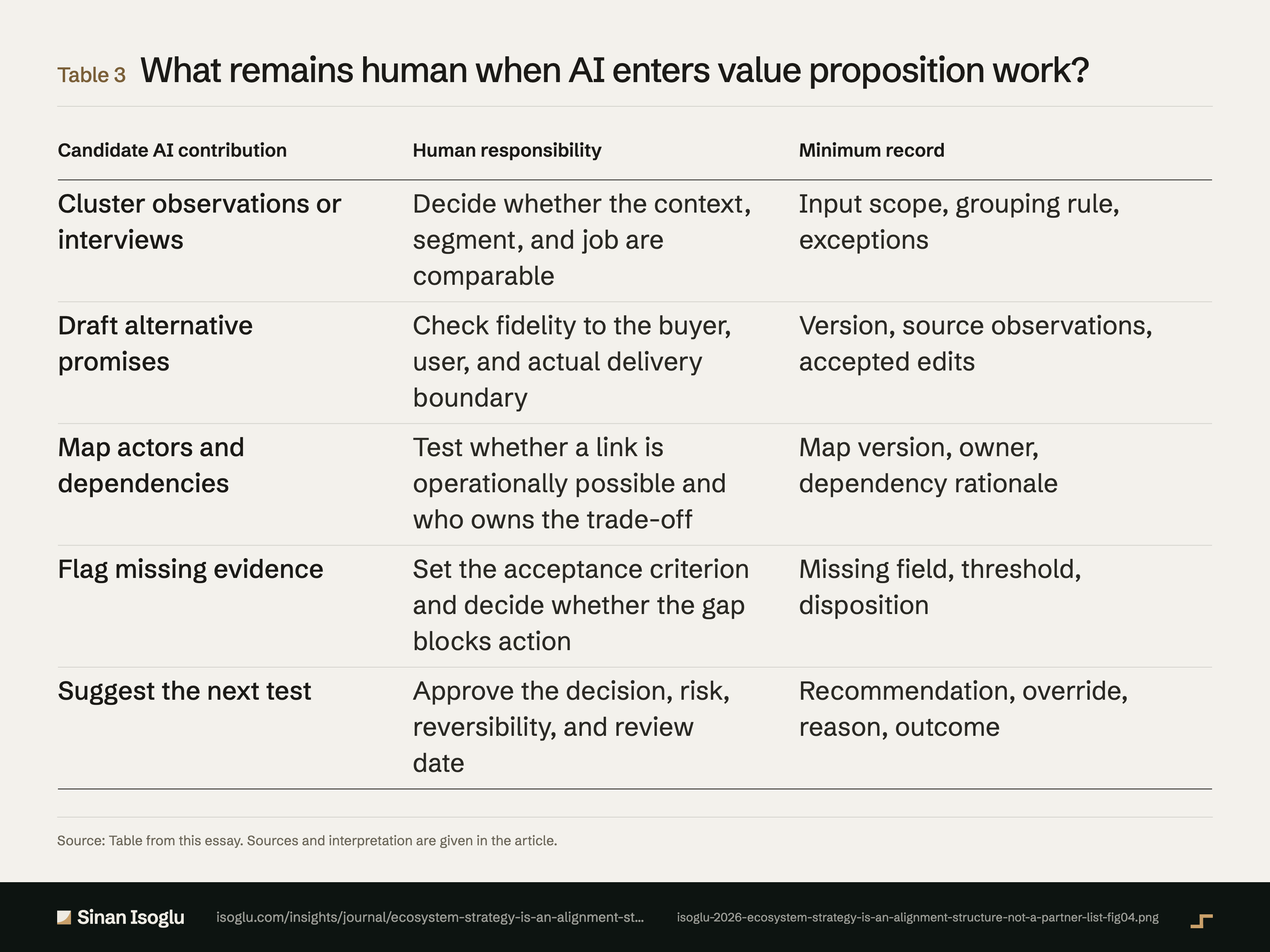
Table 3Table
What remains human when AI enters value proposition work?
An ecosystem strategy is an alignment structure, not a partner list
Contact
Bring the question you're working on.
Research, a guest lecture, or a commercial question.