Table 1From “Algorithm trust changes with the task”
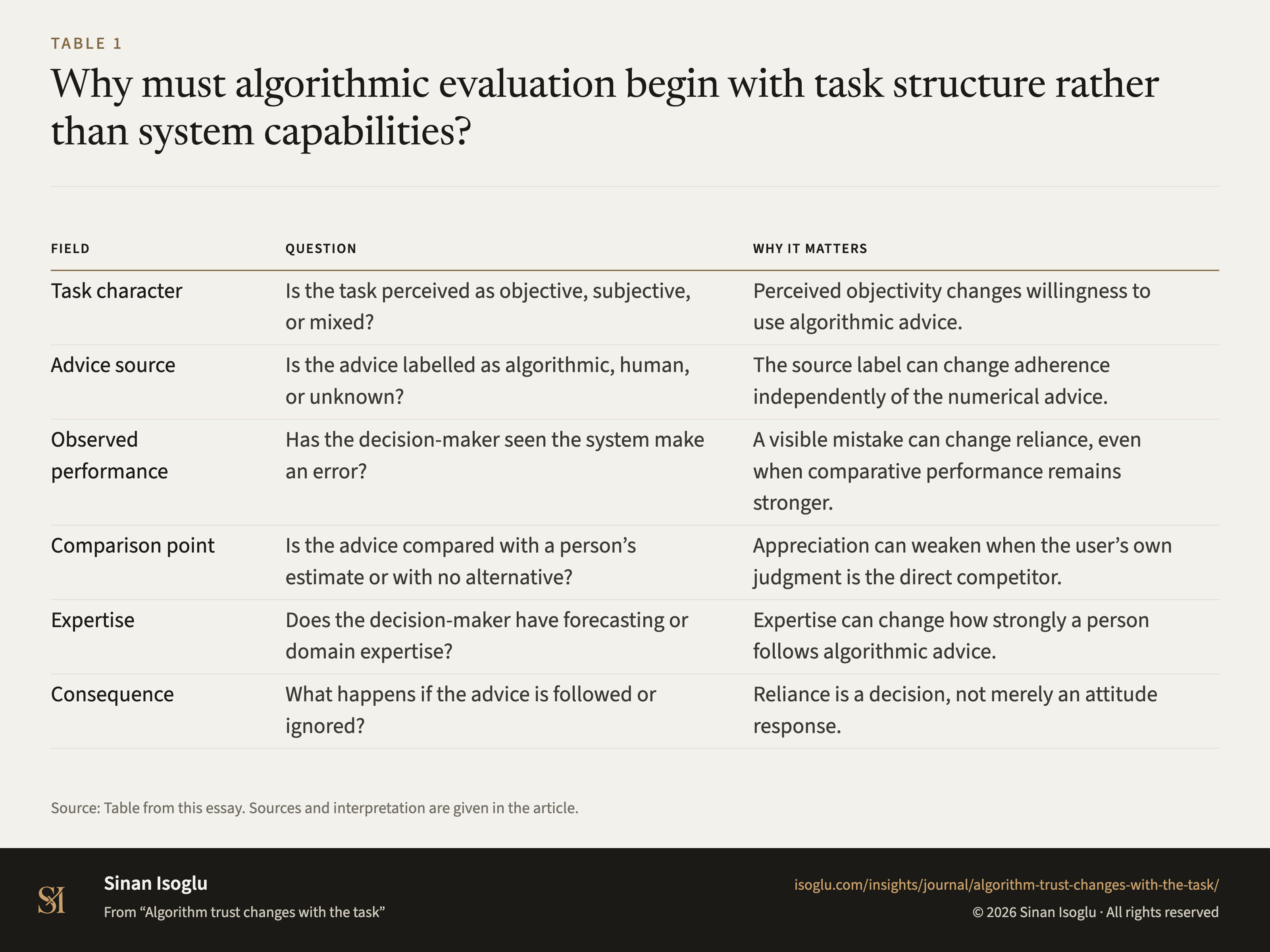
Why must algorithmic evaluation begin with task structure rather than system capabilities?
Table 1Why must algorithmic evaluation begin with task structure rather than system capabilities?
| Field | Question | Why it matters |
|---|---|---|
| Task character | Is the task perceived as objective, subjective, or mixed? | Perceived objectivity changes willingness to use algorithmic advice. |
| Advice source | Is the advice labelled as algorithmic, human, or unknown? | The source label can change adherence independently of the numerical advice. |
| Observed performance | Has the decision-maker seen the system make an error? | A visible mistake can change reliance, even when comparative performance remains stronger. |
| Comparison point | Is the advice compared with a person's estimate or with no alternative? | Appreciation can weaken when the user's own judgment is the direct competitor. |
| Expertise | Does the decision-maker have forecasting or domain expertise? | Expertise can change how strongly a person follows algorithmic advice. |
| Consequence | What happens if the advice is followed or ignored? | Reliance is a decision, not merely an attitude response. |
Swipe or scroll horizontally if the table is wider than your screen.
Source: Table from this essay. Sources and interpretation are given in the article.
From the essay
From the research bench
Algorithm trust changes with the task
Algorithm trust is task-dependent: review objectivity, observed error, advice source, expertise, and reliance before calling a system trusted.
Read the essayThis exhibit belongs to an essay: the numbers live here, the argument lives there.
Cite or embed
Related exhibits
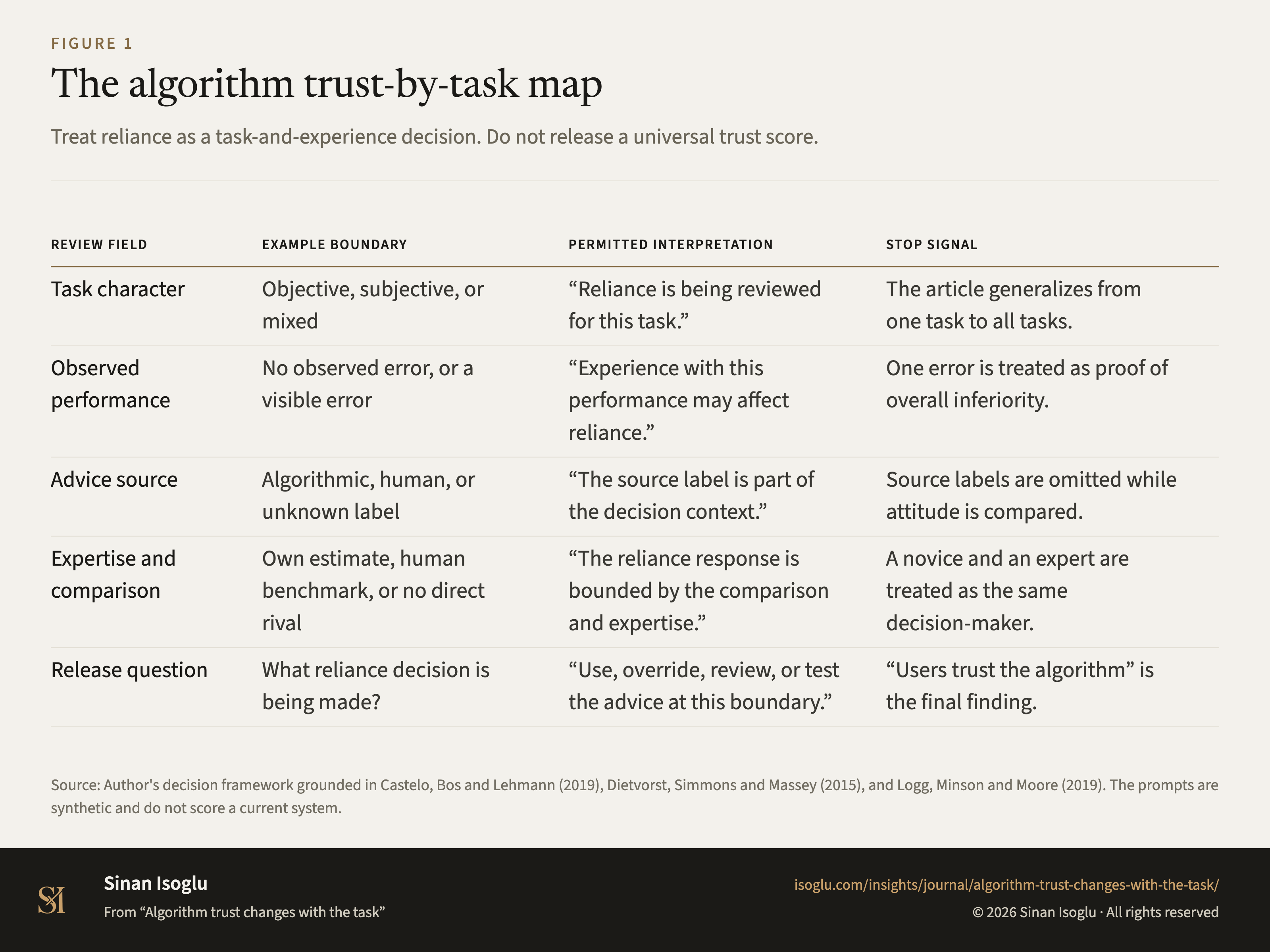
Figure 1Figure
The algorithm trust-by-task map
Algorithm trust changes with the task
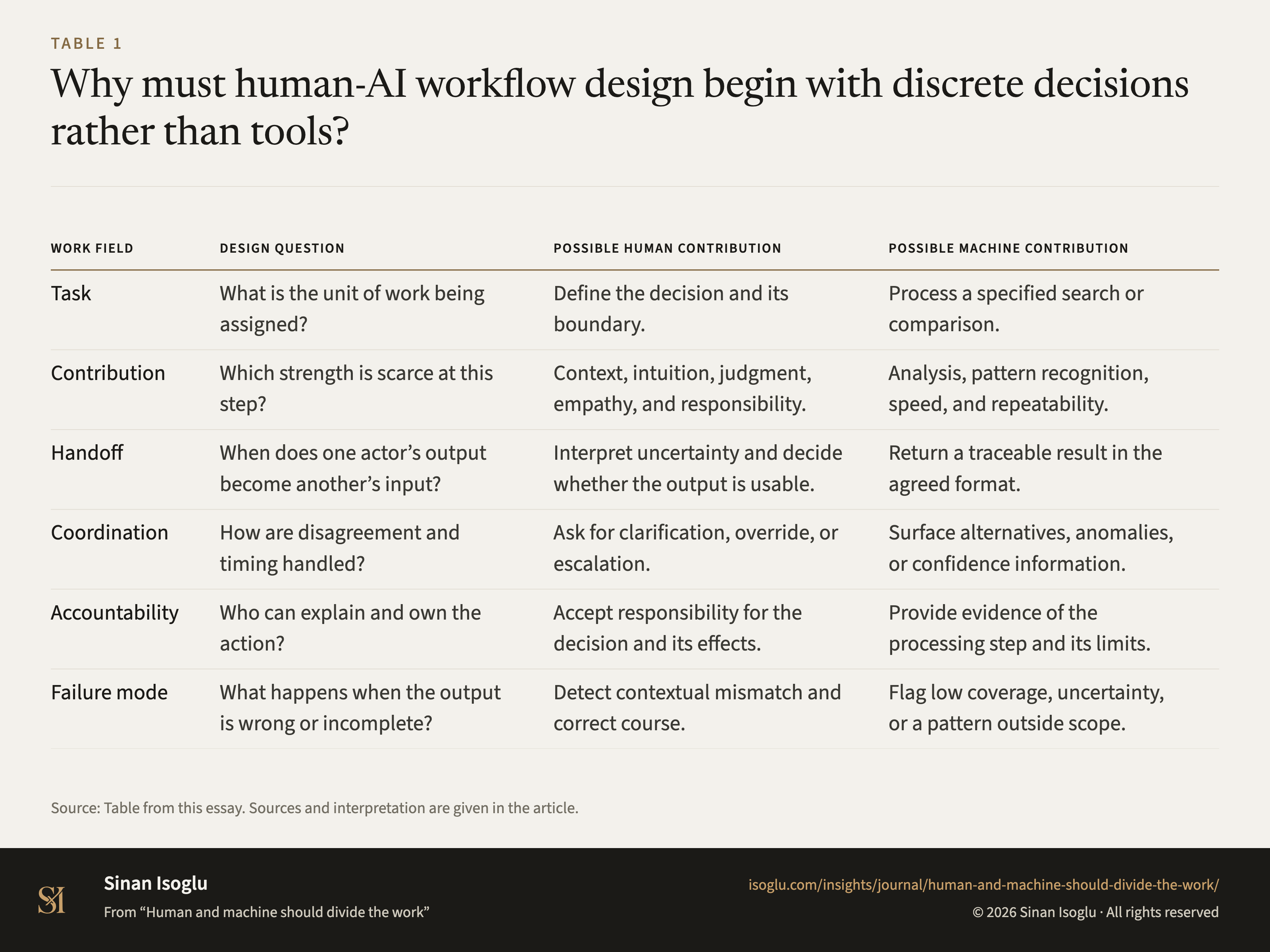
Table 1Table
Why must human-AI workflow design begin with discrete decisions rather than tools?
Human and machine should divide the work
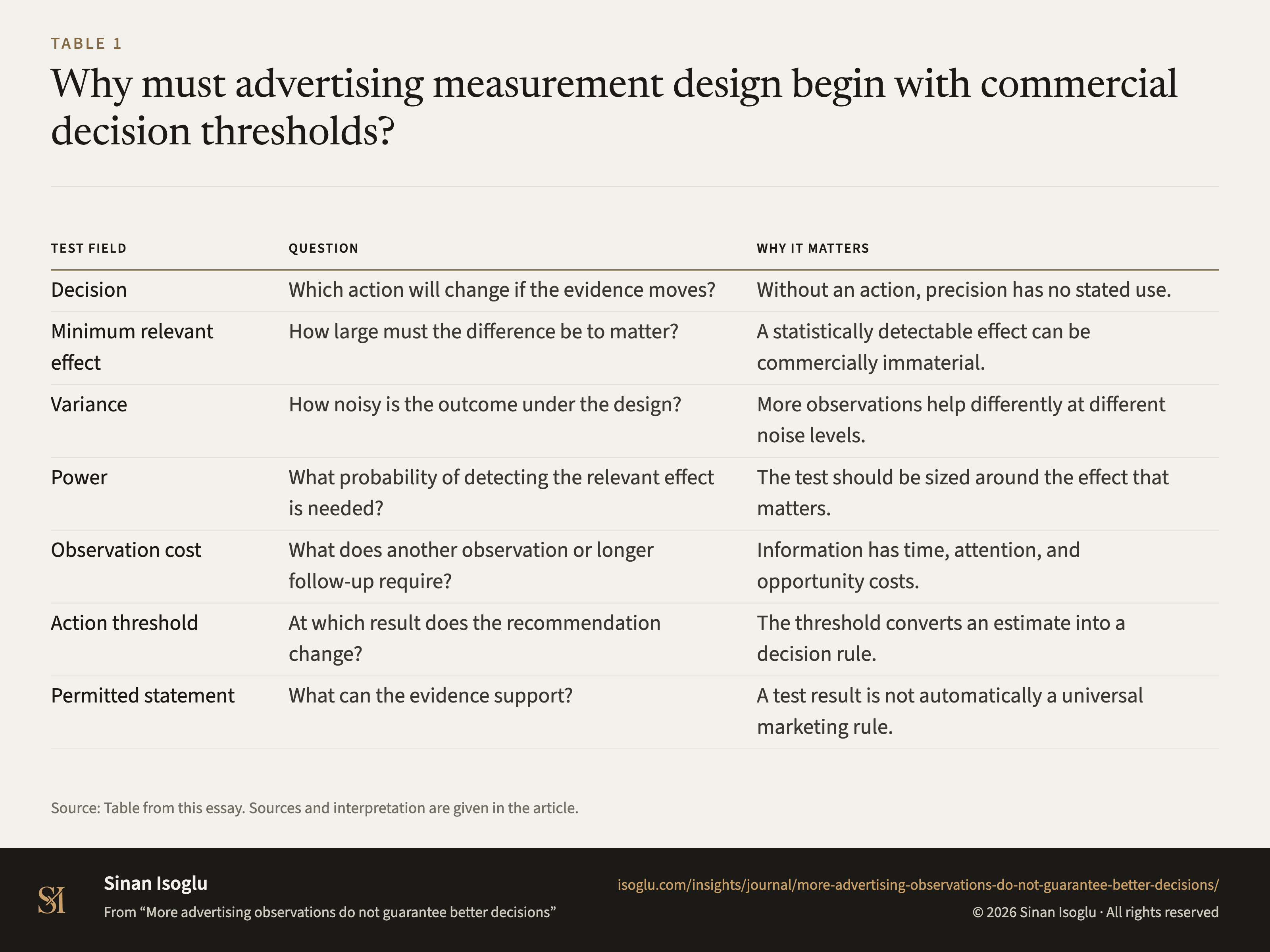
Table 1Table
Why must advertising measurement design begin with commercial decision thresholds?
More advertising observations do not guarantee better decisions
Contact
Bring the question you're working on.
Research, a guest lecture, or a commercial question.