Table 1From “More advertising observations do not guarantee better decisions”
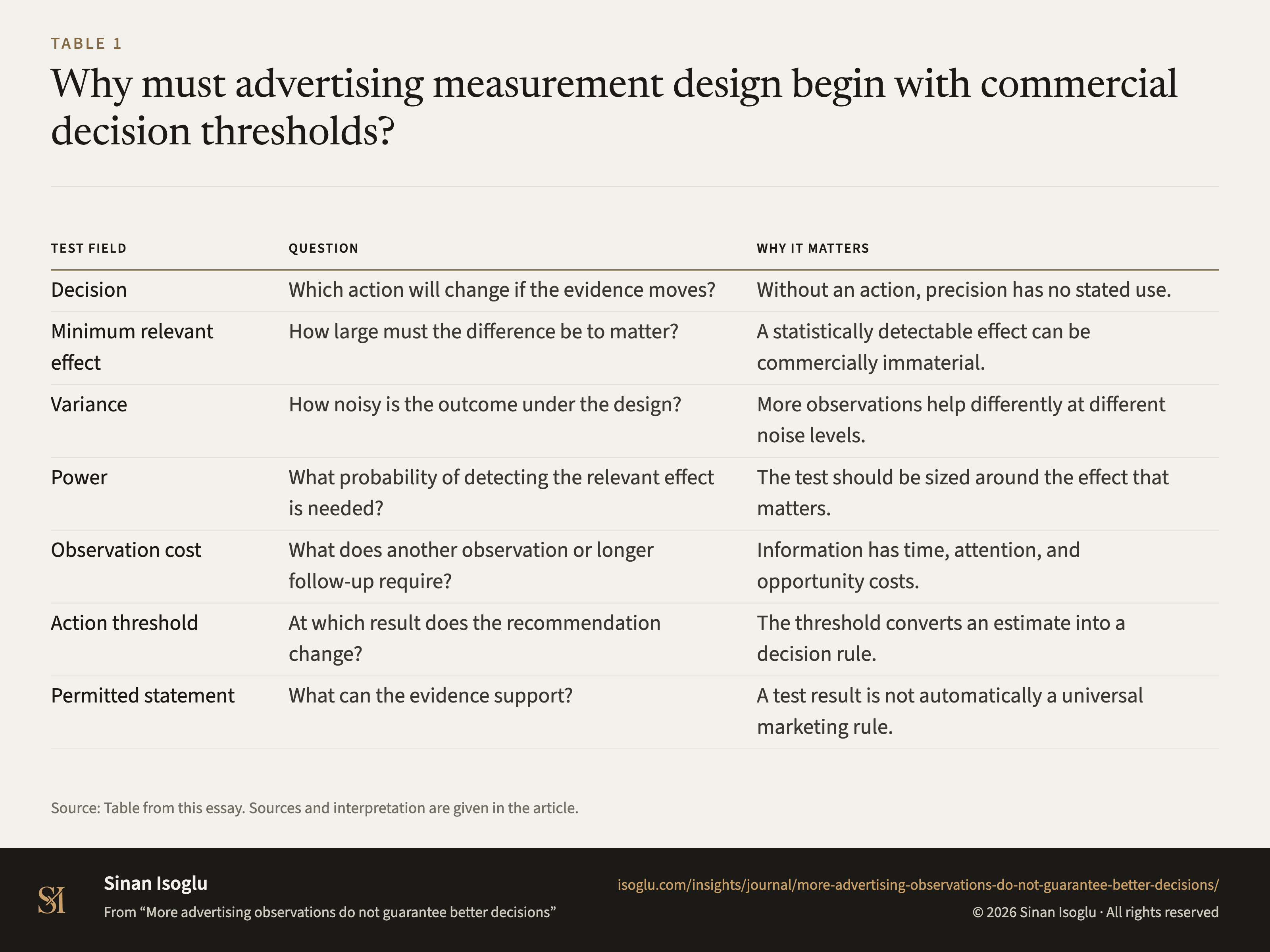
Why must advertising measurement design begin with commercial decision thresholds?
Table 1Why must advertising measurement design begin with commercial decision thresholds?
| Test field | Question | Why it matters |
|---|---|---|
| Decision | Which action will change if the evidence moves? | Without an action, precision has no stated use. |
| Minimum relevant effect | How large must the difference be to matter? | A statistically detectable effect can be commercially immaterial. |
| Variance | How noisy is the outcome under the design? | More observations help differently at different noise levels. |
| Power | What probability of detecting the relevant effect is needed? | The test should be sized around the effect that matters. |
| Observation cost | What does another observation or longer follow-up require? | Information has time, attention, and opportunity costs. |
| Action threshold | At which result does the recommendation change? | The threshold converts an estimate into a decision rule. |
| Permitted statement | What can the evidence support? | A test result is not automatically a universal marketing rule. |
Swipe or scroll horizontally if the table is wider than your screen.
Source: Table from this essay. Sources and interpretation are given in the article.
From the essay
From the research bench
More advertising observations do not guarantee better decisions
More advertising data can improve precision, but decision value also depends on variance, effect size, observation cost, and action thresholds.
Read the essayThis exhibit belongs to an essay: the numbers live here, the argument lives there.
Cite or embed
Related exhibits
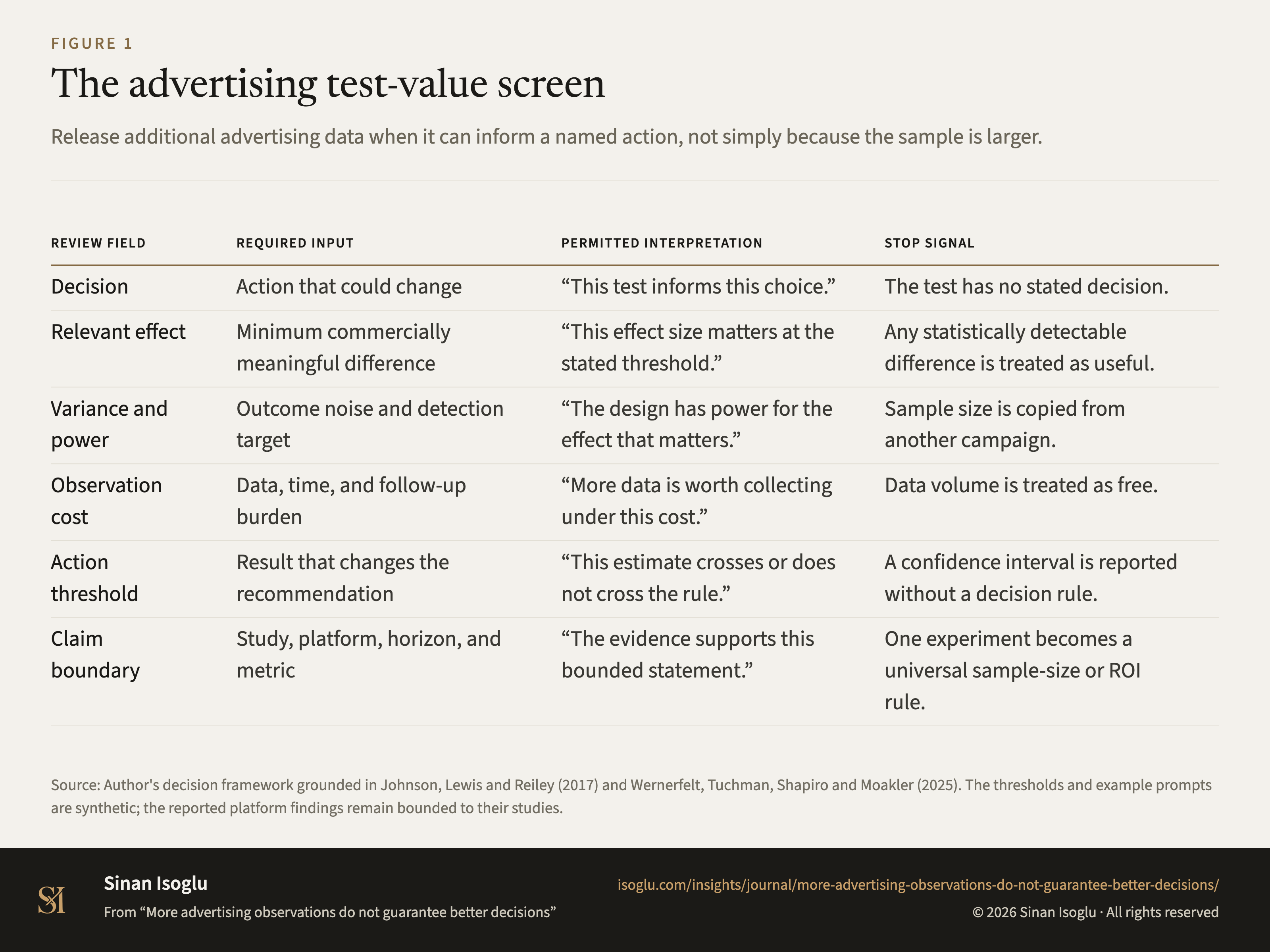
Figure 1Figure
The advertising test-value screen
More advertising observations do not guarantee better decisions
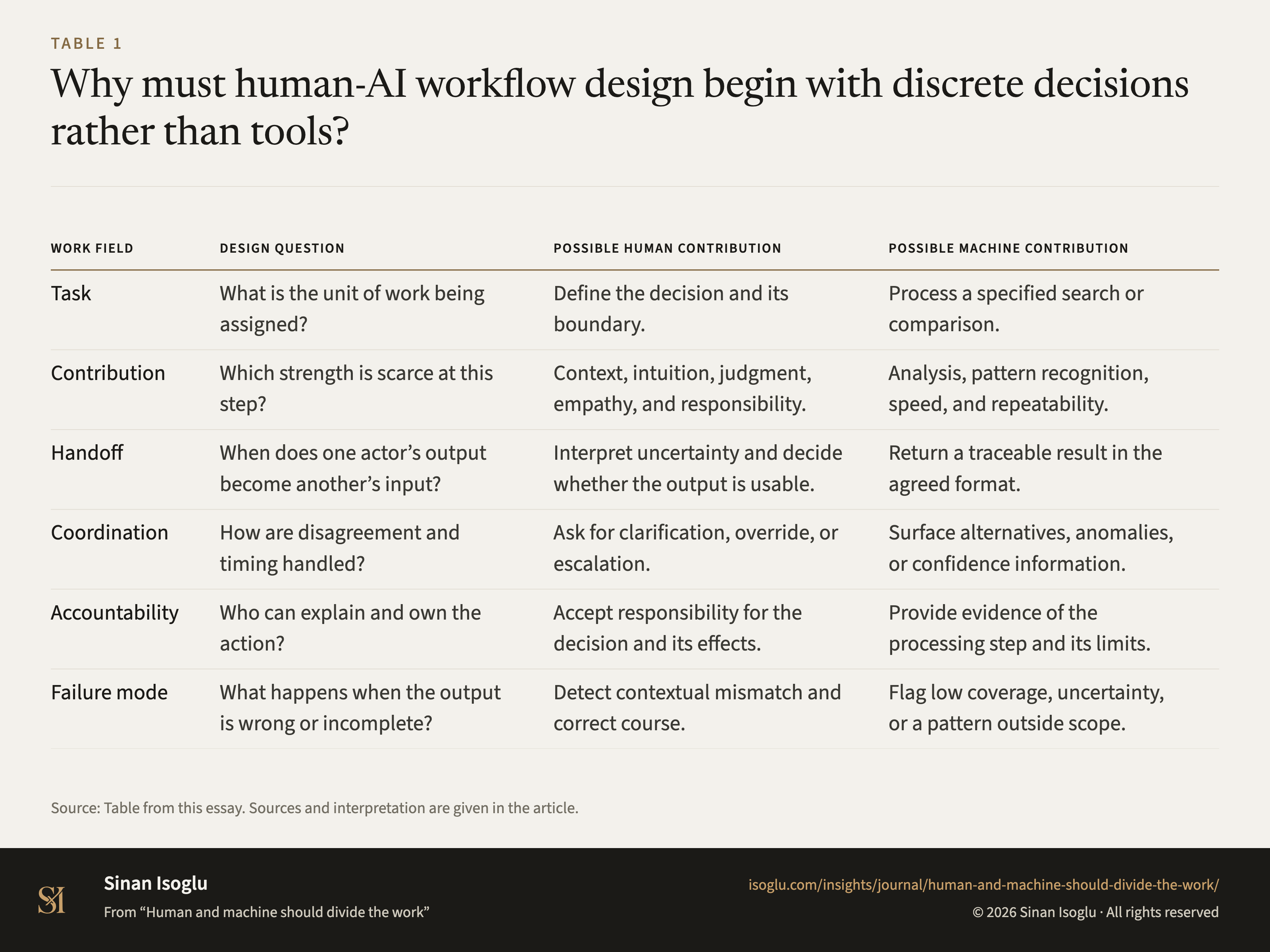
Table 1Table
Why must human-AI workflow design begin with discrete decisions rather than tools?
Human and machine should divide the work
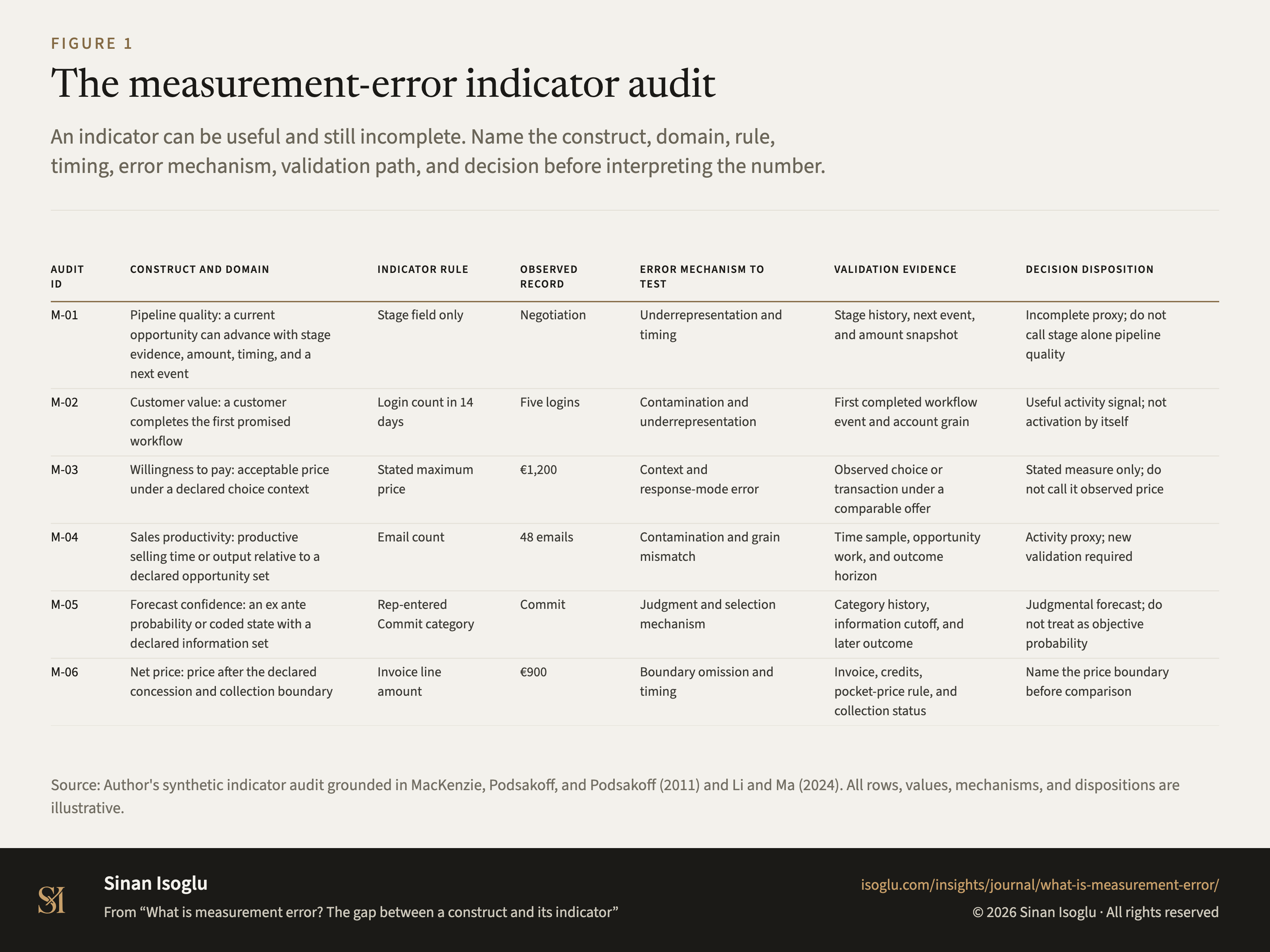
Figure 1Figure
The measurement-error indicator audit
What is measurement error? The gap between a construct and its indicator
Contact
Bring the question you're working on.
Research, a guest lecture, or a commercial question.