Table 10From “What is product-led growth? Product usage is not a growth loop”
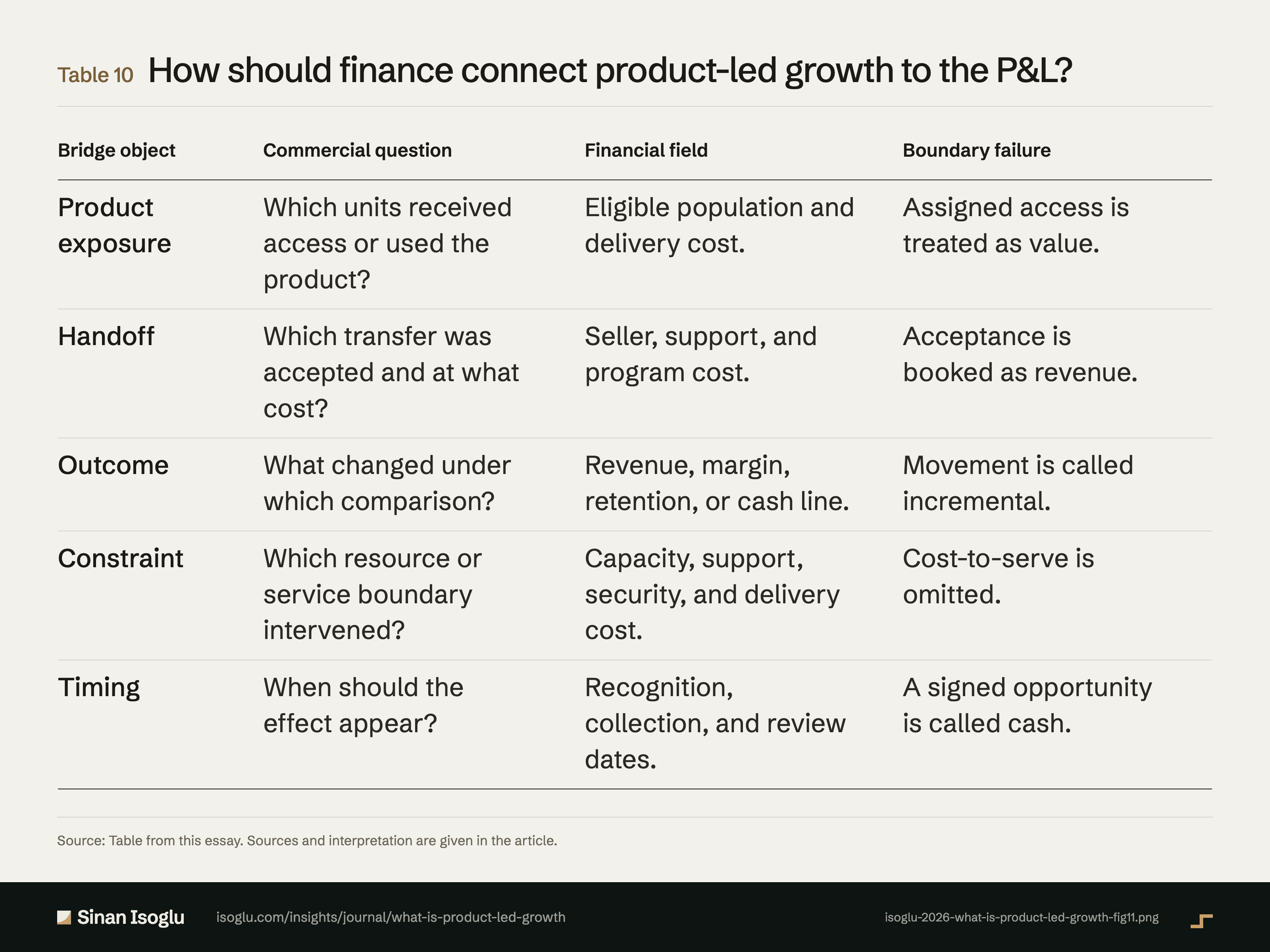
How should finance connect product-led growth to the P&L?
Table 10How should finance connect product-led growth to the P&L?
| Bridge object | Commercial question | Financial field | Boundary failure |
|---|---|---|---|
| Product exposure | Which units received access or used the product? | Eligible population and delivery cost. | Assigned access is treated as value. |
| Handoff | Which transfer was accepted and at what cost? | Seller, support, and program cost. | Acceptance is booked as revenue. |
| Outcome | What changed under which comparison? | Revenue, margin, retention, or cash line. | Movement is called incremental. |
| Constraint | Which resource or service boundary intervened? | Capacity, support, security, and delivery cost. | Cost-to-serve is omitted. |
| Timing | When should the effect appear? | Recognition, collection, and review dates. | A signed opportunity is called cash. |
Swipe or scroll horizontally if the table is wider than your screen.
Source: Table from this essay. Sources and interpretation are given in the article.
From the essay
Go-to-market strategy
What is product-led growth? Product usage is not a growth loop
Product-led growth is a commercial motion, not a usage count. Define the product trigger, handoff, feedback path, and outcome before naming a loop.
Read the essayThis exhibit belongs to an essay: the numbers live here, the argument lives there.
Cite or embed
Related exhibits
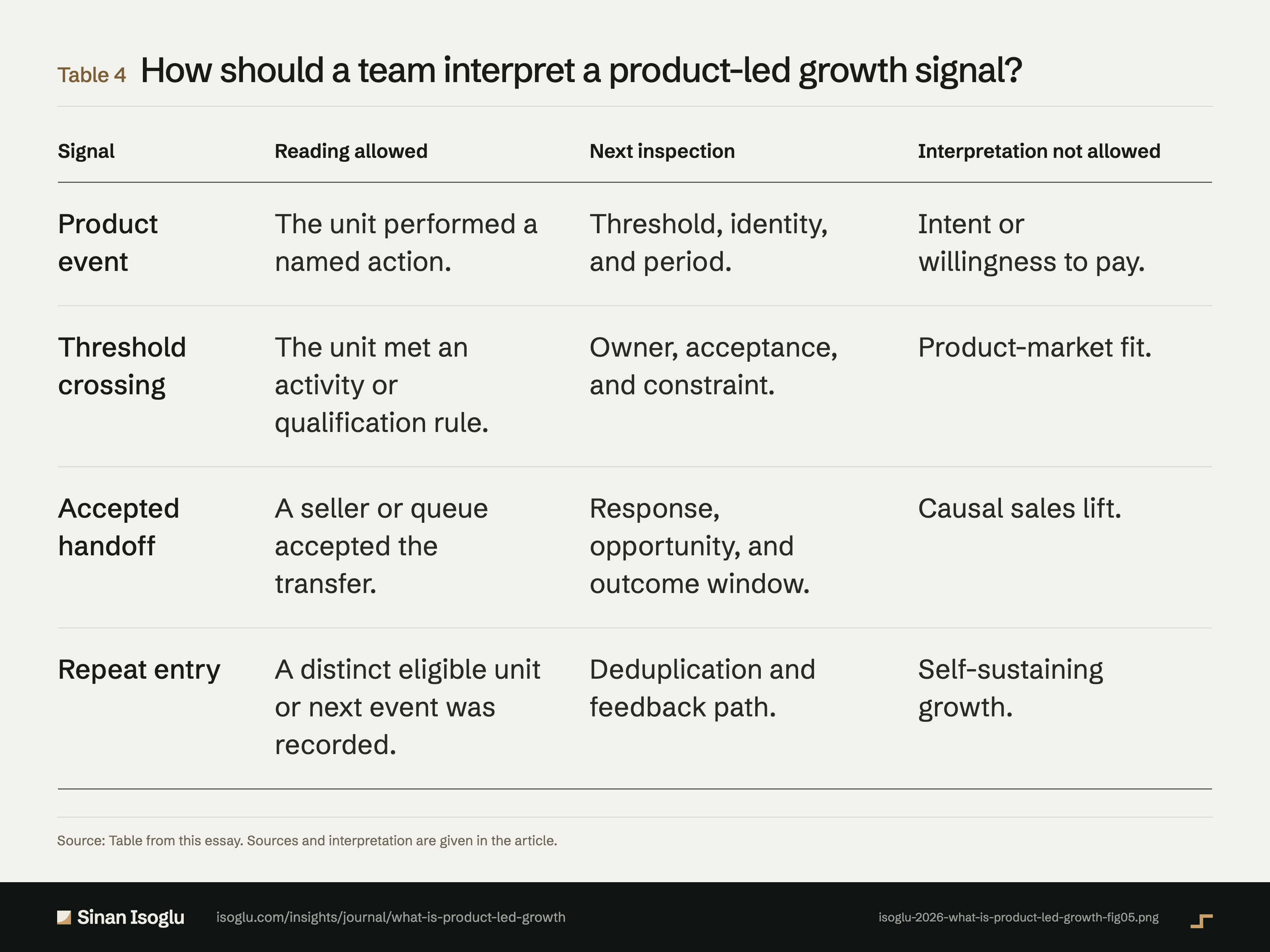
Table 4Table
How should a team interpret a product-led growth signal?
What is product-led growth? Product usage is not a growth loop
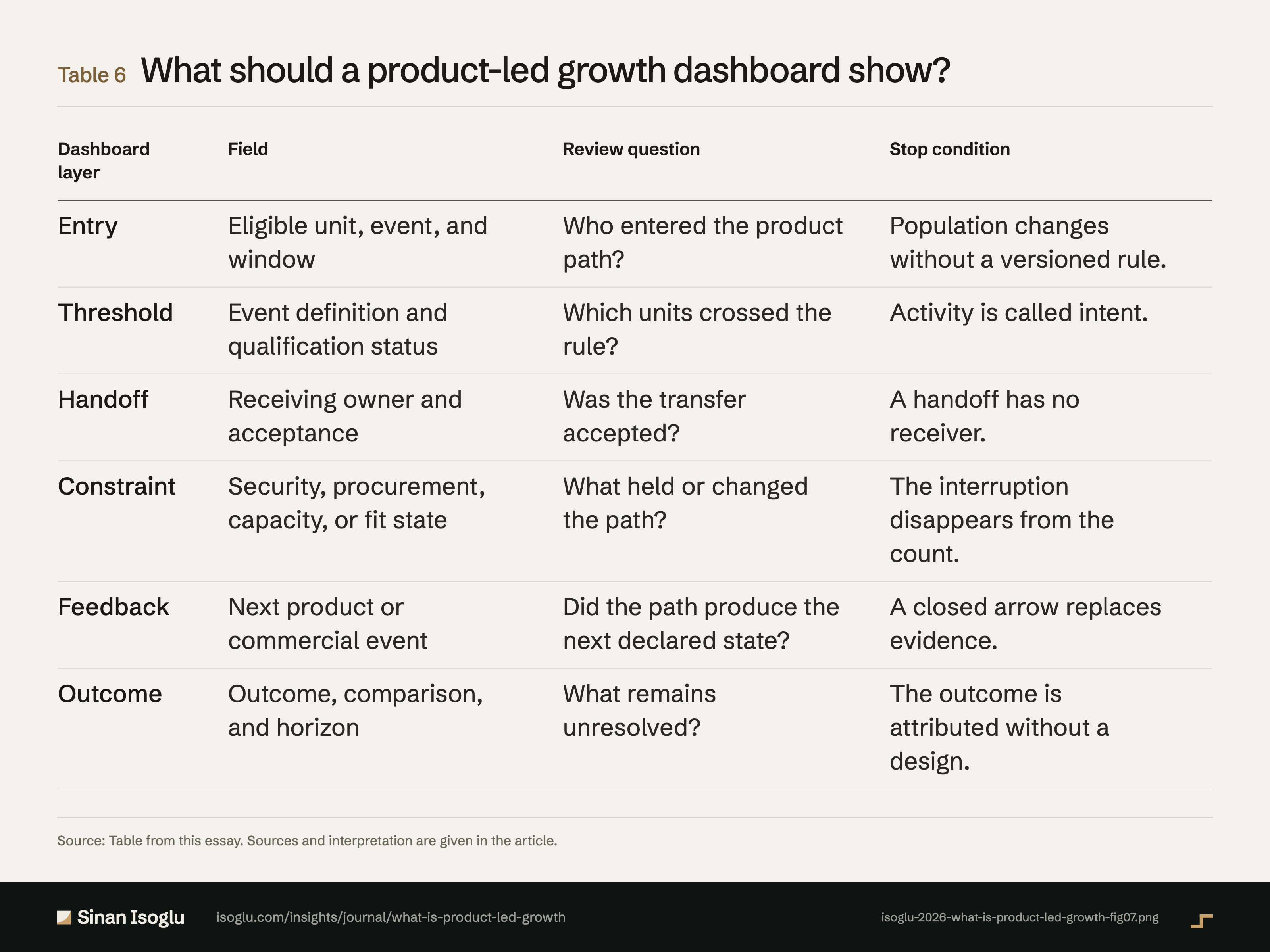
Table 6Table
What should a product-led growth dashboard show?
What is product-led growth? Product usage is not a growth loop
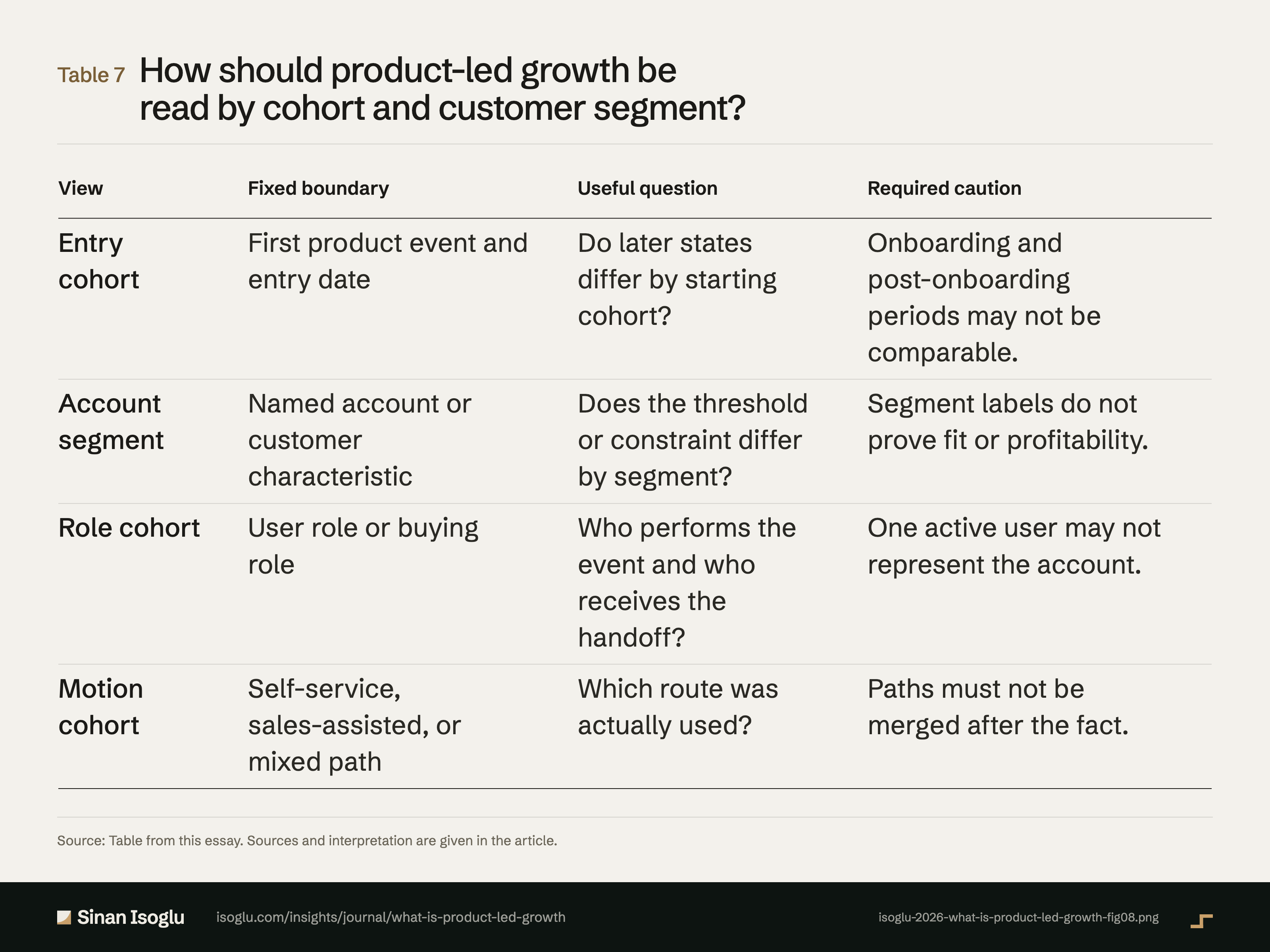
Table 7Table
How should product-led growth be read by cohort and customer segment?
What is product-led growth? Product usage is not a growth loop
Contact
Bring the question you're working on.
Research, a guest lecture, or a commercial question.