Table 4From “What is product-led growth? Product usage is not a growth loop”
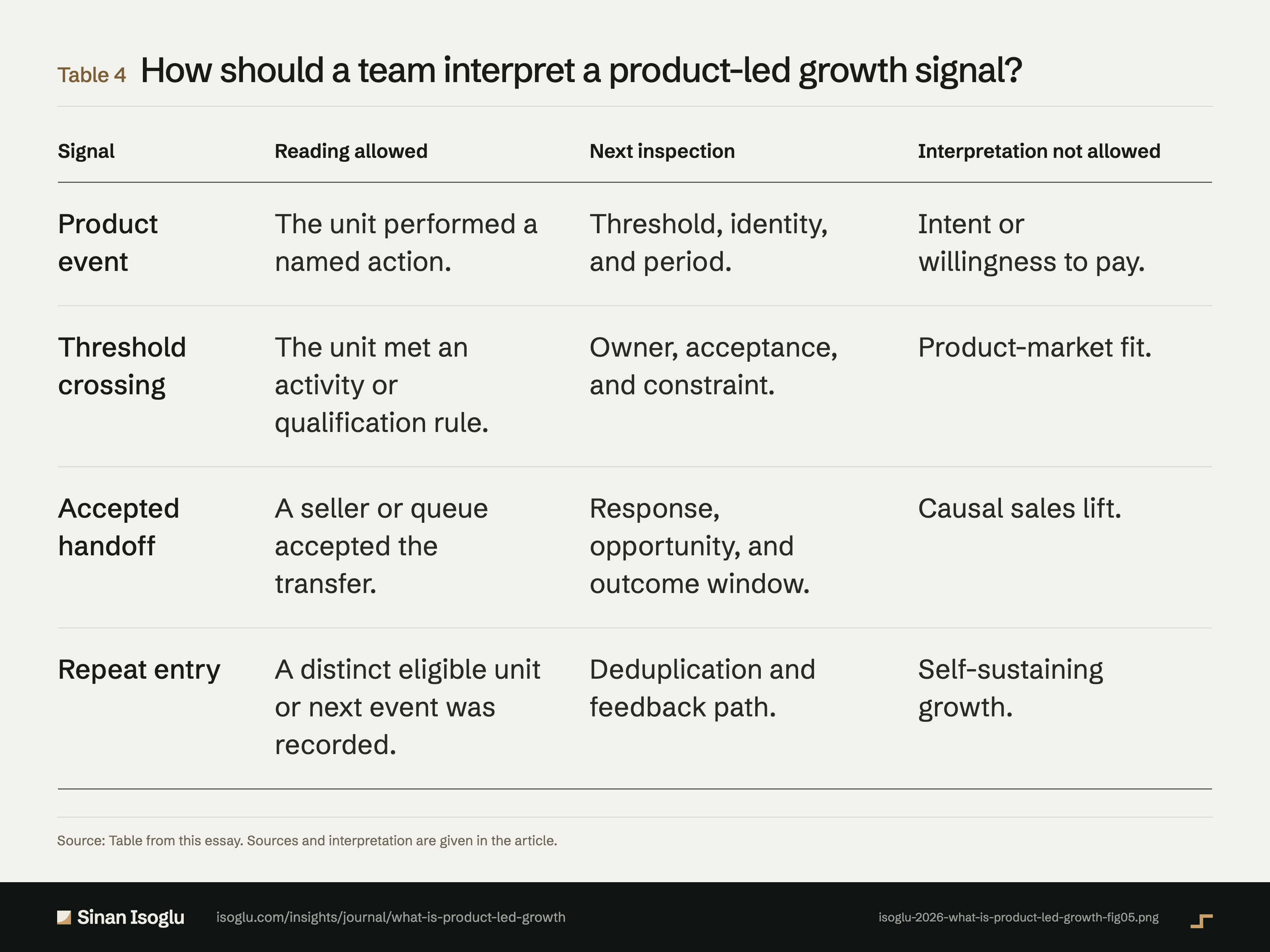
How should a team interpret a product-led growth signal?
Table 4How should a team interpret a product-led growth signal?
| Signal | Reading allowed | Next inspection | Interpretation not allowed |
|---|---|---|---|
| Product event | The unit performed a named action. | Threshold, identity, and period. | Intent or willingness to pay. |
| Threshold crossing | The unit met an activity or qualification rule. | Owner, acceptance, and constraint. | Product-market fit. |
| Accepted handoff | A seller or queue accepted the transfer. | Response, opportunity, and outcome window. | Causal sales lift. |
| Repeat entry | A distinct eligible unit or next event was recorded. | Deduplication and feedback path. | Self-sustaining growth. |
Swipe or scroll horizontally if the table is wider than your screen.
Source: Table from this essay. Sources and interpretation are given in the article.
From the essay
Go-to-market strategy
What is product-led growth? Product usage is not a growth loop
Product-led growth is a commercial motion, not a usage count. Define the product trigger, handoff, feedback path, and outcome before naming a loop.
Read the essayThis exhibit belongs to an essay: the numbers live here, the argument lives there.
Cite or embed
Related exhibits
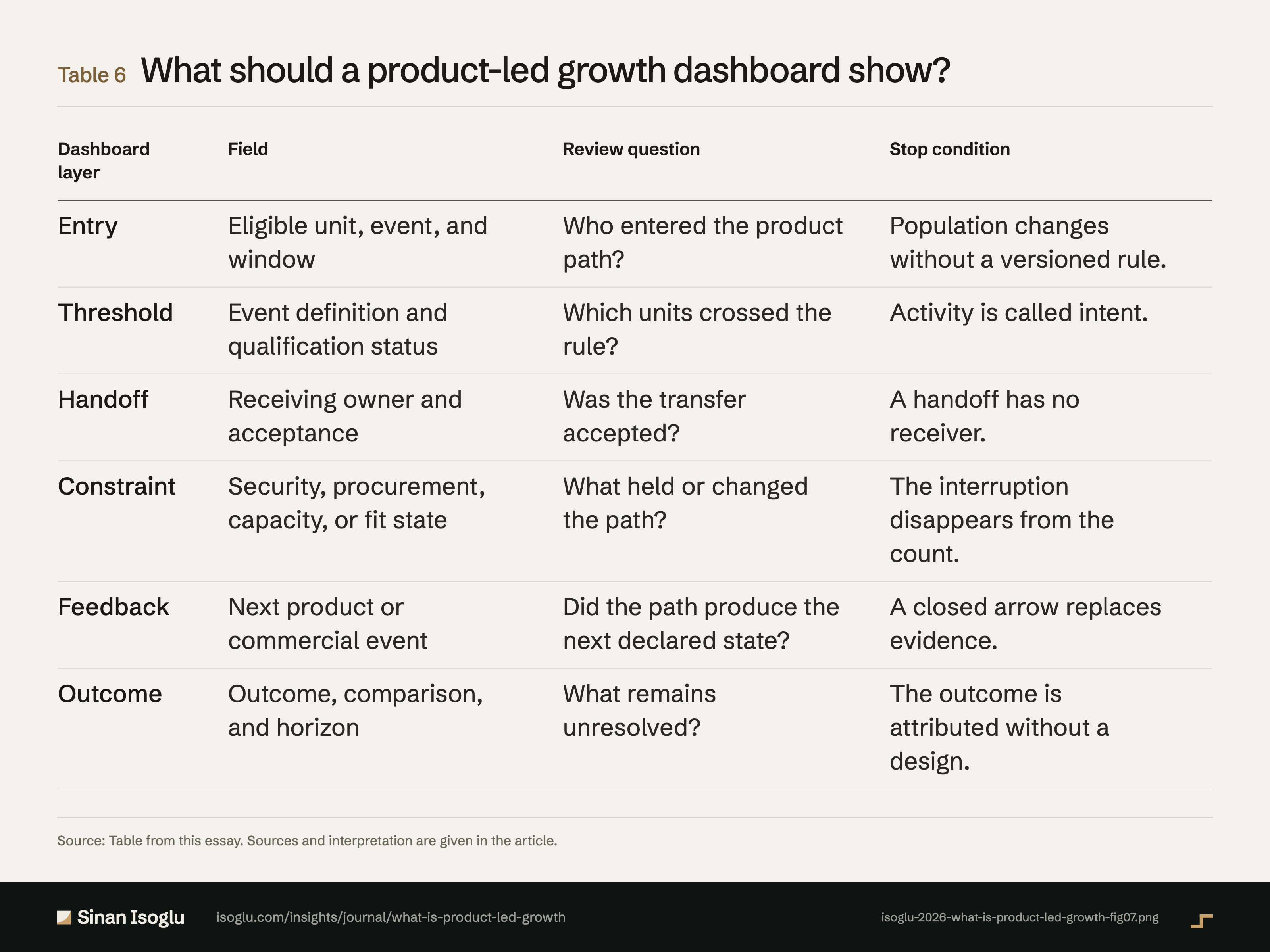
Table 6Table
What should a product-led growth dashboard show?
What is product-led growth? Product usage is not a growth loop
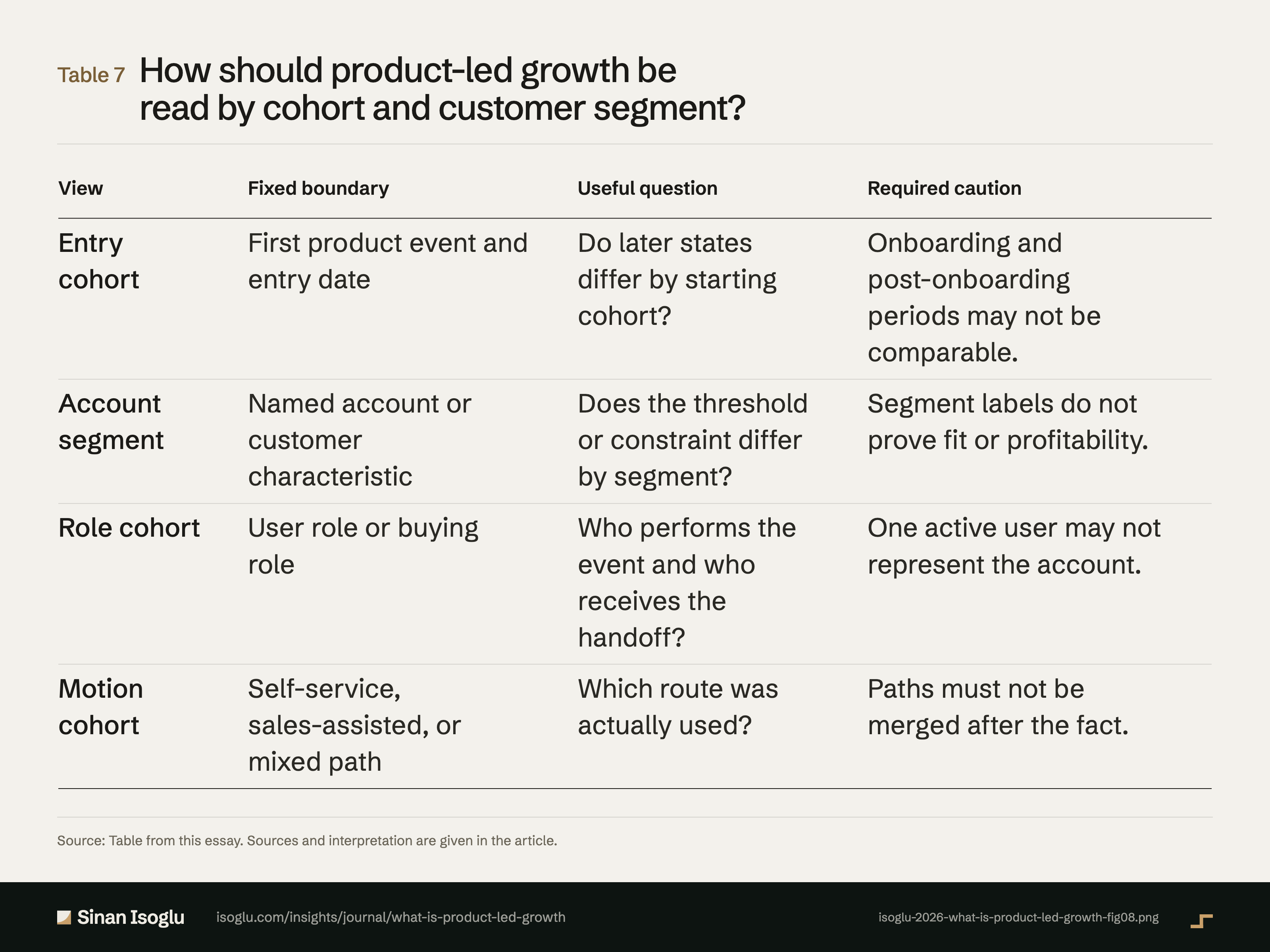
Table 7Table
How should product-led growth be read by cohort and customer segment?
What is product-led growth? Product usage is not a growth loop
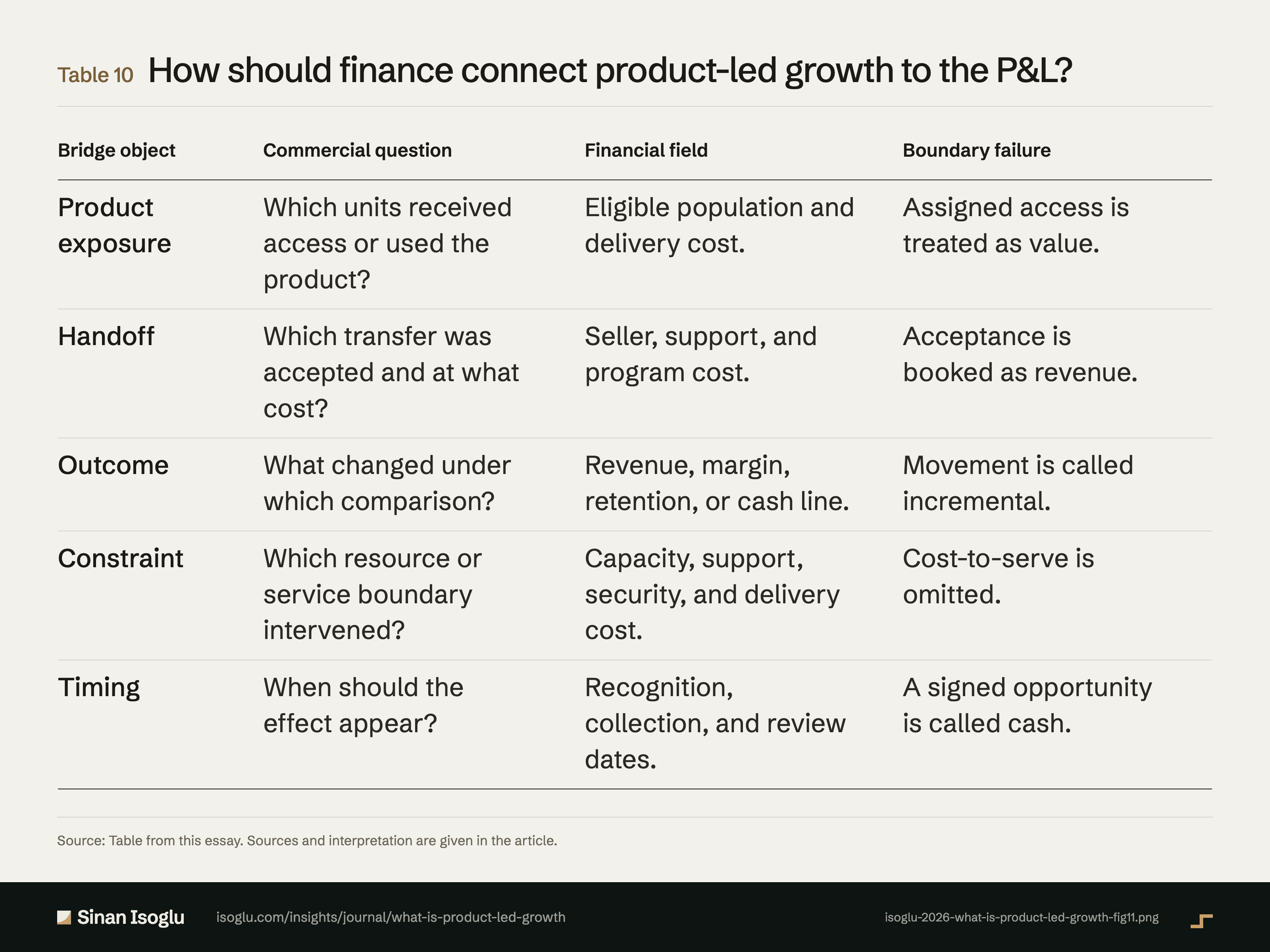
Table 10Table
How should finance connect product-led growth to the P&L?
What is product-led growth? Product usage is not a growth loop
Contact
Bring the question you're working on.
Research, a guest lecture, or a commercial question.