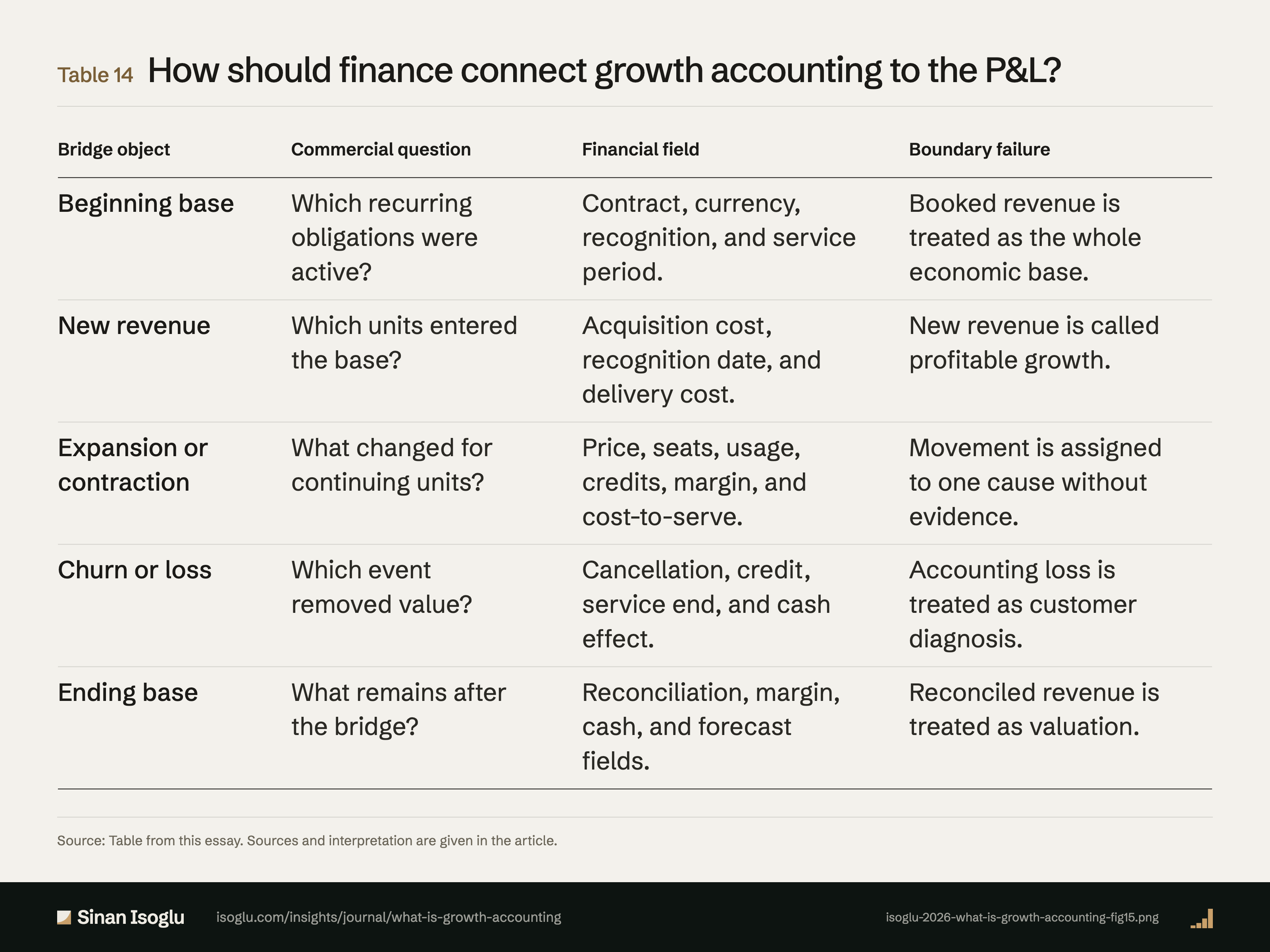
Table 14From “What is growth accounting? Separate new, retained, expanded, and lost revenue”
How should finance connect growth accounting to the P&L?
Table 14How should finance connect growth accounting to the P&L?
| Bridge object | Commercial question | Financial field | Boundary failure |
|---|---|---|---|
| Beginning base | Which recurring obligations were active? | Contract, currency, recognition, and service period. | Booked revenue is treated as the whole economic base. |
| New revenue | Which units entered the base? | Acquisition cost, recognition date, and delivery cost. | New revenue is called profitable growth. |
| Expansion or contraction | What changed for continuing units? | Price, seats, usage, credits, margin, and cost-to-serve. | Movement is assigned to one cause without evidence. |
| Churn or loss | Which event removed value? | Cancellation, credit, service end, and cash effect. | Accounting loss is treated as customer diagnosis. |
| Ending base | What remains after the bridge? | Reconciliation, margin, cash, and forecast fields. | Reconciled revenue is treated as valuation. |
Swipe or scroll horizontally if the table is wider than your screen.
Source: Table from this essay. Sources and interpretation are given in the article.
From the essay
Growth that compounds
What is growth accounting? Separate new, retained, expanded, and lost revenue
Growth accounting reconciles recurring revenue through new, expanded, contracted, and lost components. Keep revenue and customer counts separate.
Read the essayThis exhibit belongs to an essay: the numbers live here, the argument lives there.
Cite or embed
Related exhibits
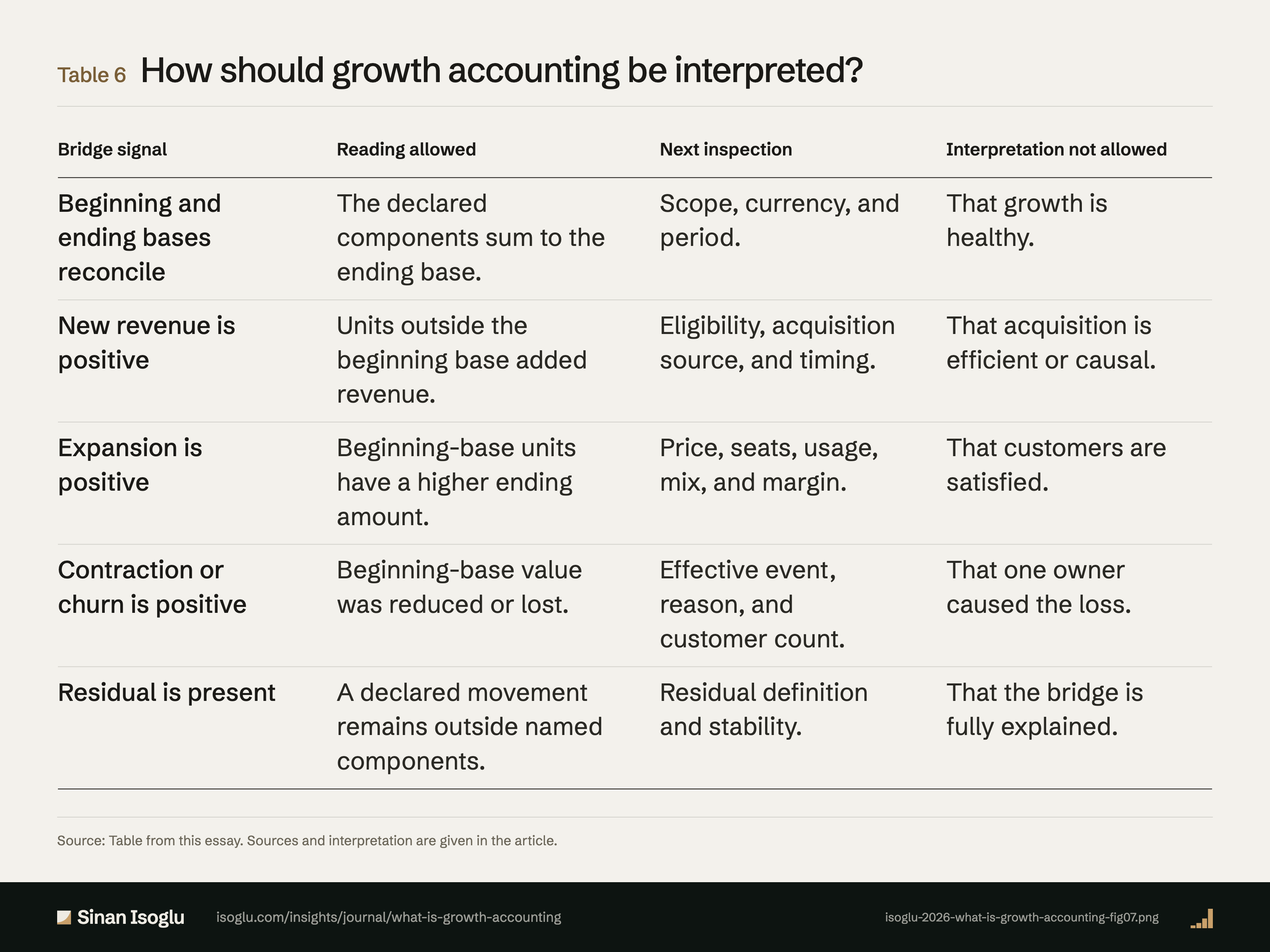
Table 6Table
How should growth accounting be interpreted?
What is growth accounting? Separate new, retained, expanded, and lost revenue
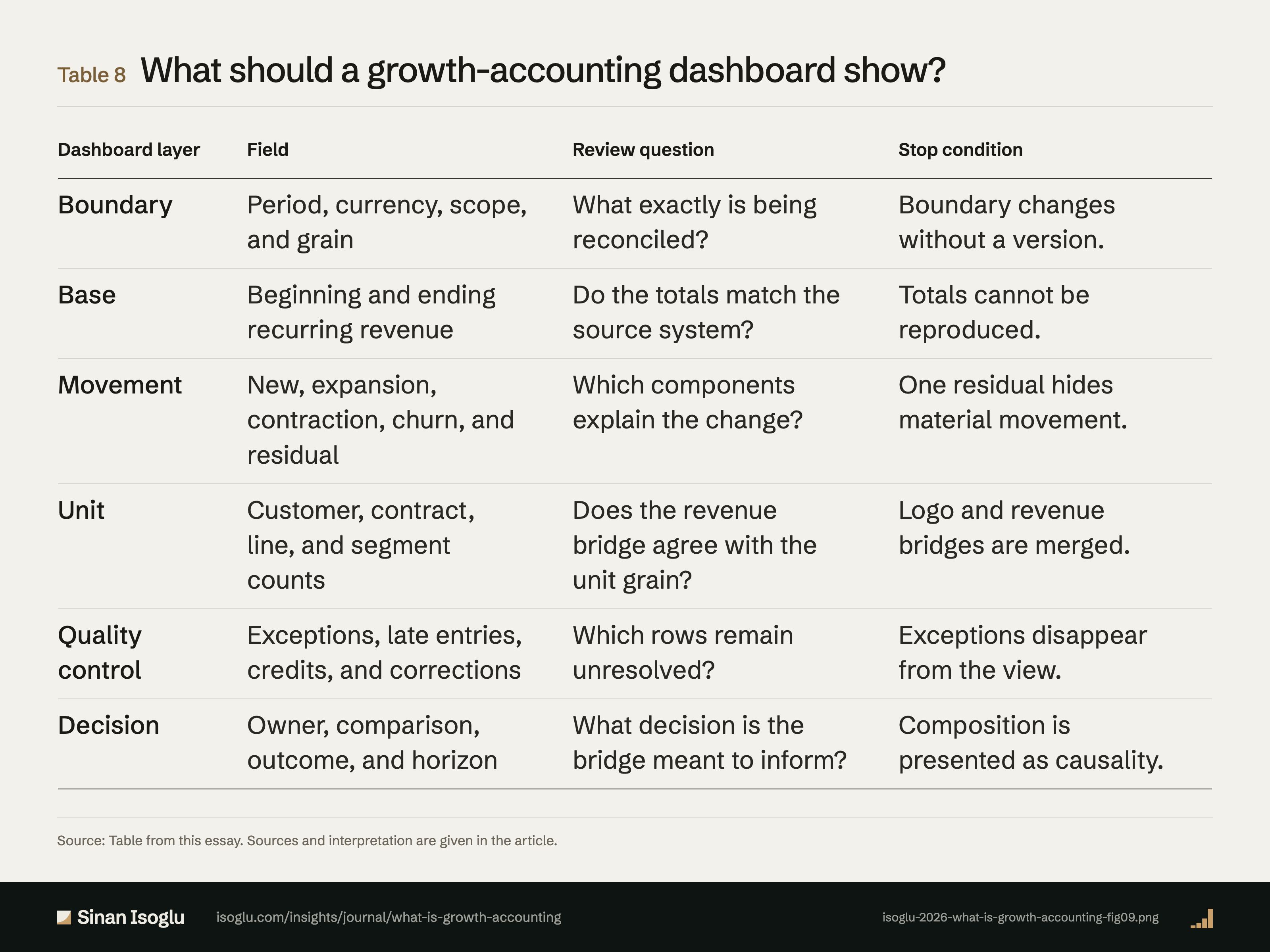
Table 8Table
What should a growth-accounting dashboard show?
What is growth accounting? Separate new, retained, expanded, and lost revenue
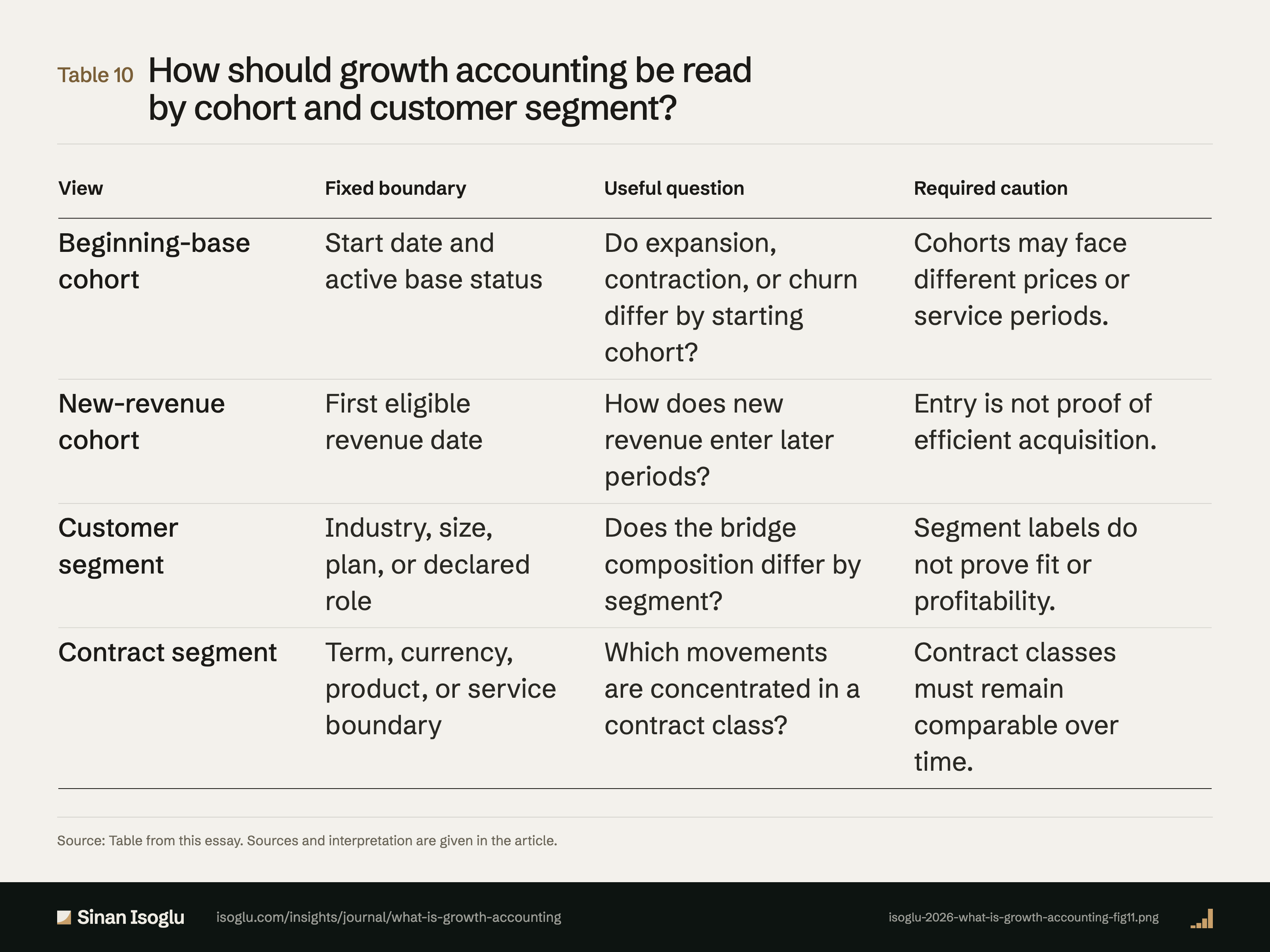
Table 10Table
How should growth accounting be read by cohort and customer segment?
What is growth accounting? Separate new, retained, expanded, and lost revenue
Contact
Bring the question you're working on.
Research, a guest lecture, or a commercial question.