Table 13From “What is growth accounting? Separate new, retained, expanded, and lost revenue”
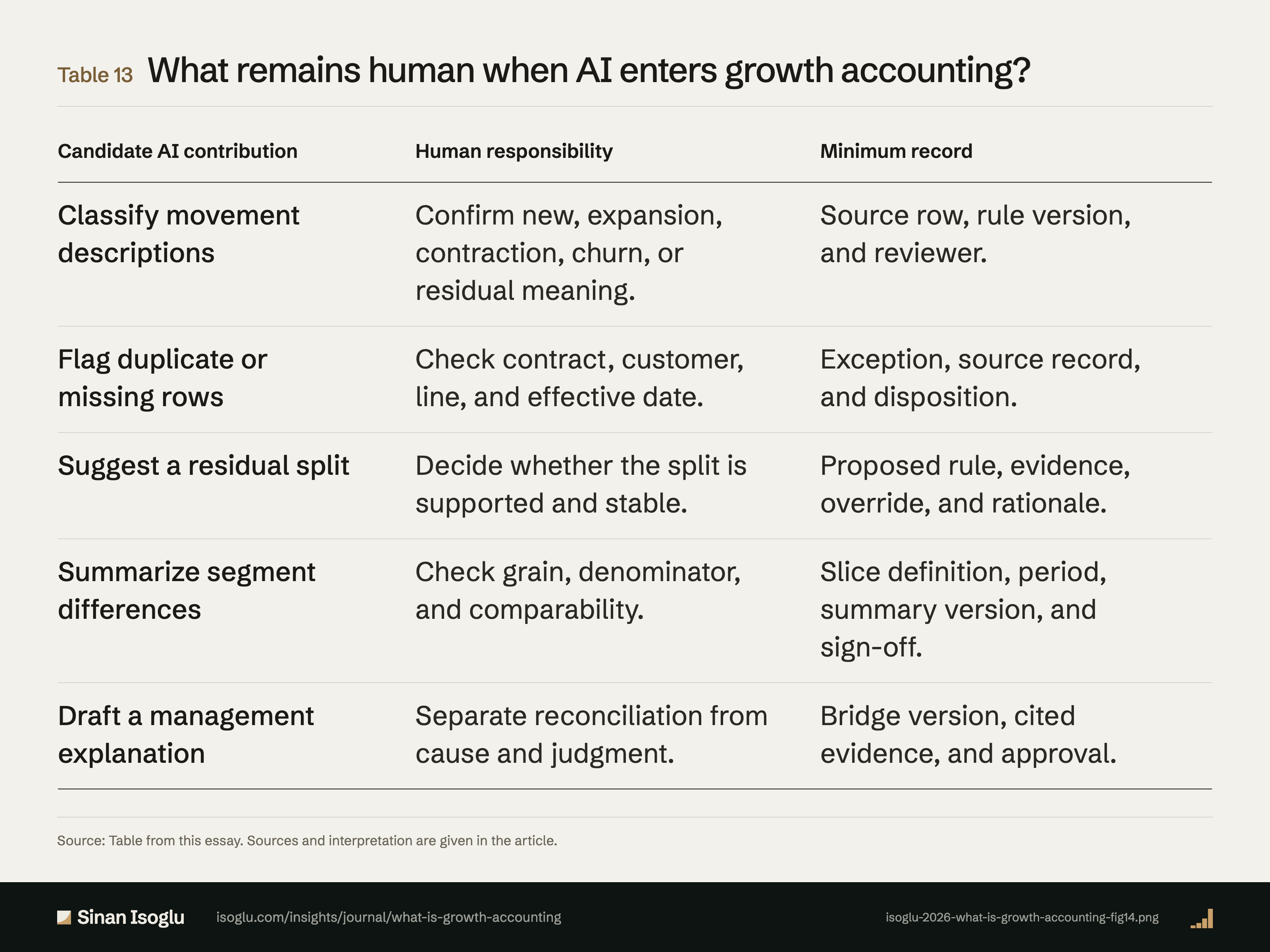
What remains human when AI enters growth accounting?
Table 13What remains human when AI enters growth accounting?
| Candidate AI contribution | Human responsibility | Minimum record |
|---|---|---|
| Classify movement descriptions | Confirm new, expansion, contraction, churn, or residual meaning. | Source row, rule version, and reviewer. |
| Flag duplicate or missing rows | Check contract, customer, line, and effective date. | Exception, source record, and disposition. |
| Suggest a residual split | Decide whether the split is supported and stable. | Proposed rule, evidence, override, and rationale. |
| Summarize segment differences | Check grain, denominator, and comparability. | Slice definition, period, summary version, and sign-off. |
| Draft a management explanation | Separate reconciliation from cause and judgment. | Bridge version, cited evidence, and approval. |
Swipe or scroll horizontally if the table is wider than your screen.
Source: Table from this essay. Sources and interpretation are given in the article.
From the essay
Growth that compounds
What is growth accounting? Separate new, retained, expanded, and lost revenue
Growth accounting reconciles recurring revenue through new, expanded, contracted, and lost components. Keep revenue and customer counts separate.
Read the essayThis exhibit belongs to an essay: the numbers live here, the argument lives there.
Cite or embed
Related exhibits
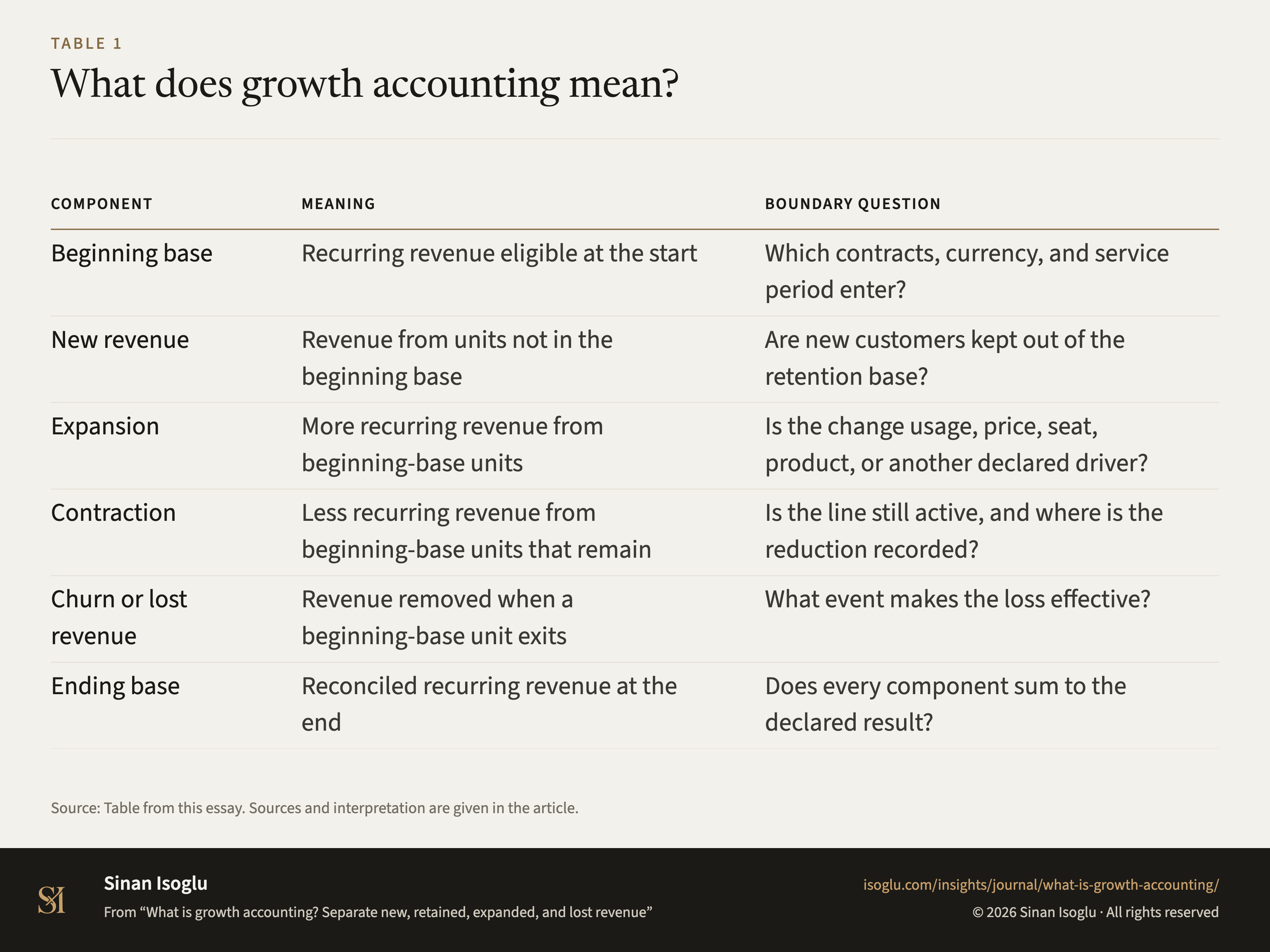
Table 1Table
What does growth accounting mean?
What is growth accounting? Separate new, retained, expanded, and lost revenue
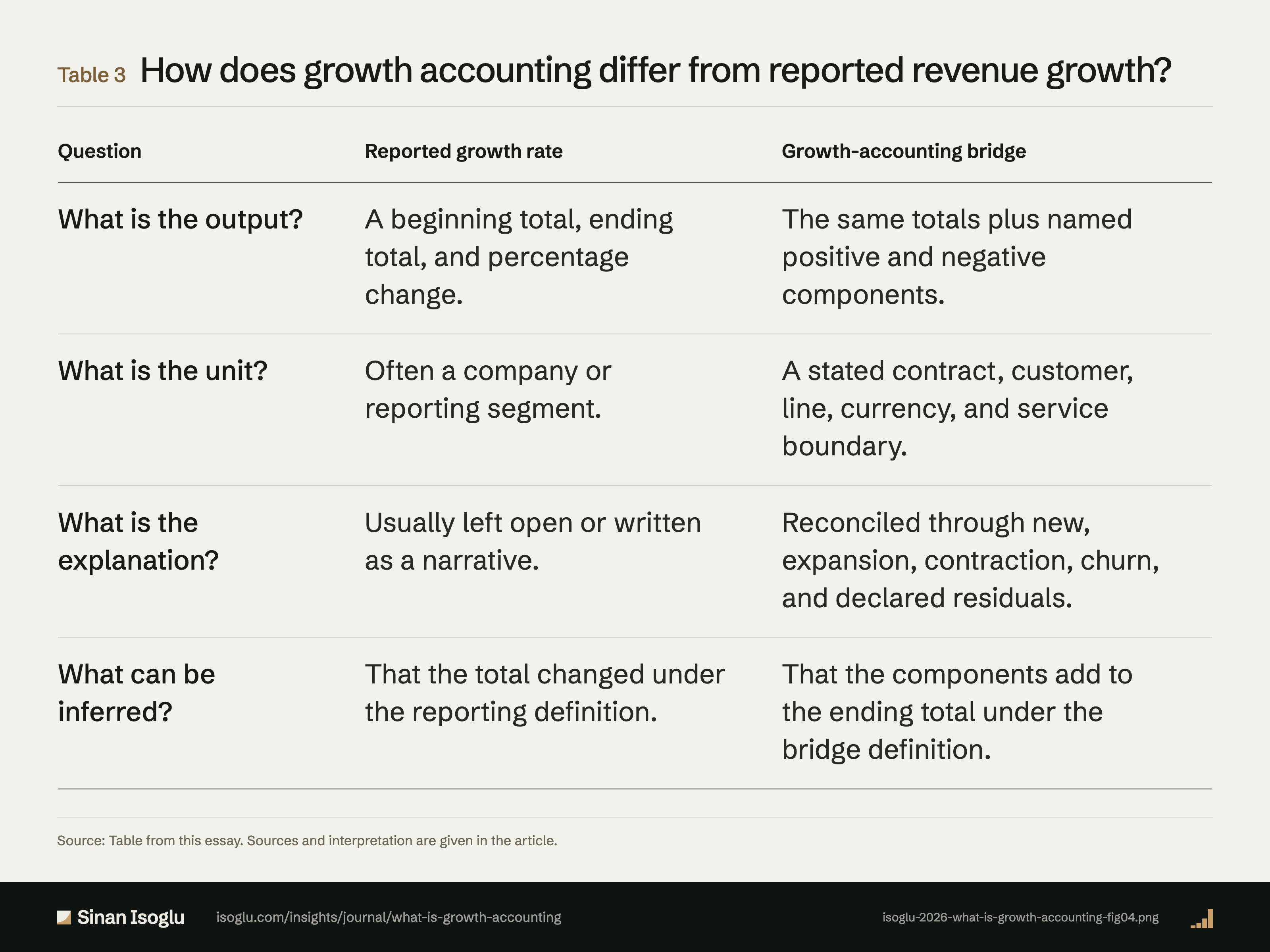
Table 3Table
How does growth accounting differ from reported revenue growth?
What is growth accounting? Separate new, retained, expanded, and lost revenue
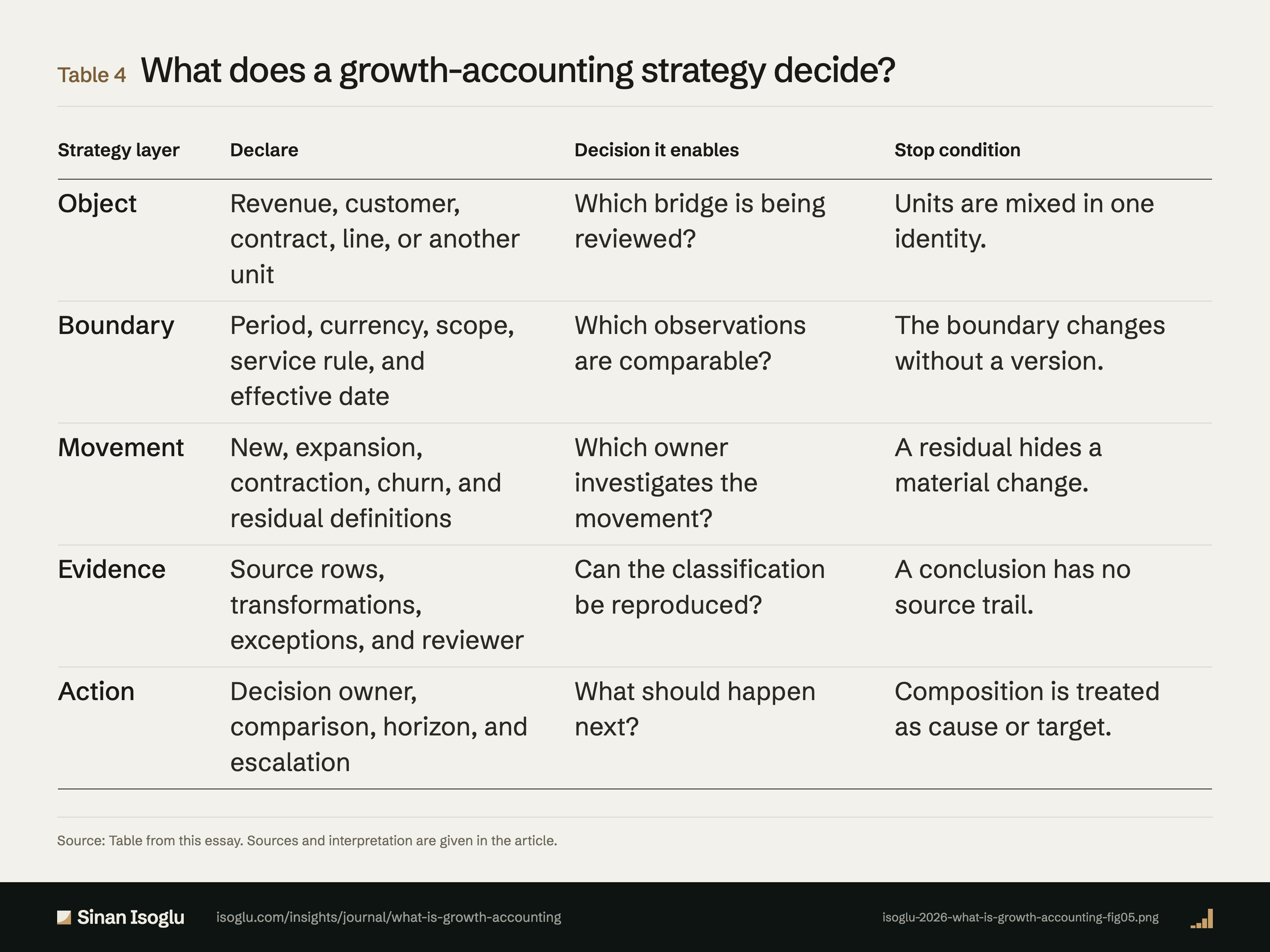
Table 4Table
What does a growth-accounting strategy decide?
What is growth accounting? Separate new, retained, expanded, and lost revenue
Contact
Bring the question you're working on.
Research, a guest lecture, or a commercial question.