Table 11From “What is growth accounting? Separate new, retained, expanded, and lost revenue”
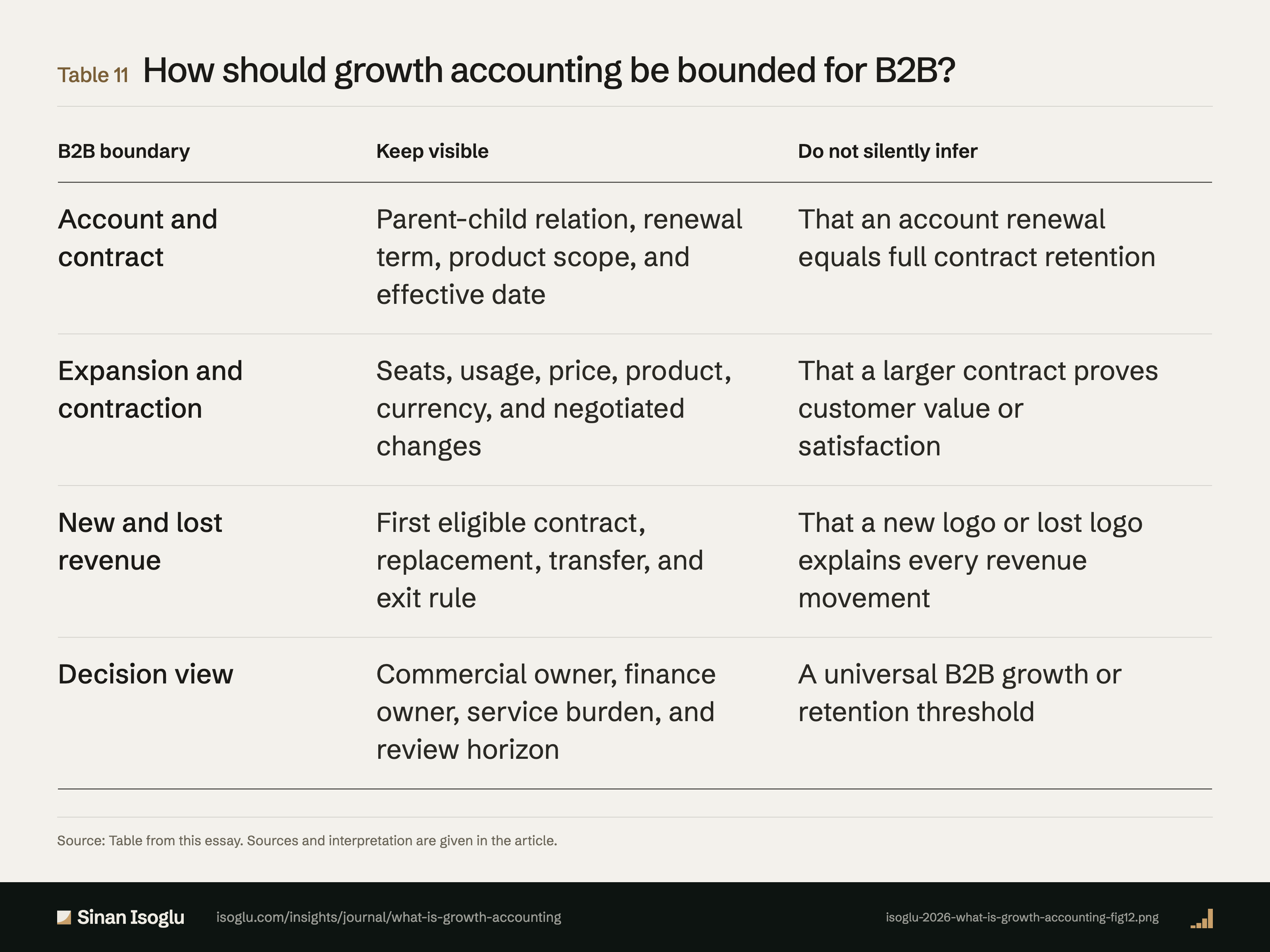
How should growth accounting be bounded for B2B?
Table 11How should growth accounting be bounded for B2B?
| B2B boundary | Keep visible | Do not silently infer |
|---|---|---|
| Account and contract | Parent-child relation, renewal term, product scope, and effective date | That an account renewal equals full contract retention |
| Expansion and contraction | Seats, usage, price, product, currency, and negotiated changes | That a larger contract proves customer value or satisfaction |
| New and lost revenue | First eligible contract, replacement, transfer, and exit rule | That a new logo or lost logo explains every revenue movement |
| Decision view | Commercial owner, finance owner, service burden, and review horizon | A universal B2B growth or retention threshold |
Swipe or scroll horizontally if the table is wider than your screen.
Source: Table from this essay. Sources and interpretation are given in the article.
From the essay
Growth that compounds
What is growth accounting? Separate new, retained, expanded, and lost revenue
Growth accounting reconciles recurring revenue through new, expanded, contracted, and lost components. Keep revenue and customer counts separate.
Read the essayThis exhibit belongs to an essay: the numbers live here, the argument lives there.
Cite or embed
Related exhibits
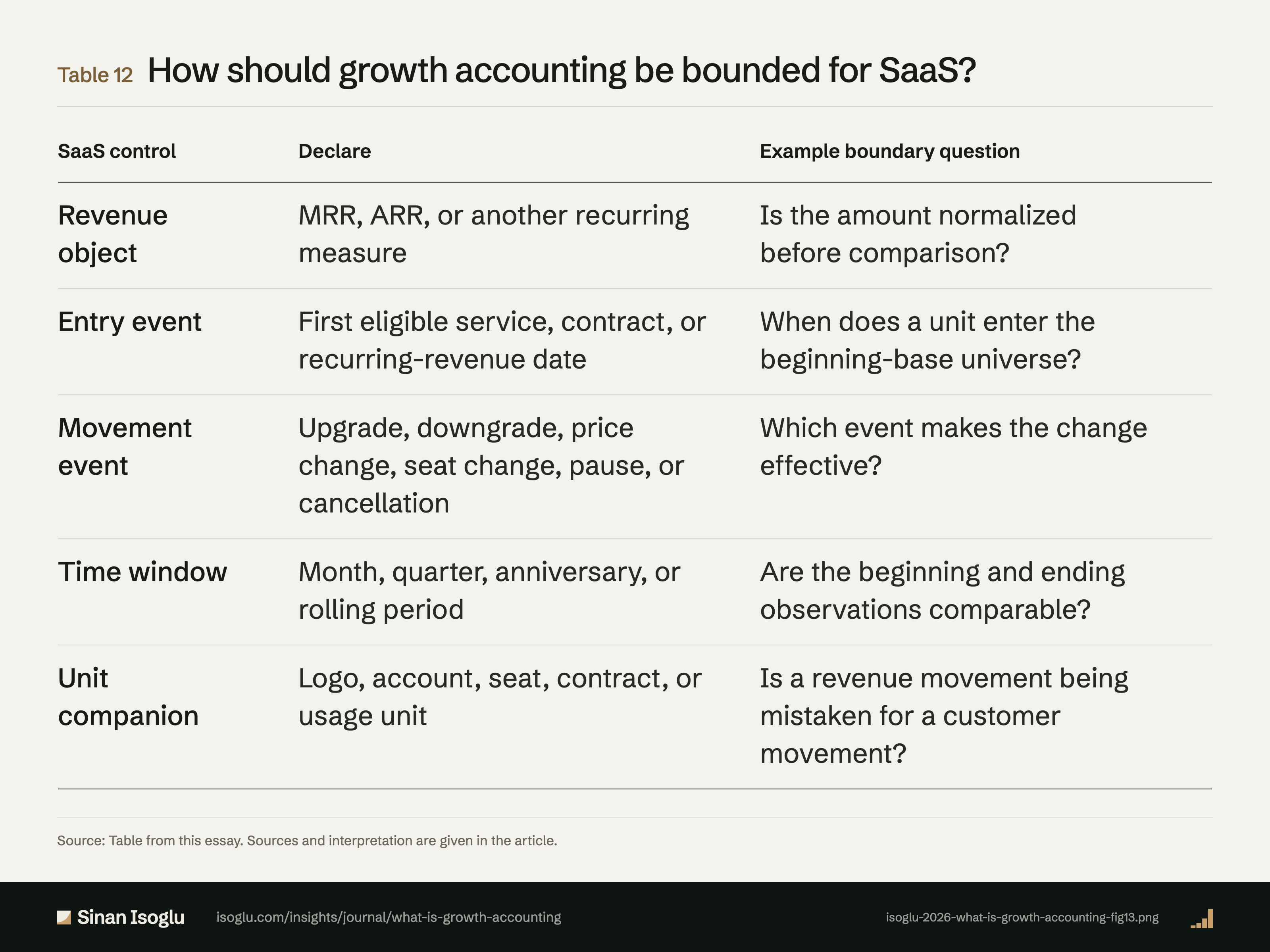
Table 12Table
How should growth accounting be bounded for SaaS?
What is growth accounting? Separate new, retained, expanded, and lost revenue
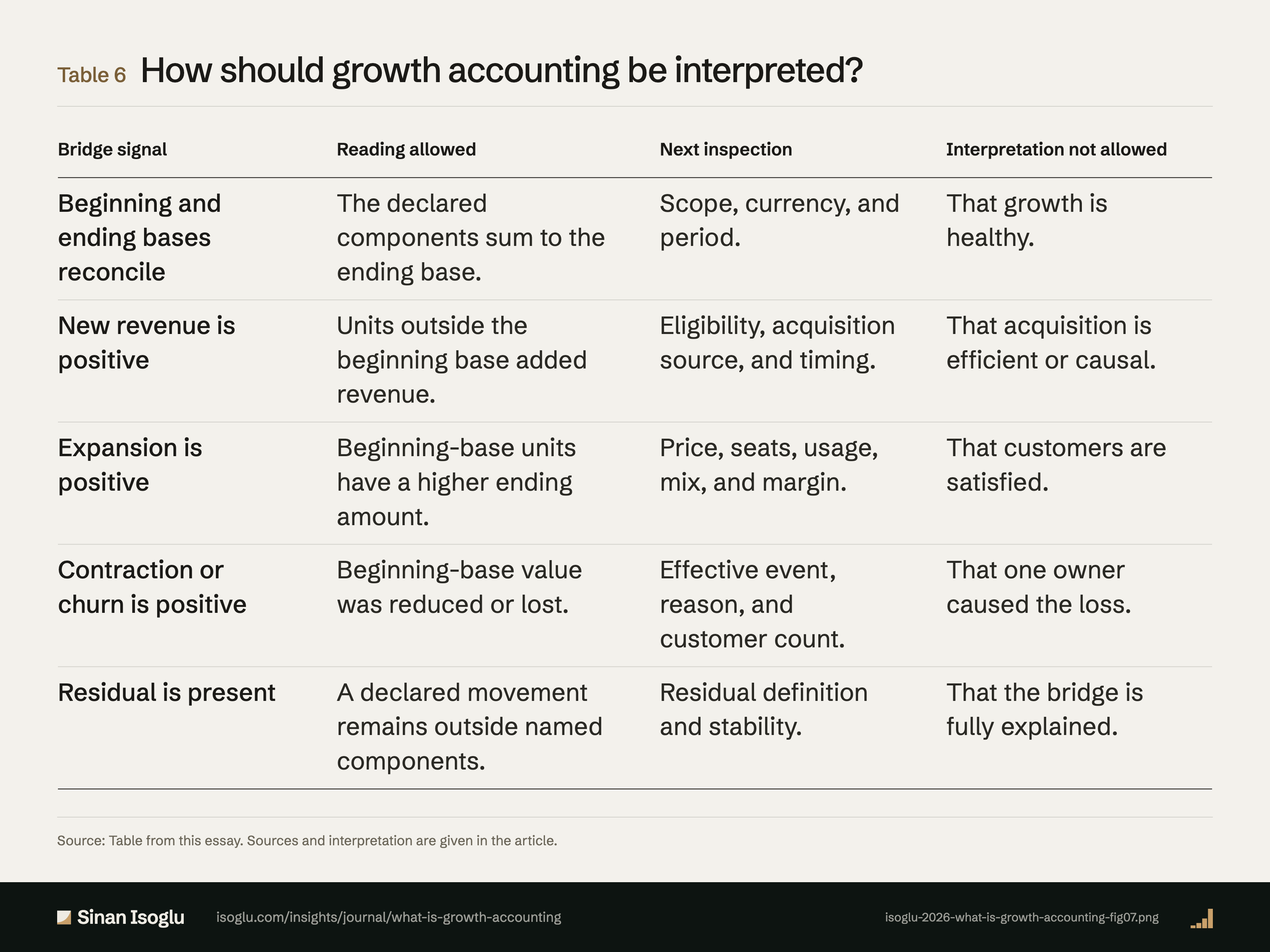
Table 6Table
How should growth accounting be interpreted?
What is growth accounting? Separate new, retained, expanded, and lost revenue
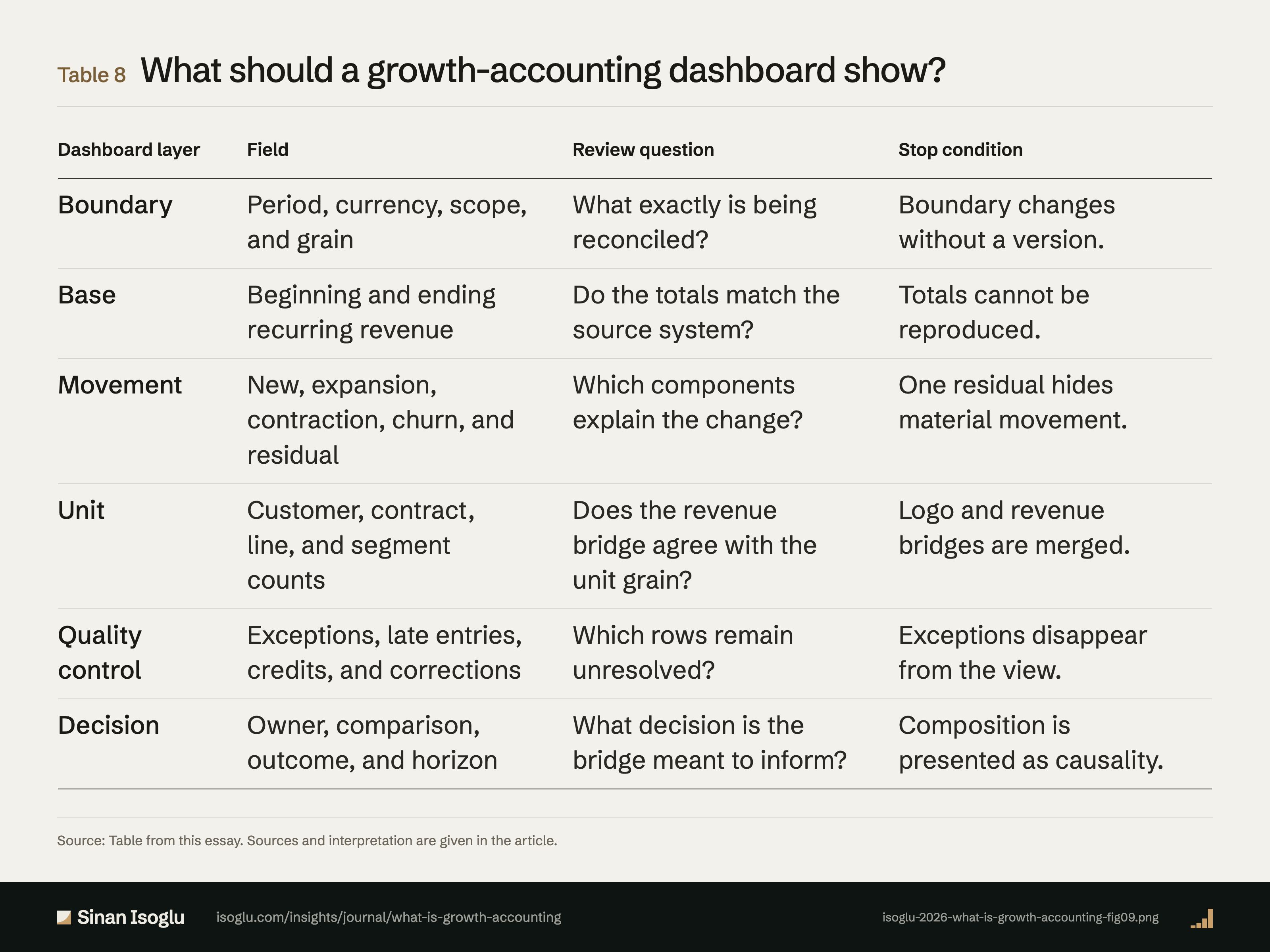
Table 8Table
What should a growth-accounting dashboard show?
What is growth accounting? Separate new, retained, expanded, and lost revenue
Contact
Bring the question you're working on.
Research, a guest lecture, or a commercial question.