Table 2From “What is cohort analysis? A stable entry event before a retention curve”
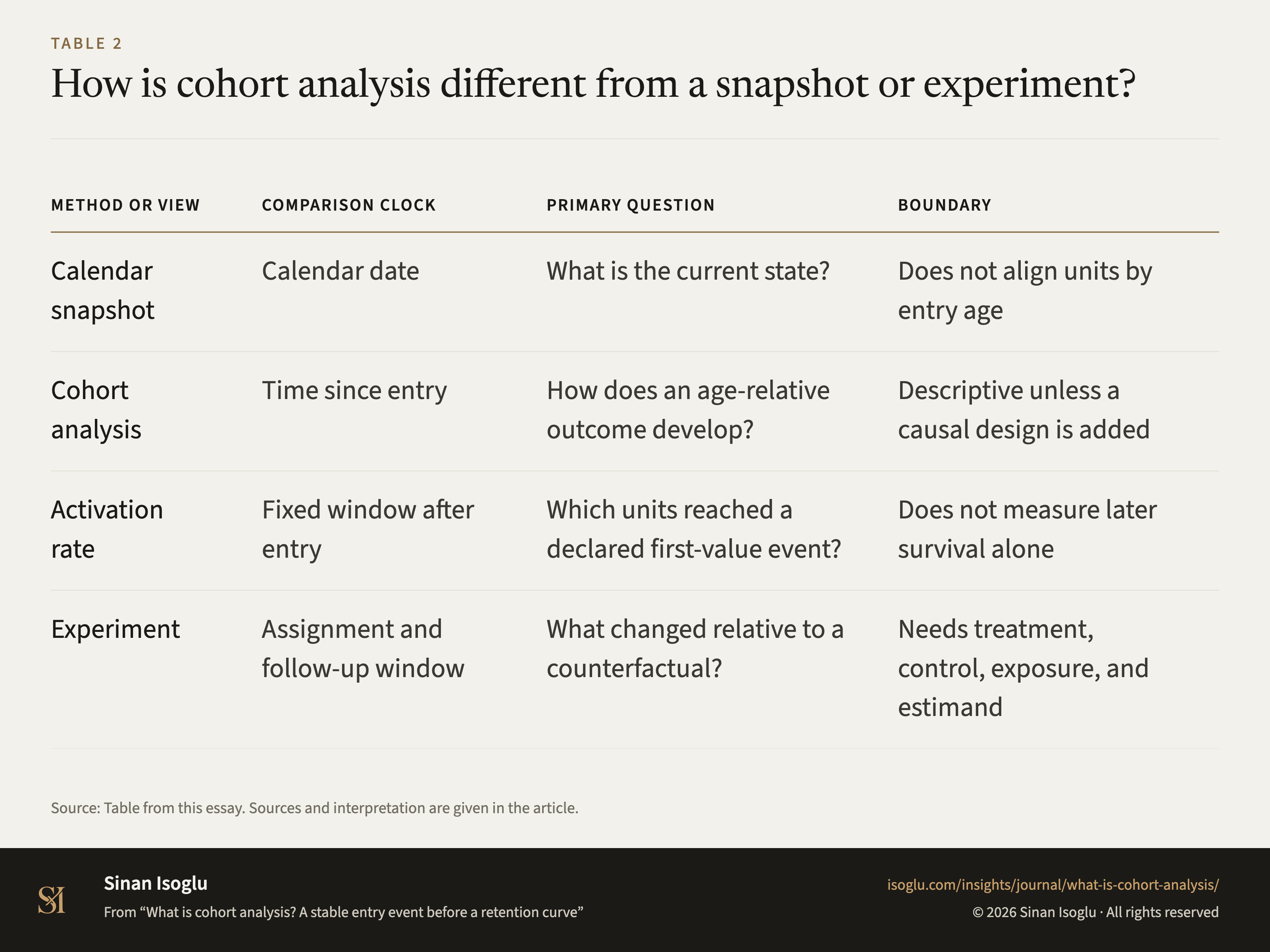
How is cohort analysis different from a snapshot or experiment?
Table 2How is cohort analysis different from a snapshot or experiment?
| Method or view | Comparison clock | Primary question | Boundary |
|---|---|---|---|
| Calendar snapshot | Calendar date | What is the current state? | Does not align units by entry age |
| Cohort analysis | Time since entry | How does an age-relative outcome develop? | Descriptive unless a causal design is added |
| Activation rate | Fixed window after entry | Which units reached a declared first-value event? | Does not measure later survival alone |
| Experiment | Assignment and follow-up window | What changed relative to a counterfactual? | Needs treatment, control, exposure, and estimand |
Swipe or scroll horizontally if the table is wider than your screen.
Source: Table from this essay. Sources and interpretation are given in the article.
From the essay
Growth that compounds
What is cohort analysis? A stable entry event before a retention curve
Cohort analysis aligns units by a declared entry event and age. Define the cohort, outcome, maturity rule, and denominator before reading the curve.
Read the essayThis exhibit belongs to an essay: the numbers live here, the argument lives there.
Cite or embed
Related exhibits
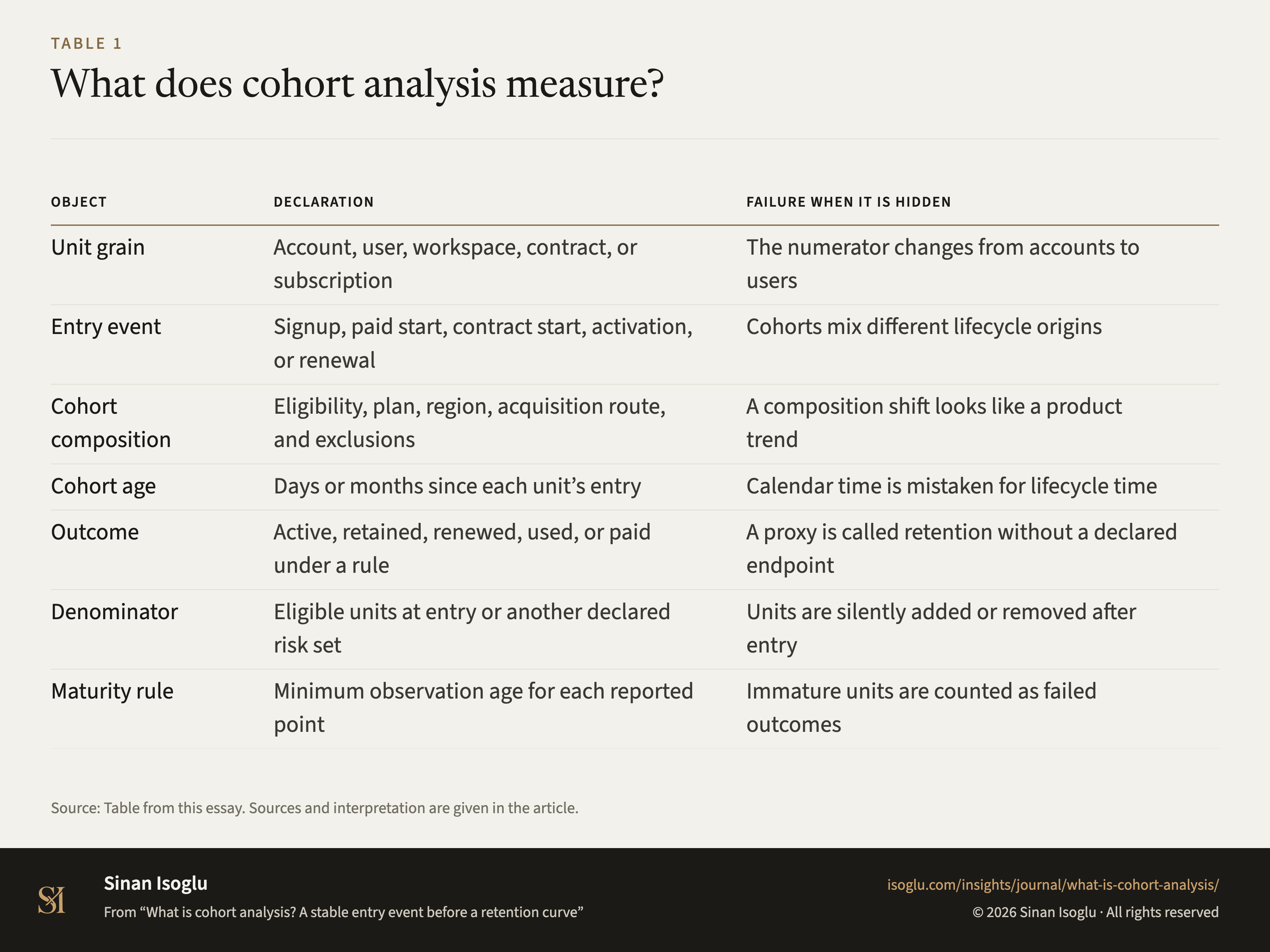
Table 1Table
What does cohort analysis measure?
What is cohort analysis? A stable entry event before a retention curve
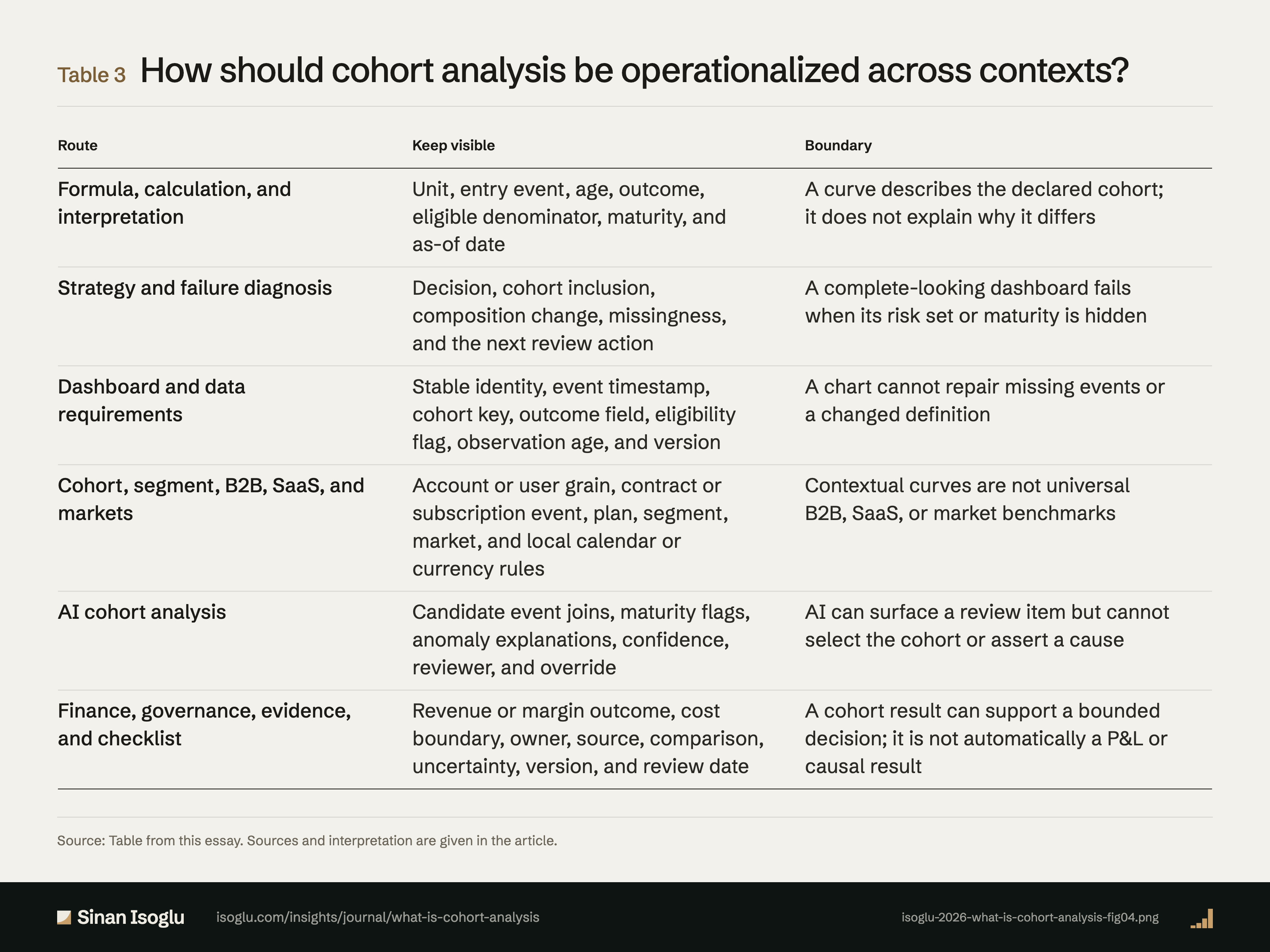
Table 3Table
How should cohort analysis be operationalized across contexts?
What is cohort analysis? A stable entry event before a retention curve
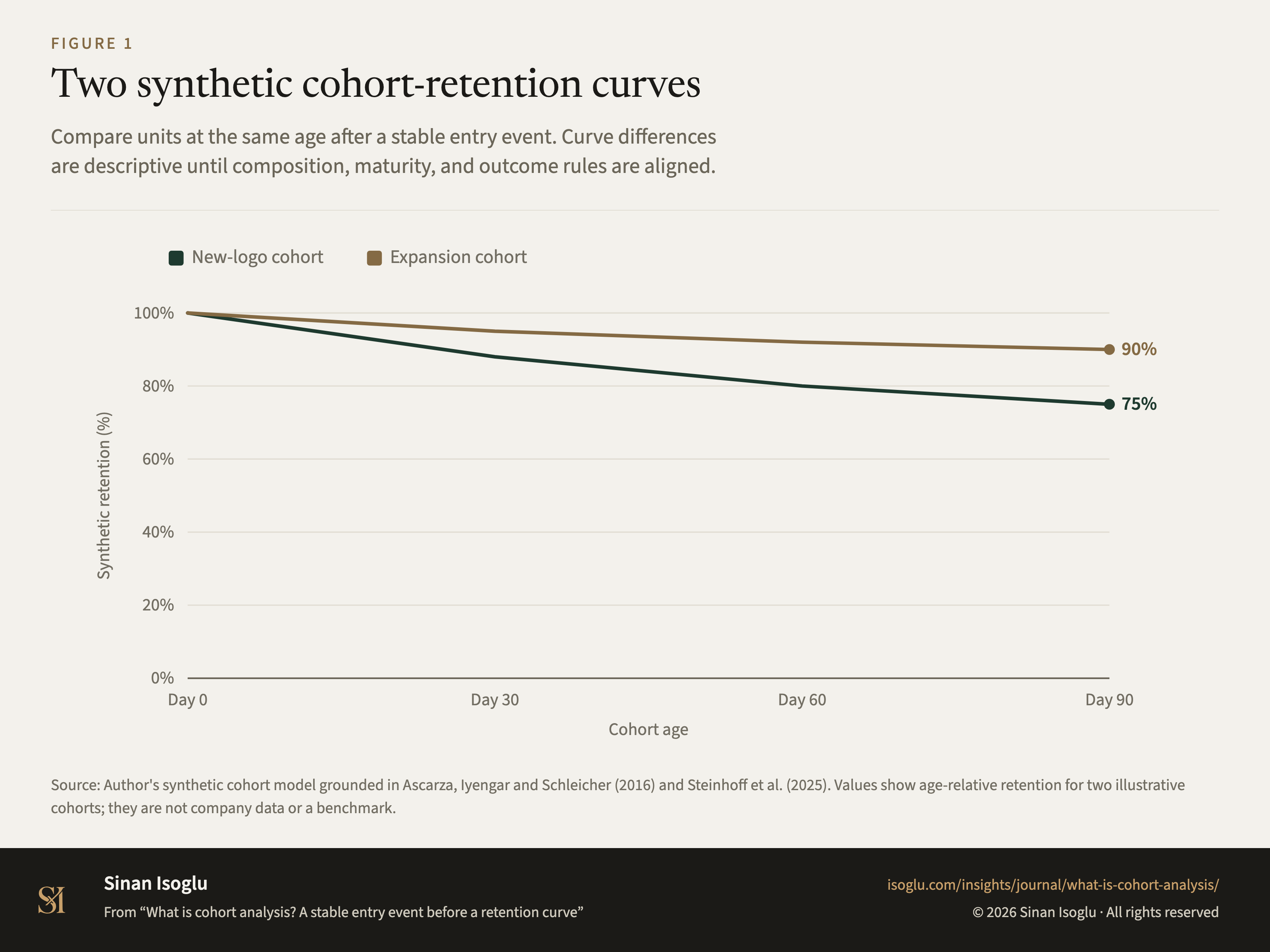
Figure 1Figure
Two synthetic cohort-retention curves
What is cohort analysis? A stable entry event before a retention curve
Contact
Bring the question you're working on.
Research, a guest lecture, or a commercial question.