Table 2From “What is channel economics? Revenue share is not channel profit”
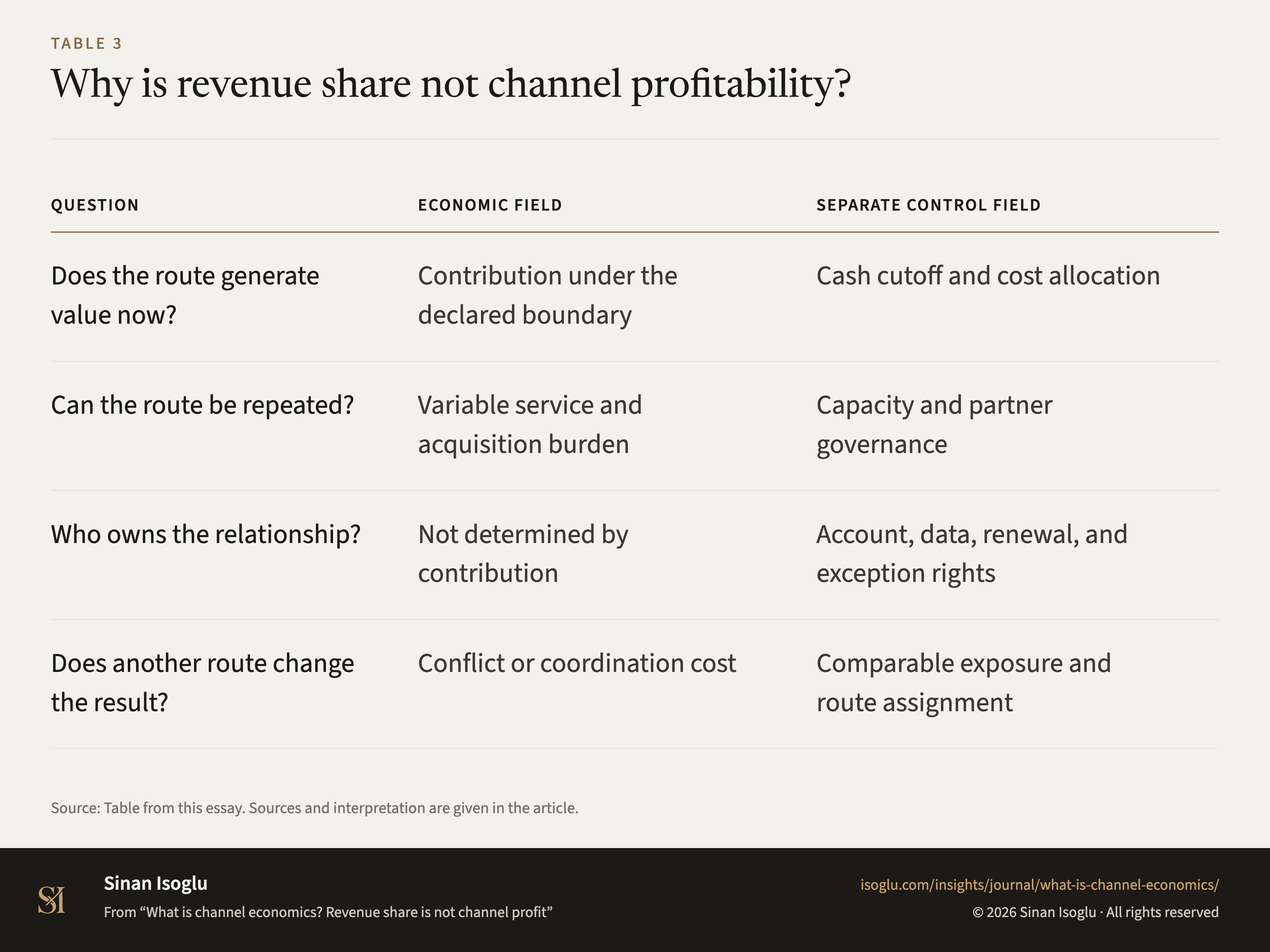
Why is revenue share not channel profitability?
Table 2Why is revenue share not channel profitability?
| Question | Economic field | Separate control field |
|---|---|---|
| Does the route generate value now? | Contribution under the declared boundary | Cash cutoff and cost allocation |
| Can the route be repeated? | Variable service and acquisition burden | Capacity and partner governance |
| Who owns the relationship? | Not determined by contribution | Account, data, renewal, and exception rights |
| Does another route change the result? | Conflict or coordination cost | Comparable exposure and route assignment |
Swipe or scroll horizontally if the table is wider than your screen.
Source: Table from this essay. Sources and interpretation are given in the article.
From the essay
Go-to-market strategy
What is channel economics? Revenue share is not channel profit
Channel economics reconciles collected revenue, route costs, service load, acquisition, conflict, and contribution. Revenue share is not channel profit.
Read the essayThis exhibit belongs to an essay: the numbers live here, the argument lives there.
Cite or embed
Related exhibits
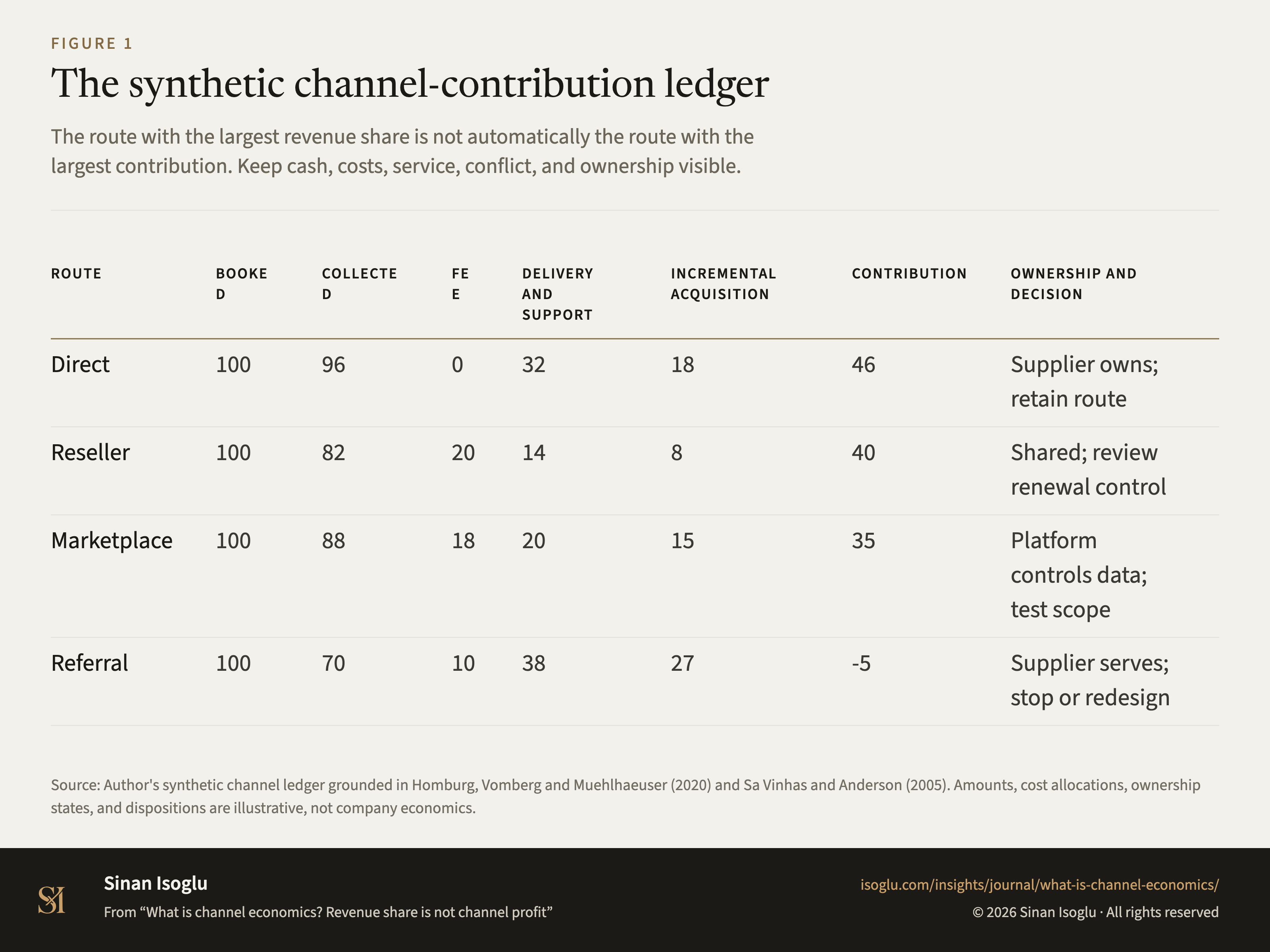
Figure 1Figure
The synthetic channel-contribution ledger
What is channel economics? Revenue share is not channel profit
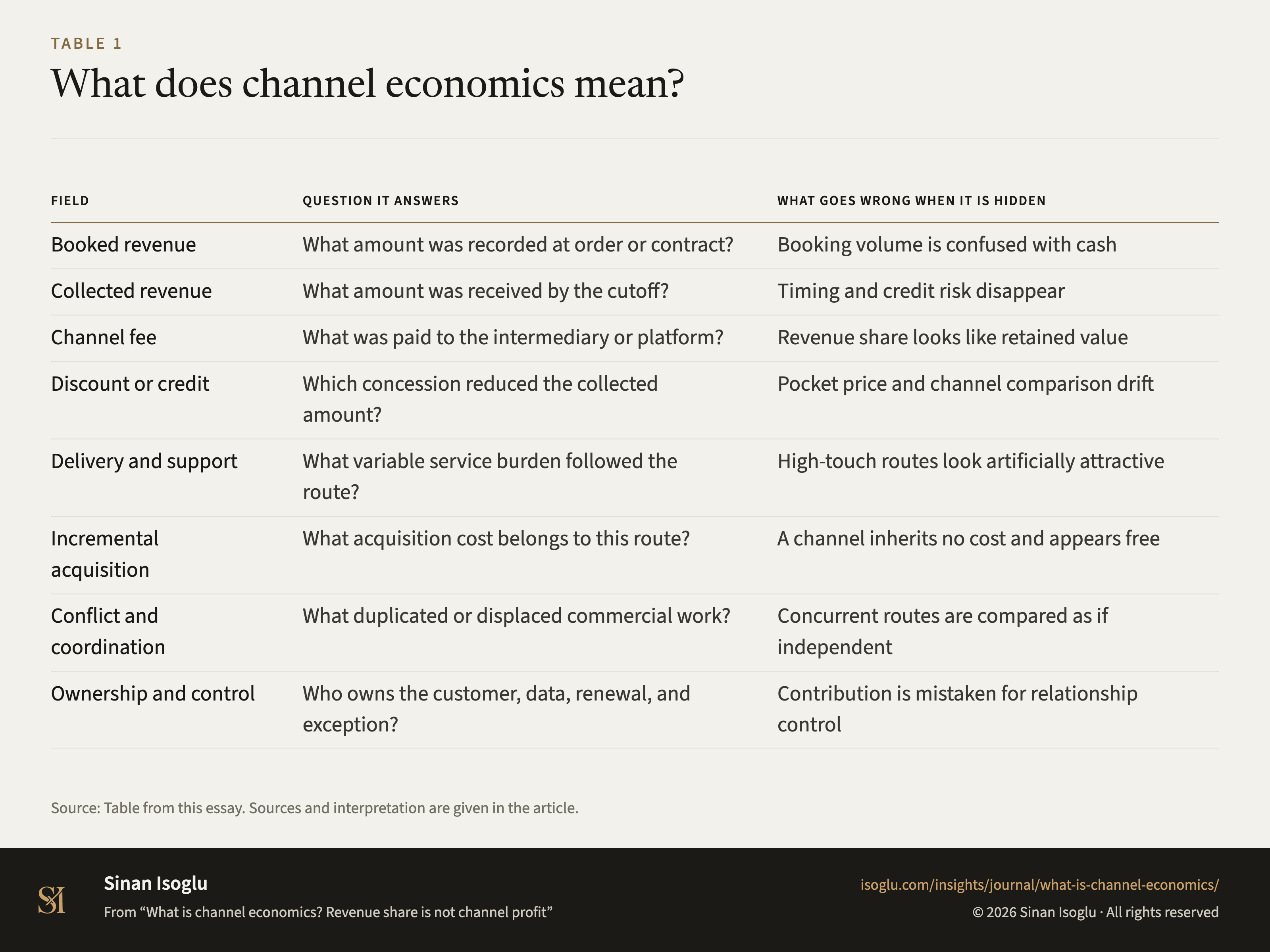
Table 1Table
What does channel economics mean?
What is channel economics? Revenue share is not channel profit
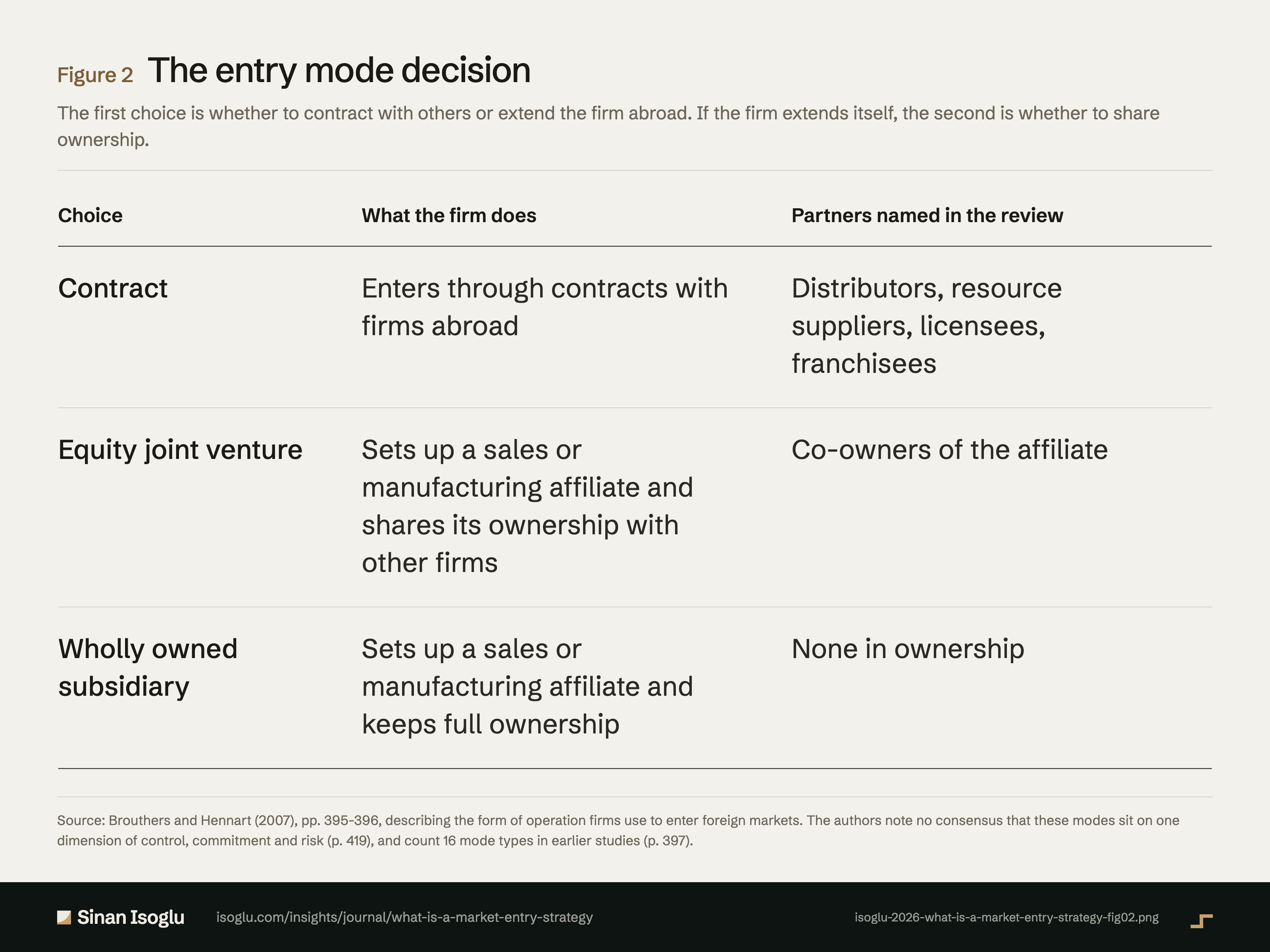
Figure 2Figure
The entry mode decision
What is a market entry strategy?
Contact
Bring the question you're working on.
Research, a guest lecture, or a commercial question.