Table 1From “What is channel economics? Revenue share is not channel profit”
What does channel economics mean?
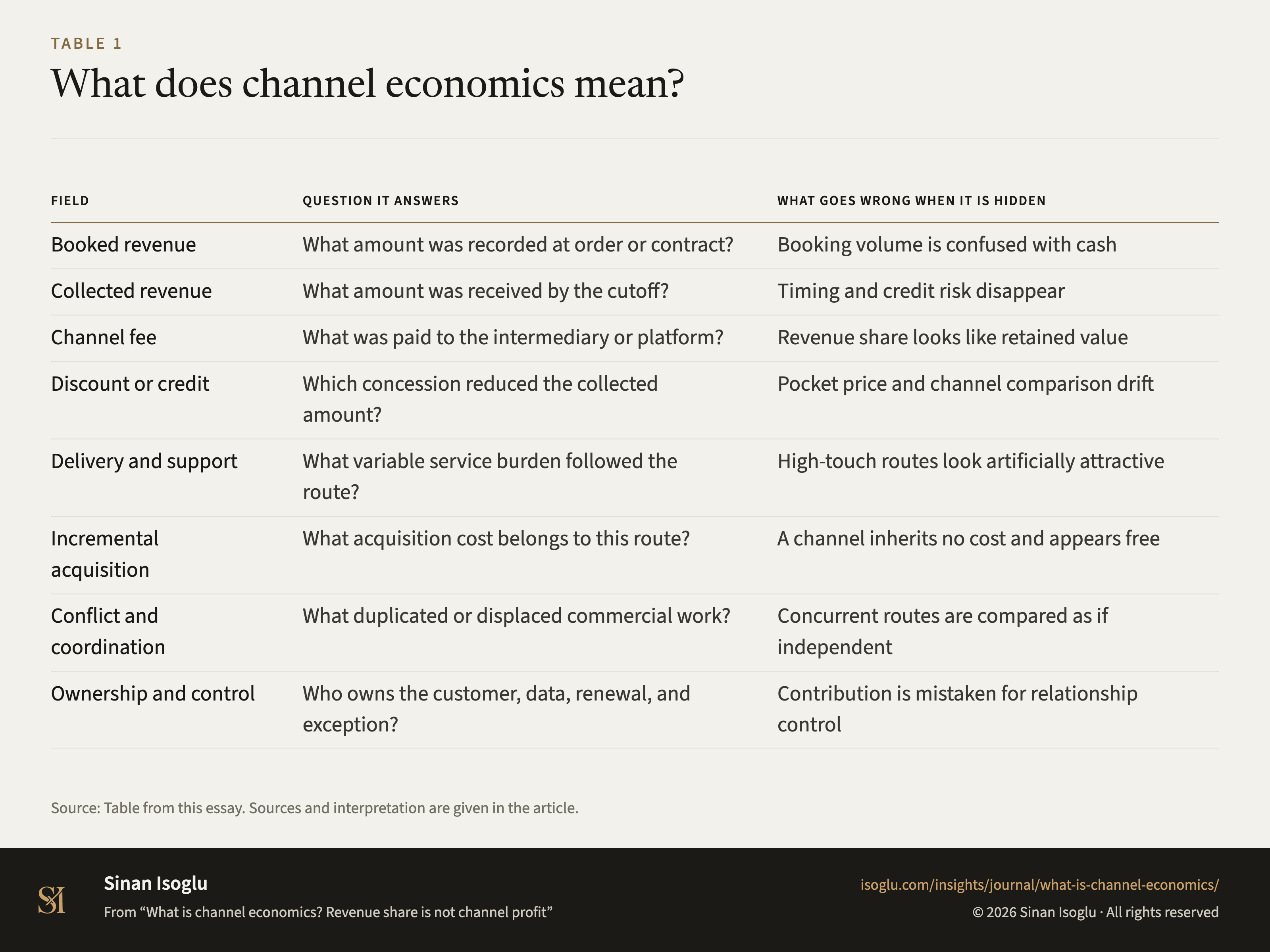
Table 1What does channel economics mean?
| Field | Question it answers | What goes wrong when it is hidden |
|---|---|---|
| Booked revenue | What amount was recorded at order or contract? | Booking volume is confused with cash |
| Collected revenue | What amount was received by the cutoff? | Timing and credit risk disappear |
| Channel fee | What was paid to the intermediary or platform? | Revenue share looks like retained value |
| Discount or credit | Which concession reduced the collected amount? | Pocket price and channel comparison drift |
| Delivery and support | What variable service burden followed the route? | High-touch routes look artificially attractive |
| Incremental acquisition | What acquisition cost belongs to this route? | A channel inherits no cost and appears free |
| Conflict and coordination | What duplicated or displaced commercial work? | Concurrent routes are compared as if independent |
| Ownership and control | Who owns the customer, data, renewal, and exception? | Contribution is mistaken for relationship control |
Swipe or scroll horizontally if the table is wider than your screen.
Source: Table from this essay. Sources and interpretation are given in the article.
From the essay
Go-to-market strategy
What is channel economics? Revenue share is not channel profit
Channel economics reconciles collected revenue, route costs, service load, acquisition, conflict, and contribution. Revenue share is not channel profit.
Read the essayThis exhibit belongs to an essay: the numbers live here, the argument lives there.
Cite or embed
Related exhibits
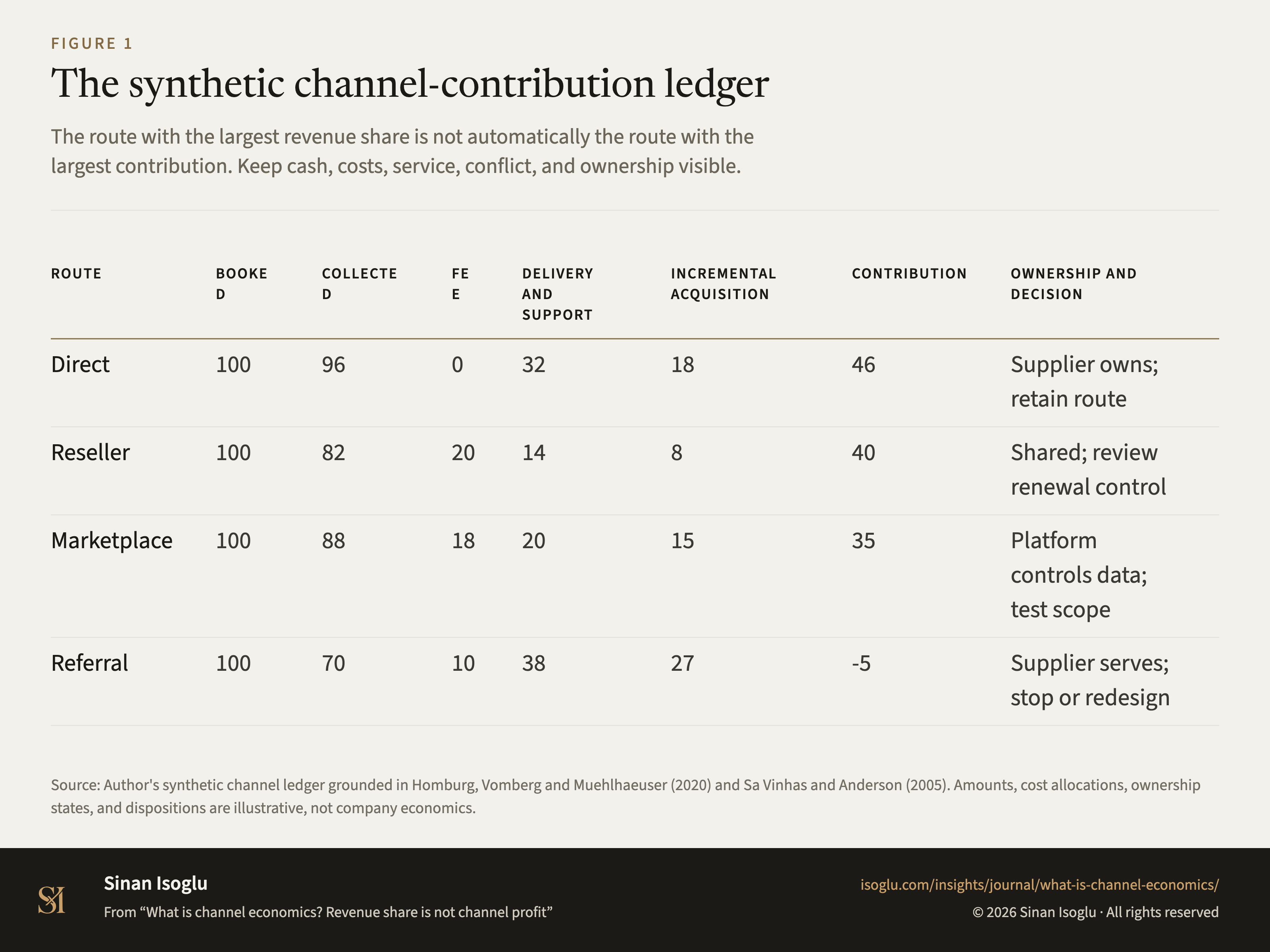
Figure 1Figure
The synthetic channel-contribution ledger
What is channel economics? Revenue share is not channel profit
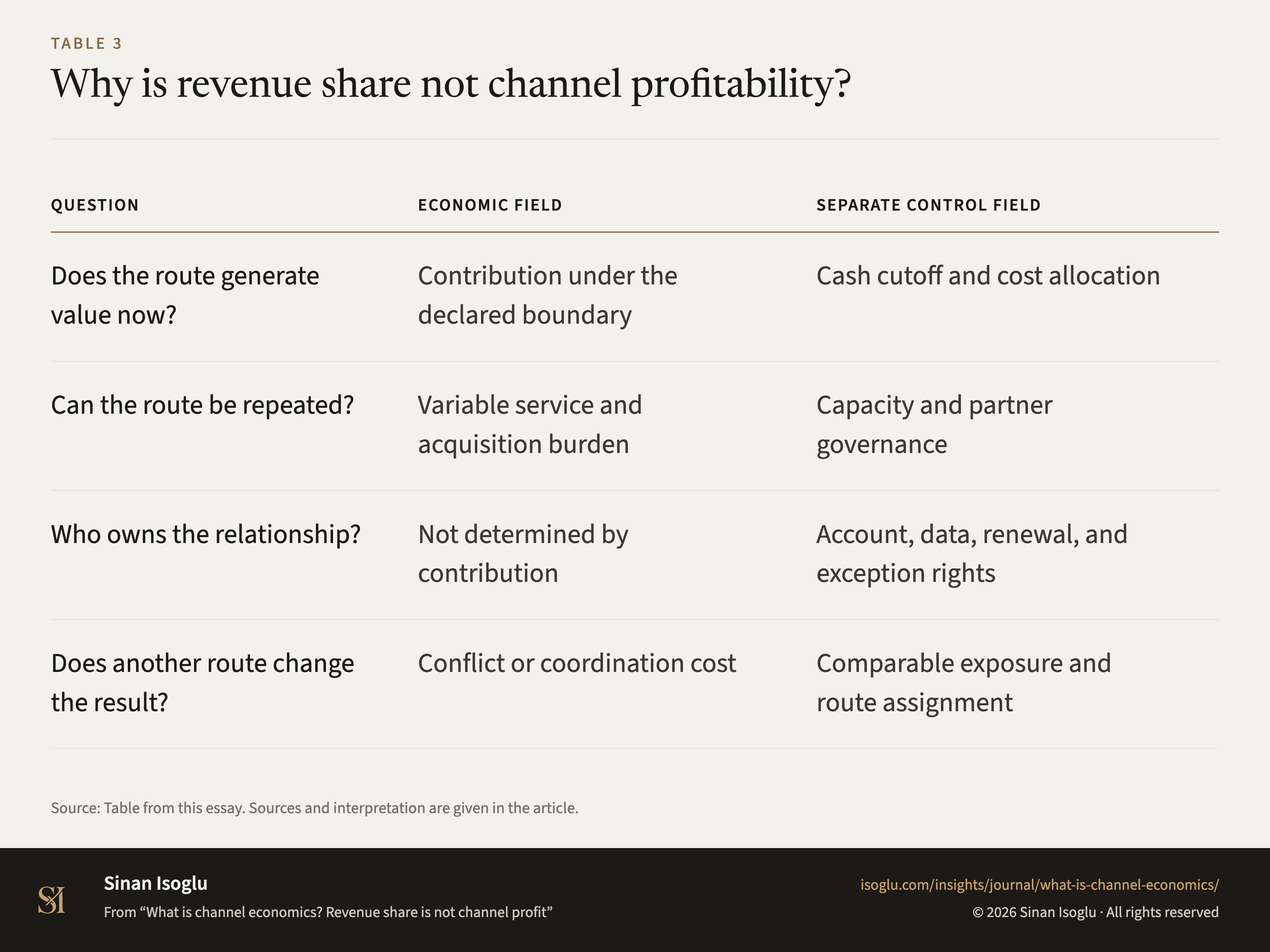
Table 2Table
Why is revenue share not channel profitability?
What is channel economics? Revenue share is not channel profit
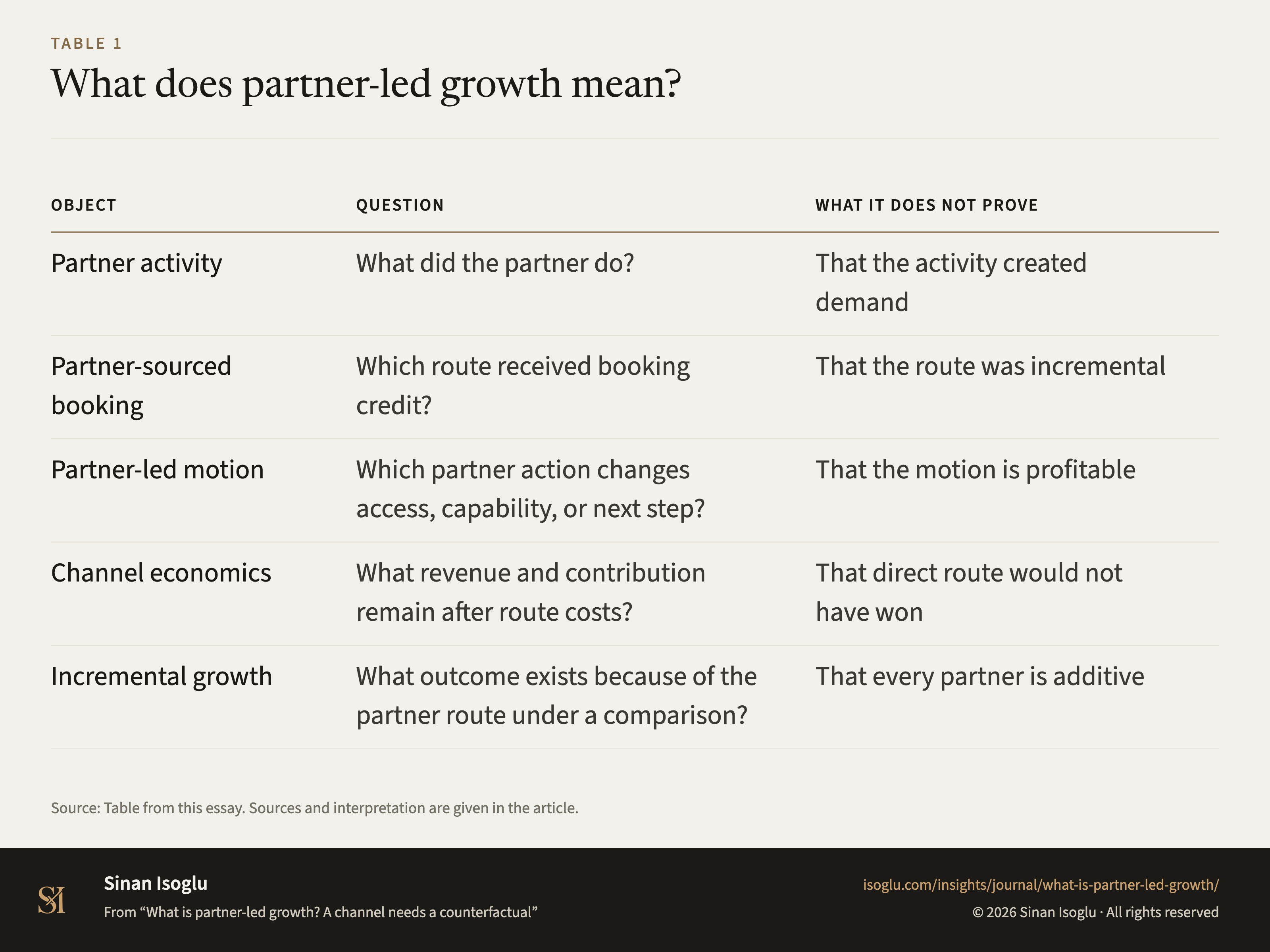
Table 1Table
What does partner-led growth mean?
What is partner-led growth? A channel needs a counterfactual
Contact
Bring the question you're working on.
Research, a guest lecture, or a commercial question.