Table 2From “What is activation rate? The first value event must be observable”
Activation rate vs retention rate: which metric answers which question?
Table 2Activation rate vs retention rate: which metric answers which question?
| Metric | Object to freeze | Question it answers | What it cannot establish alone |
|---|---|---|---|
| Activation rate | Cohort entry, first-value event, unit grain, and observation window | Which eligible units reached first value? | Durable adoption or retention causality |
| Retention rate | Retention entry, survival or renewal rule, unit grain, and outcome horizon | Which units remained under the later rule? | That an earlier activation event caused survival |
Swipe or scroll horizontally if the table is wider than your screen.
Source: Table from this essay. Sources and interpretation are given in the article.
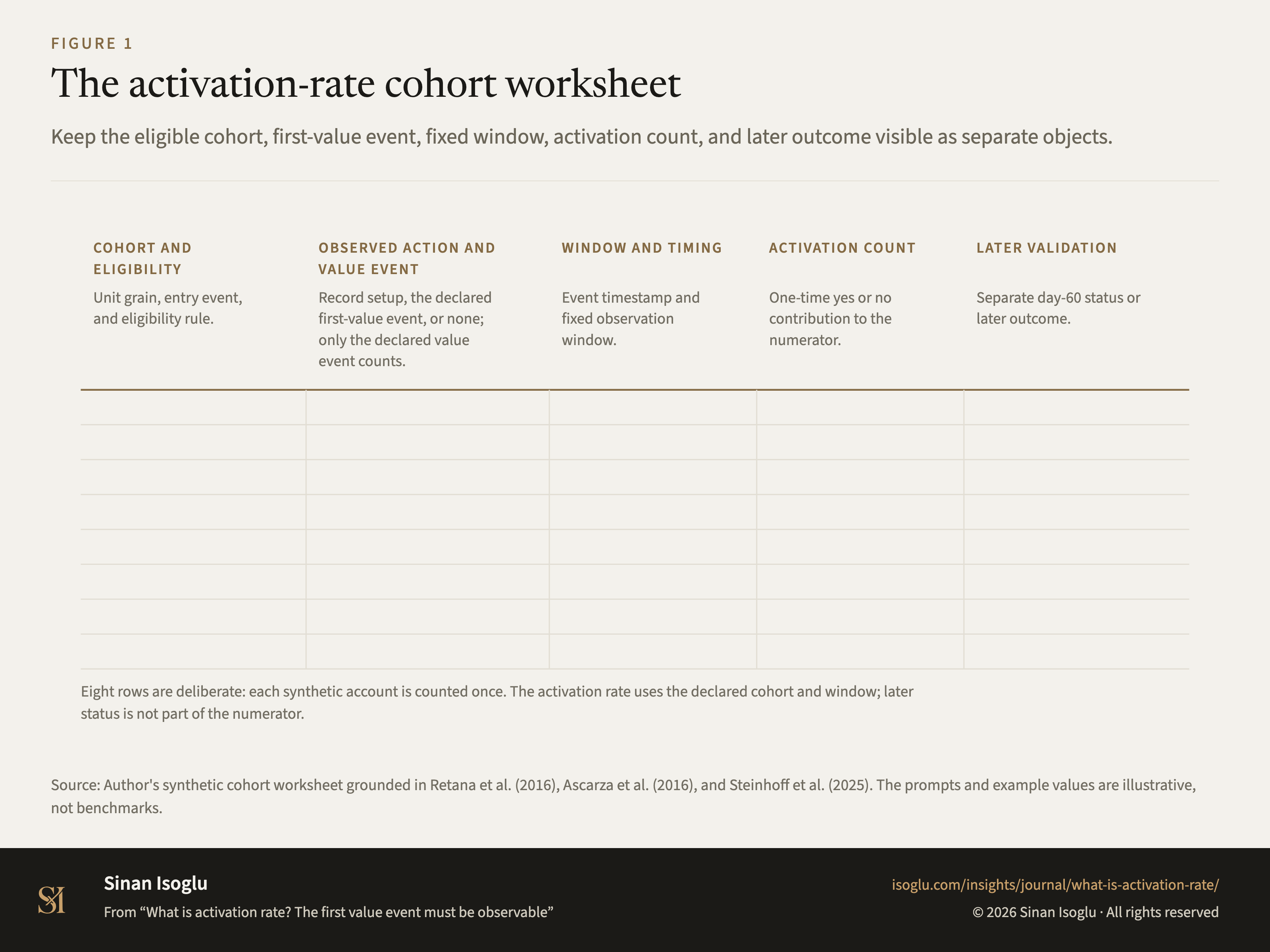
From the essay
Growth that compounds
What is activation rate? The first value event must be observable
Activation rate is the share of an eligible cohort reaching a declared first-value event inside a fixed window. Define the event first.
Read the essayThis exhibit belongs to an essay: the numbers live here, the argument lives there.
Cite or embed
Related exhibits
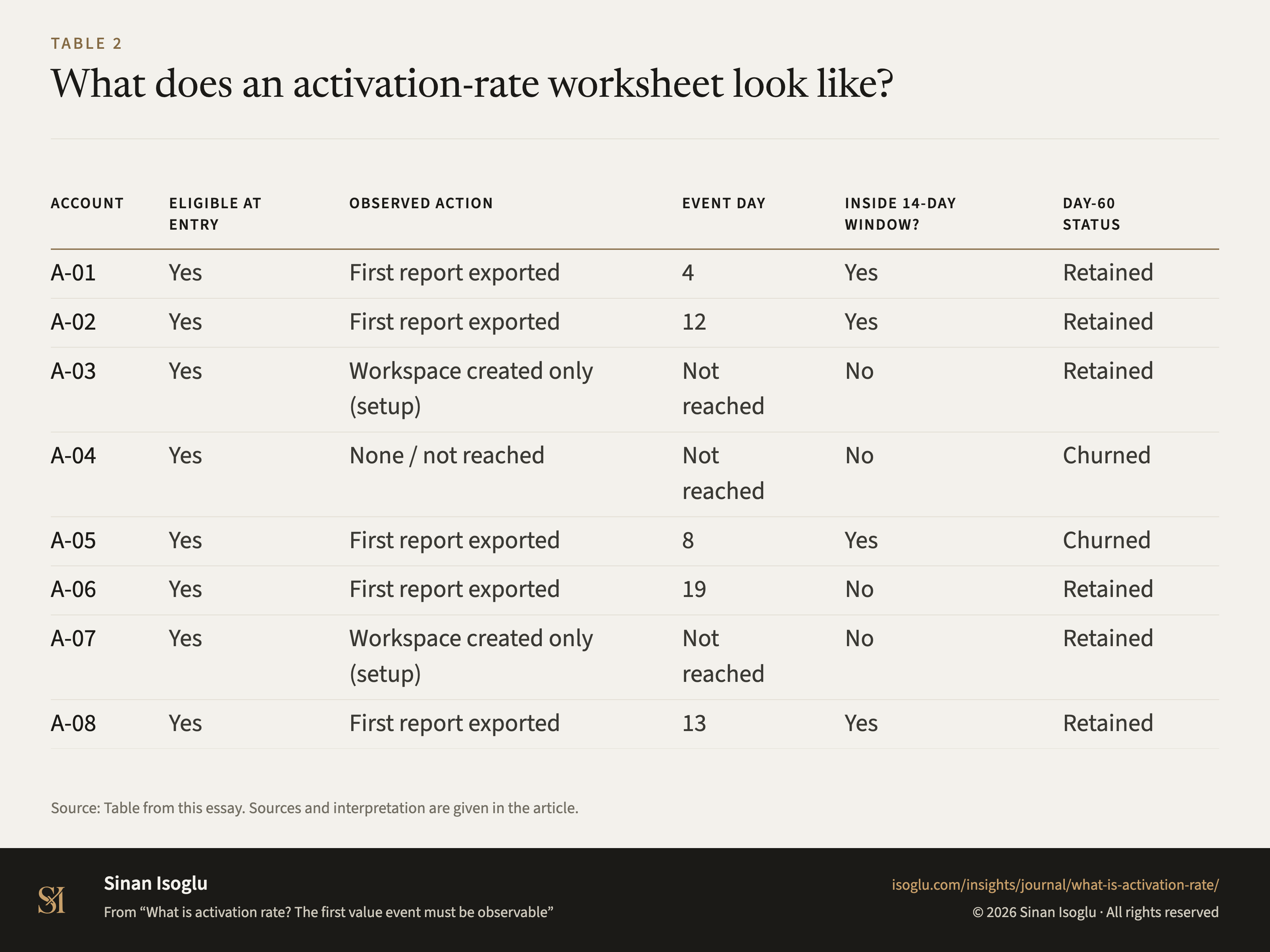
Table 3Table
Activation rate dashboard: which fields, dimensions, and review cadence matter?
What is activation rate? The first value event must be observable
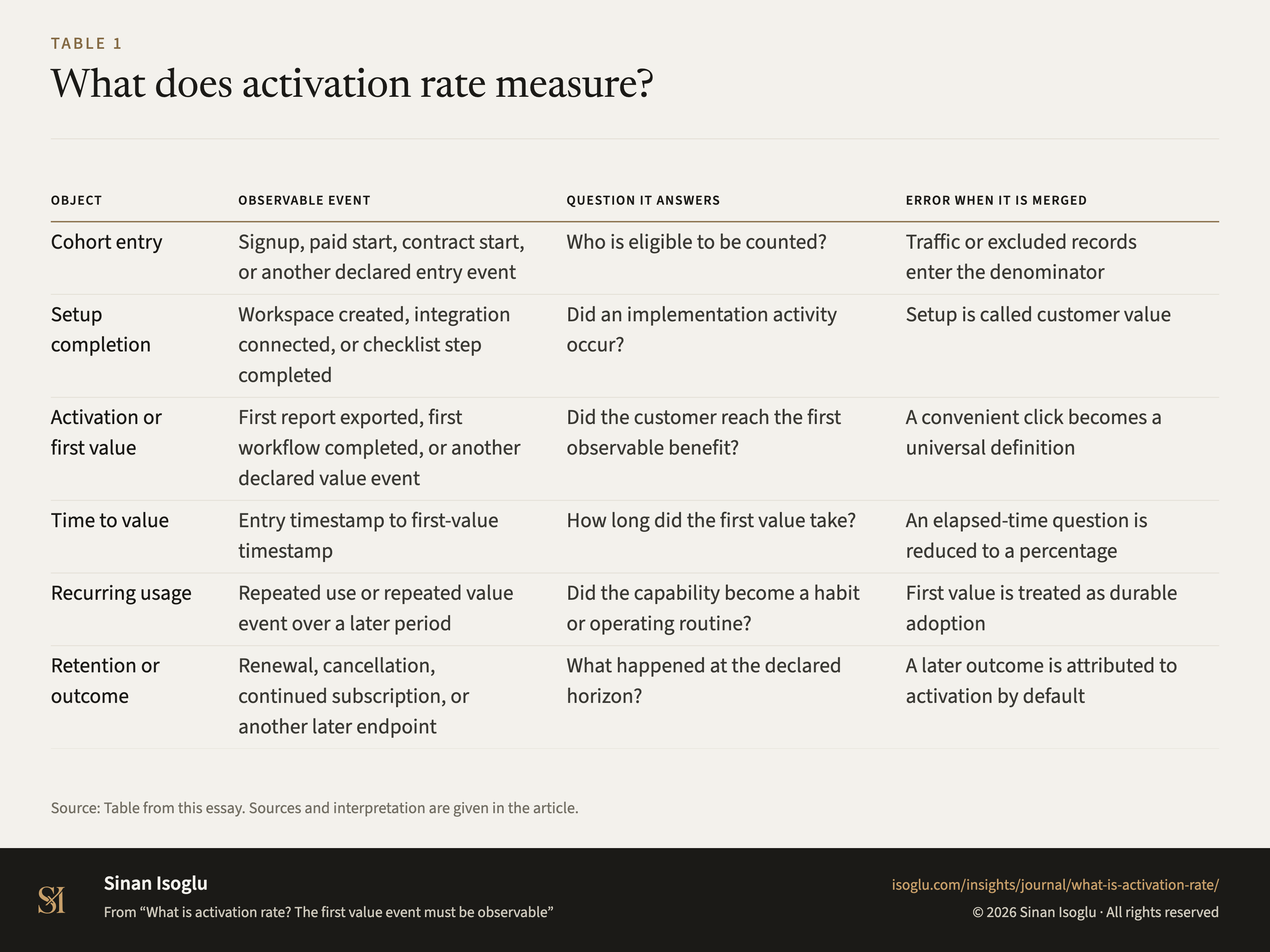
Table 1Table
What does activation rate measure?
What is activation rate? The first value event must be observable
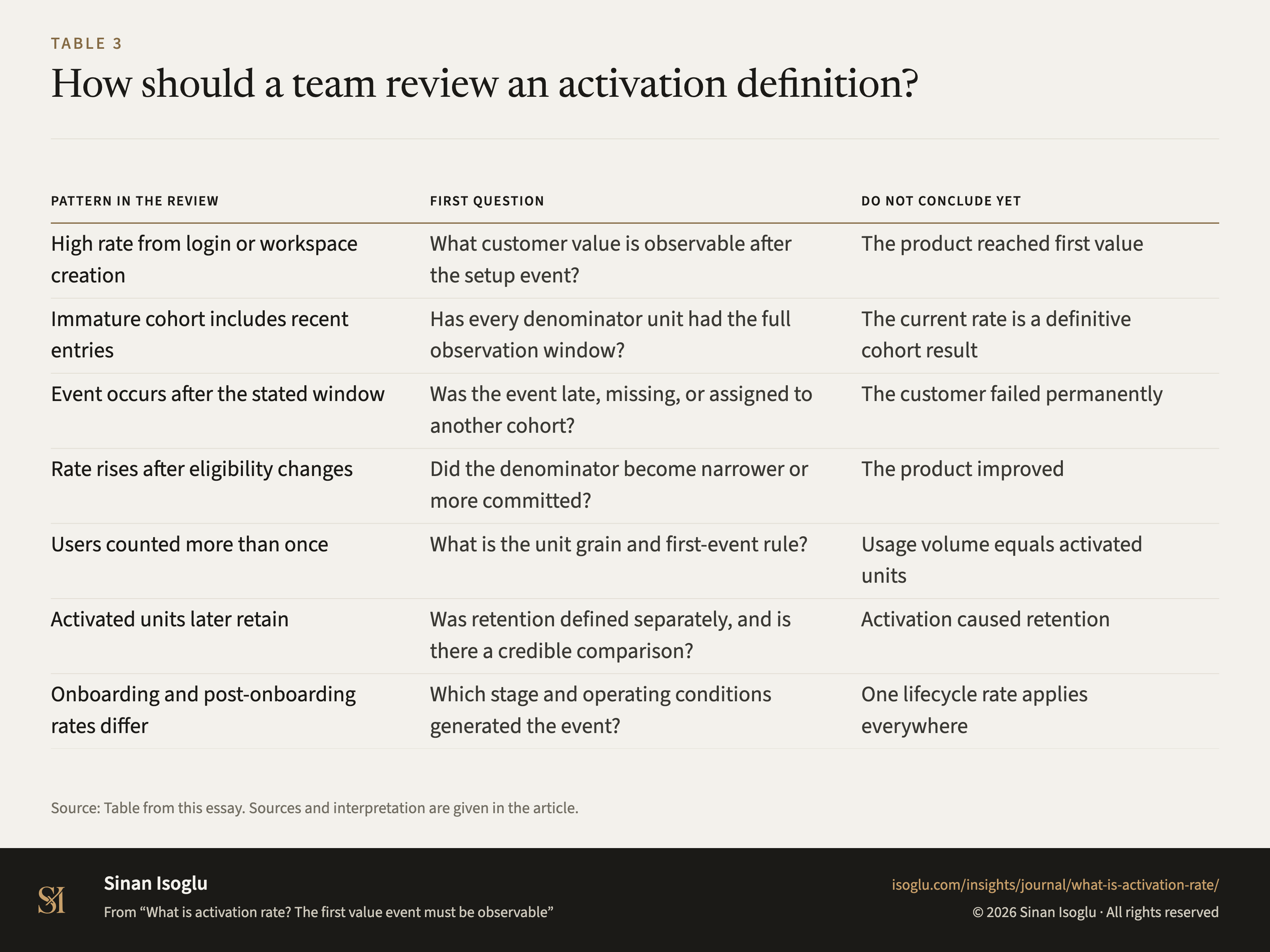
Figure 1Figure
The activation-rate cohort worksheet
What is activation rate? The first value event must be observable
Contact
Bring the question you're working on.
Research, a guest lecture, or a commercial question.