Table 2From “A voice-of-customer acquisition is not customer knowledge”
The outcome boundary
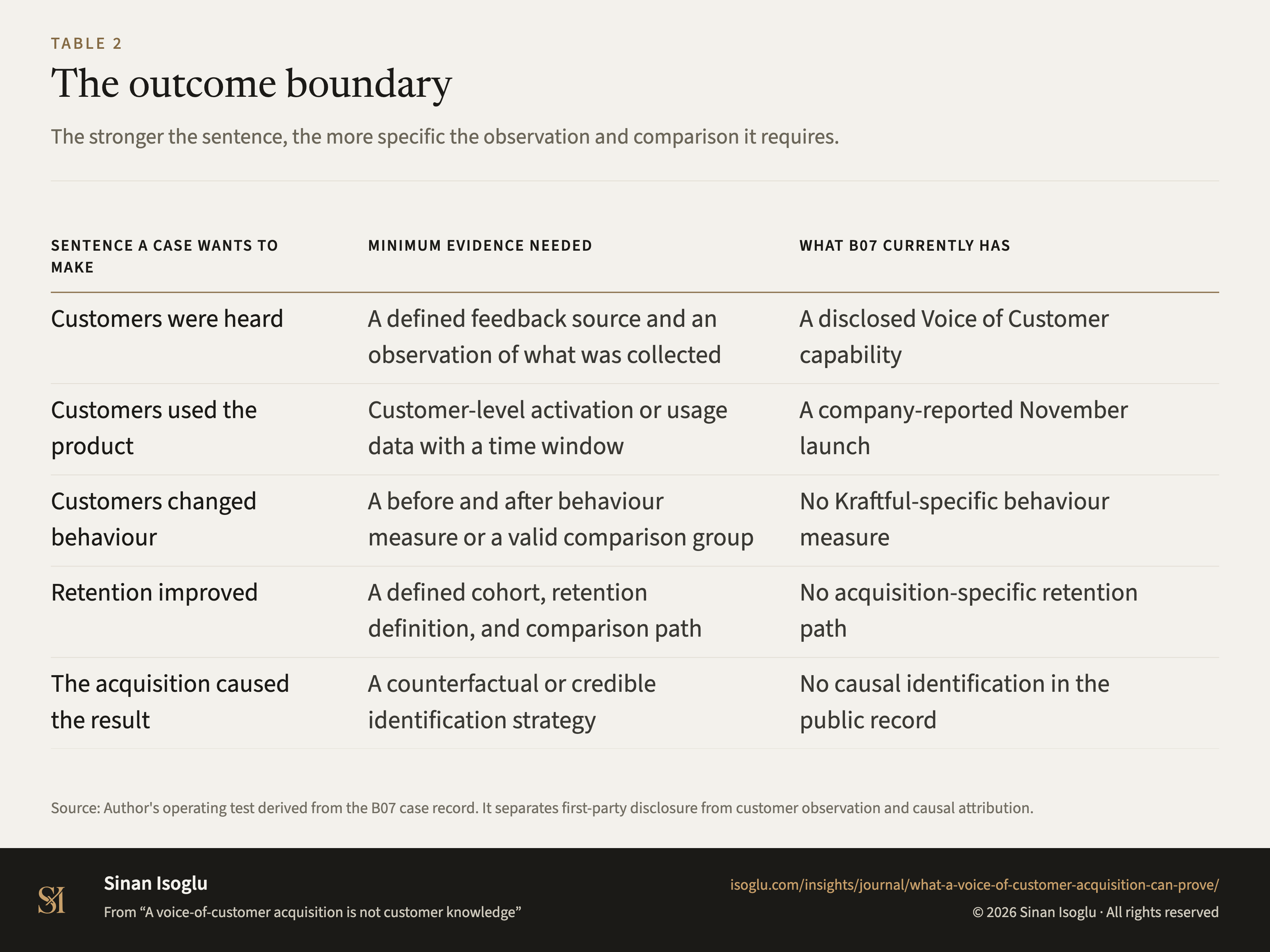
The stronger the sentence, the more specific the observation and comparison it requires.
Table 2The outcome boundary
| Sentence a case wants to make | Minimum evidence needed | What B07 currently has |
|---|---|---|
| Customers were heard | A defined feedback source and an observation of what was collected | A disclosed Voice of Customer capability |
| Customers used the product | Customer-level activation or usage data with a time window | A company-reported November launch |
| Customers changed behaviour | A before and after behaviour measure or a valid comparison group | No Kraftful-specific behaviour measure |
| Retention improved | A defined cohort, retention definition, and comparison path | No acquisition-specific retention path |
| The acquisition caused the result | A counterfactual or credible identification strategy | No causal identification in the public record |
Swipe or scroll horizontally if the table is wider than your screen.
Source: Author's operating test derived from the B07 case record. It separates first-party disclosure from customer observation and causal attribution.
Source and evidence
Each line names a claim related to this exhibit, its source, and how it was checked.
- B AK25-C3 Amplitude's 2025 filing records AI Feedback as launched in November 2025Amplitude 2025 Form 10-K, product launches section
- B AK25-C4 The same filing says AI Feedback was developed following the July Kraftful acquisitionAmplitude 2025 Form 10-K, product launches section
Grades: A, verified against the printed page of the primary source · B, primary source, text layer only · C, authoritative secondary · D, reported.
From the essay
Go-to-market strategy
A voice-of-customer acquisition is not customer knowledge
The Amplitude-Kraftful case shows what an announcement, filing, product disclosure, and customer outcome can each prove, and where inference must stop.
Read the essayThis exhibit belongs to an essay: the numbers live here, the argument lives there.
Cite or embed
Related exhibits
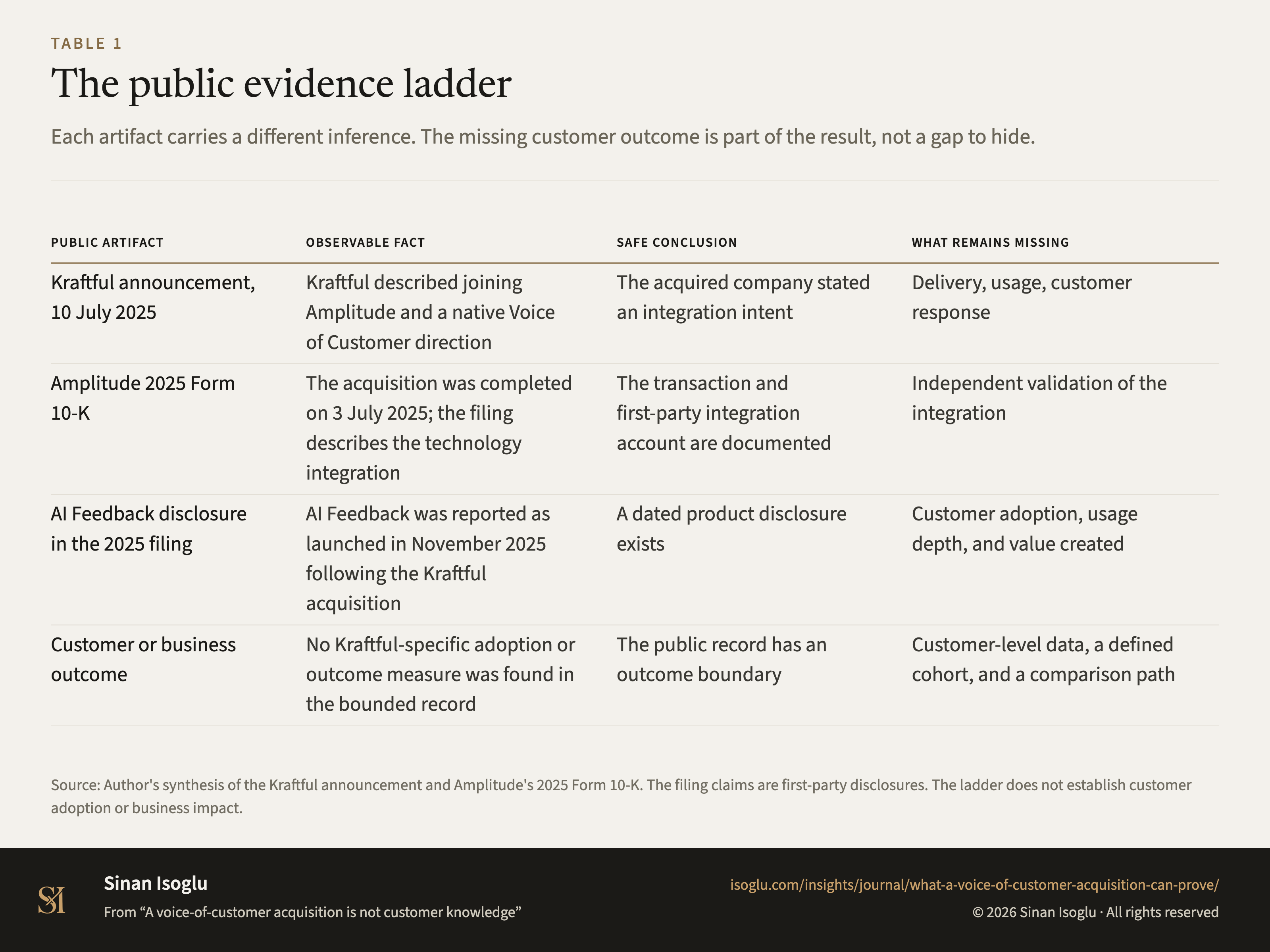
Table 1Table
The public evidence ladder
A voice-of-customer acquisition is not customer knowledge
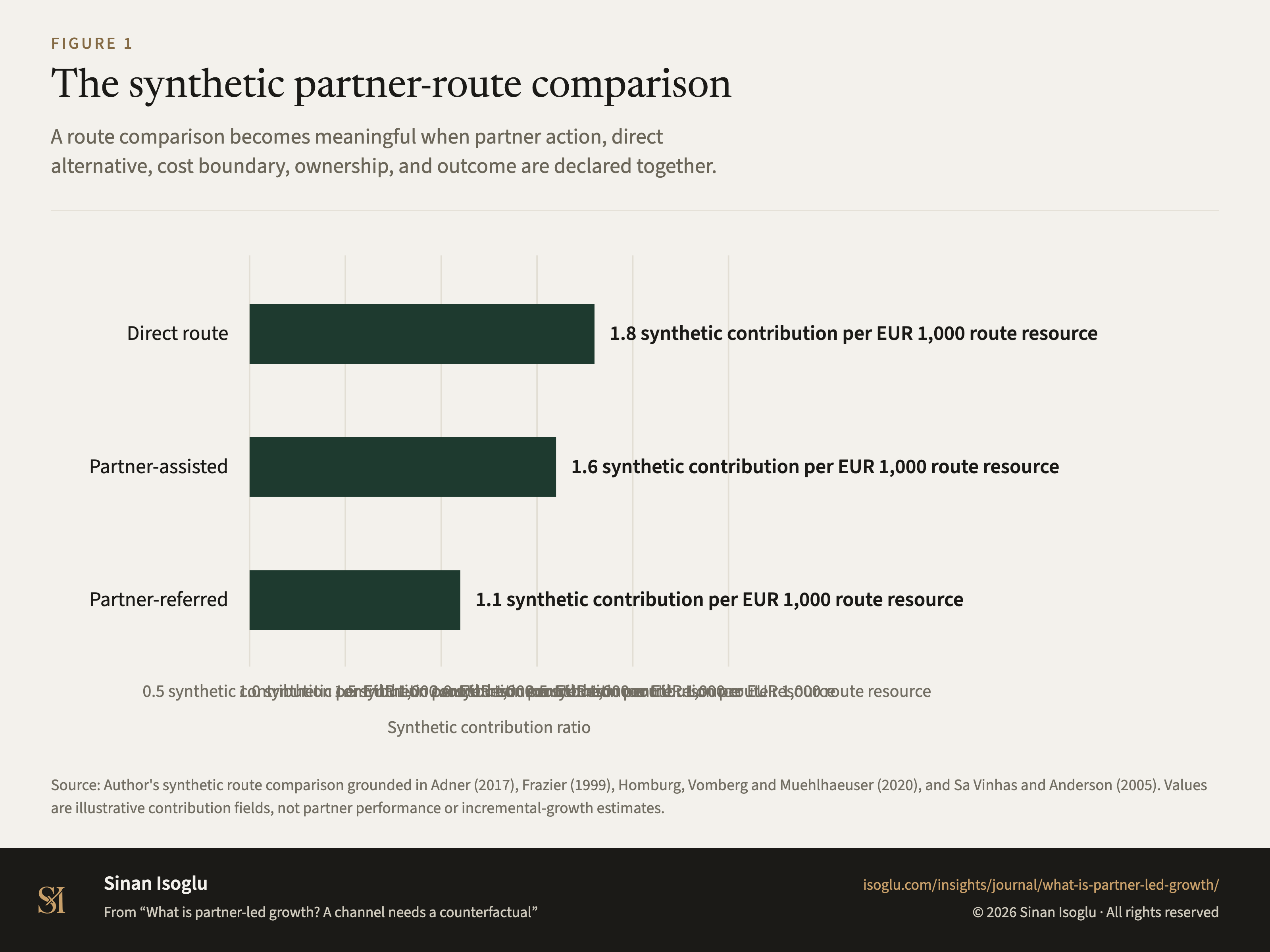
Figure 1Figure
The synthetic partner-route comparison
What is partner-led growth? A channel needs a counterfactual
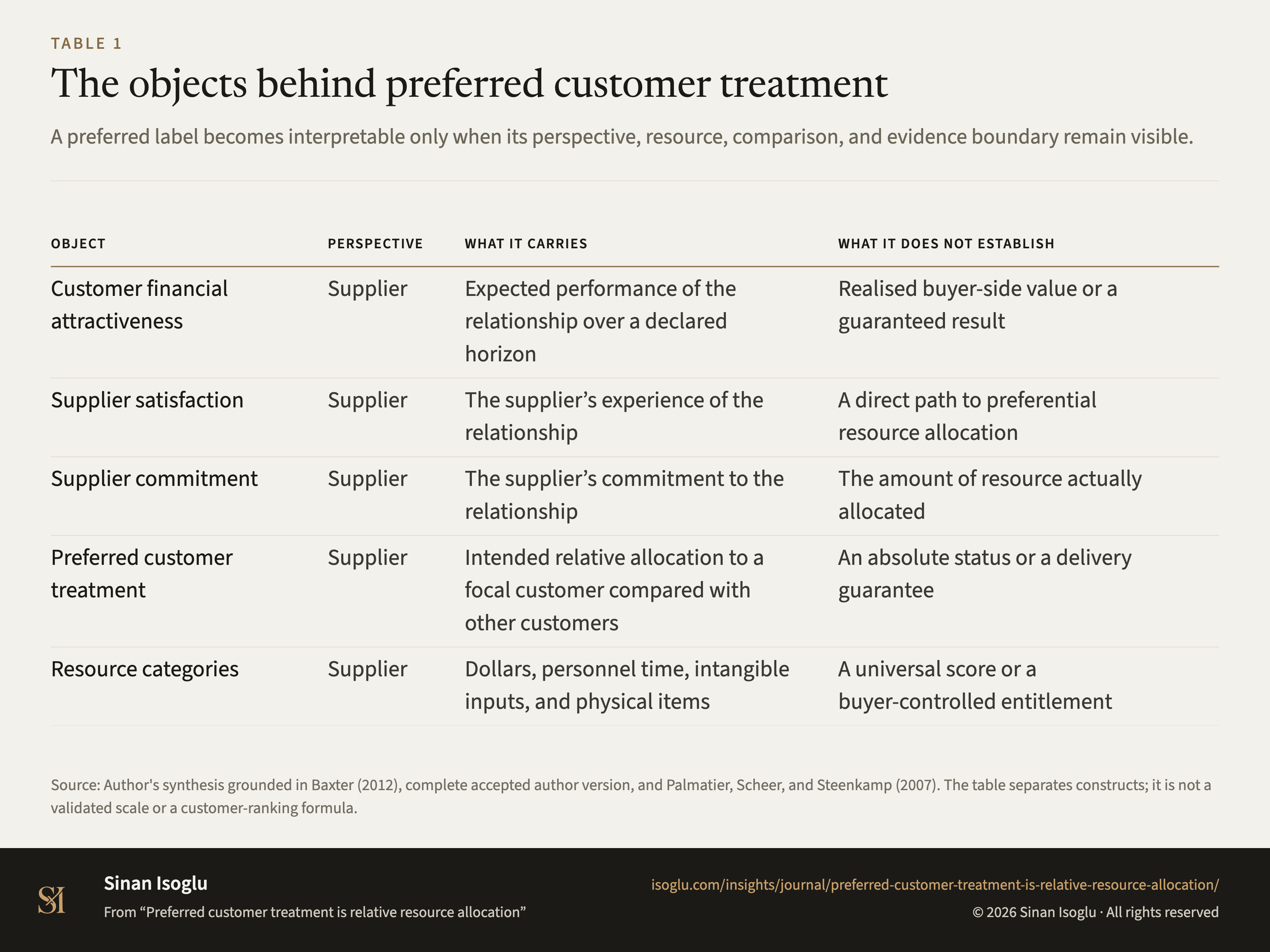
Table 1Table
The objects behind preferred customer treatment
Preferred customer treatment is relative resource allocation
Contact
Bring the question you're working on.
Research, a guest lecture, or a commercial question.