Table 1From “The 20-55 rule: customer prioritization misclassifies the portfolio”
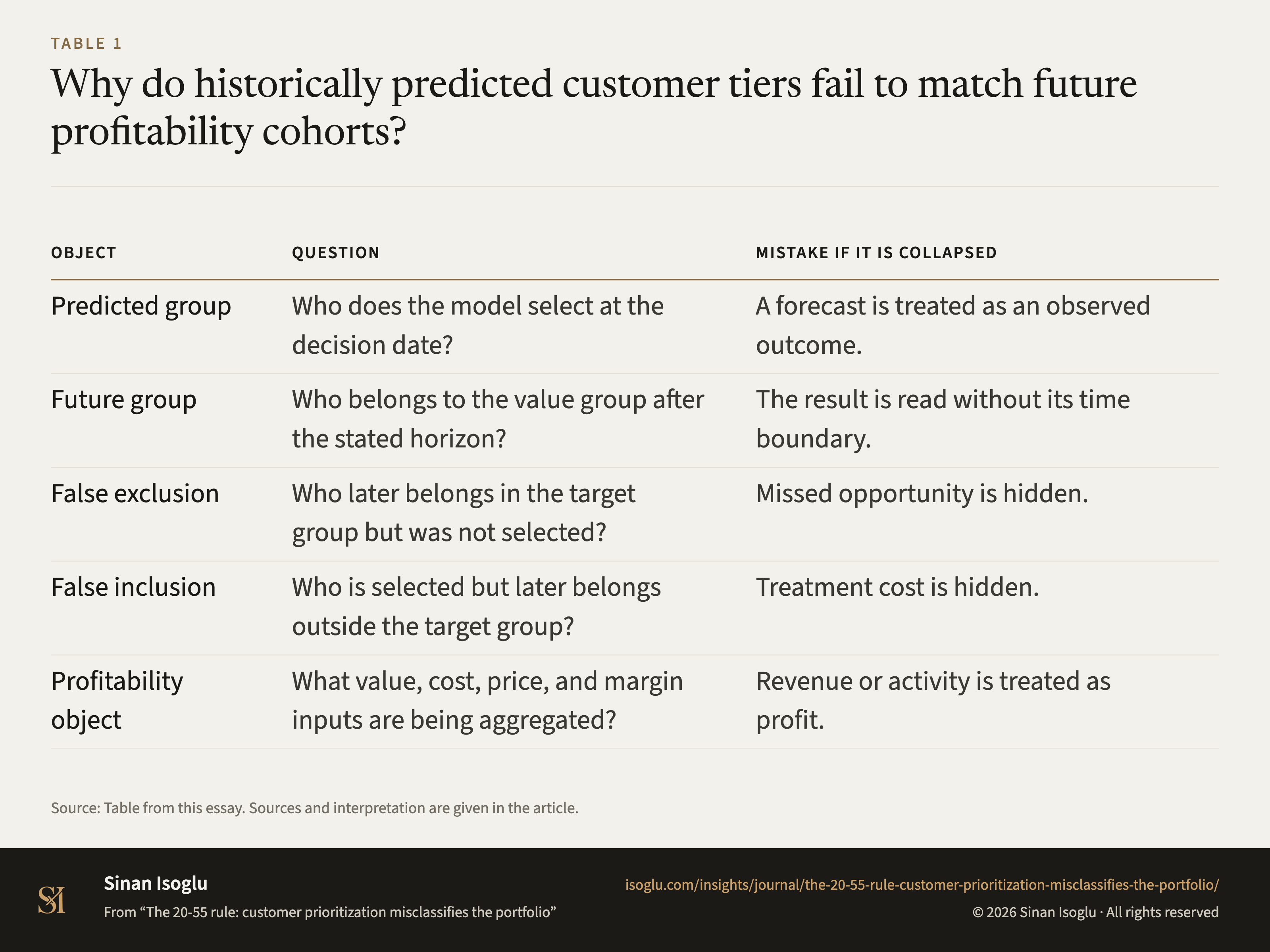
Why do historically predicted customer tiers fail to match future profitability cohorts?
Table 1Why do historically predicted customer tiers fail to match future profitability cohorts?
| Object | Question | Mistake if it is collapsed |
|---|---|---|
| Predicted group | Who does the model select at the decision date? | A forecast is treated as an observed outcome. |
| Future group | Who belongs to the value group after the stated horizon? | The result is read without its time boundary. |
| False exclusion | Who later belongs in the target group but was not selected? | Missed opportunity is hidden. |
| False inclusion | Who is selected but later belongs outside the target group? | Treatment cost is hidden. |
| Profitability object | What value, cost, price, and margin inputs are being aggregated? | Revenue or activity is treated as profit. |
Swipe or scroll horizontally if the table is wider than your screen.
Source: Table from this essay. Sources and interpretation are given in the article.
From the essay
Growth that compounds
The 20-55 rule: customer prioritization misclassifies the portfolio
A customer ranking can miss future top customers: keep prediction horizon, cutoff, misclassification cost, and profitability inputs visible.
Read the essayThis exhibit belongs to an essay: the numbers live here, the argument lives there.
Cite or embed
Related exhibits
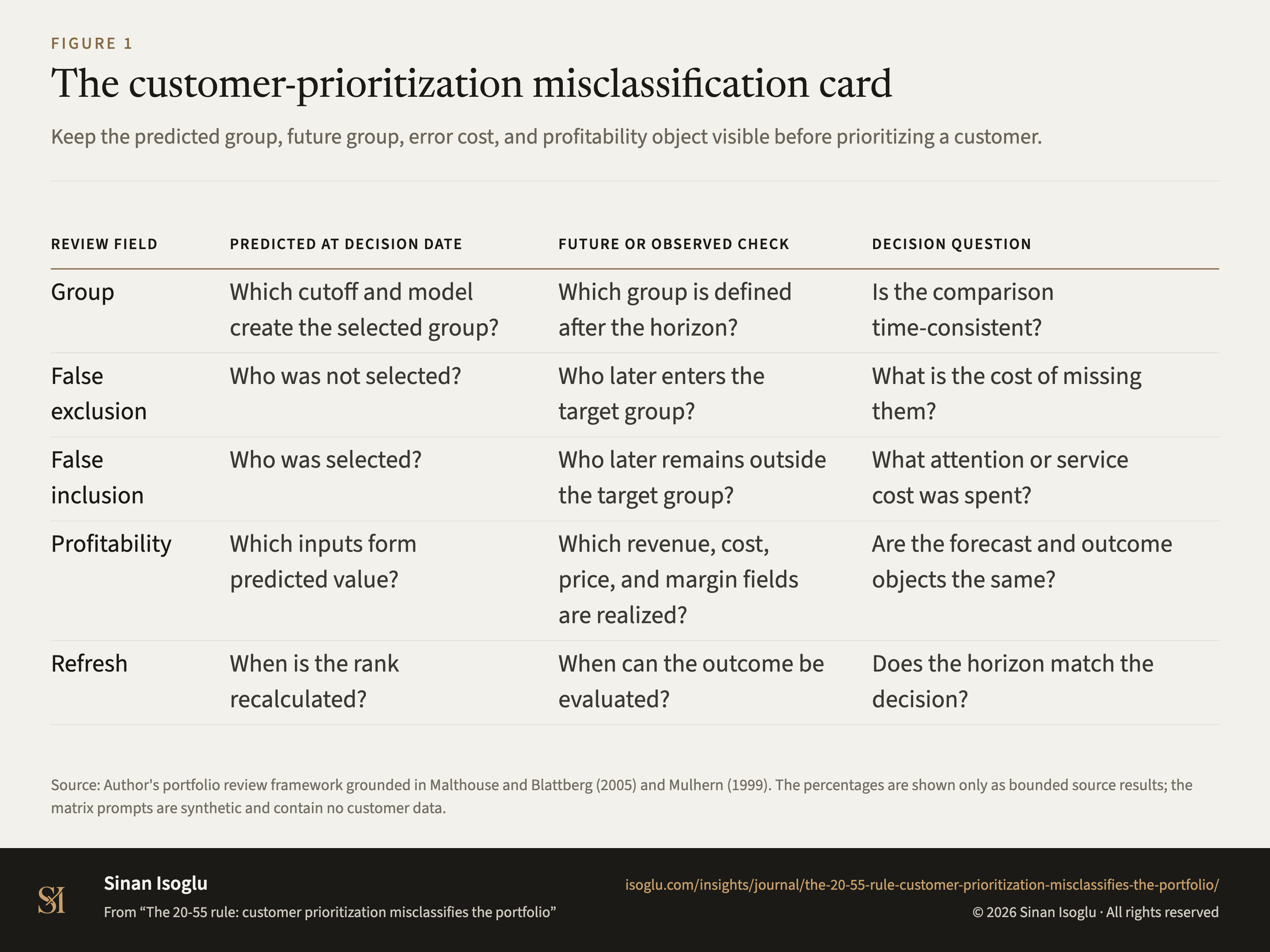
Figure 1Figure
The customer-prioritization misclassification card
The 20-55 rule: customer prioritization misclassifies the portfolio
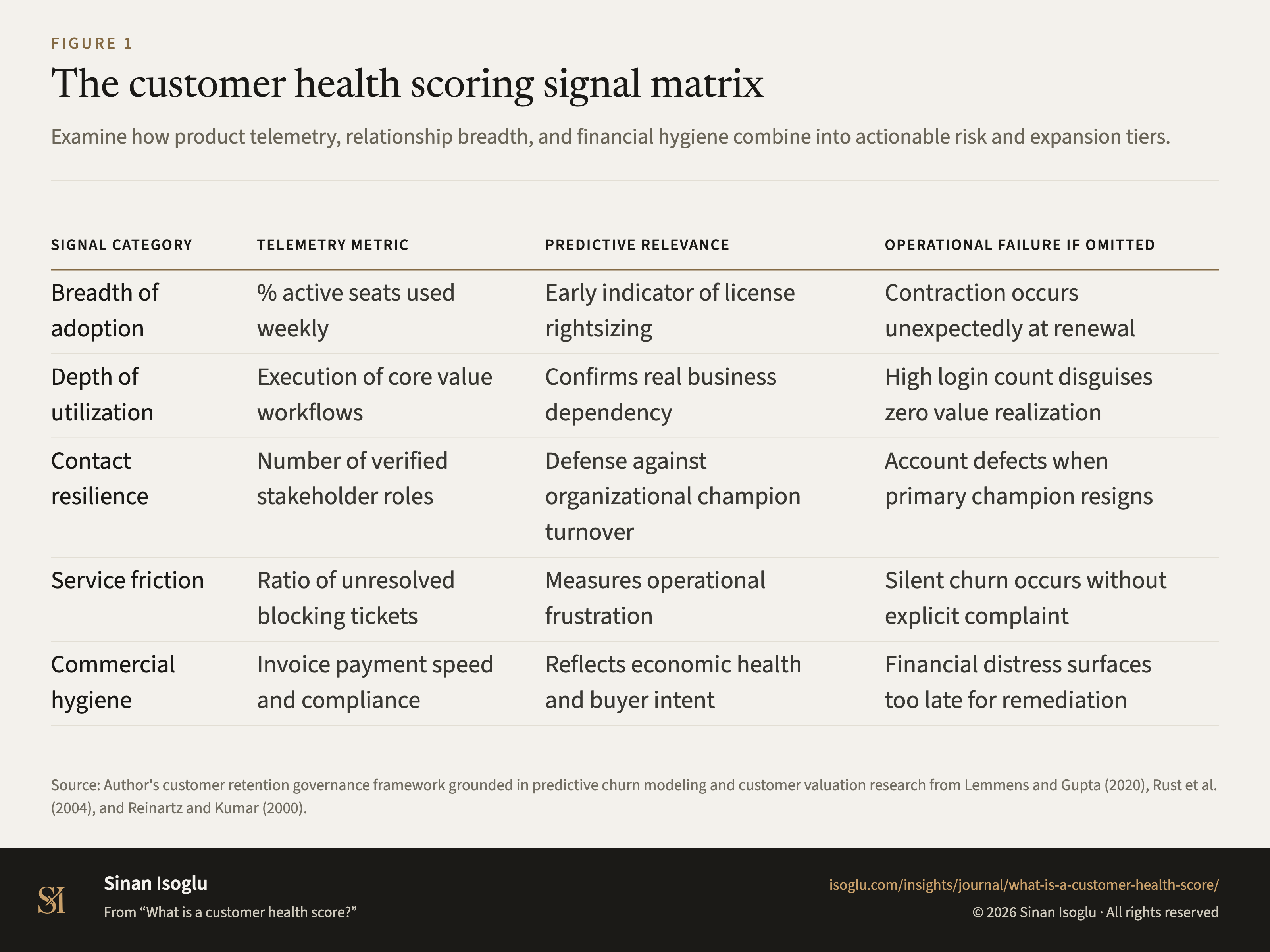
Figure 1Figure
The customer health scoring signal matrix
What is a customer health score?
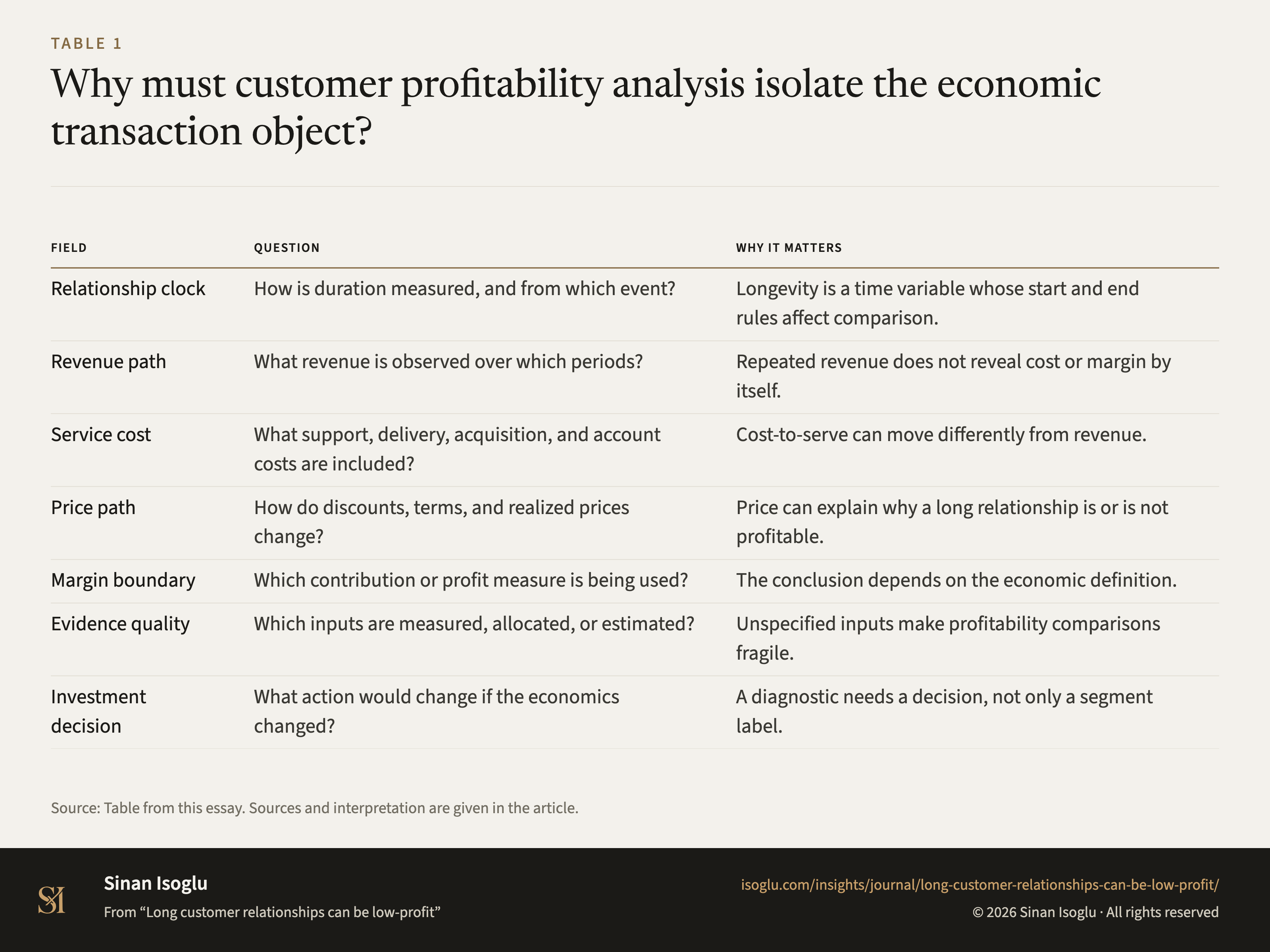
Table 1Table
Why must customer profitability analysis isolate the economic transaction object?
Long customer relationships can be low-profit
Contact
Bring the question you're working on.
Research, a guest lecture, or a commercial question.