Table 3From “Saturation is a decision rule, not a number”
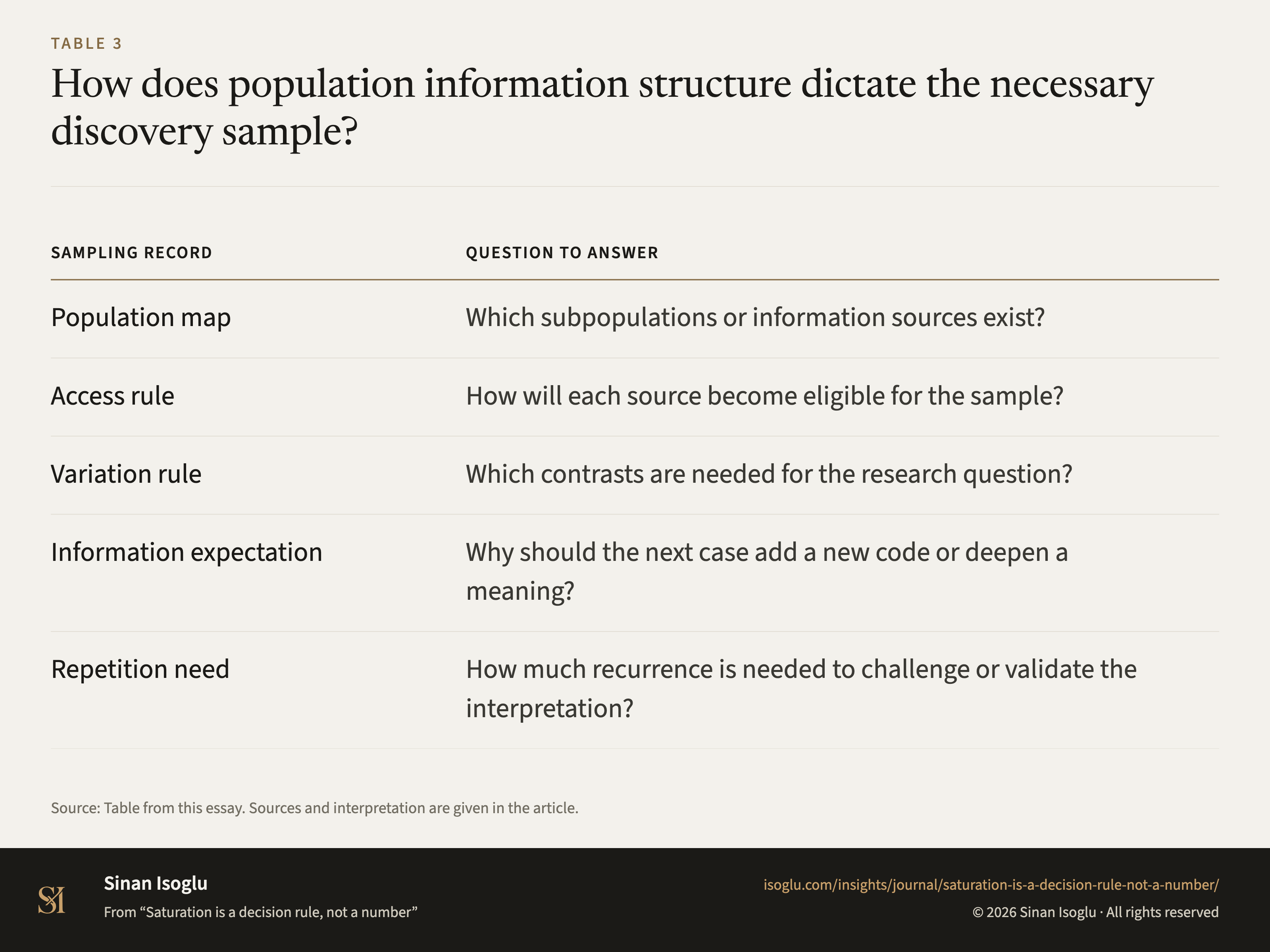
How does population information structure dictate the necessary discovery sample?
Table 3How does population information structure dictate the necessary discovery sample?
| Sampling record | Question to answer |
|---|---|
| Population map | Which subpopulations or information sources exist? |
| Access rule | How will each source become eligible for the sample? |
| Variation rule | Which contrasts are needed for the research question? |
| Information expectation | Why should the next case add a new code or deepen a meaning? |
| Repetition need | How much recurrence is needed to challenge or validate the interpretation? |
Swipe or scroll horizontally if the table is wider than your screen.
Source: Table from this essay. Sources and interpretation are given in the article.
From the essay
From the research bench
Saturation is a decision rule, not a number
Qualitative saturation is a stopping decision, not a universal interview count: match code or meaning to the question and sampling design.
Read the essayThis exhibit belongs to an essay: the numbers live here, the argument lives there.
Cite or embed
Related exhibits
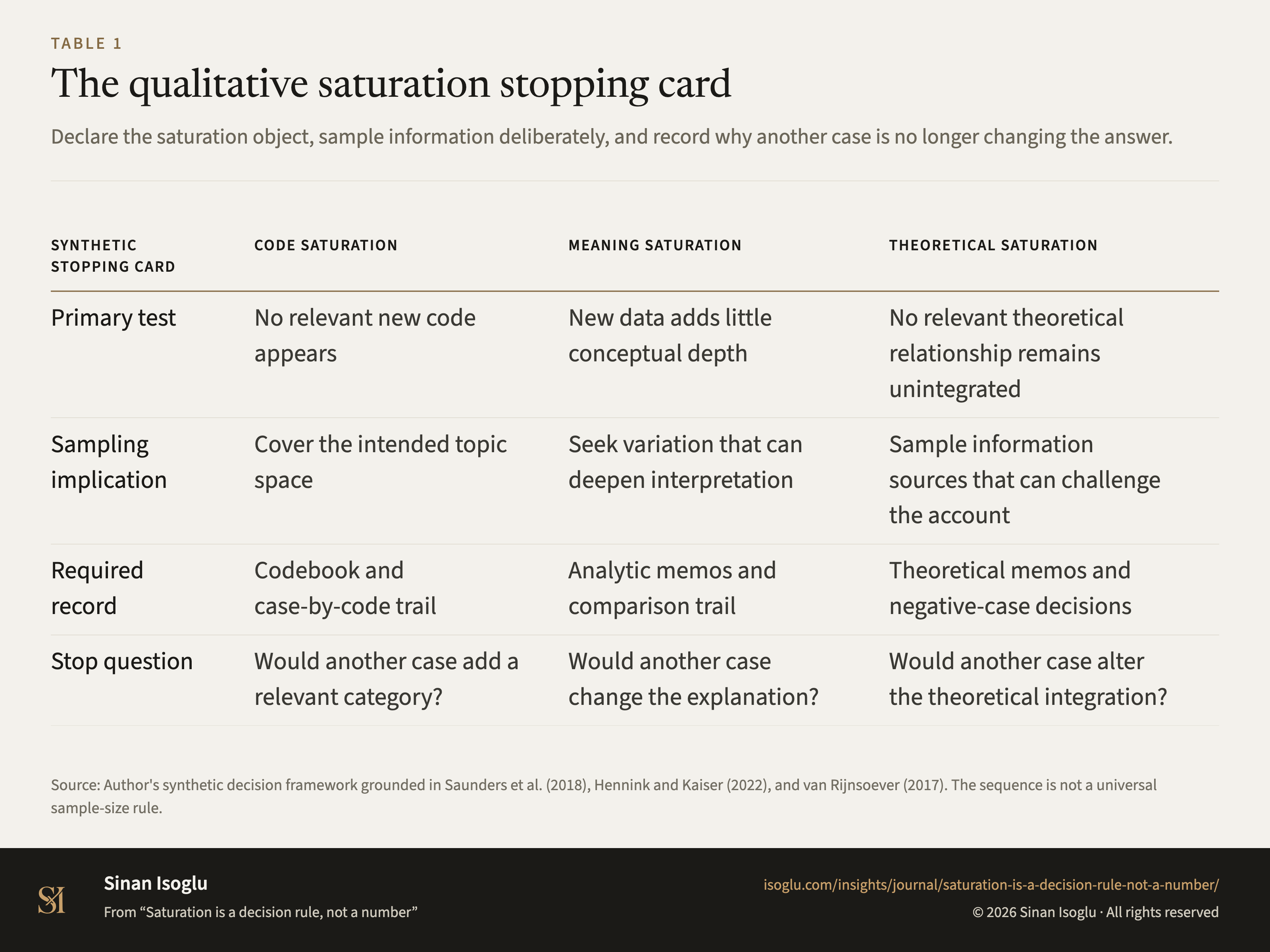
Table 1Table
The qualitative saturation stopping card
Saturation is a decision rule, not a number
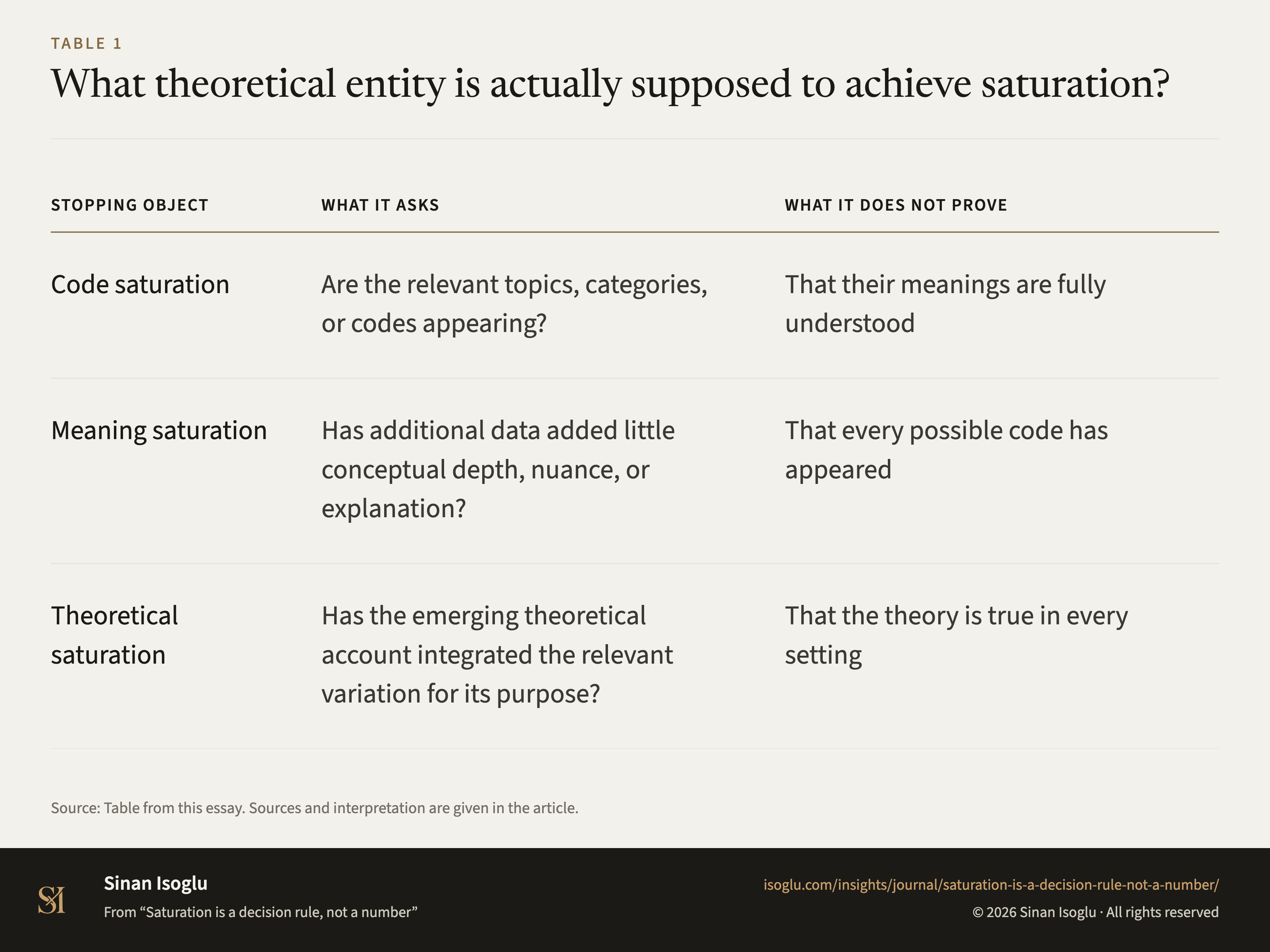
Table 1Table
What theoretical entity is actually supposed to achieve saturation?
Saturation is a decision rule, not a number
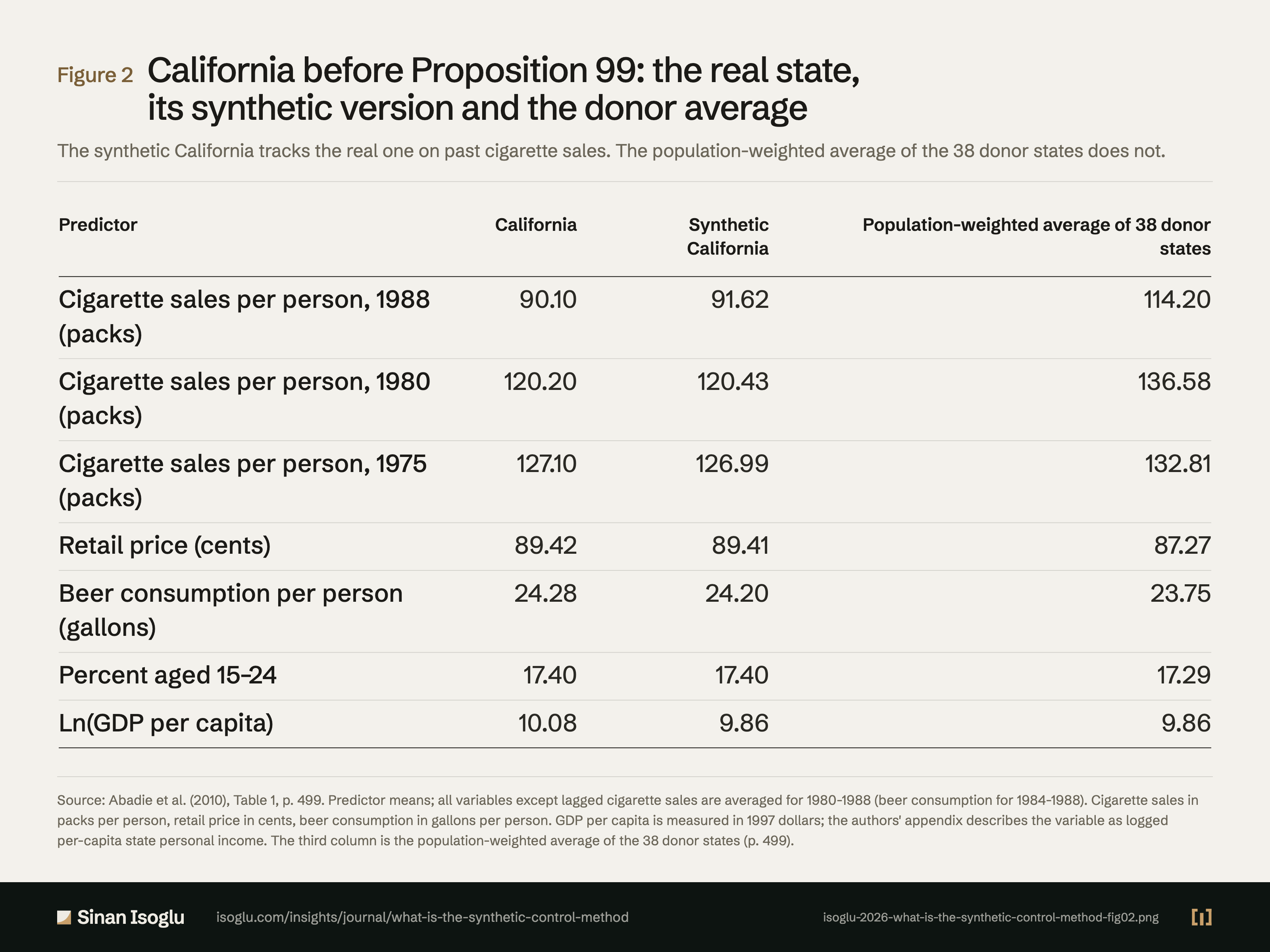
Figure 2Figure
California before Proposition 99: the real state, its synthetic version and the donor average
What is the synthetic control method?
Contact
Bring the question you're working on.
Research, a guest lecture, or a commercial question.