Table 8From “Acquisition growth loops need a declared entry event”
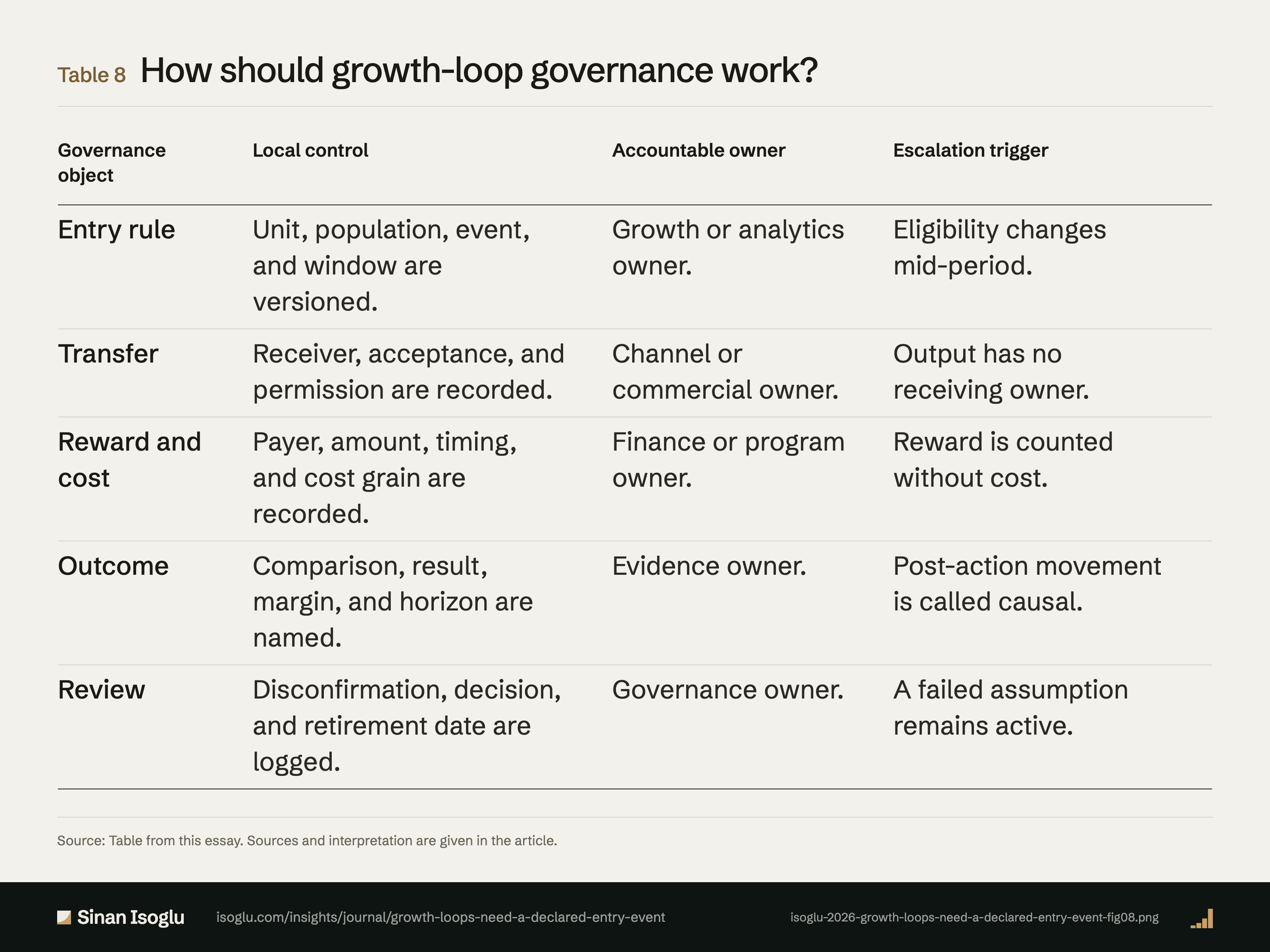
How should growth-loop governance work?
Table 8How should growth-loop governance work?
| Governance object | Local control | Accountable owner | Escalation trigger |
|---|---|---|---|
| Entry rule | Unit, population, event, and window are versioned. | Growth or analytics owner. | Eligibility changes mid-period. |
| Transfer | Receiver, acceptance, and permission are recorded. | Channel or commercial owner. | Output has no receiving owner. |
| Reward and cost | Payer, amount, timing, and cost grain are recorded. | Finance or program owner. | Reward is counted without cost. |
| Outcome | Comparison, result, margin, and horizon are named. | Evidence owner. | Post-action movement is called causal. |
| Review | Disconfirmation, decision, and retirement date are logged. | Governance owner. | A failed assumption remains active. |
Swipe or scroll horizontally if the table is wider than your screen.
Source: Table from this essay. Sources and interpretation are given in the article.
From the essay
Growth that compounds
Acquisition growth loops need a declared entry event
An acquisition growth loop is measurable only when action, transfer, eligibility, reward cost, and the next outcome are defined under one boundary.
Read the essayThis exhibit belongs to an essay: the numbers live here, the argument lives there.
Cite or embed
Related exhibits
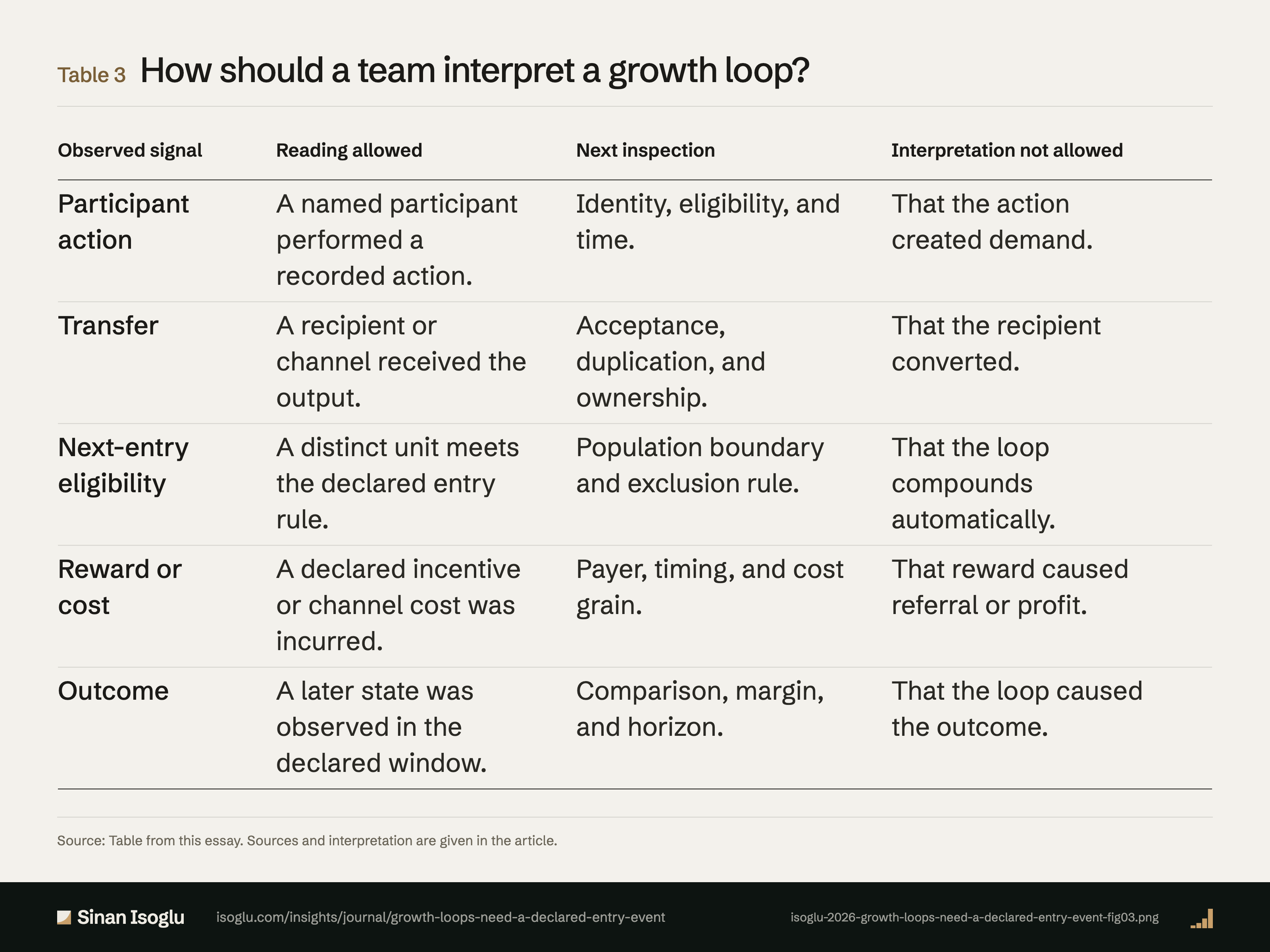
Table 3Table
How should a team interpret a growth loop?
Acquisition growth loops need a declared entry event
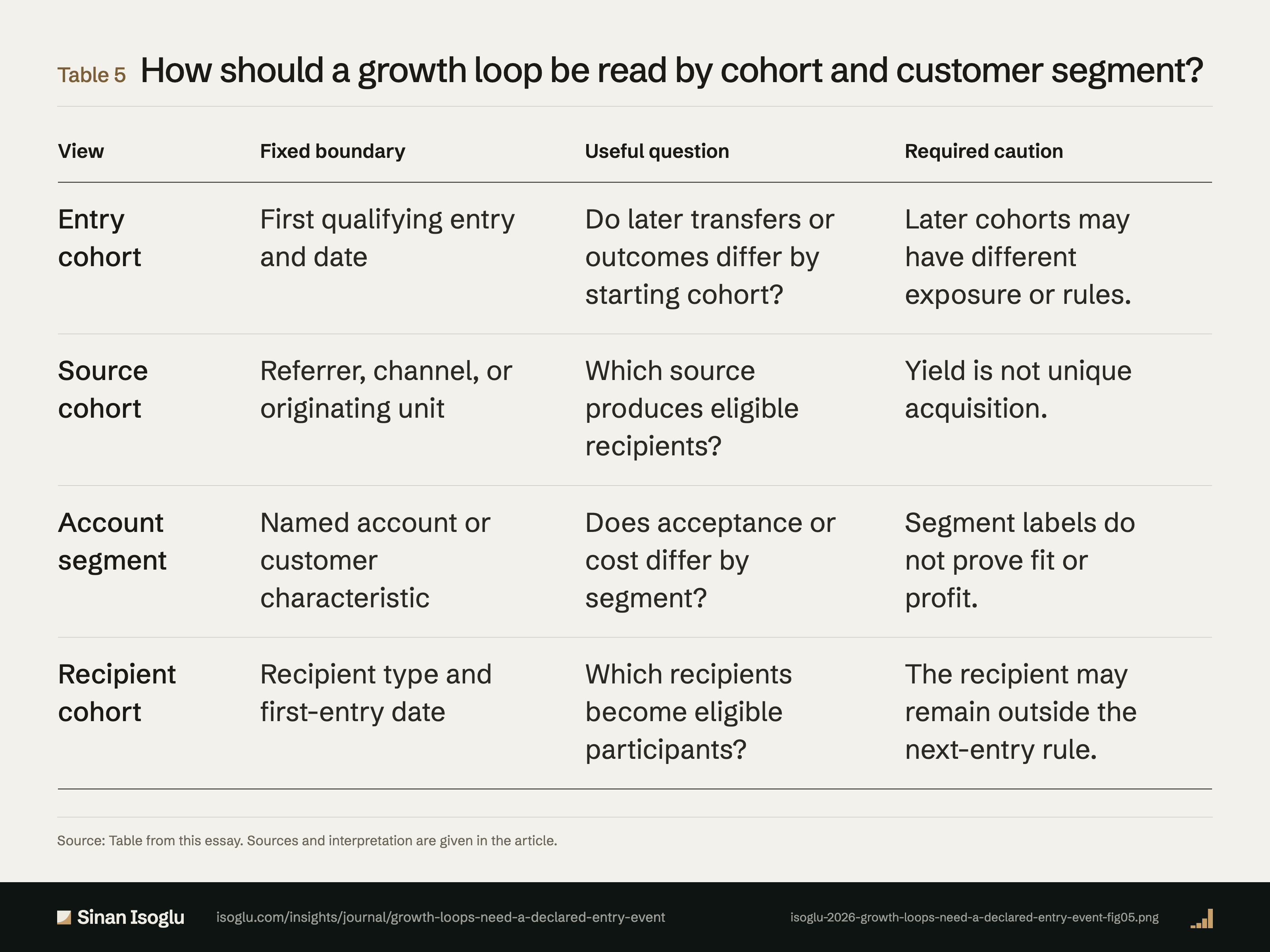
Table 5Table
How should a growth loop be read by cohort and customer segment?
Acquisition growth loops need a declared entry event
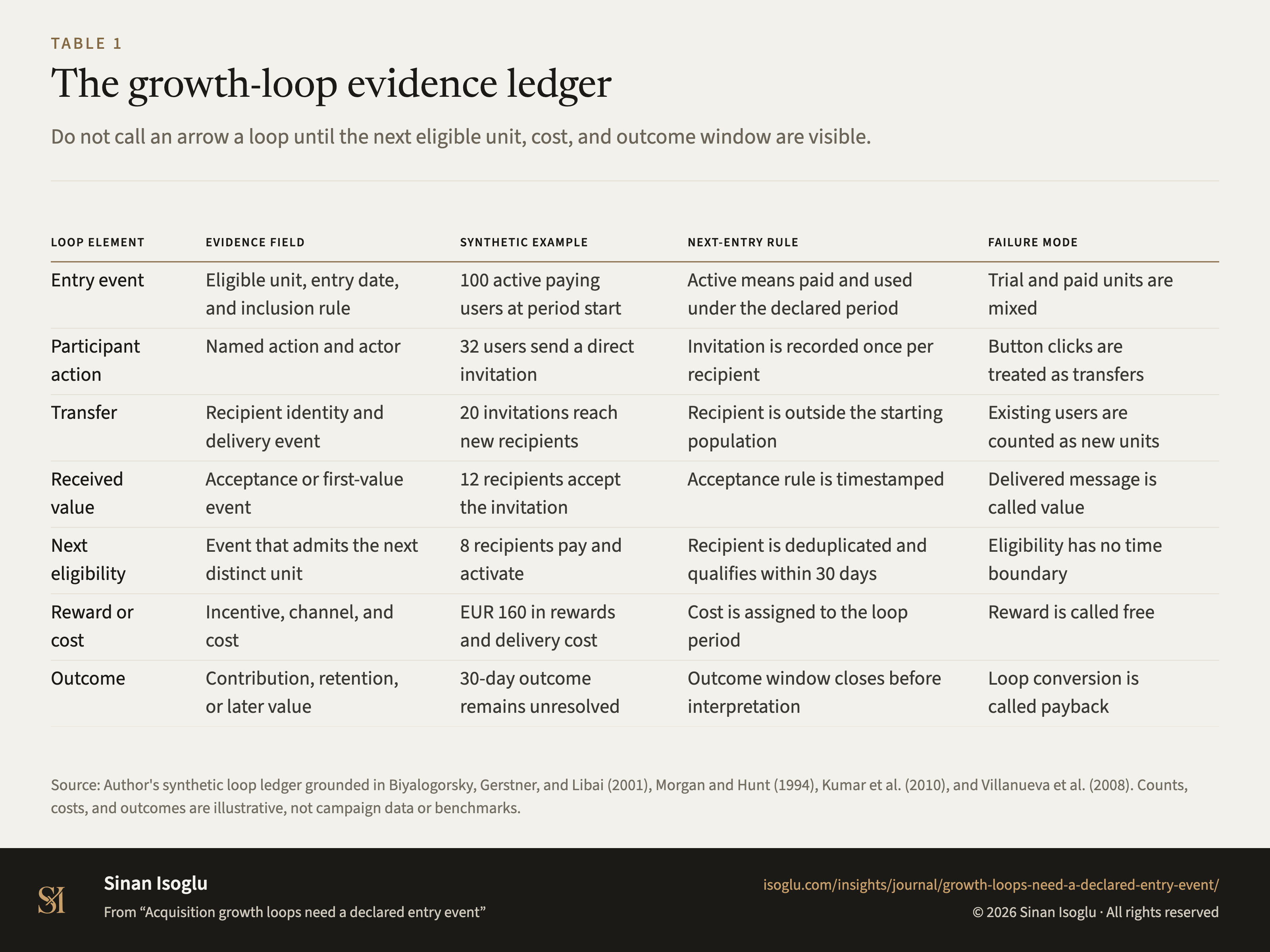
Table 1Table
The growth-loop evidence ledger
Acquisition growth loops need a declared entry event
Contact
Bring the question you're working on.
Research, a guest lecture, or a commercial question.