Table 5From “Acquisition growth loops need a declared entry event”
How should a growth loop be read by cohort and customer segment?
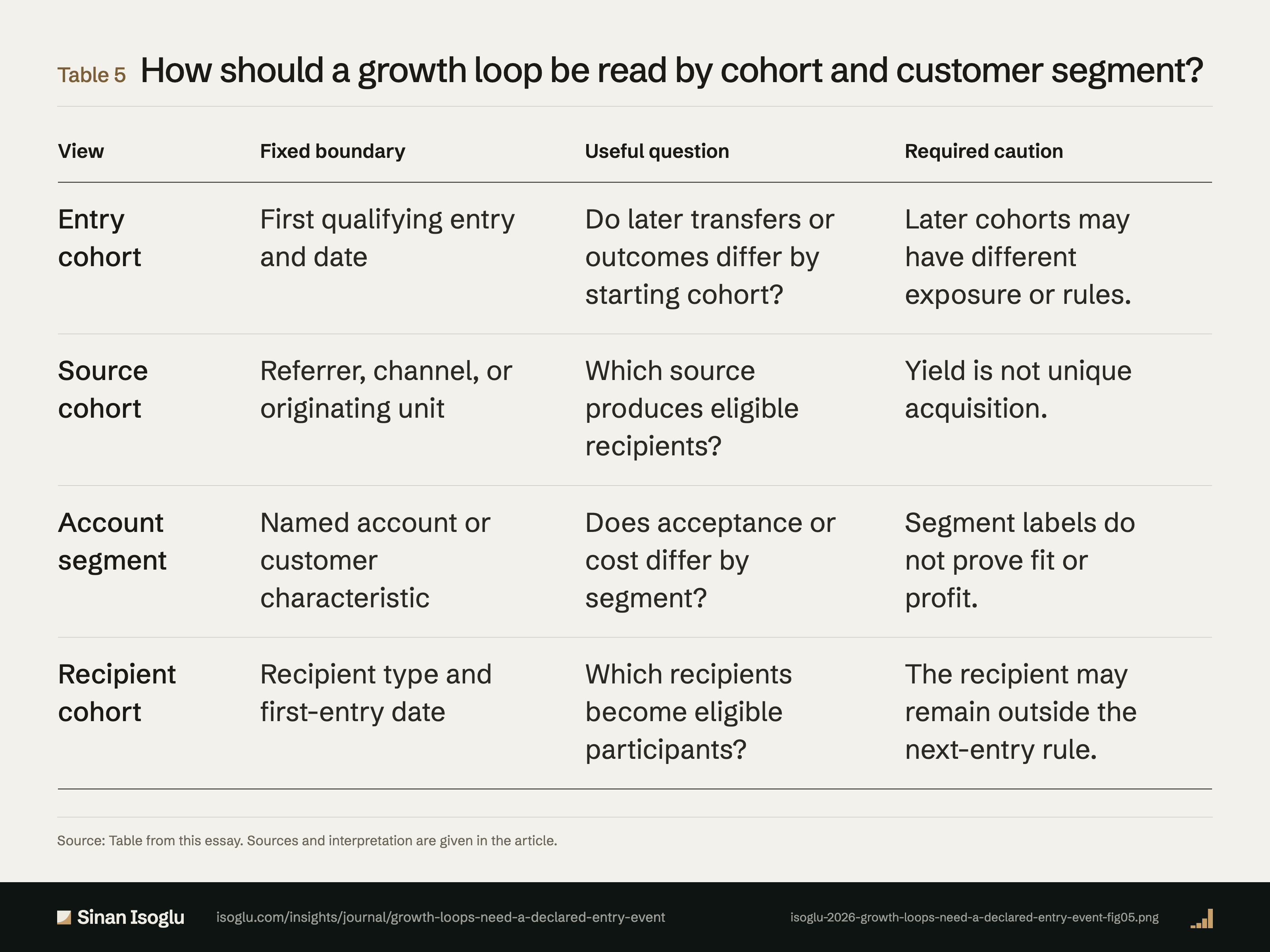
Table 5How should a growth loop be read by cohort and customer segment?
| View | Fixed boundary | Useful question | Required caution |
|---|---|---|---|
| Entry cohort | First qualifying entry and date | Do later transfers or outcomes differ by starting cohort? | Later cohorts may have different exposure or rules. |
| Source cohort | Referrer, channel, or originating unit | Which source produces eligible recipients? | Yield is not unique acquisition. |
| Account segment | Named account or customer characteristic | Does acceptance or cost differ by segment? | Segment labels do not prove fit or profit. |
| Recipient cohort | Recipient type and first-entry date | Which recipients become eligible participants? | The recipient may remain outside the next-entry rule. |
Swipe or scroll horizontally if the table is wider than your screen.
Source: Table from this essay. Sources and interpretation are given in the article.
From the essay
Growth that compounds
Acquisition growth loops need a declared entry event
An acquisition growth loop is measurable only when action, transfer, eligibility, reward cost, and the next outcome are defined under one boundary.
Read the essayThis exhibit belongs to an essay: the numbers live here, the argument lives there.
Cite or embed
Related exhibits
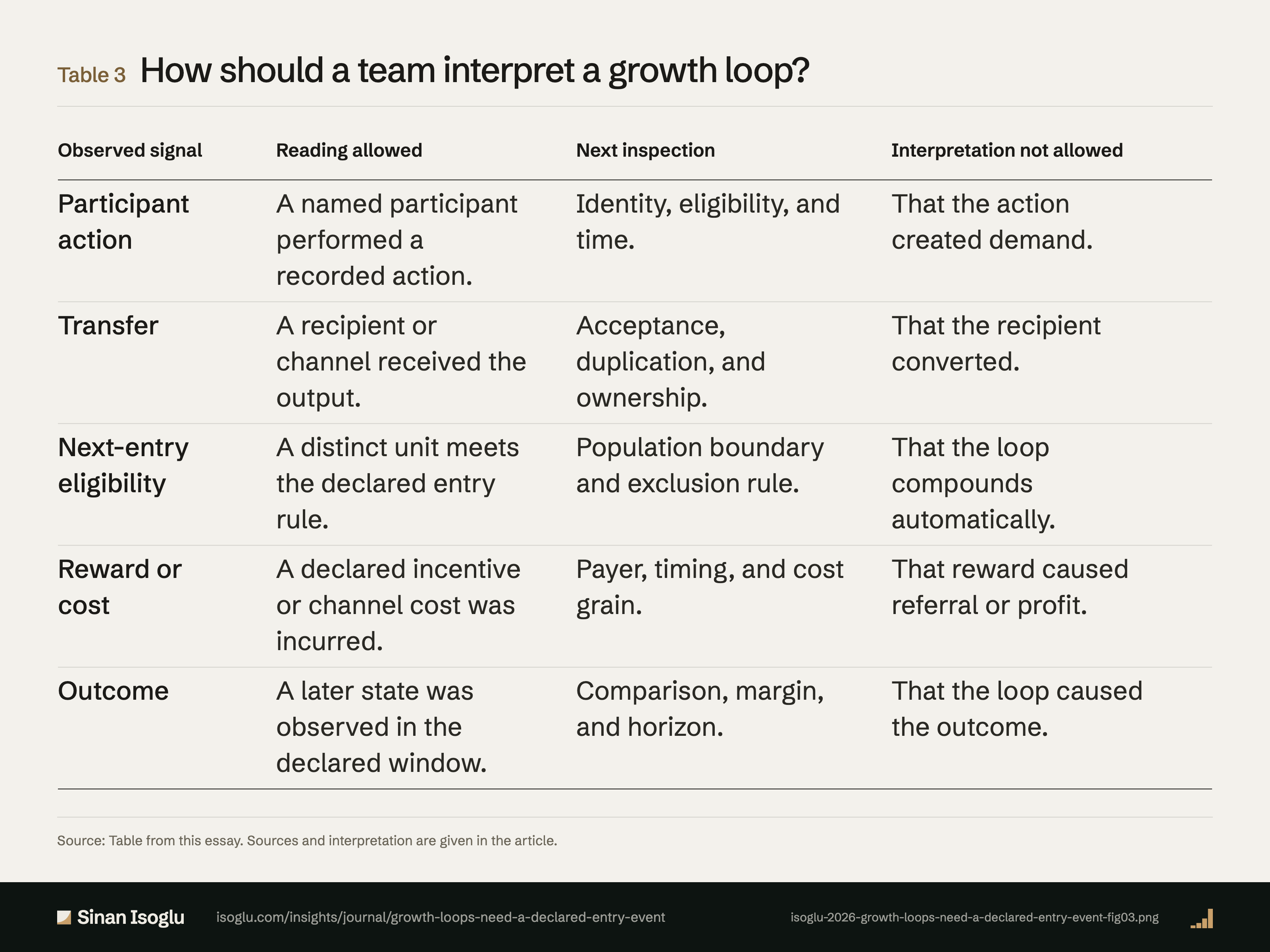
Table 3Table
How should a team interpret a growth loop?
Acquisition growth loops need a declared entry event
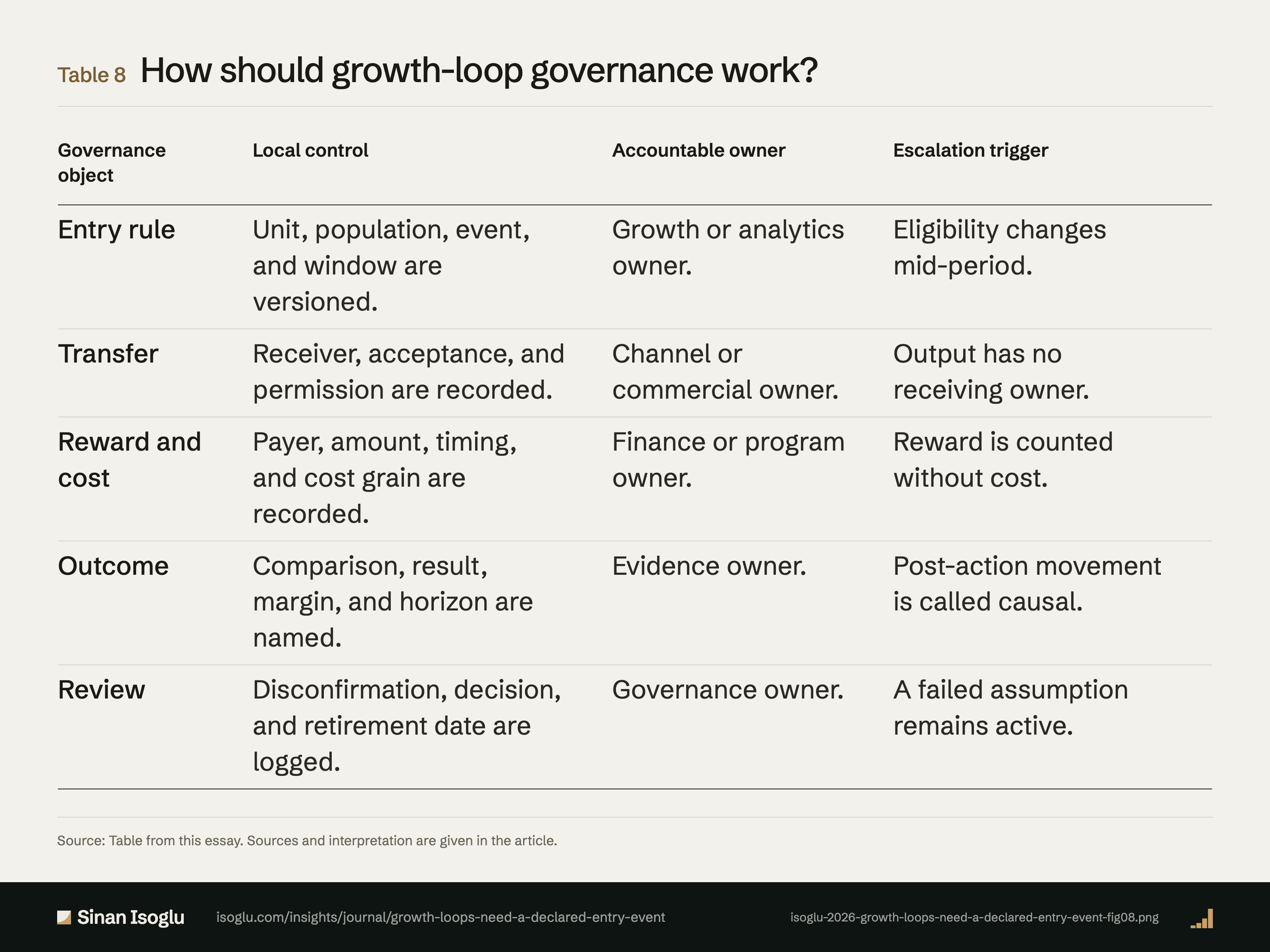
Table 8Table
How should growth-loop governance work?
Acquisition growth loops need a declared entry event
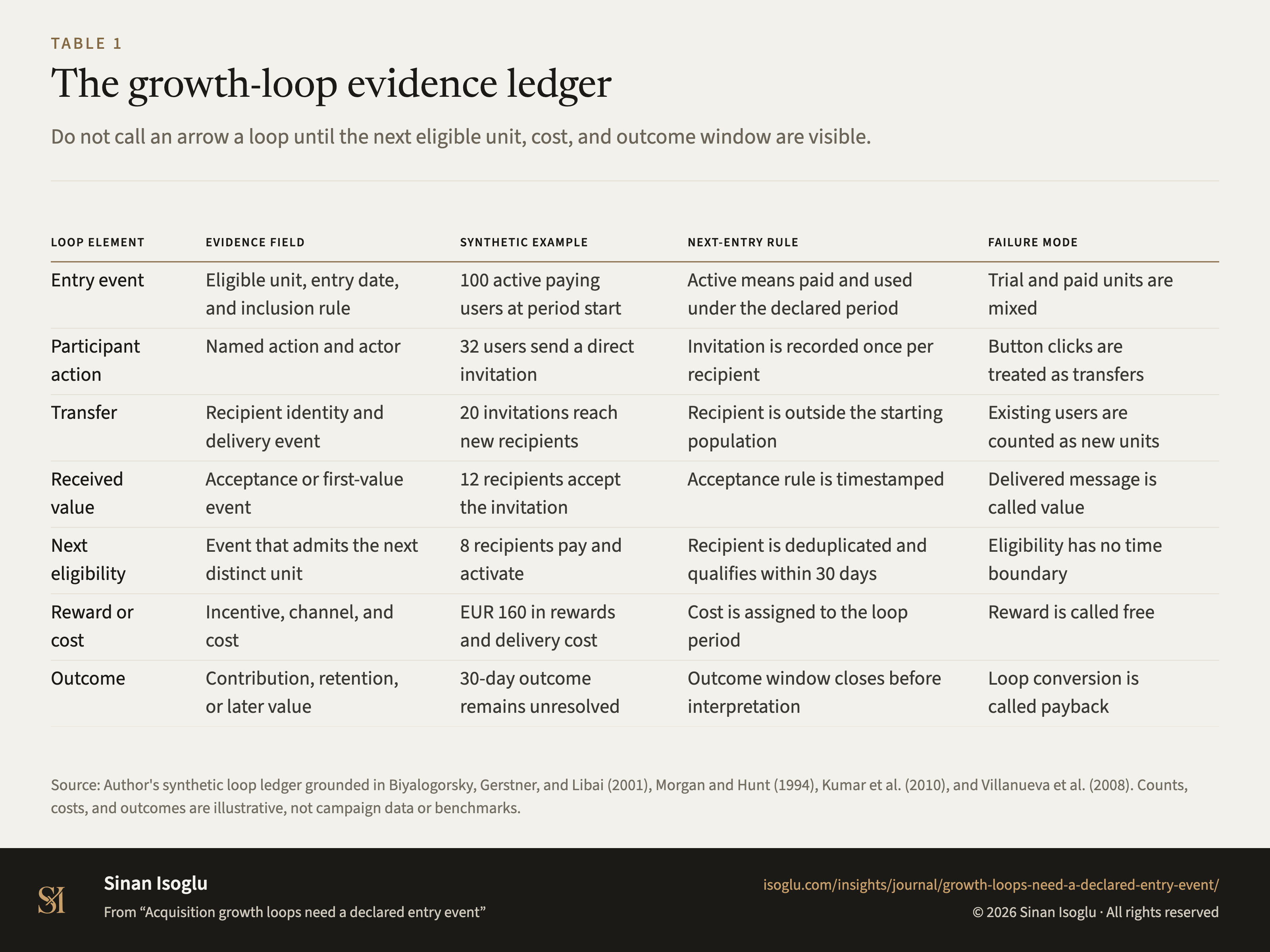
Table 1Table
The growth-loop evidence ledger
Acquisition growth loops need a declared entry event
Contact
Bring the question you're working on.
Research, a guest lecture, or a commercial question.