Table 4From “Acquisition growth loops need a declared entry event”
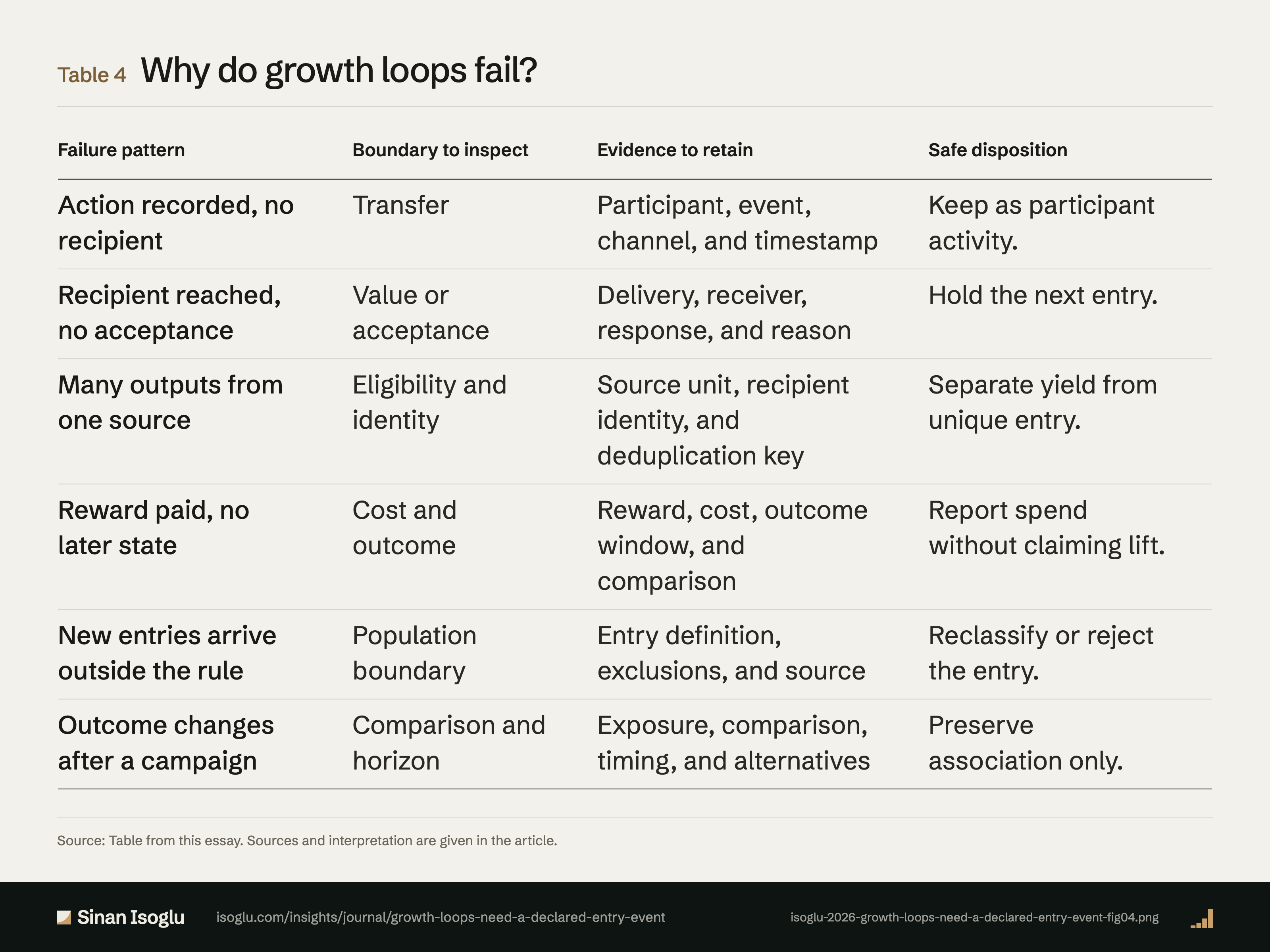
Why do growth loops fail?
Table 4Why do growth loops fail?
| Failure pattern | Boundary to inspect | Evidence to retain | Safe disposition |
|---|---|---|---|
| Action recorded, no recipient | Transfer | Participant, event, channel, and timestamp | Keep as participant activity. |
| Recipient reached, no acceptance | Value or acceptance | Delivery, receiver, response, and reason | Hold the next entry. |
| Many outputs from one source | Eligibility and identity | Source unit, recipient identity, and deduplication key | Separate yield from unique entry. |
| Reward paid, no later state | Cost and outcome | Reward, cost, outcome window, and comparison | Report spend without claiming lift. |
| New entries arrive outside the rule | Population boundary | Entry definition, exclusions, and source | Reclassify or reject the entry. |
| Outcome changes after a campaign | Comparison and horizon | Exposure, comparison, timing, and alternatives | Preserve association only. |
Swipe or scroll horizontally if the table is wider than your screen.
Source: Table from this essay. Sources and interpretation are given in the article.
From the essay
Growth that compounds
Acquisition growth loops need a declared entry event
An acquisition growth loop is measurable only when action, transfer, eligibility, reward cost, and the next outcome are defined under one boundary.
Read the essayThis exhibit belongs to an essay: the numbers live here, the argument lives there.
Cite or embed
Related exhibits
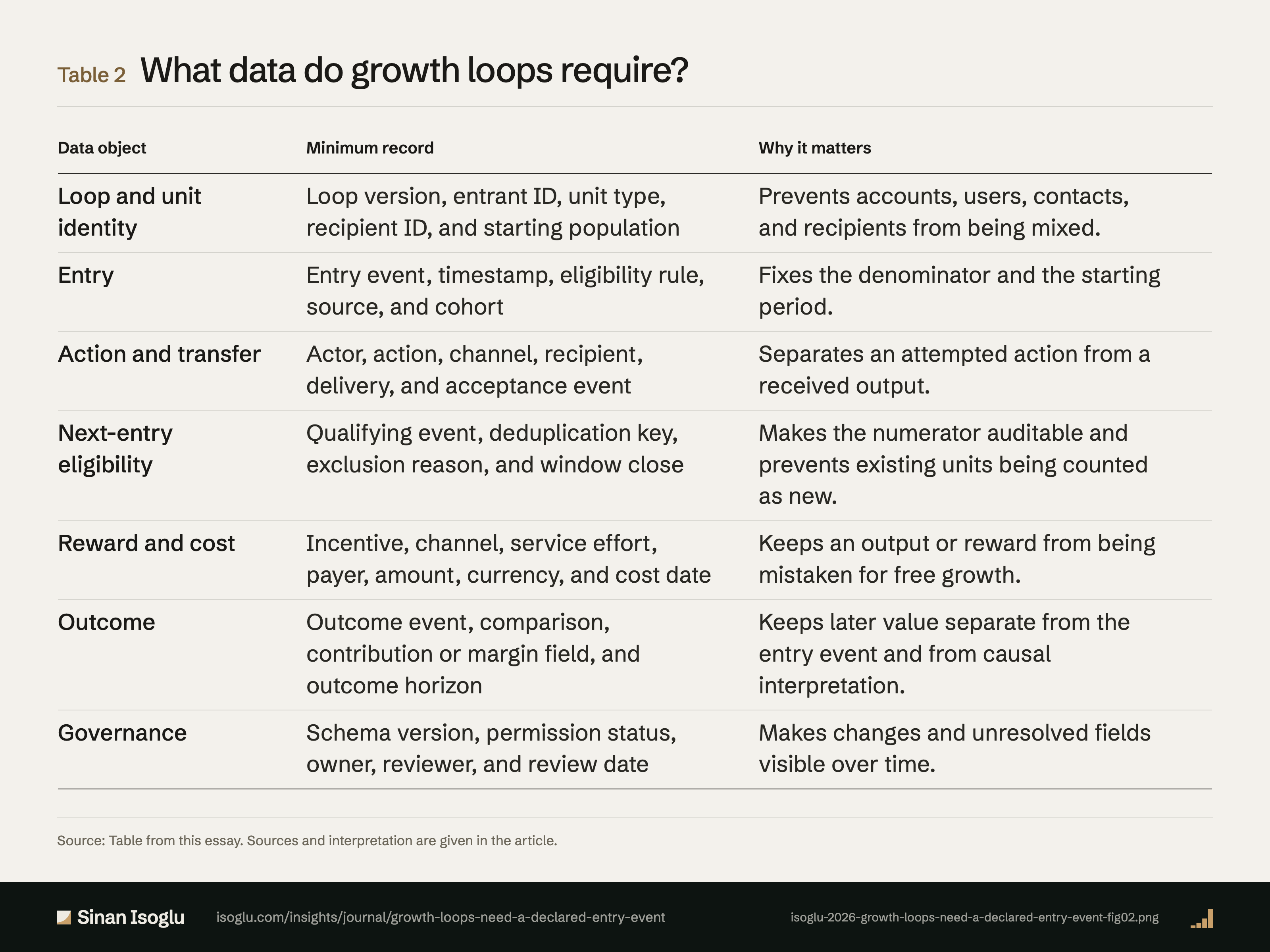
Table 2Table
What data do growth loops require?
Acquisition growth loops need a declared entry event
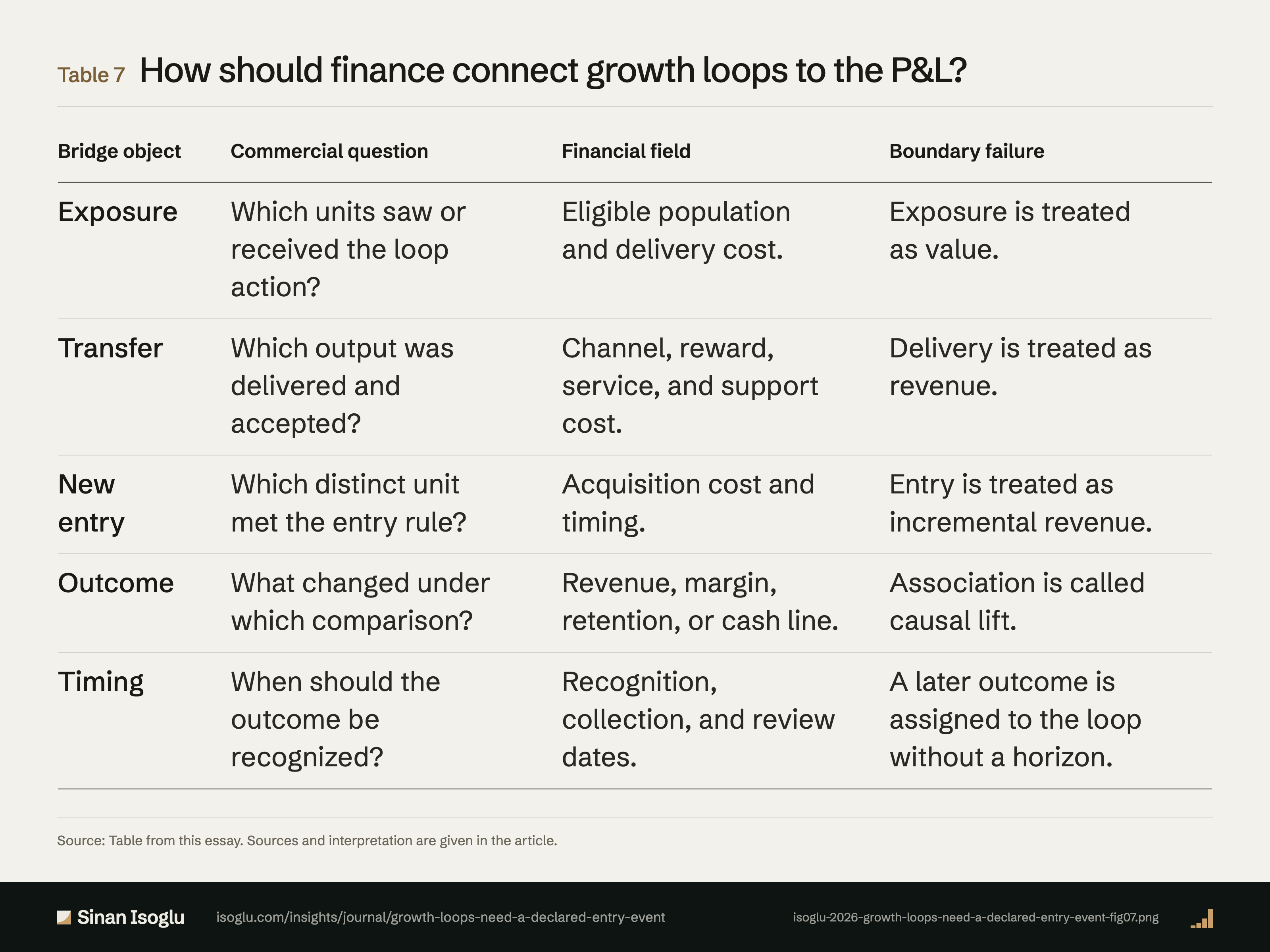
Table 7Table
How should finance connect growth loops to the P&L?
Acquisition growth loops need a declared entry event
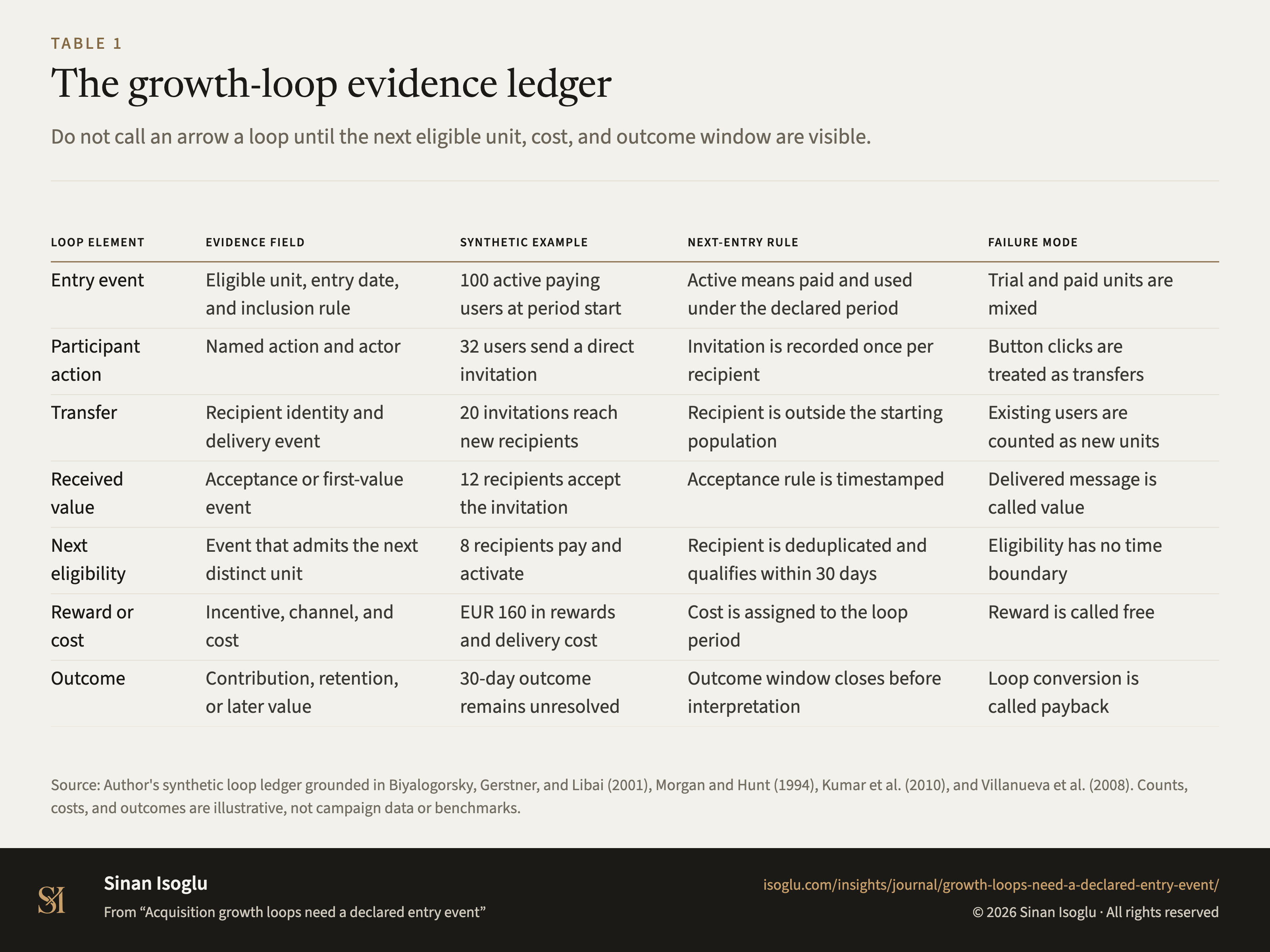
Table 1Table
The growth-loop evidence ledger
Acquisition growth loops need a declared entry event
Contact
Bring the question you're working on.
Research, a guest lecture, or a commercial question.