Figure 3From “A flat rate buys your customer’s worst month.”
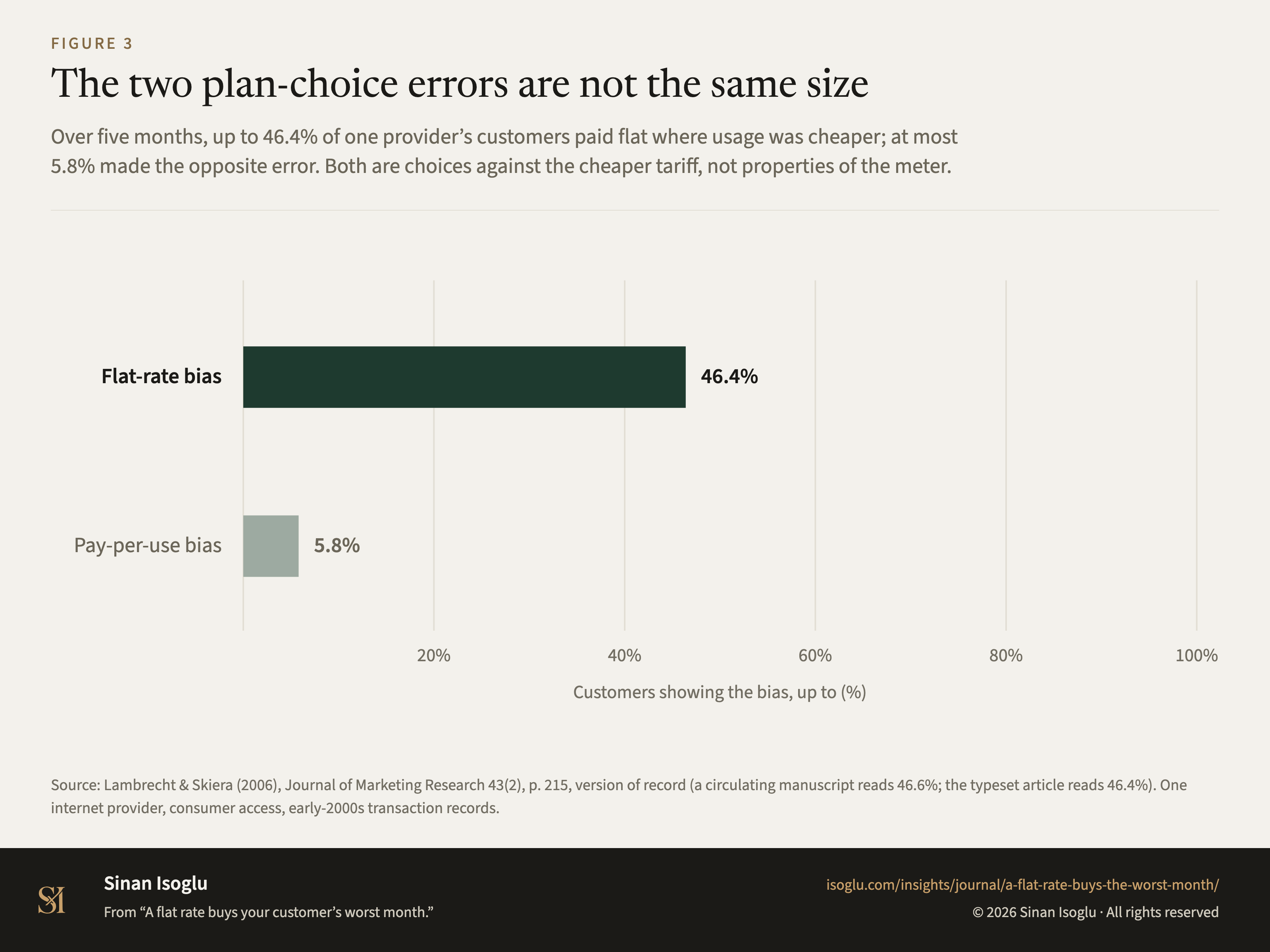
The two plan-choice errors are not the same size
Over five months, up to 46.4% of one provider’s customers paid flat where usage was cheaper; at most 5.8% made the opposite error. Both are choices against the cheaper tariff, not properties of the meter.
Figure 3The two plan-choice errors are not the same size
Source: Lambrecht & Skiera (2006), Journal of Marketing Research 43(2), p. 215, version of record (a circulating manuscript reads 46.6%; the typeset article reads 46.4%). One internet provider, consumer access, early-2000s transaction records.
Source and evidence
Each line names a claim related to this exhibit, its source, and how it was checked.
- A LS06-C6 Flat-rate bias is the regular one and pay-per-use bias the rare one, in the authors' own words: over five months, "46.4% of consumers have a flat-rate bias, and only up to" "5.8% of consumers have a pay-per-use bias" (p. 215; 48.1% on Tariff 2 under Criterion 1)Lambrecht & Skiera (2006), Journal of Marketing Research 43(2), 212–223 · VoR held
Grades: A, verified against the printed page of the primary source · B, primary source, text layer only · C, authoritative secondary · D, reported.
From the essay
Pricing & revenue architecture
A flat rate buys your customer’s worst month.
Flat pricing for software rested on two conditions, and inference cost broke one. The buyers who most want a flat rate are the ones with the biggest tail.
Read the essayThis exhibit belongs to an essay: the numbers live here, the argument lives there.
Cite or embed
Related exhibits
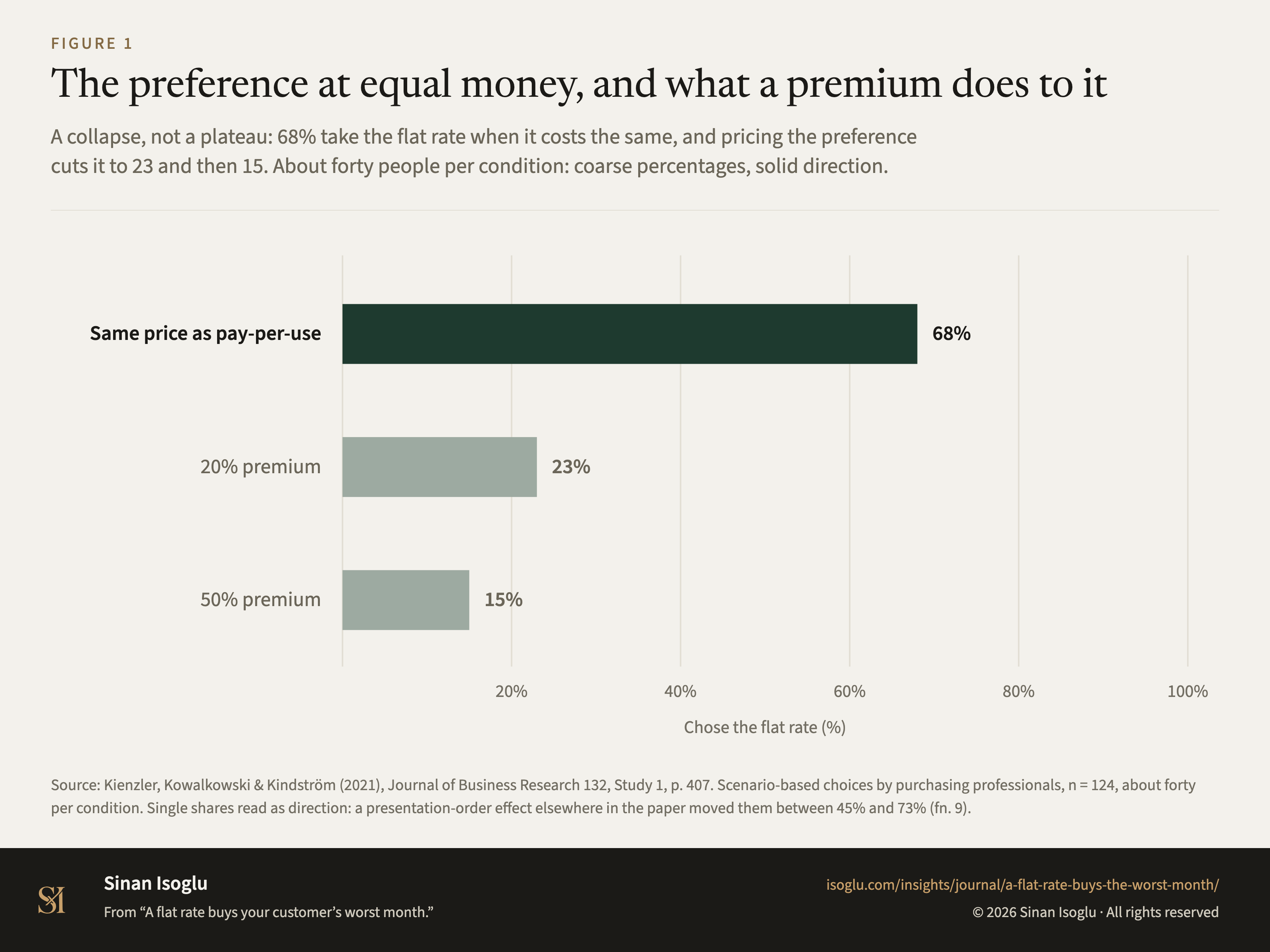
Figure 1Figure
The preference at equal money, and what a premium does to it
A flat rate buys your customer’s worst month.
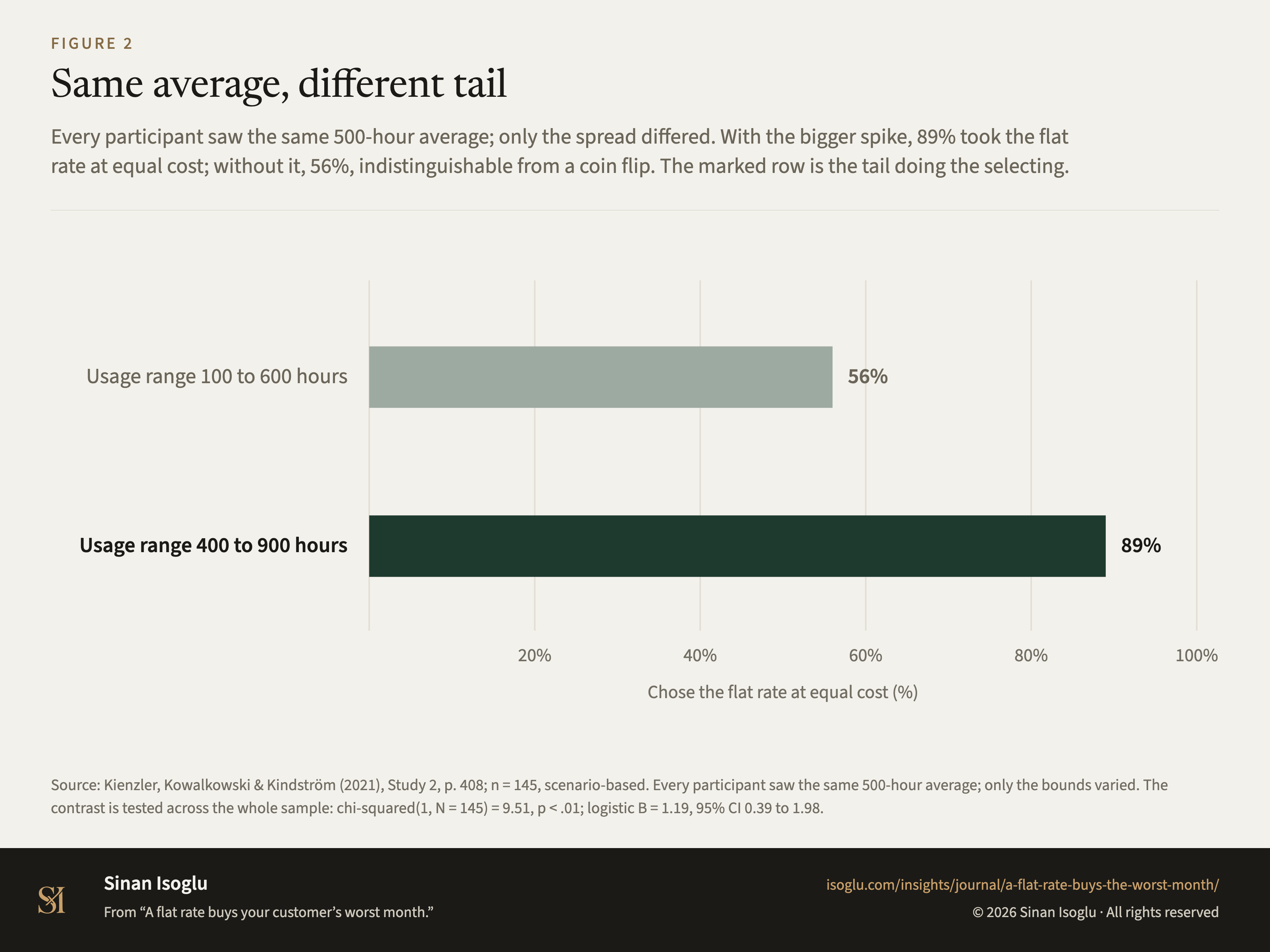
Figure 2Figure
Same average, different tail
A flat rate buys your customer’s worst month.
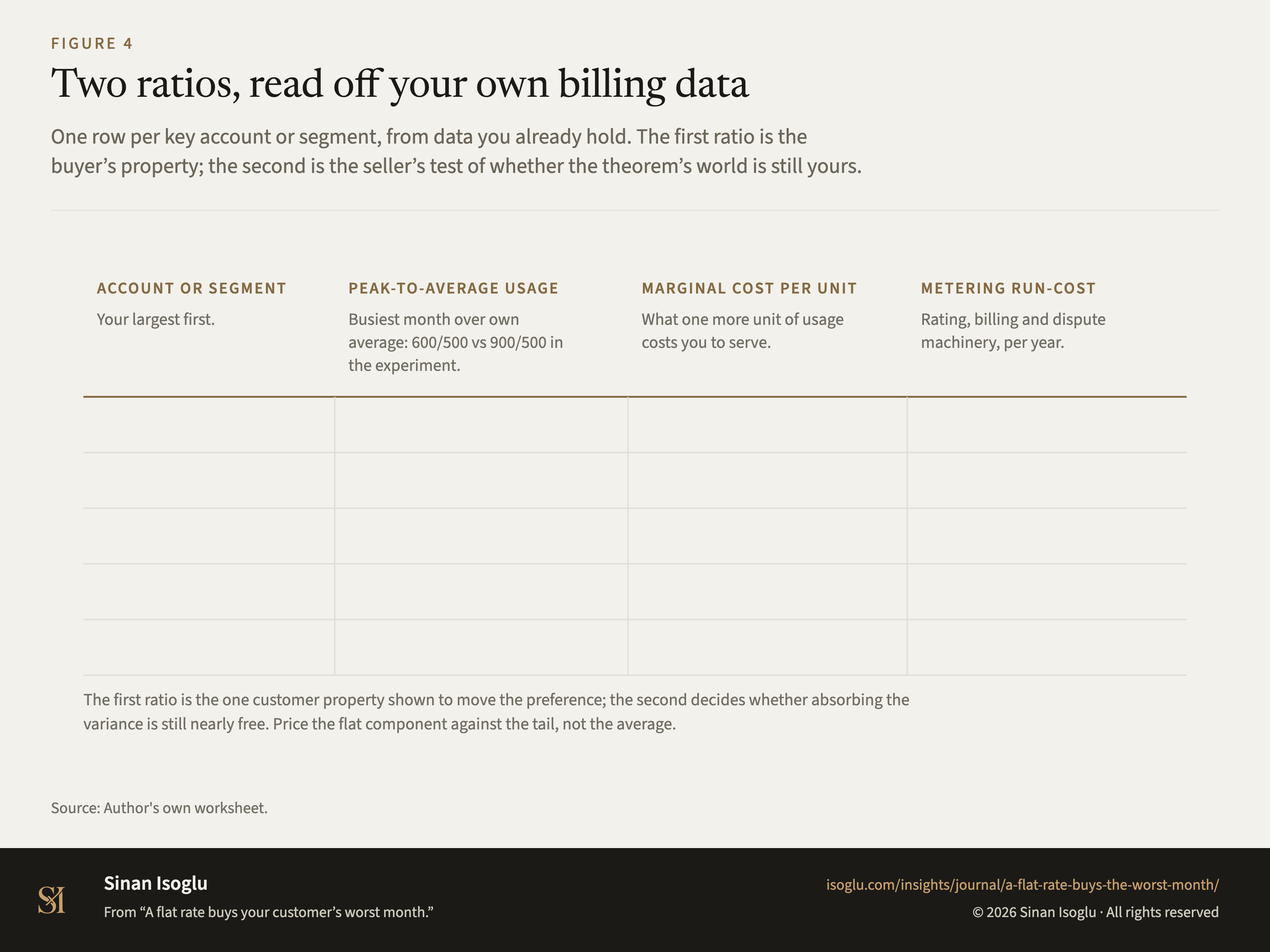
Figure 4Figure
Two ratios, read off your own billing data
A flat rate buys your customer’s worst month.
Contact
Bring the question you're working on.
Research, a guest lecture, or a commercial question.