Table 2From “What is revenue leakage? The gap between promised and collected revenue”
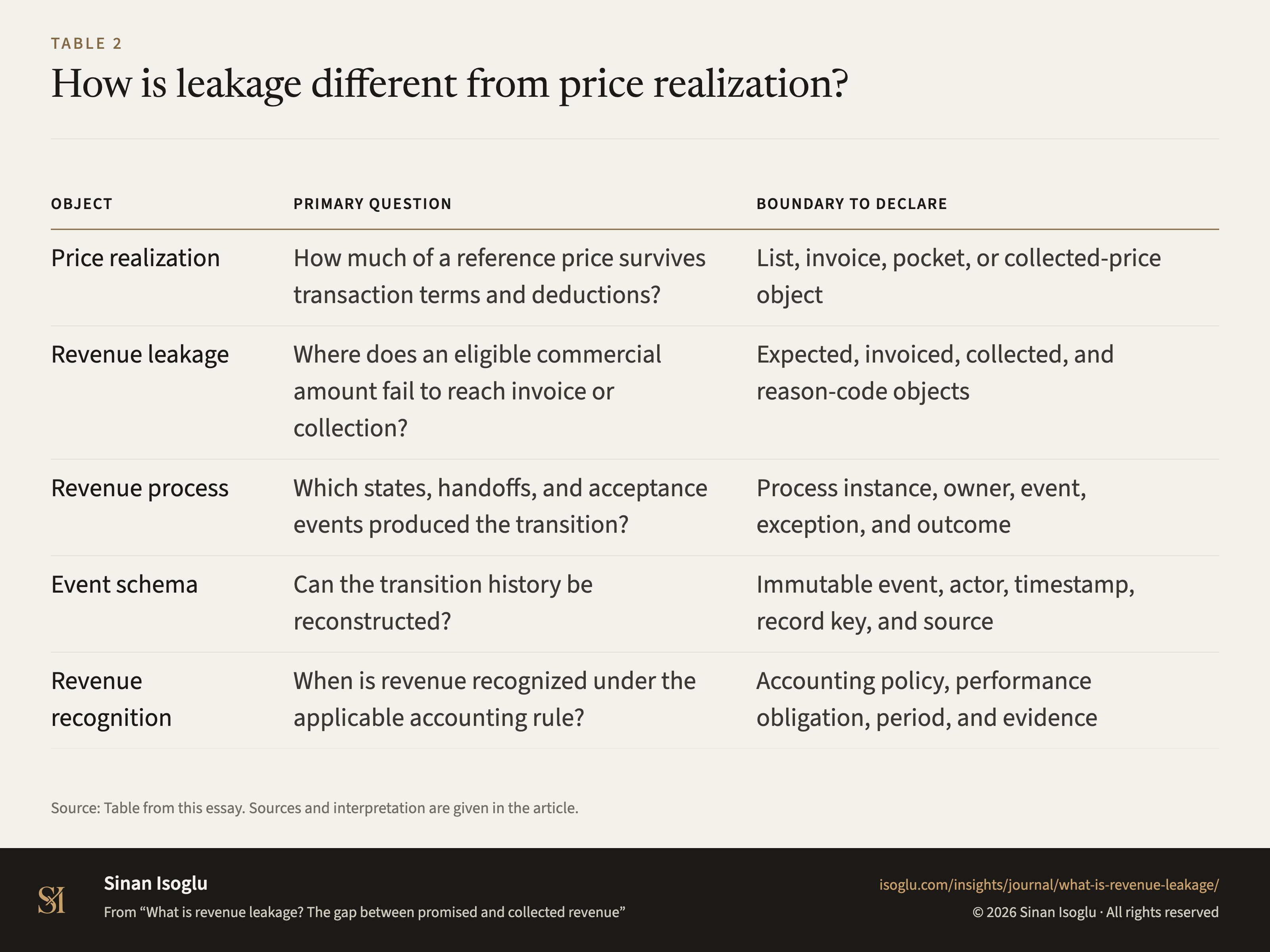
How is leakage different from price realization?
Table 2How is leakage different from price realization?
| Object | Primary question | Boundary to declare |
|---|---|---|
| Price realization | How much of a reference price survives transaction terms and deductions? | List, invoice, pocket, or collected-price object |
| Revenue leakage | Where does an eligible commercial amount fail to reach invoice or collection? | Expected, invoiced, collected, and reason-code objects |
| Revenue process | Which states, handoffs, and acceptance events produced the transition? | Process instance, owner, event, exception, and outcome |
| Event schema | Can the transition history be reconstructed? | Immutable event, actor, timestamp, record key, and source |
| Revenue recognition | When is revenue recognized under the applicable accounting rule? | Accounting policy, performance obligation, period, and evidence |
Swipe or scroll horizontally if the table is wider than your screen.
Source: Table from this essay. Sources and interpretation are given in the article.
From the essay
Pricing & revenue architecture
What is revenue leakage? The gap between promised and collected revenue
Revenue leakage is a reconciliation gap, not a synonym for discounting: name the expected value, invoice, cash, reason code, and recovery boundary.
Read the essayThis exhibit belongs to an essay: the numbers live here, the argument lives there.
Cite or embed
Related exhibits
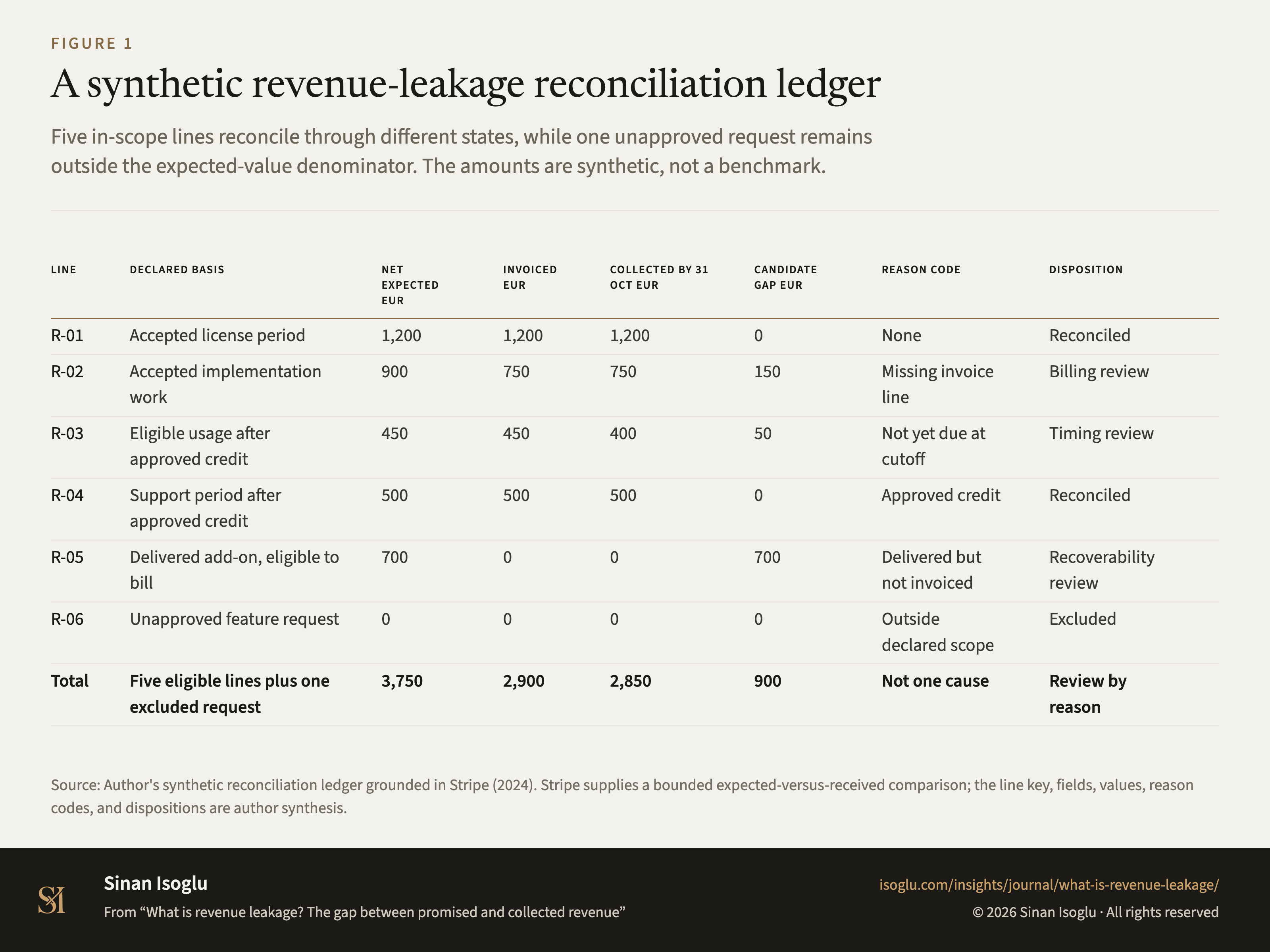
Figure 1Figure
A synthetic revenue-leakage reconciliation ledger
What is revenue leakage? The gap between promised and collected revenue
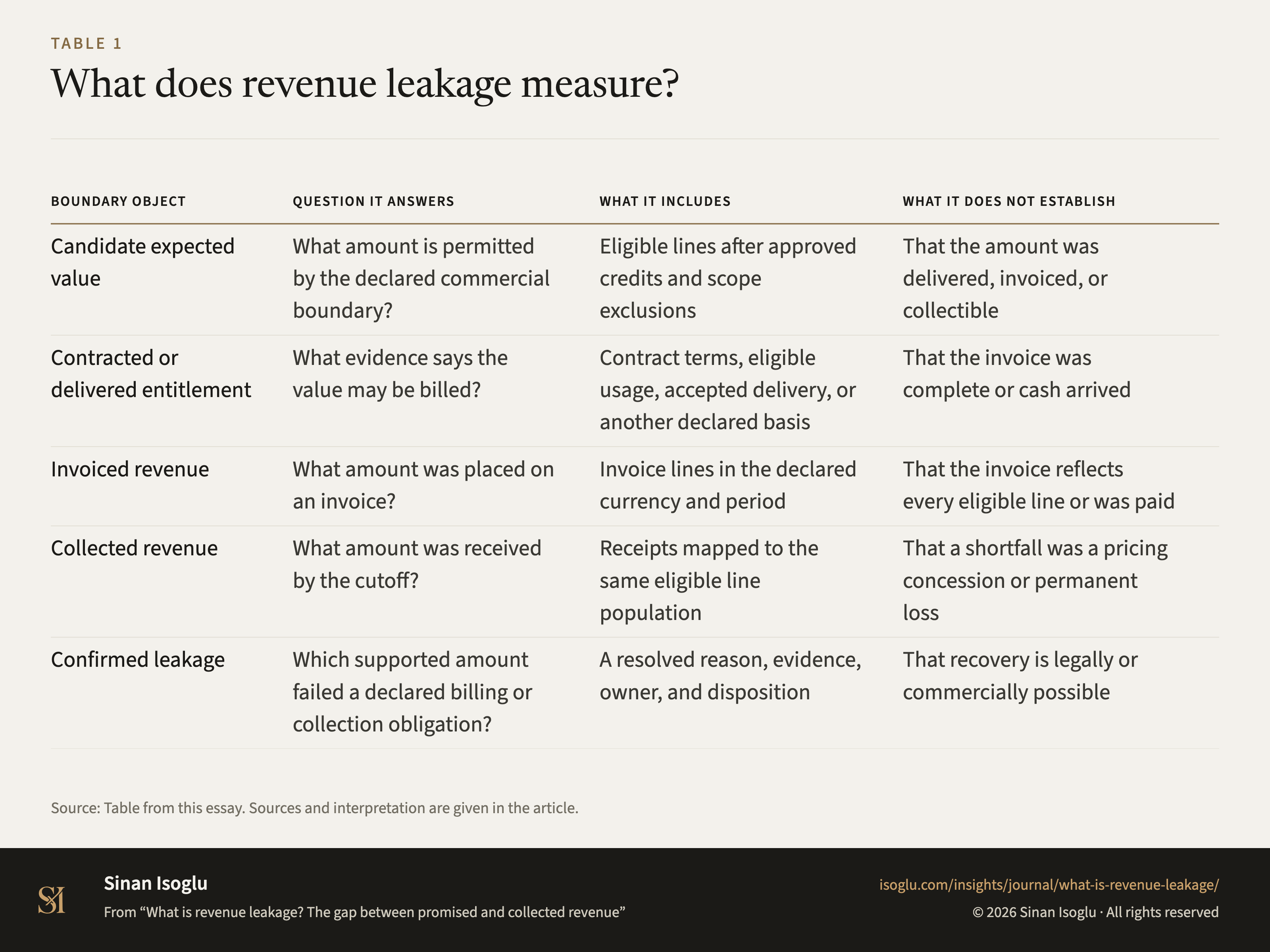
Table 1Table
What does revenue leakage measure?
What is revenue leakage? The gap between promised and collected revenue
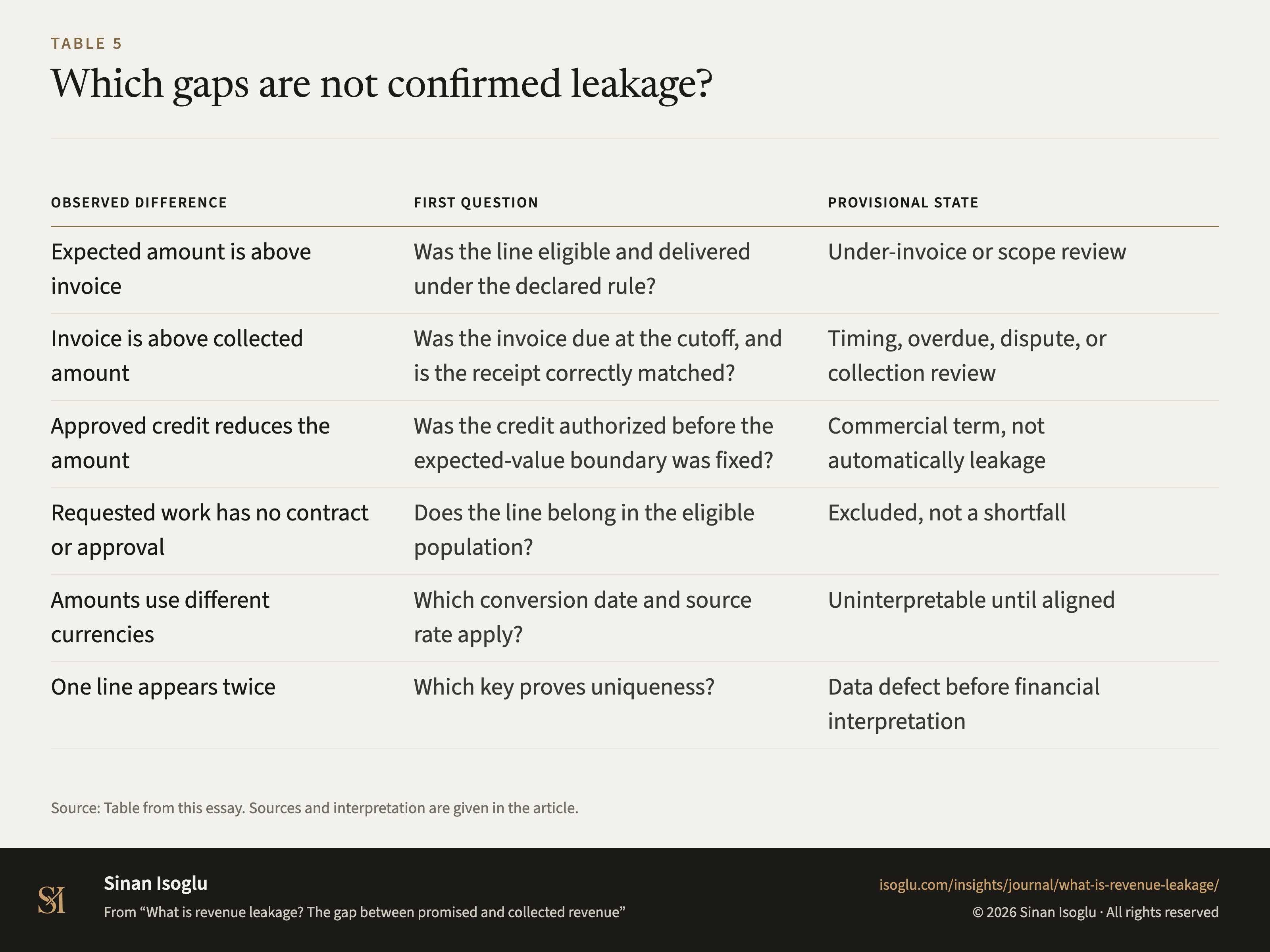
Table 4Table
Which gaps are not confirmed leakage?
What is revenue leakage? The gap between promised and collected revenue
Contact
Bring the question you're working on.
Research, a guest lecture, or a commercial question.