← Every exhibit
Table 1From “What is price elasticity of demand?”
Finance reconciliation: from the elasticity estimate to the P&L
Table 1Finance reconciliation: from the elasticity estimate to the P&L
| Bridge item | Declare before calculation | What a mismatch hides |
|---|---|---|
| Net price | Realized transaction price after discounts, terms, credits, and usage conditions | A list-price increase that never reaches the invoice |
| Quantity or outcome | Units, subscriptions, renewals, usage, or another named demand outcome | A coefficient applied to the wrong commercial event |
| Cost boundary | Marginal or variable costs included in the contribution calculation | Revenue growth that consumes delivery or service capacity |
| Population and horizon | Customer cohort, contract state, geography, and observation period | Mix changes presented as price response |
| Financial line | Revenue, contribution margin, operating profit, or cash, each named separately | A top-line movement presented as a profit result |
Swipe or scroll horizontally if the table is wider than your screen.
Source: Table from this essay. Sources and interpretation are given in the article.
PNG4:3, 1600 × 1200, with the title, the source line and the attribution set in the image isoglu-2026-what-is-price-elasticity-fig02.png
From the essay
Pricing & revenue architecture
What is price elasticity of demand?
Price elasticity measures percentage quantity response to a percentage price change, revealing how pricing power shapes revenue and contribution margin.
Read the essayThis exhibit belongs to an essay: the numbers live here, the argument lives there.
Cite or embed
Related exhibits
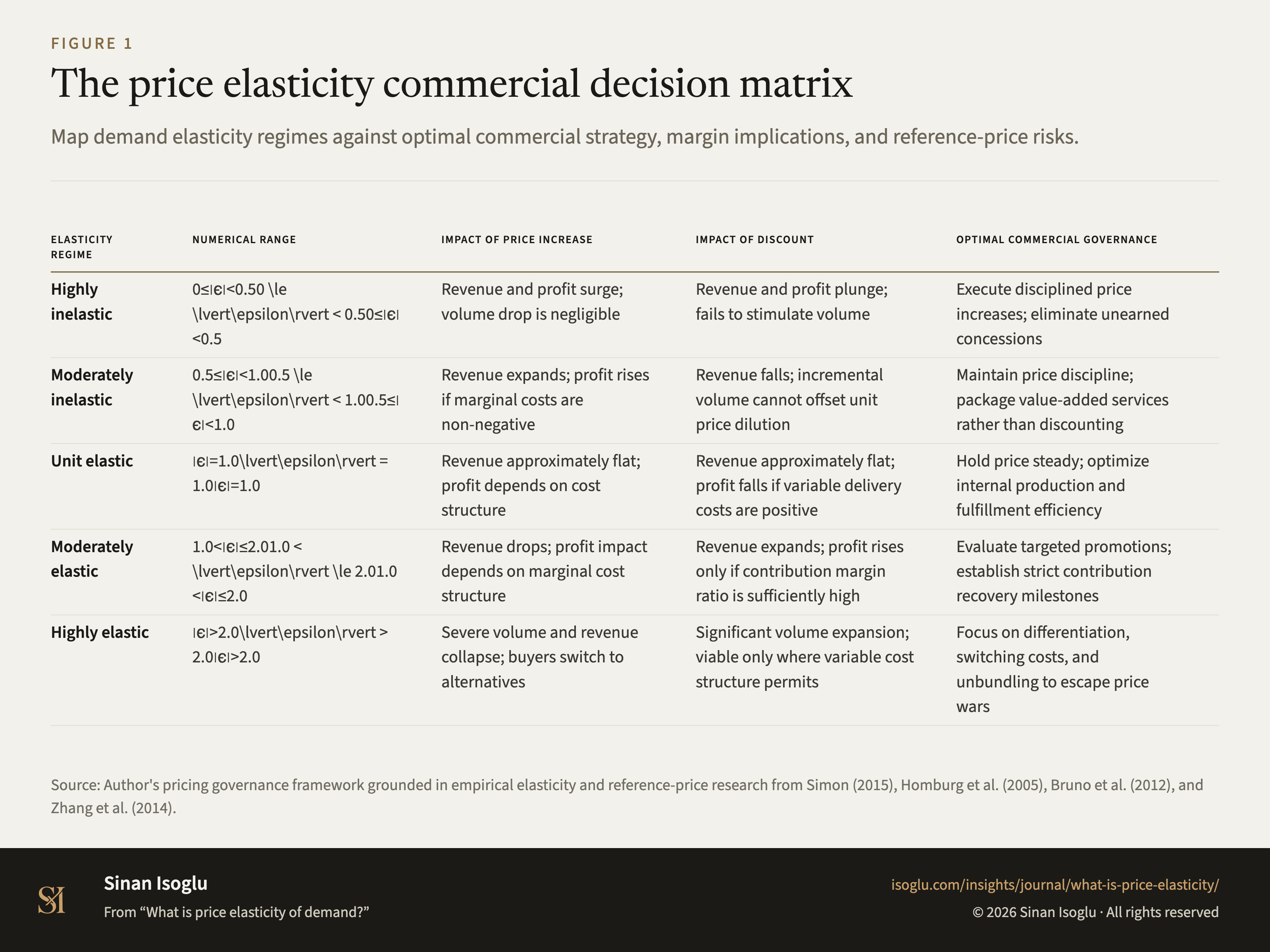
Figure 1Figure
The price elasticity commercial decision matrix
What is price elasticity of demand?
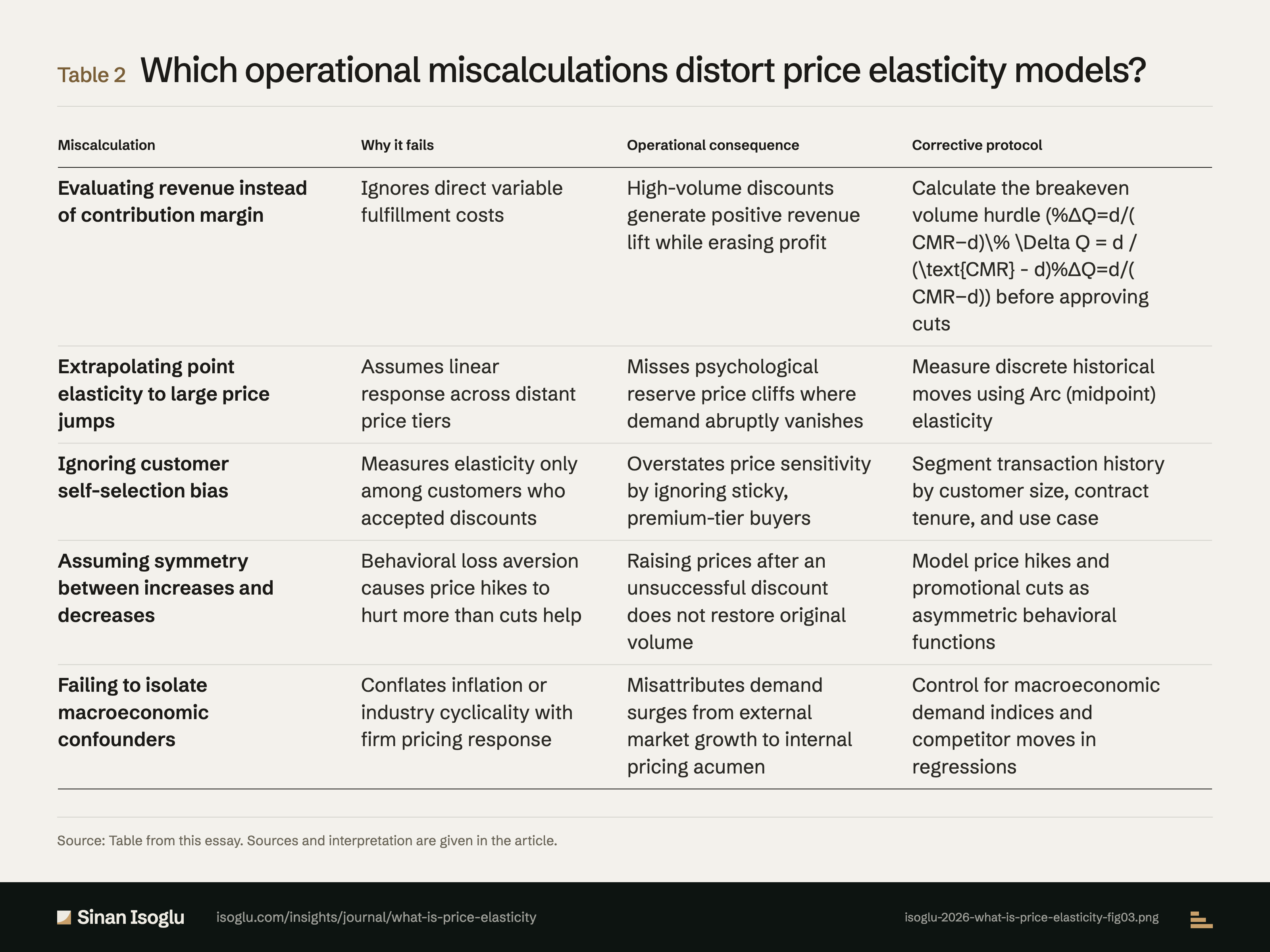
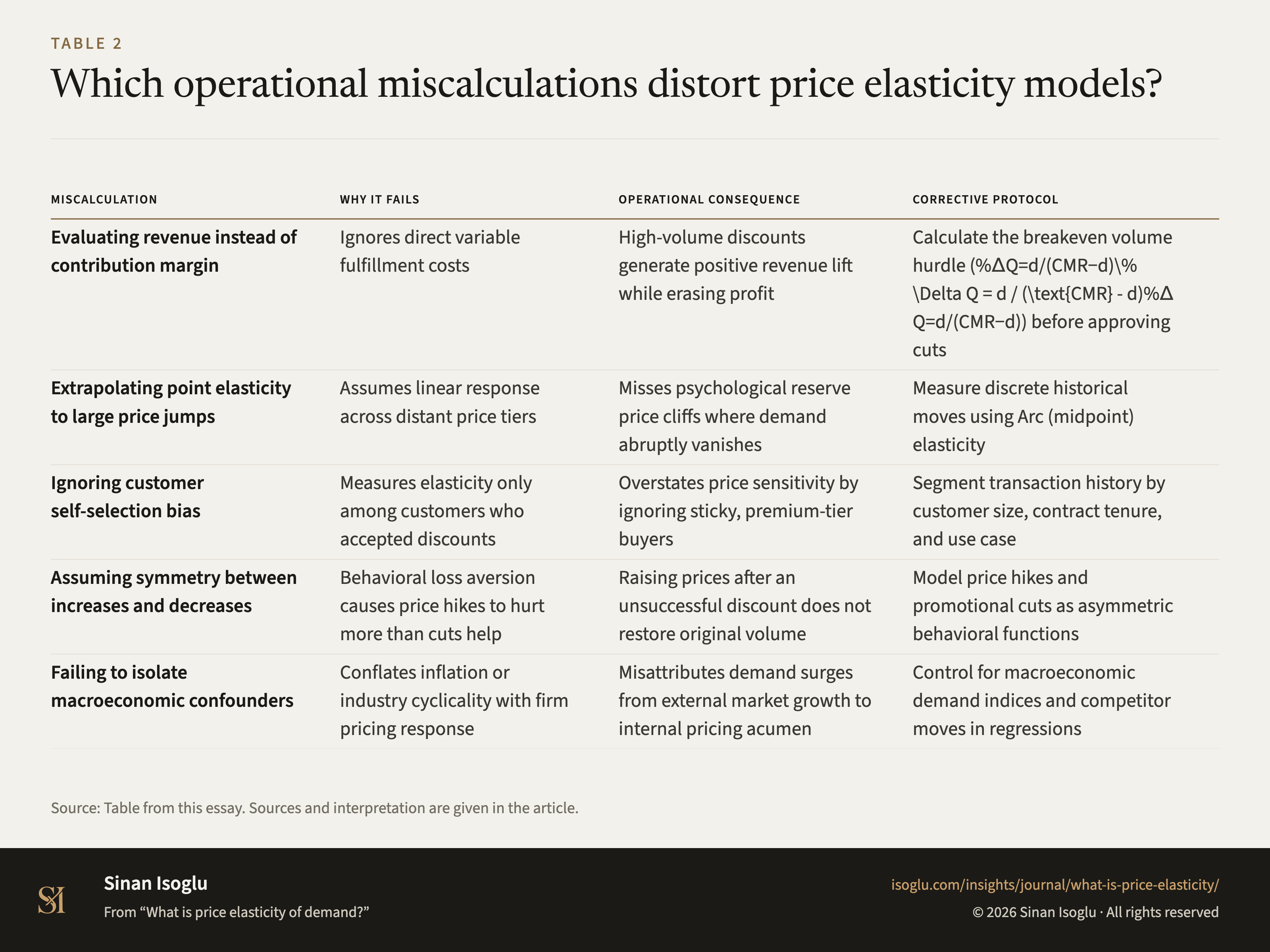
Table 2Table
Which operational miscalculations distort price elasticity models?
What is price elasticity of demand?
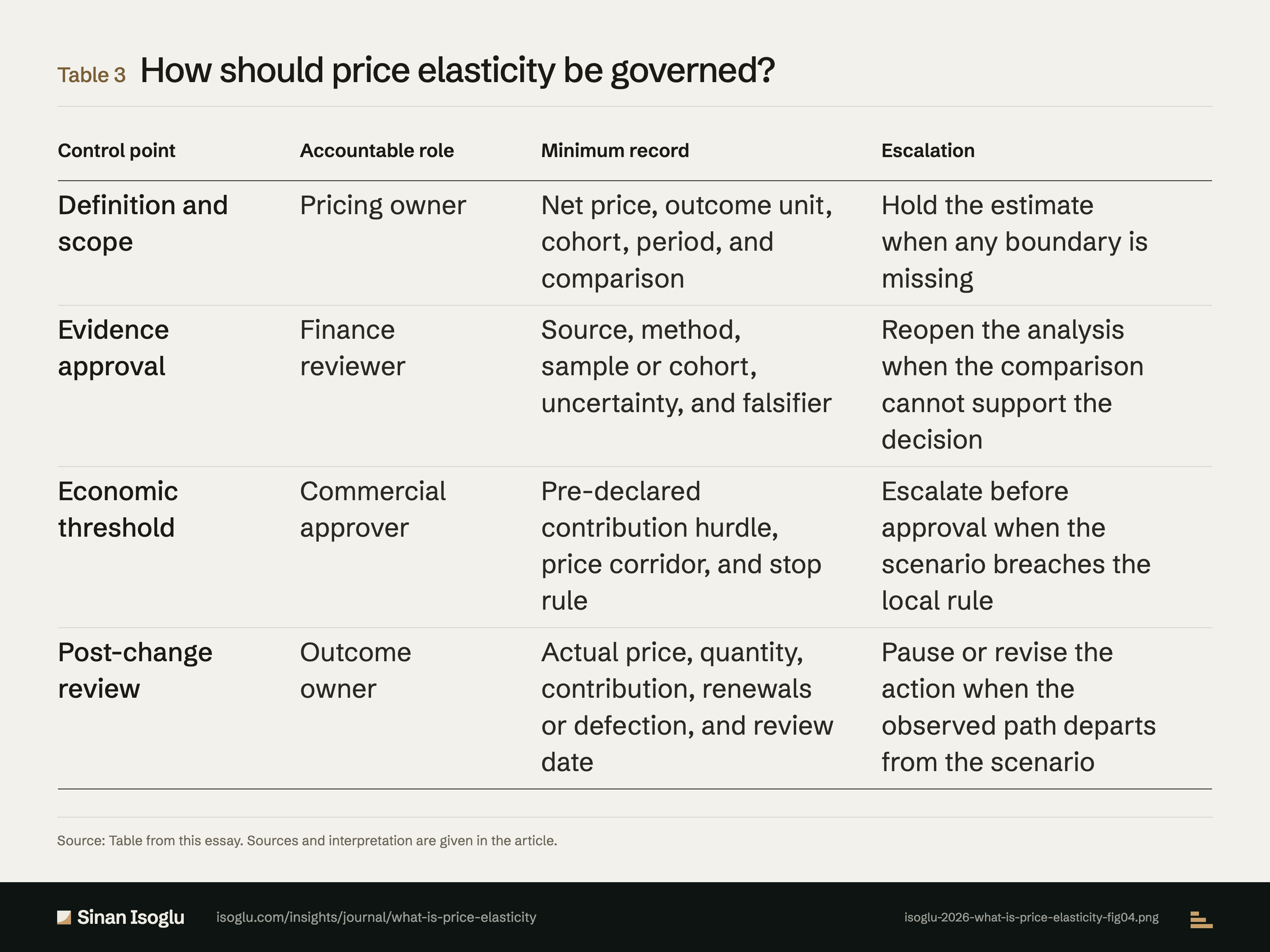
Table 3Table
How should price elasticity be governed?
What is price elasticity of demand?
Contact
Bring the question you're working on.
Research, a guest lecture, or a commercial question.