Figure 1From “What is net revenue retention?”
The three-tier net revenue retention waterfall
Decompose cohort ARR movements into contraction, churn, seat expansion, and price adjustments before evaluating health.
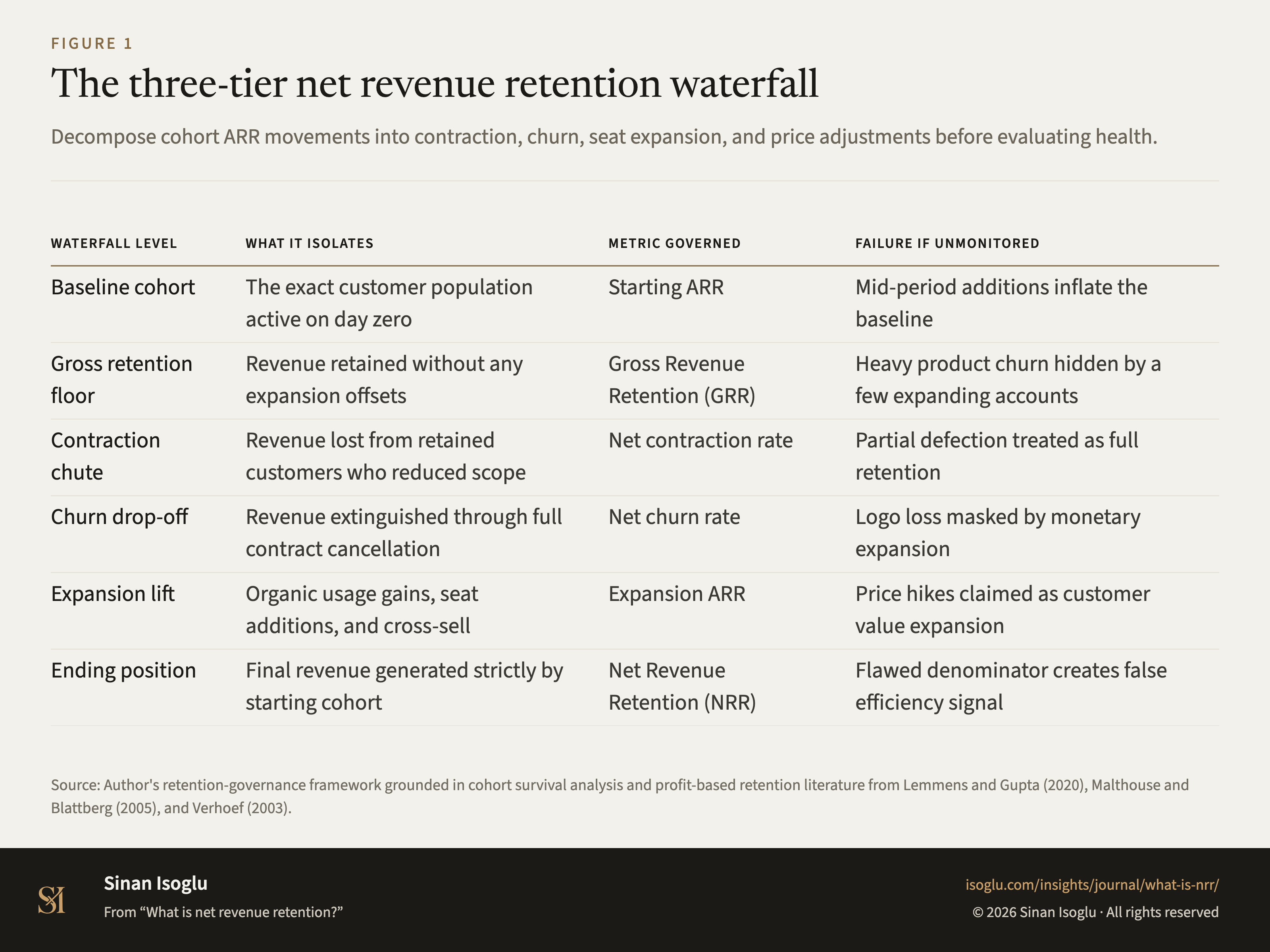
Figure 1The three-tier net revenue retention waterfall
| Waterfall level | What it isolates | Metric governed | Failure if unmonitored |
|---|---|---|---|
| Baseline cohort | The exact customer population active on day zero | Starting ARR | Mid-period additions inflate the baseline |
| Gross retention floor | Revenue retained without any expansion offsets | Gross Revenue Retention (GRR) | Heavy product churn hidden by a few expanding accounts |
| Contraction chute | Revenue lost from retained customers who reduced scope | Net contraction rate | Partial defection treated as full retention |
| Churn drop-off | Revenue extinguished through full contract cancellation | Net churn rate | Logo loss masked by monetary expansion |
| Expansion lift | Organic usage gains, seat additions, and cross-sell | Expansion ARR | Price hikes claimed as customer value expansion |
| Ending position | Final revenue generated strictly by starting cohort | Net Revenue Retention (NRR) | Flawed denominator creates false efficiency signal |
Swipe or scroll horizontally if the table is wider than your screen.
Source: Author's retention-governance framework grounded in cohort survival analysis and profit-based retention literature from Lemmens and Gupta (2020), Malthouse and Blattberg (2005), and Verhoef (2003).
Source and evidence
Each line names a claim related to this exhibit, its source, and how it was checked.
- A LG20-C1 The method, in the authors' words: "defining a profit-based loss function to predict, for each customer, the financial impact of a retention intervention"Lemmens & Gupta. (2020)
- A MB05-C1 The question is feasibility, not desirability: relationship-marketing strategies "presume that a firm can accurately predict the future profitability of customers", and the paper is "a detailed empirical evaluation of how accurately the future profitability of customers" can be predicted across four industry data setsMalthouse & Blattberg. (2005)
- A VER03-C1 The two outcomes are held apart by design: the study investigates "the differential effects of customer relationship perceptions and relationship marketing instruments on customer retention and customer share development over time", where share development is "the change in customer share between two periods"Verhoef. (2003)
- A VER03-C3 The paper's own conclusion runs against the usual reading: "firms can use the same strategies to affect both customer retention and customer share development". Only direct mailings act on share alone, so the instruments differ in reach rather than splitting into two separate mechanismsVerhoef. (2003)
Grades: A, verified against the printed page of the primary source · B, primary source, text layer only · C, authoritative secondary · D, reported.
From the essay
Growth that compounds
What is net revenue retention?
Net revenue retention measures cohort revenue expansion minus churn and contraction. Isolate price hikes from volume and usage growth.
Read the essayThis exhibit belongs to an essay: the numbers live here, the argument lives there.
Cite or embed
Related exhibits

Contact
Bring the question you're working on.
Research, a guest lecture, or a commercial question.