Table 4From “What is lead routing? Assignment is a measurement boundary”
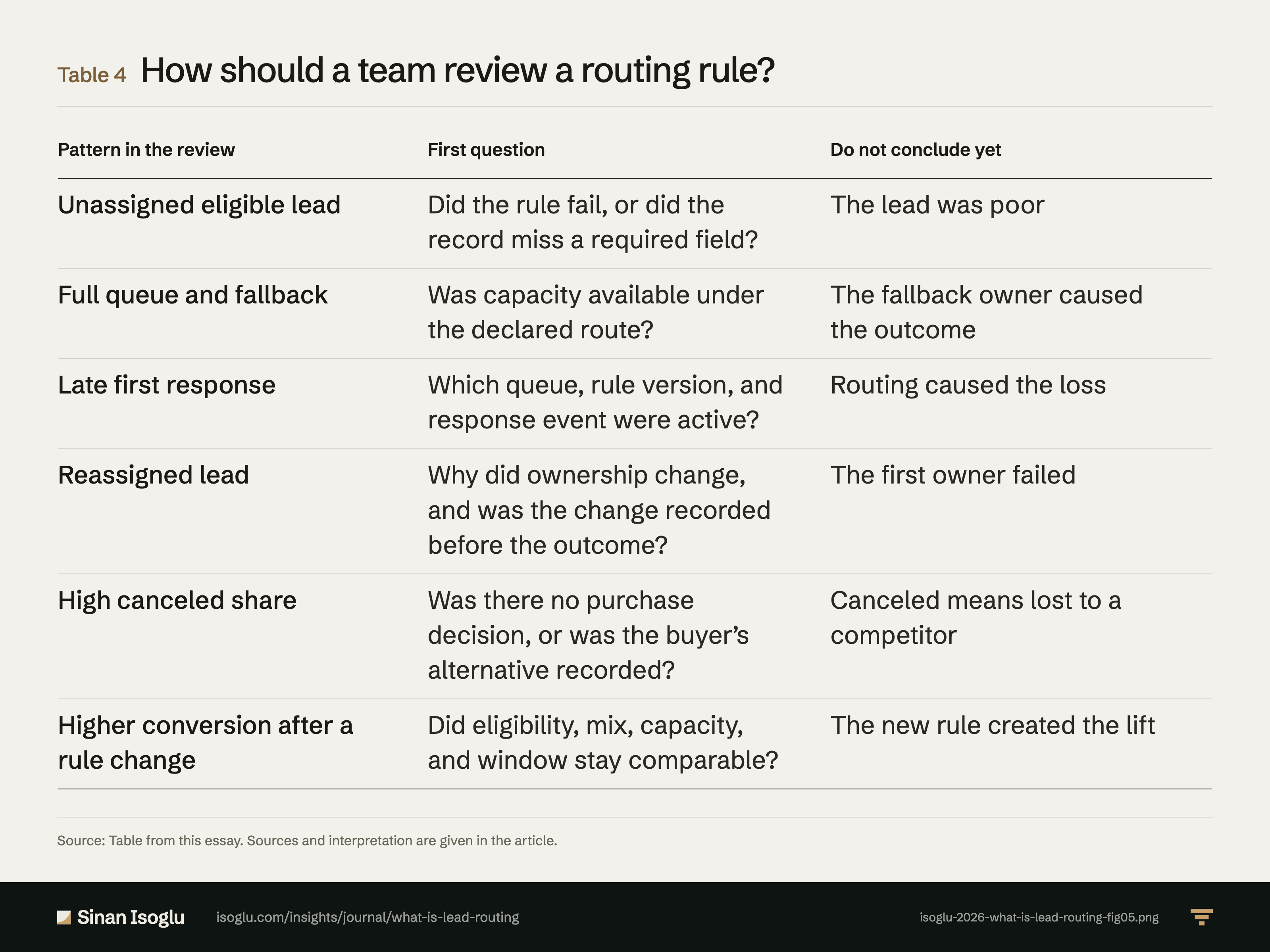
How should a team review a routing rule?
Table 4How should a team review a routing rule?
| Pattern in the review | First question | Do not conclude yet |
|---|---|---|
| Unassigned eligible lead | Did the rule fail, or did the record miss a required field? | The lead was poor |
| Full queue and fallback | Was capacity available under the declared route? | The fallback owner caused the outcome |
| Late first response | Which queue, rule version, and response event were active? | Routing caused the loss |
| Reassigned lead | Why did ownership change, and was the change recorded before the outcome? | The first owner failed |
| High canceled share | Was there no purchase decision, or was the buyer's alternative recorded? | Canceled means lost to a competitor |
| Higher conversion after a rule change | Did eligibility, mix, capacity, and window stay comparable? | The new rule created the lift |
Swipe or scroll horizontally if the table is wider than your screen.
Source: Table from this essay. Sources and interpretation are given in the article.
From the essay
Revenue operations & AI
What is lead routing? Assignment is a measurement boundary
Lead routing assigns an eligible lead to an owner or queue. The rule, capacity state, response event, and outcome window make it reviewable.
Read the essayThis exhibit belongs to an essay: the numbers live here, the argument lives there.
Cite or embed
Related exhibits
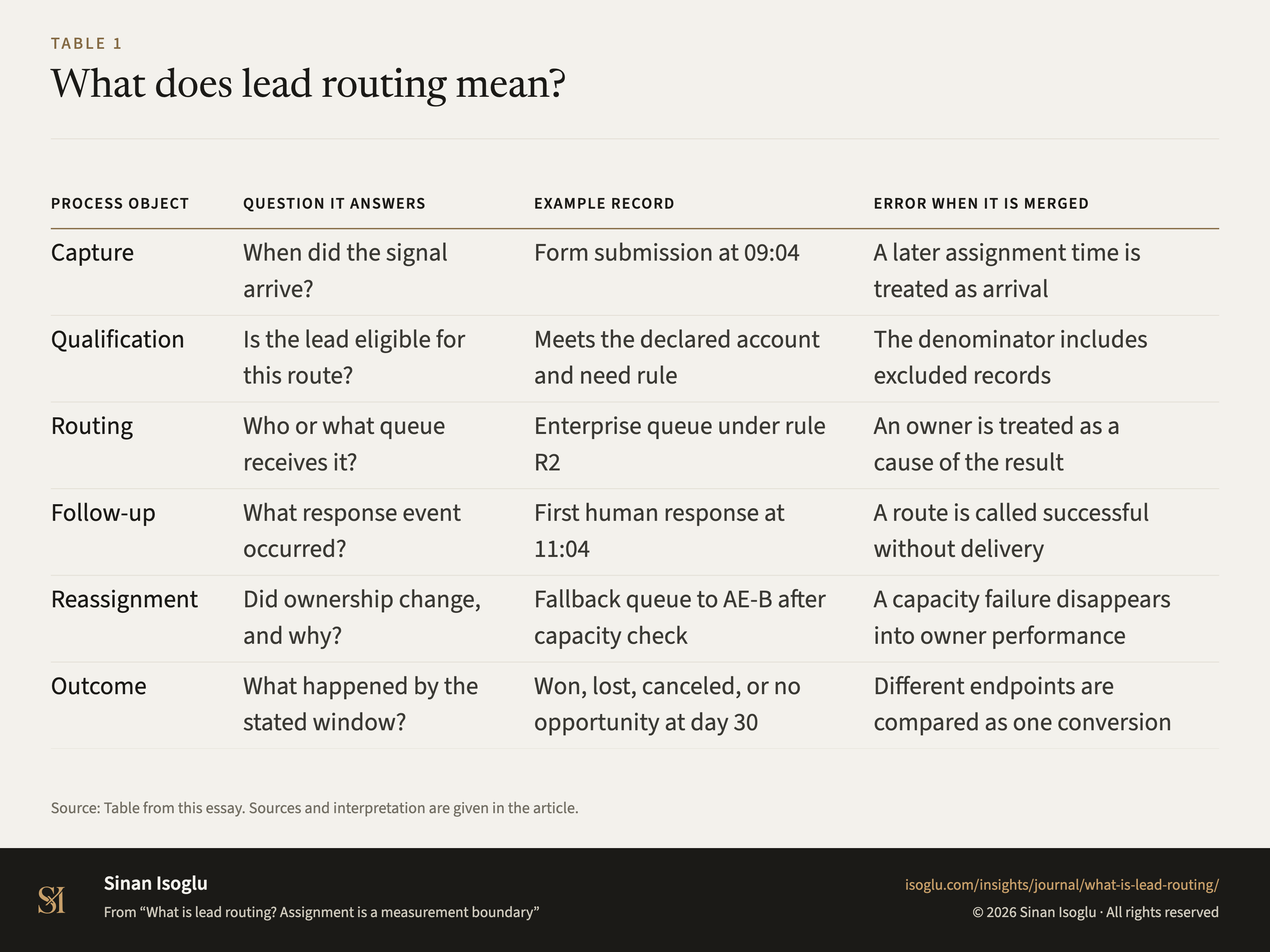
Table 1Table
What does lead routing mean?
What is lead routing? Assignment is a measurement boundary
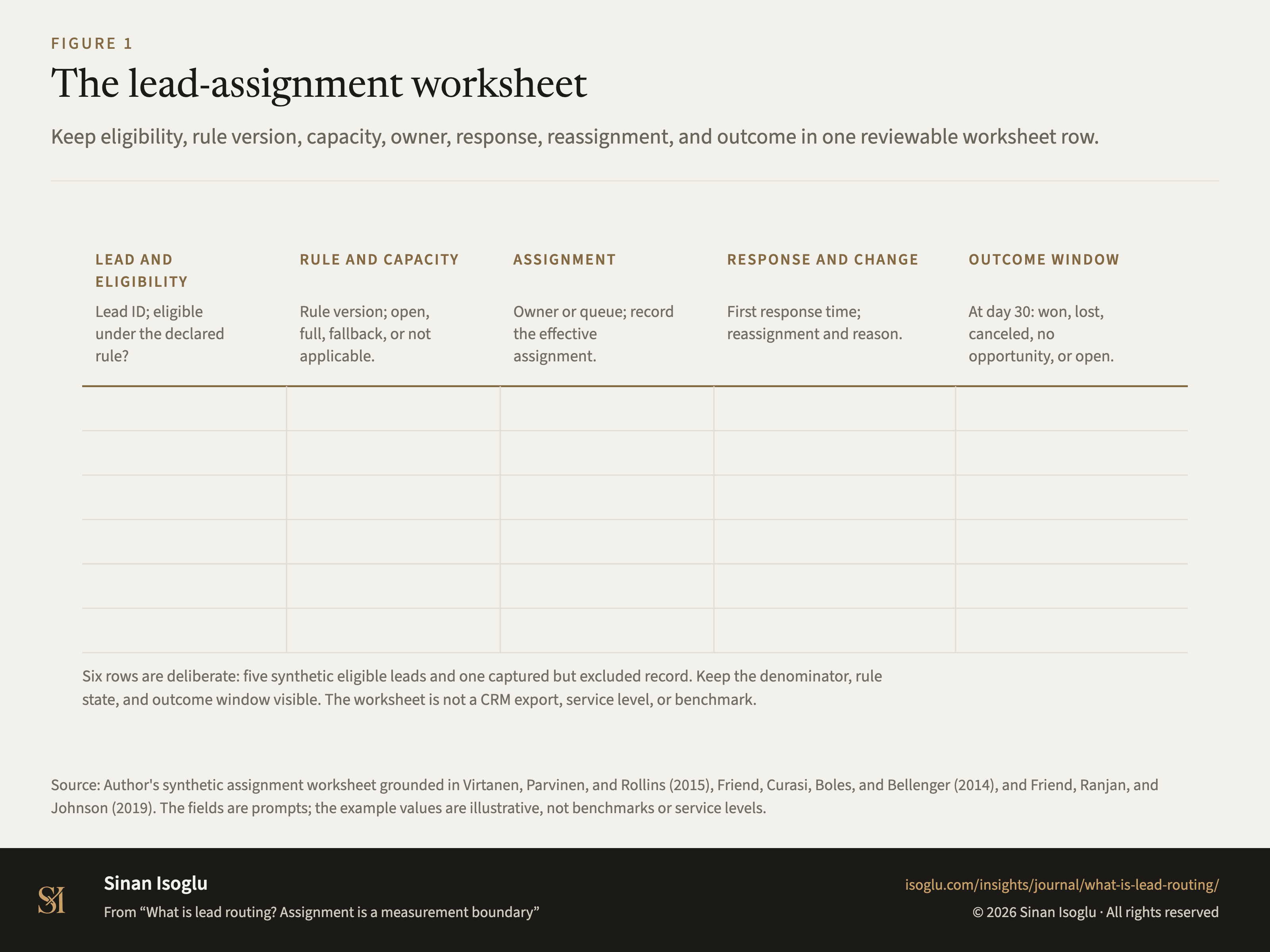
Table 2Table
What do integrated lead processes add to routing?
What is lead routing? Assignment is a measurement boundary
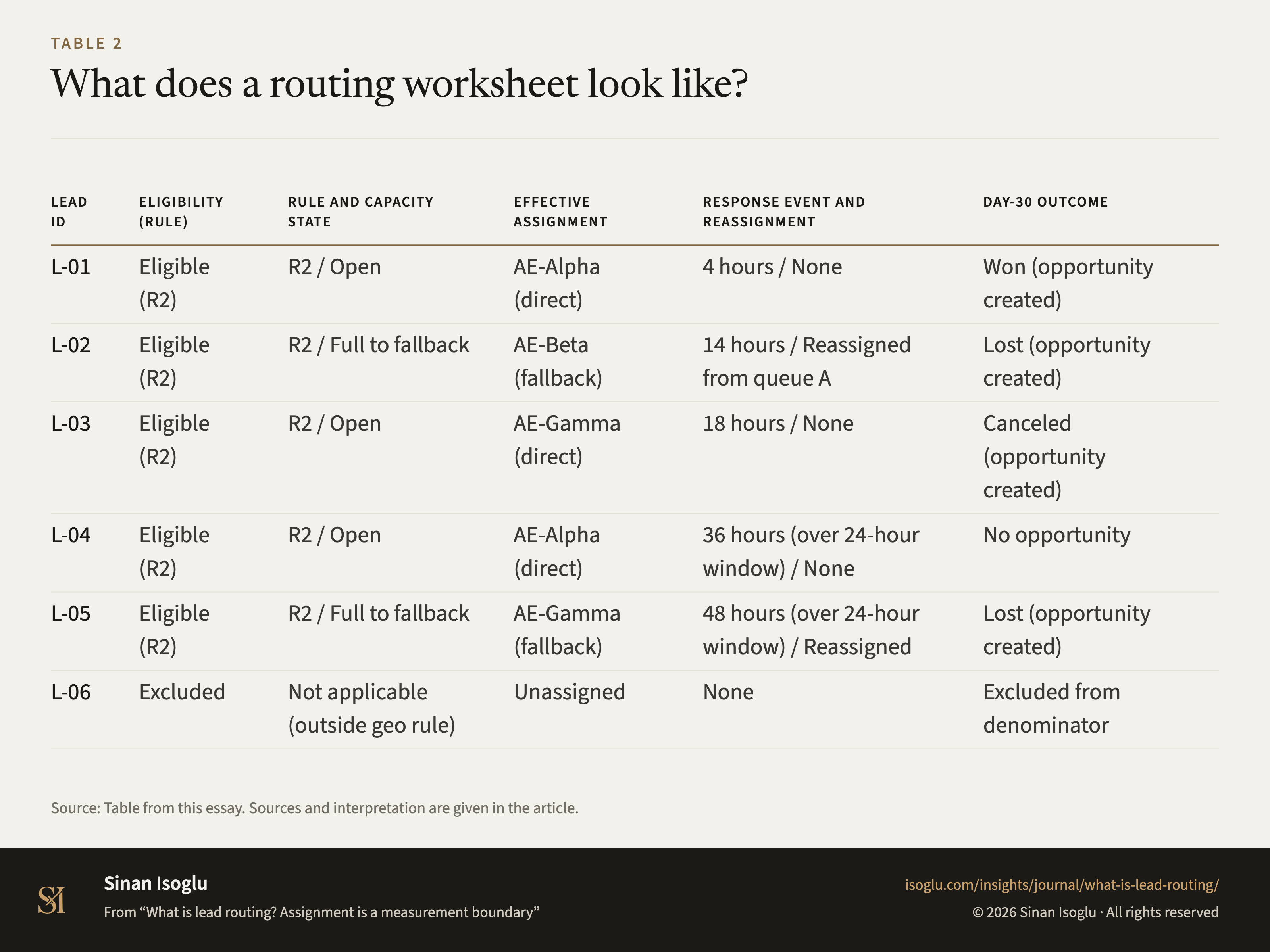
Figure 1Figure
The lead-assignment worksheet
What is lead routing? Assignment is a measurement boundary
Contact
Bring the question you're working on.
Research, a guest lecture, or a commercial question.