Table 4From “What is knowledge transfer? Absorptive capacity, operational replication, and stickiness”
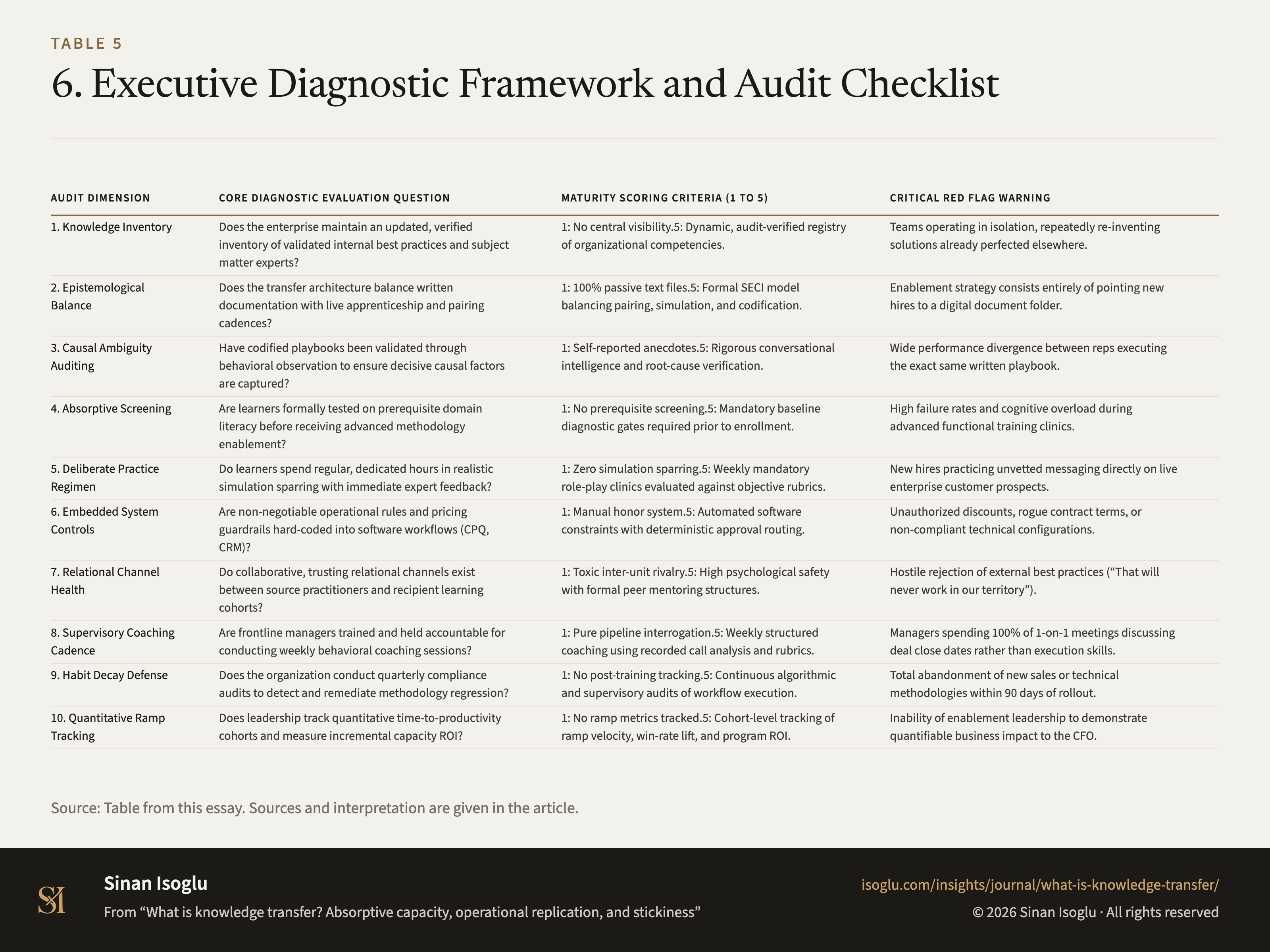
How do you audit your own knowledge transfer?
Table 4How do you audit your own knowledge transfer?
| Audit Dimension | Core Diagnostic Evaluation Question | Maturity Scoring Criteria (1 to 5) | Critical Red Flag Warning |
|---|---|---|---|
| 1. Knowledge Inventory | Does the enterprise maintain an updated, verified inventory of validated internal best practices and subject matter experts? | 1: No central visibility. 5: Dynamic, audit-verified registry of organizational competencies. | Teams operating in isolation, repeatedly re-inventing solutions already perfected elsewhere. |
| 2. Epistemological Balance | Does the transfer architecture balance written documentation with live apprenticeship and pairing cadences? | 1: 100% passive text files. 5: Formal SECI model balancing pairing, simulation, and codification. | Enablement strategy consists entirely of pointing new hires to a digital document folder. |
| 3. Causal Ambiguity Auditing | Have codified playbooks been validated through behavioral observation to ensure decisive causal factors are captured? | 1: Self-reported anecdotes. 5: Rigorous conversational intelligence and root-cause verification. | Wide performance divergence between reps executing the exact same written playbook. |
| 4. Absorptive Screening | Are learners formally tested on prerequisite domain literacy before receiving advanced methodology enablement? | 1: No prerequisite screening. 5: Mandatory baseline diagnostic gates required prior to enrollment. | High failure rates and cognitive overload during advanced functional training clinics. |
| 5. Deliberate Practice Regimen | Do learners spend regular, dedicated hours in realistic simulation sparring with immediate expert feedback? | 1: Zero simulation sparring. 5: Weekly mandatory role-play clinics evaluated against objective rubrics. | New hires practicing unvetted messaging directly on live enterprise customer prospects. |
| 6. Embedded System Controls | Are non-negotiable operational rules and pricing guardrails hard-coded into software workflows (CPQ, CRM)? | 1: Manual honor system. 5: Automated software constraints with deterministic approval routing. | Unauthorized discounts, rogue contract terms, or non-compliant technical configurations. |
| 7. Relational Channel Health | Do collaborative, trusting relational channels exist between source practitioners and recipient learning cohorts? | 1: Toxic inter-unit rivalry. 5: High psychological safety with formal peer mentoring structures. | Hostile rejection of external best practices ("That will never work in our territory"). |
| 8. Supervisory Coaching Cadence | Are frontline managers trained and held accountable for conducting weekly behavioral coaching sessions? | 1: Pure pipeline interrogation. 5: Weekly structured coaching using recorded call analysis and rubrics. | Managers spending 100% of 1-on-1 meetings discussing deal close dates rather than execution skills. |
| 9. Habit Decay Defense | Does the organization conduct quarterly compliance audits to detect and remediate methodology regression? | 1: No post-training tracking. 5: Continuous algorithmic and supervisory audits of workflow execution. | Total abandonment of new sales or technical methodologies within 90 days of rollout. |
| 10. Quantitative Ramp Tracking | Does leadership track quantitative time-to-productivity cohorts and measure incremental capacity ROI? | 1: No ramp metrics tracked. 5: Cohort-level tracking of ramp velocity, win-rate lift, and program ROI. | Inability of enablement leadership to demonstrate quantifiable business impact to the CFO. |
Swipe or scroll horizontally if the table is wider than your screen.
Source: Table from this essay. Sources and interpretation are given in the article.
From the essay
Revenue operations & AI
What is knowledge transfer? Absorptive capacity, operational replication, and stickiness
Knowledge transfer is the structured replication and embedding of tacit and codified commercial know-how across individuals and operational units.
Read the essayThis exhibit belongs to an essay: the numbers live here, the argument lives there.
Cite or embed
Related exhibits
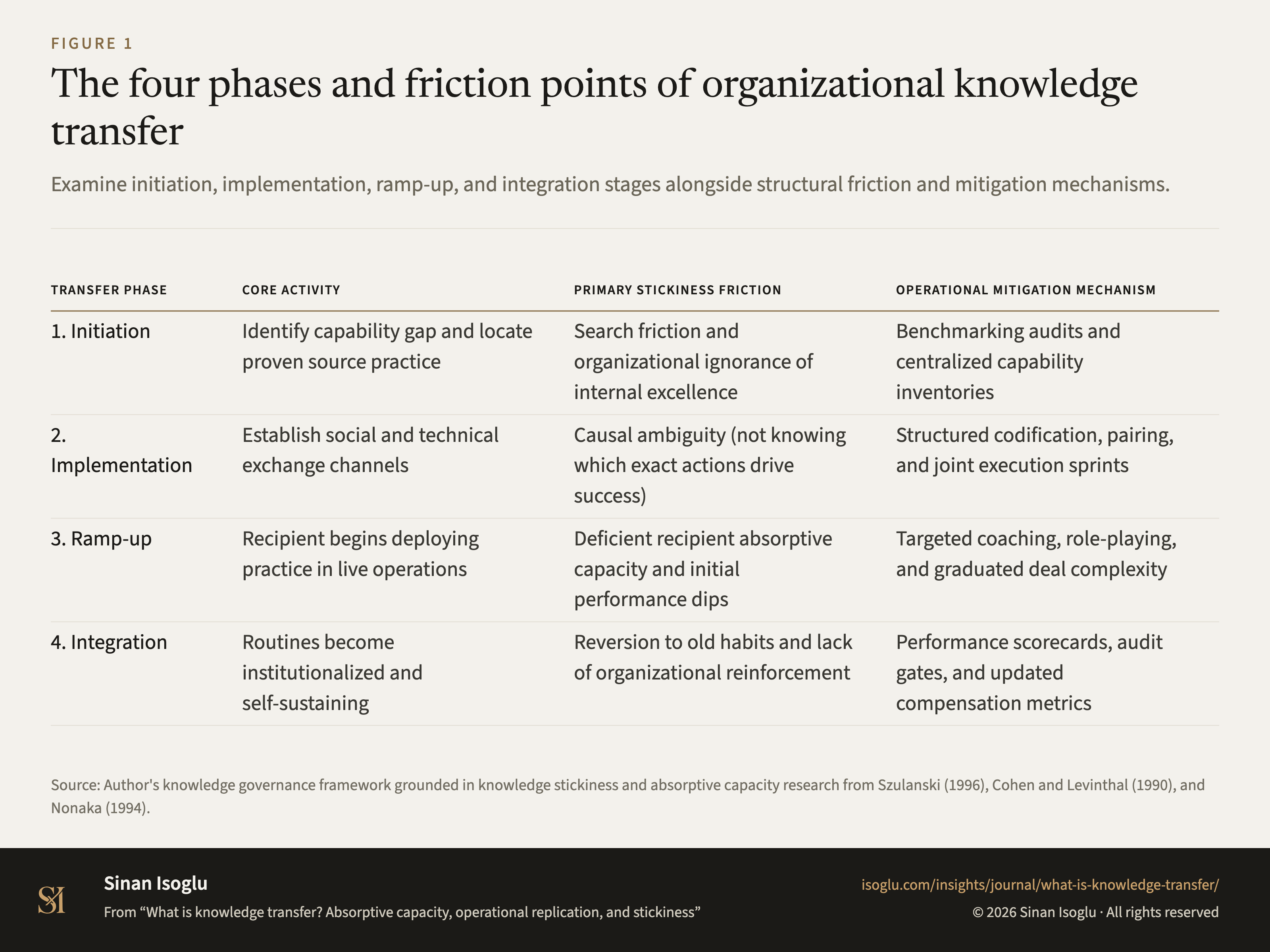
Figure 1Figure
The four phases and friction points of organizational knowledge transfer
What is knowledge transfer? Absorptive capacity, operational replication, and stickiness
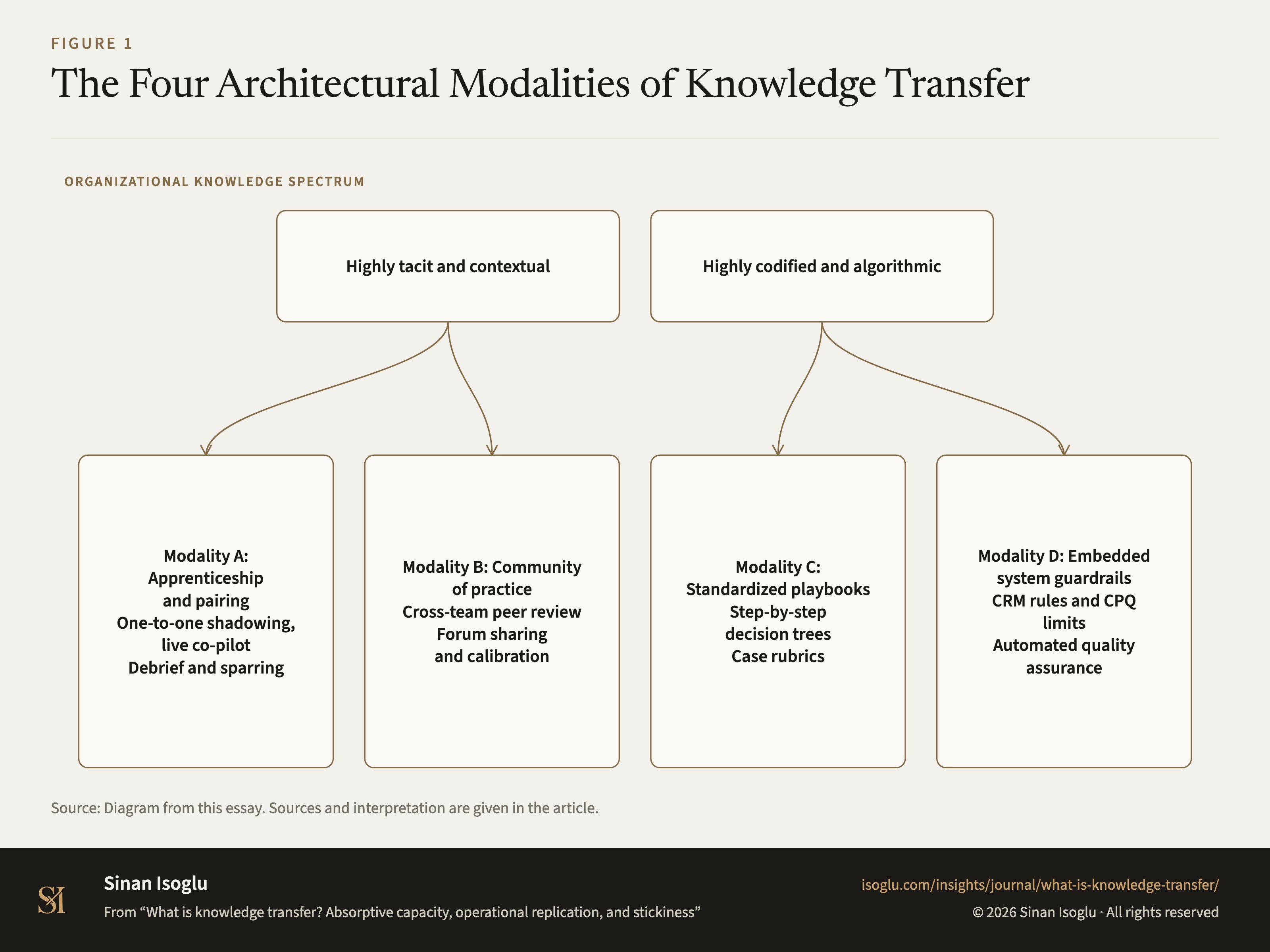
Figure 2Figure
The Four Architectural Modalities of Knowledge Transfer
What is knowledge transfer? Absorptive capacity, operational replication, and stickiness
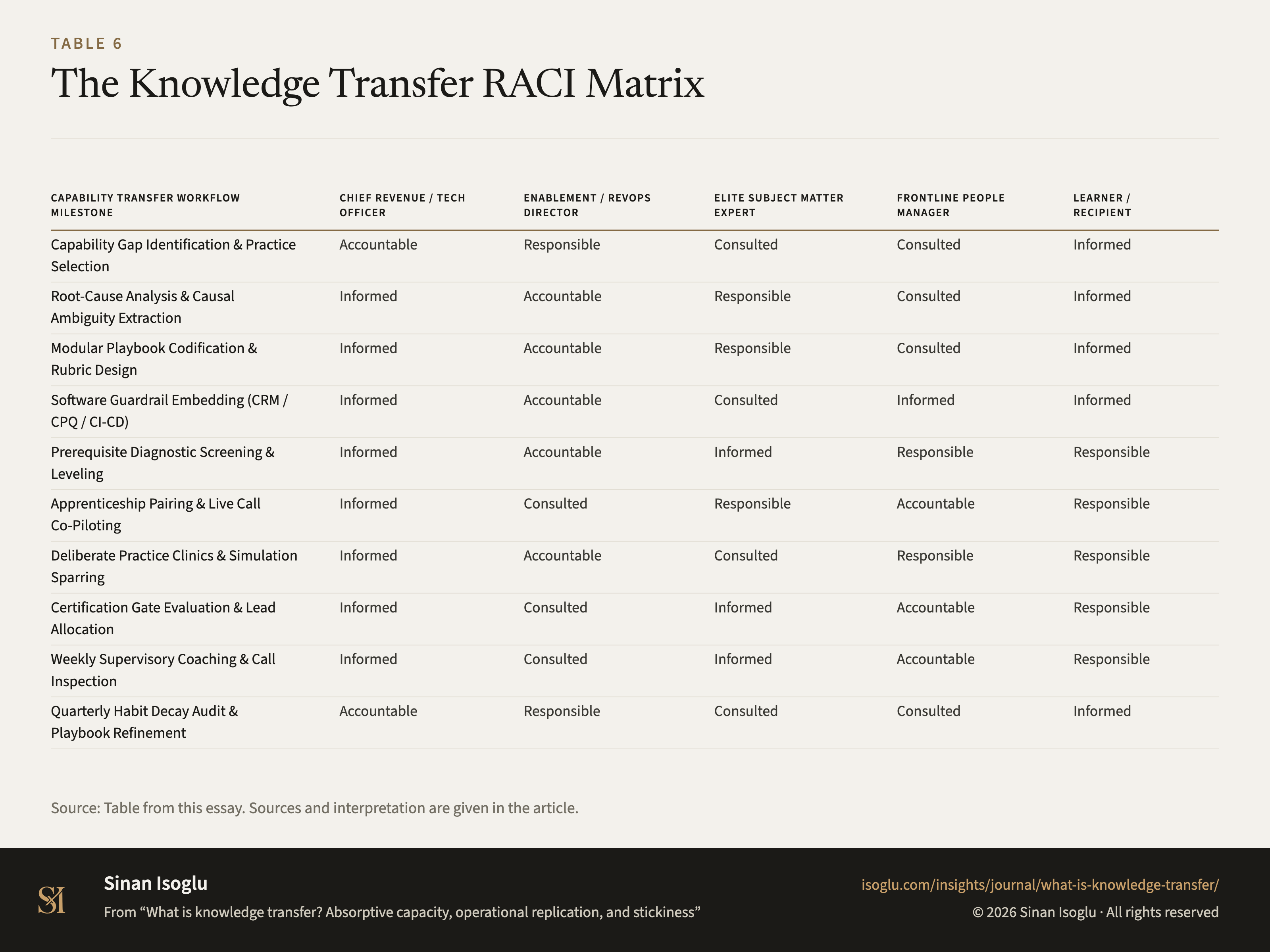
Table 5Table
The Knowledge Transfer RACI Matrix
What is knowledge transfer? Absorptive capacity, operational replication, and stickiness
Contact
Bring the question you're working on.
Research, a guest lecture, or a commercial question.