Figure 2From “The discount outlives the deal it was meant to close”
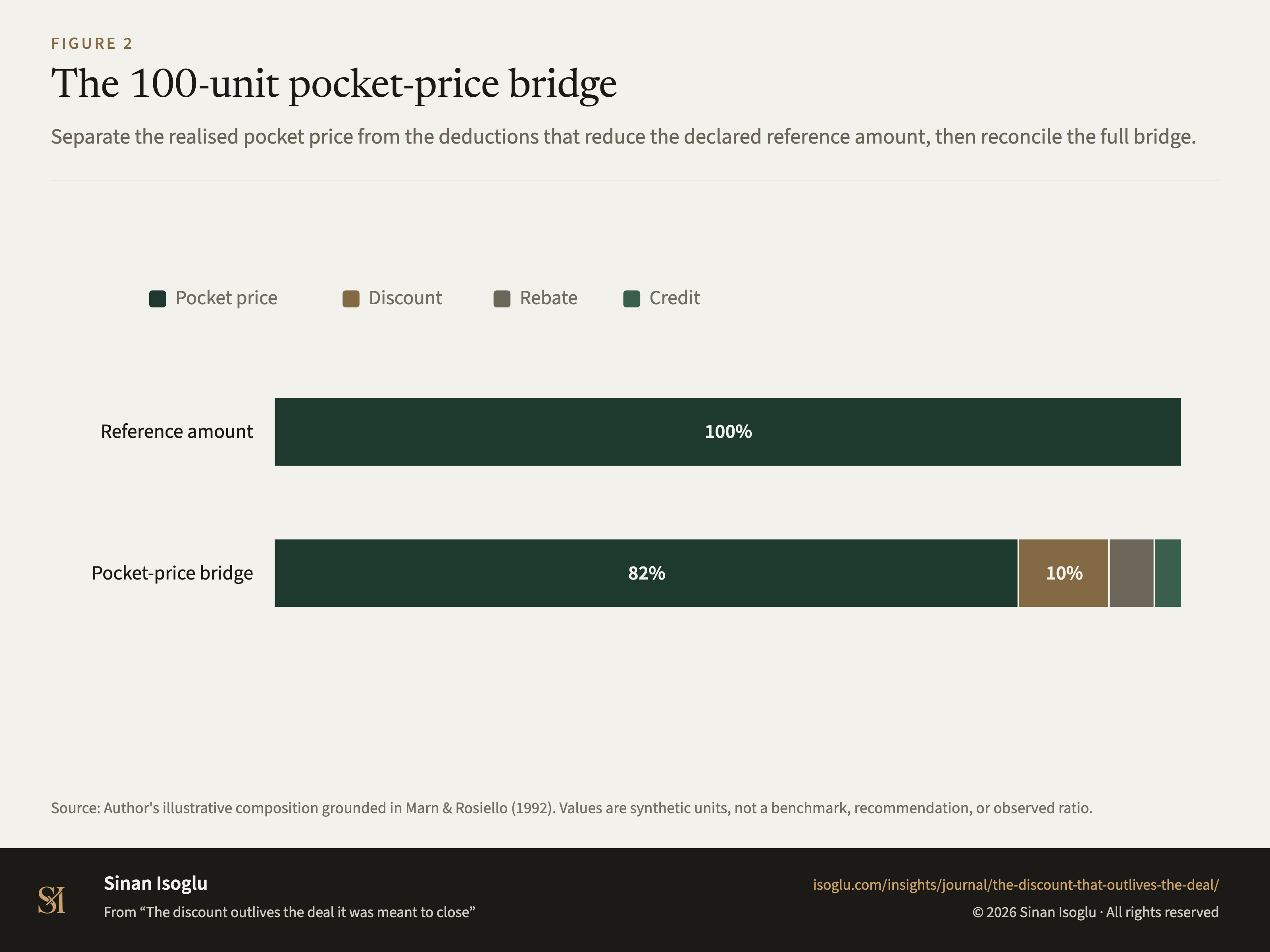
The 100-unit pocket-price bridge
Separate the realised pocket price from the deductions that reduce the declared reference amount, then reconcile the full bridge.
Figure 2The 100-unit pocket-price bridge
Source: Author's illustrative composition grounded in Marn & Rosiello (1992). Values are synthetic units, not a benchmark, recommendation, or observed ratio.
Source and evidence
Each line names a claim related to this exhibit, its source, and how it was checked.
- B MR92-C1 The two concepts, verbatim: "the pocket price waterfall and the pocket price band", which is where "these concepts show companies where their products' prices erode between invoice price and actual transaction price". The 1%-lever number stays out, guarded by MR92-X1campaign (HBR records)
Grades: A, verified against the printed page of the primary source · B, primary source, text layer only · C, authoritative secondary · D, reported.
From the essay
Pricing & revenue architecture
The discount outlives the deal it was meant to close
Buyers benchmark the last price paid; sellers anchor on their last concession; the quarter end manufactures both. What is measured, and what is folklore.
Read the essayThis exhibit belongs to an essay: the numbers live here, the argument lives there.
Cite or embed
Related exhibits
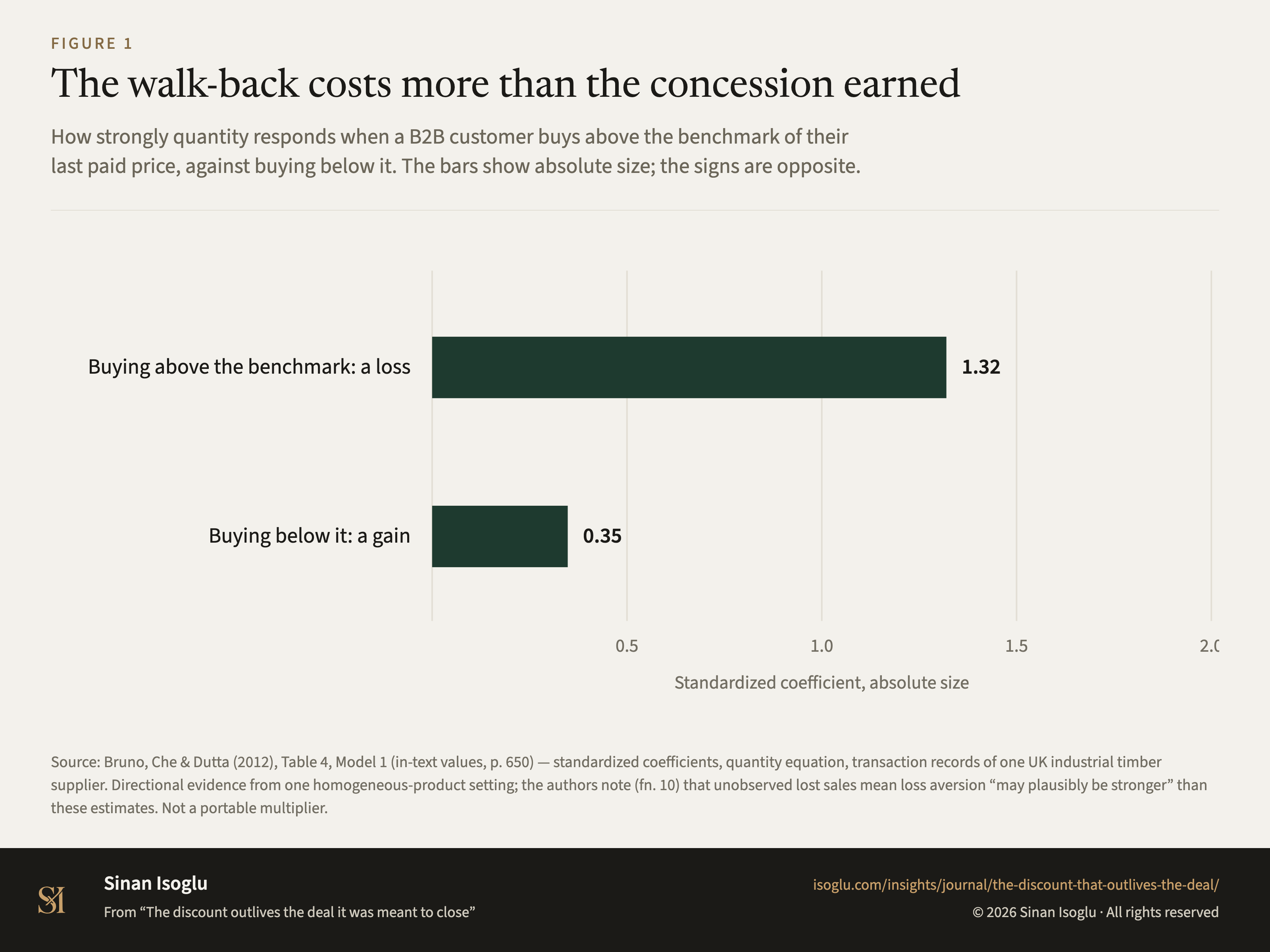
Figure 1Figure
The walk-back costs more than the concession earned
The discount outlives the deal it was meant to close
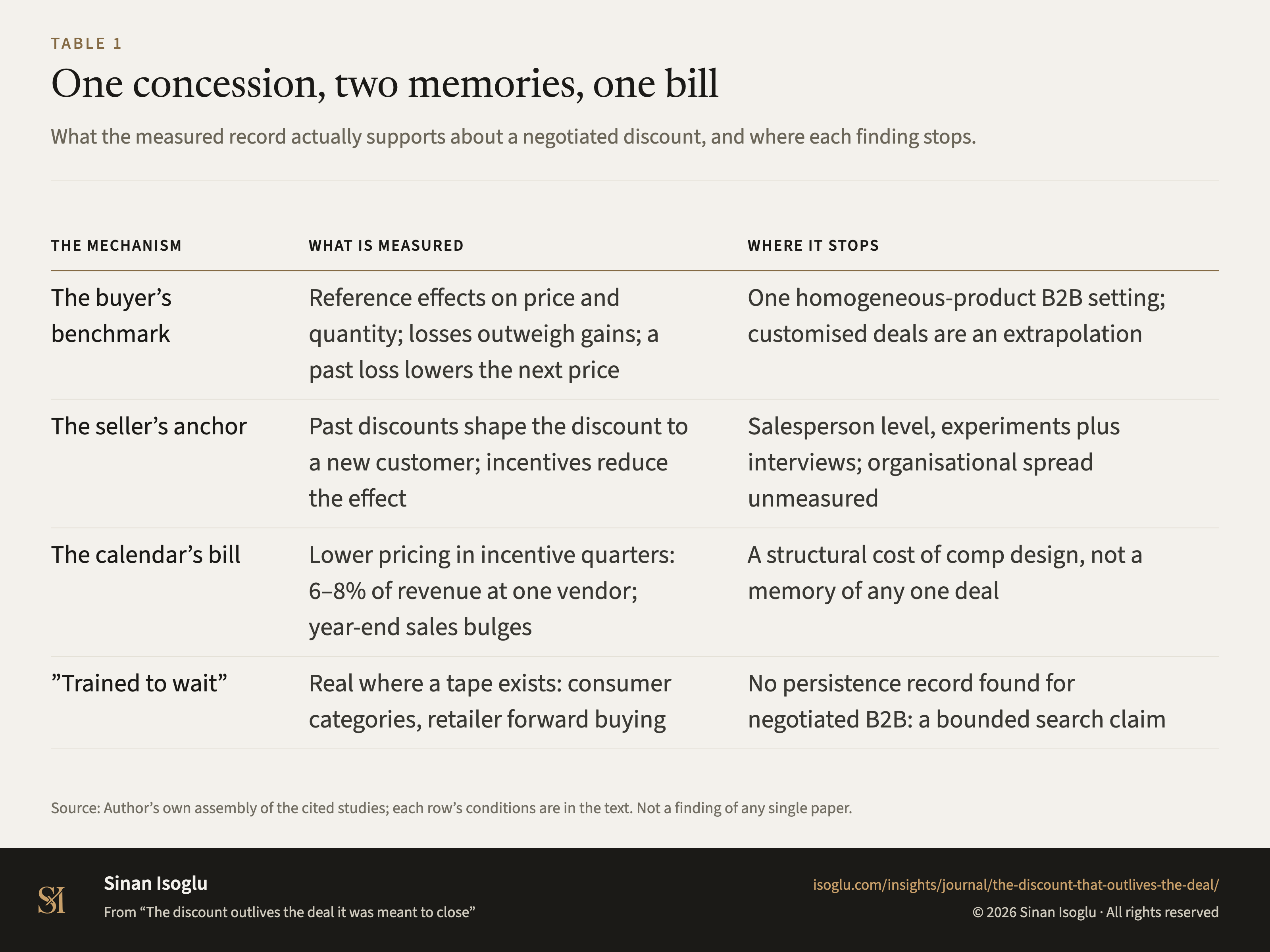
Table 1Table
One concession, two memories, one bill
The discount outlives the deal it was meant to close
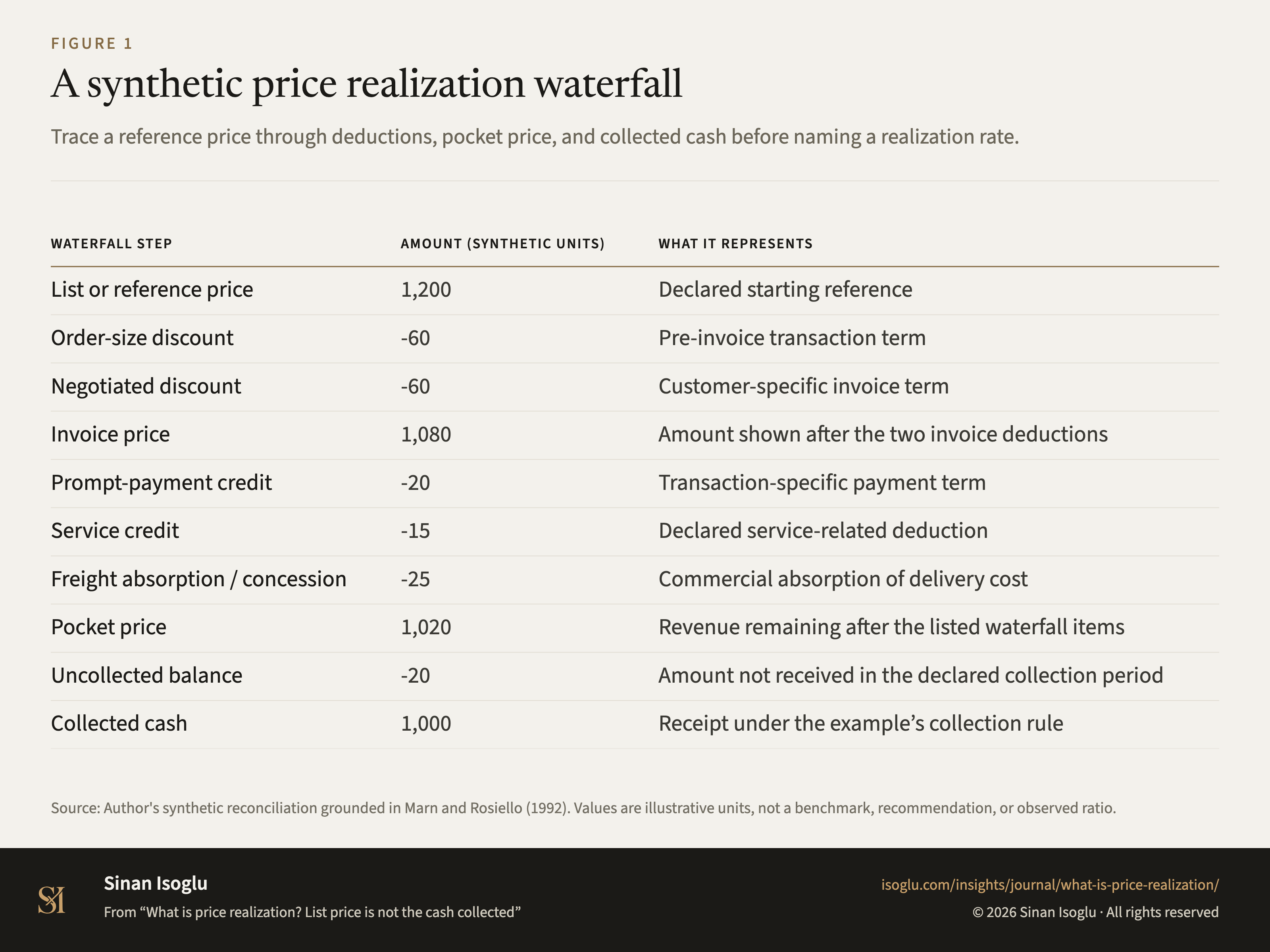
Figure 1Figure
A synthetic price realization waterfall
What is price realization? List price is not the cash collected
Contact
Bring the question you're working on.
Research, a guest lecture, or a commercial question.