Table 1From “Hybrid intelligence needs a boundary between capability and outcome”
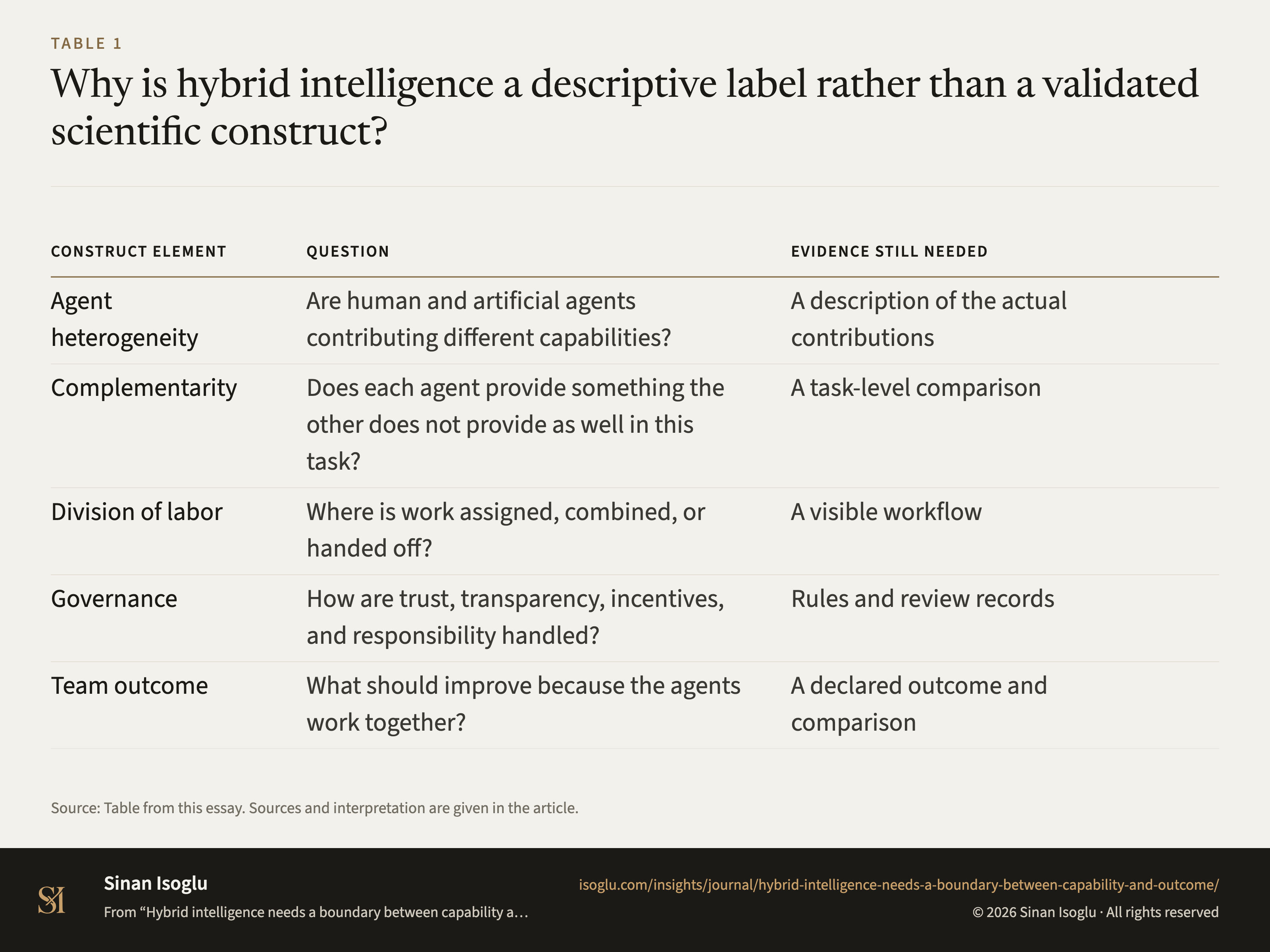
Why is hybrid intelligence a descriptive label rather than a validated scientific construct?
Table 1Why is hybrid intelligence a descriptive label rather than a validated scientific construct?
| Construct element | Question | Evidence still needed |
|---|---|---|
| Agent heterogeneity | Are human and artificial agents contributing different capabilities? | A description of the actual contributions |
| Complementarity | Does each agent provide something the other does not provide as well in this task? | A task-level comparison |
| Division of labor | Where is work assigned, combined, or handed off? | A visible workflow |
| Governance | How are trust, transparency, incentives, and responsibility handled? | Rules and review records |
| Team outcome | What should improve because the agents work together? | A declared outcome and comparison |
Swipe or scroll horizontally if the table is wider than your screen.
Source: Table from this essay. Sources and interpretation are given in the article.
From the essay
From the research bench
Hybrid intelligence needs a boundary between capability and outcome
Hybrid intelligence names complementary human and machine capability, not proof of better performance: define the construct before measuring the outcome.
Read the essayThis exhibit belongs to an essay: the numbers live here, the argument lives there.
Cite or embed
Related exhibits
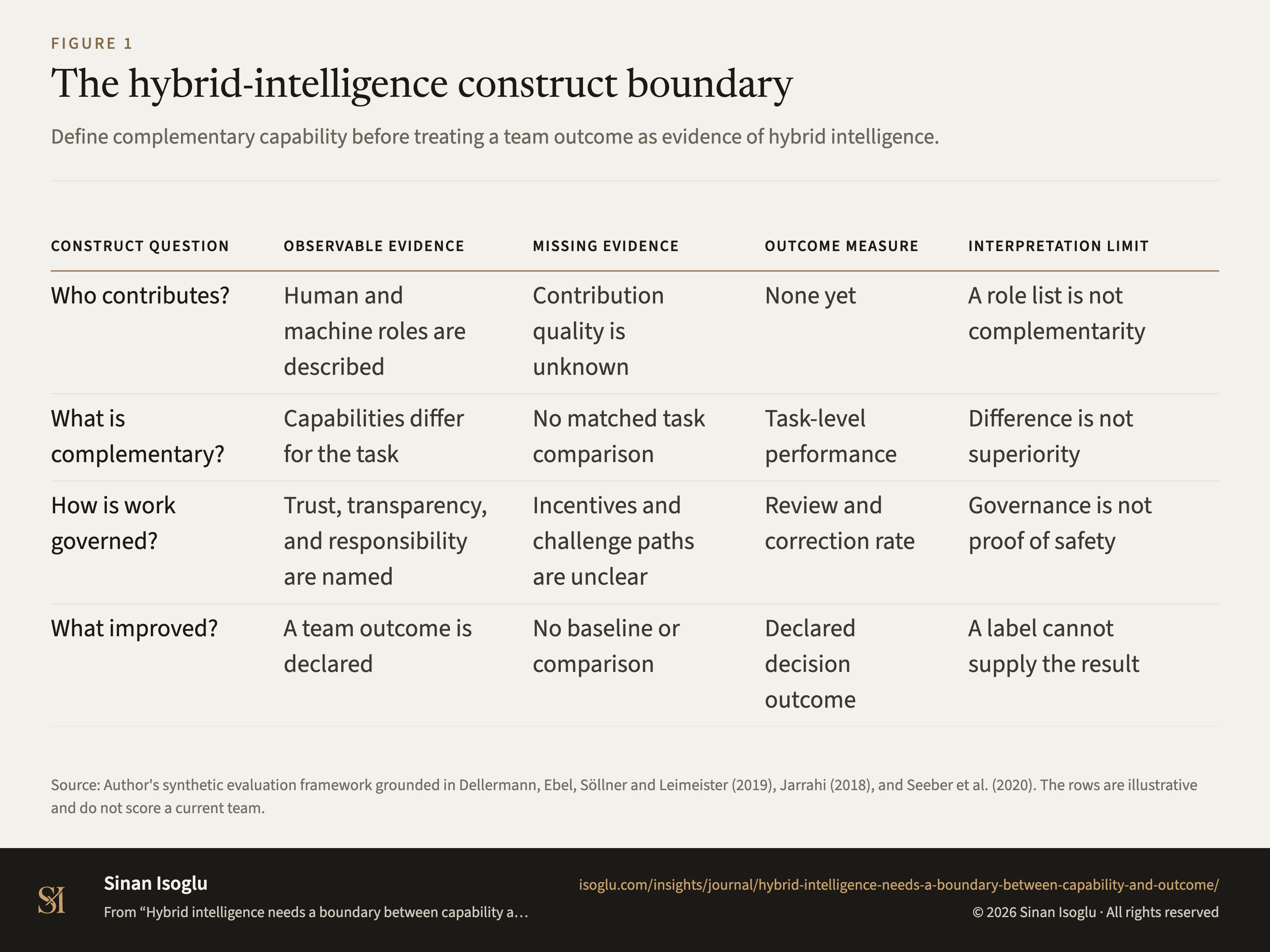
Figure 1Figure
The hybrid-intelligence construct boundary
Hybrid intelligence needs a boundary between capability and outcome
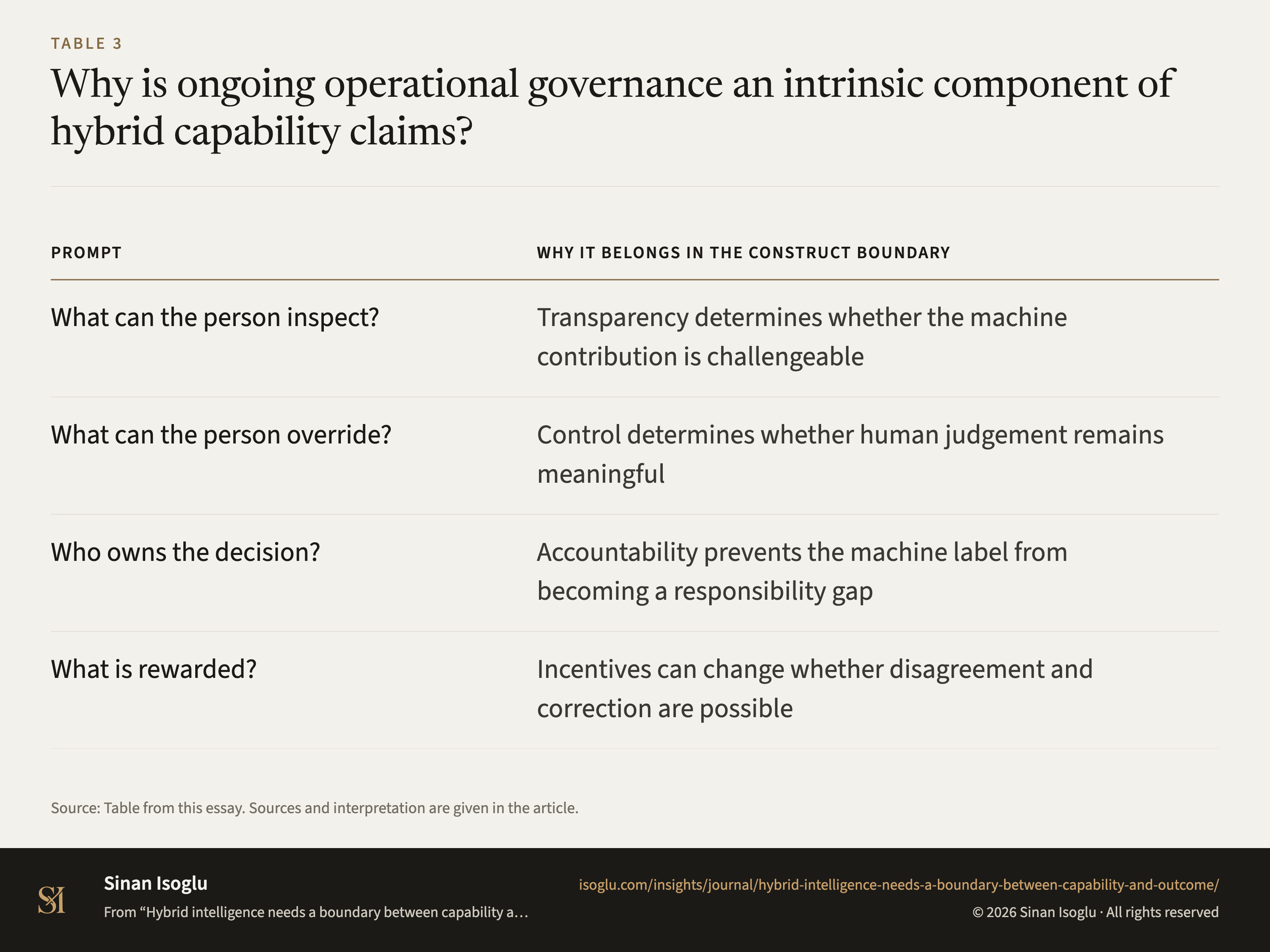
Table 2Table
Why is ongoing operational governance an intrinsic component of hybrid capability claims?
Hybrid intelligence needs a boundary between capability and outcome
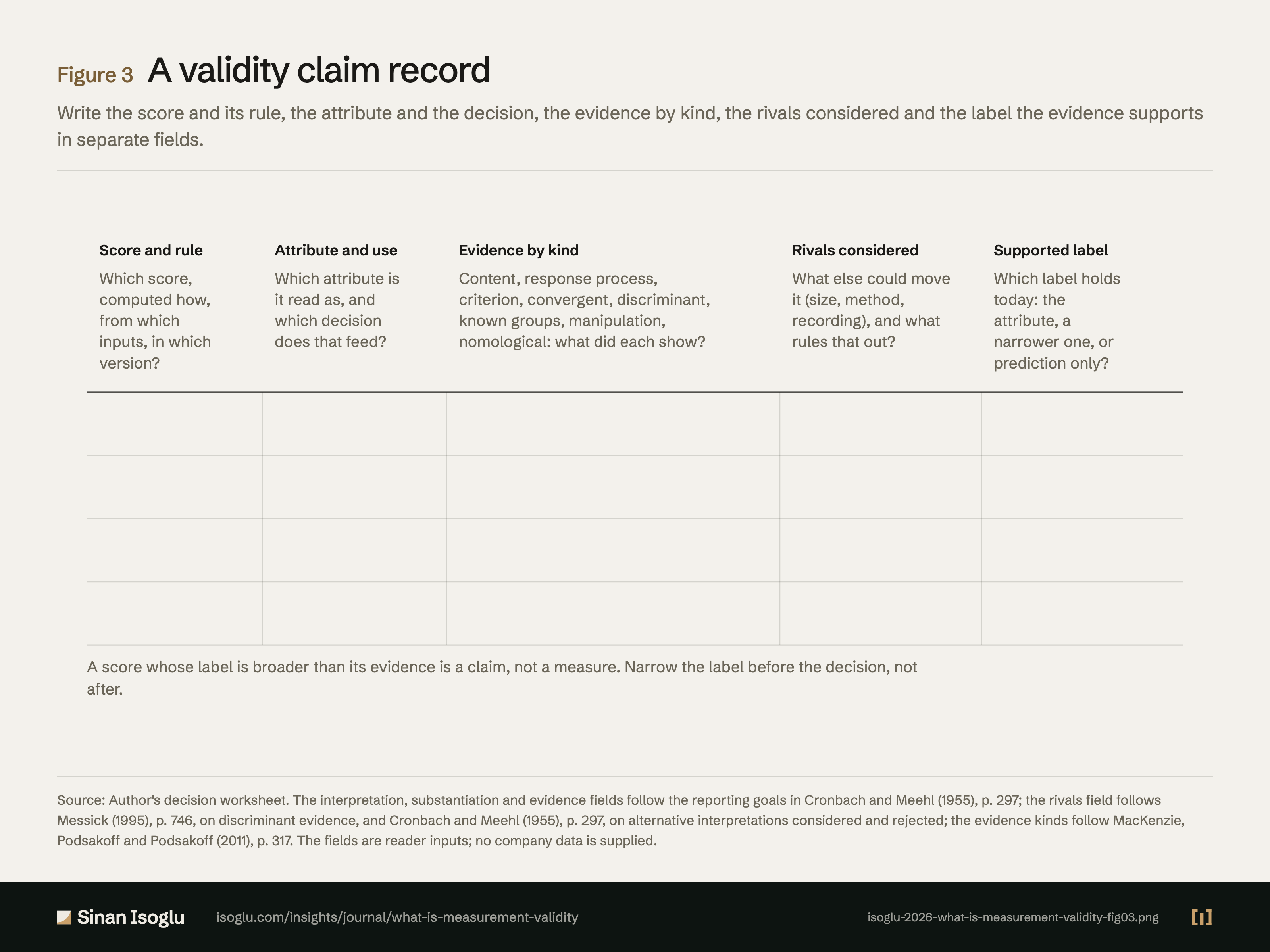
Figure 3Figure
A validity claim record
What is measurement validity?
Contact
Bring the question you're working on.
Research, a guest lecture, or a commercial question.