← Every exhibit
Table 4From “Forecast accuracy can hide offsetting errors”
Distribution matters before the mean
Table 4Distribution matters before the mean
| Set | Signed errors | Mean signed error | Mean absolute error | Shape |
|---|---|---|---|---|
| A | -20, +20, -20, +20 | 0 | 20 | Repeated moderate miss |
| B | -40, 0, 0, +40 | 0 | 20 | Two exact periods and two larger misses |
Swipe or scroll horizontally if the table is wider than your screen.
Source: Table from this essay. Sources and interpretation are given in the article.
PNG4:3, 1600 × 1200, with the title, the source line and the attribution set in the image isoglu-2026-forecast-accuracy-can-hide-offsetting-errors-fig04.png
From the essay
Revenue operations & AI
Forecast accuracy can hide offsetting errors
A forecast can be unbiased on average while missing every period: keep signed error, absolute error, distribution, horizon, and decision cost separate.
Read the essayThis exhibit belongs to an essay: the numbers live here, the argument lives there.
Cite or embed
Related exhibits
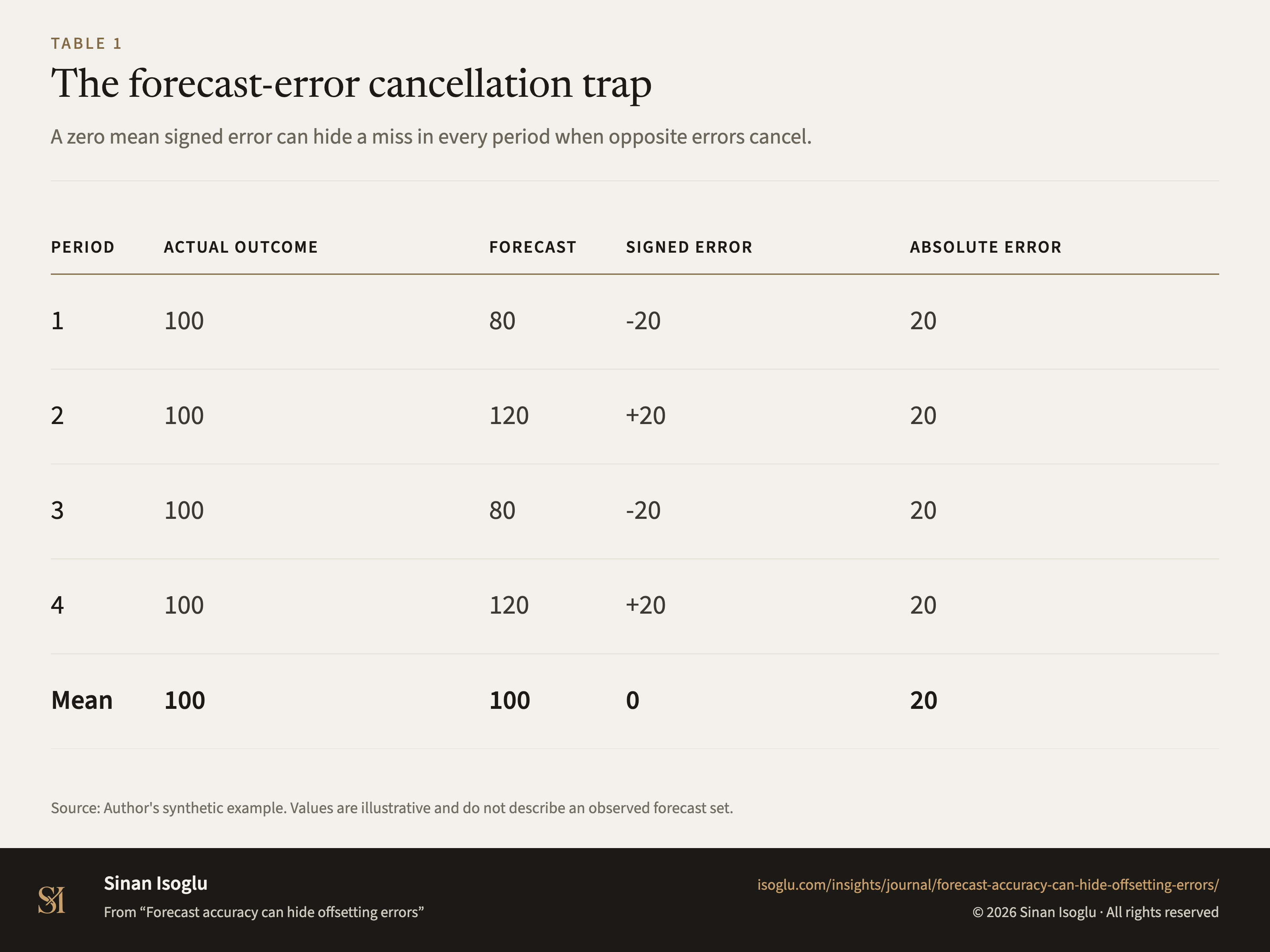
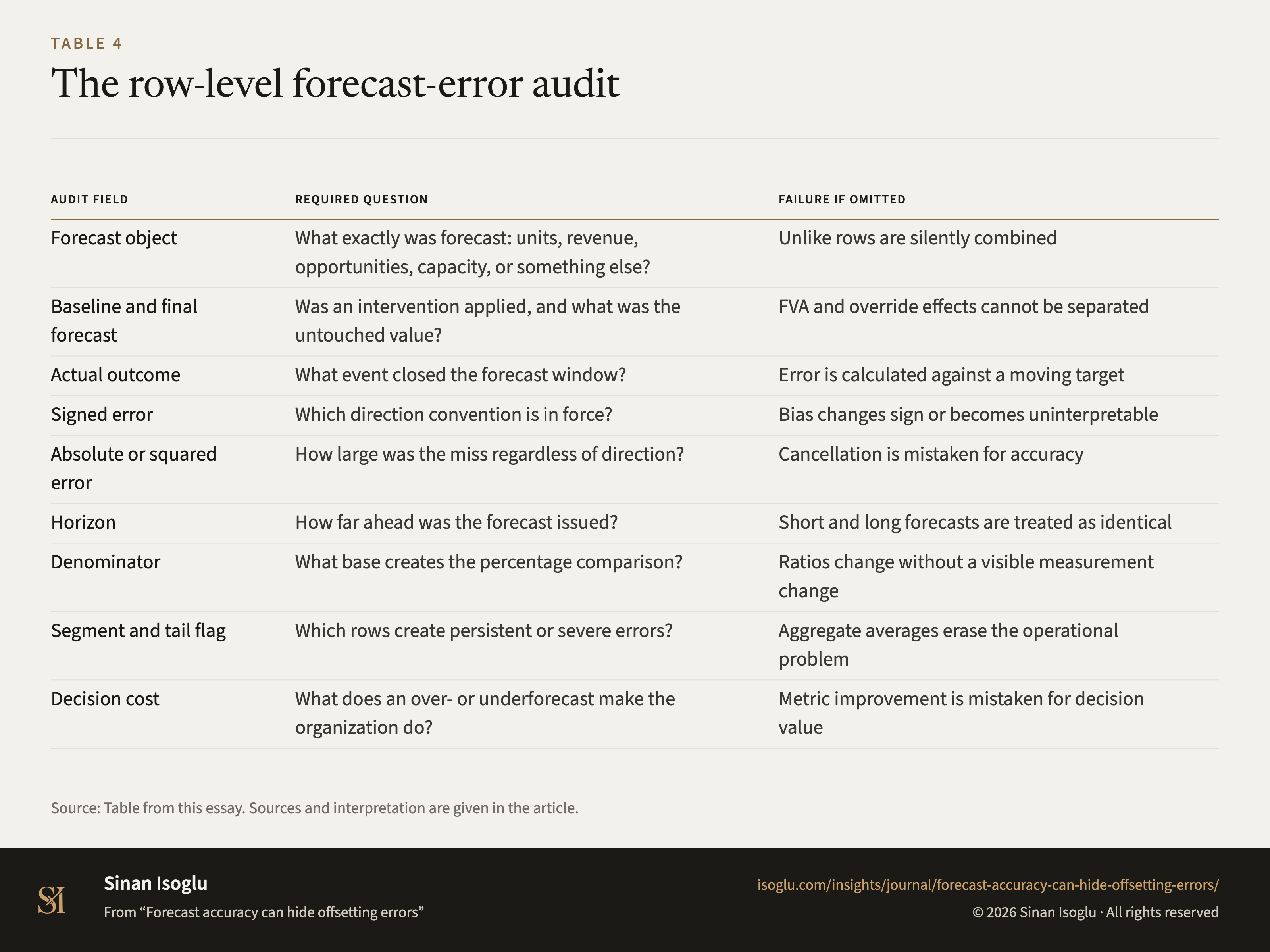
Table 1Table
What does sales forecasting mean before accuracy is summarized?
Forecast accuracy can hide offsetting errors
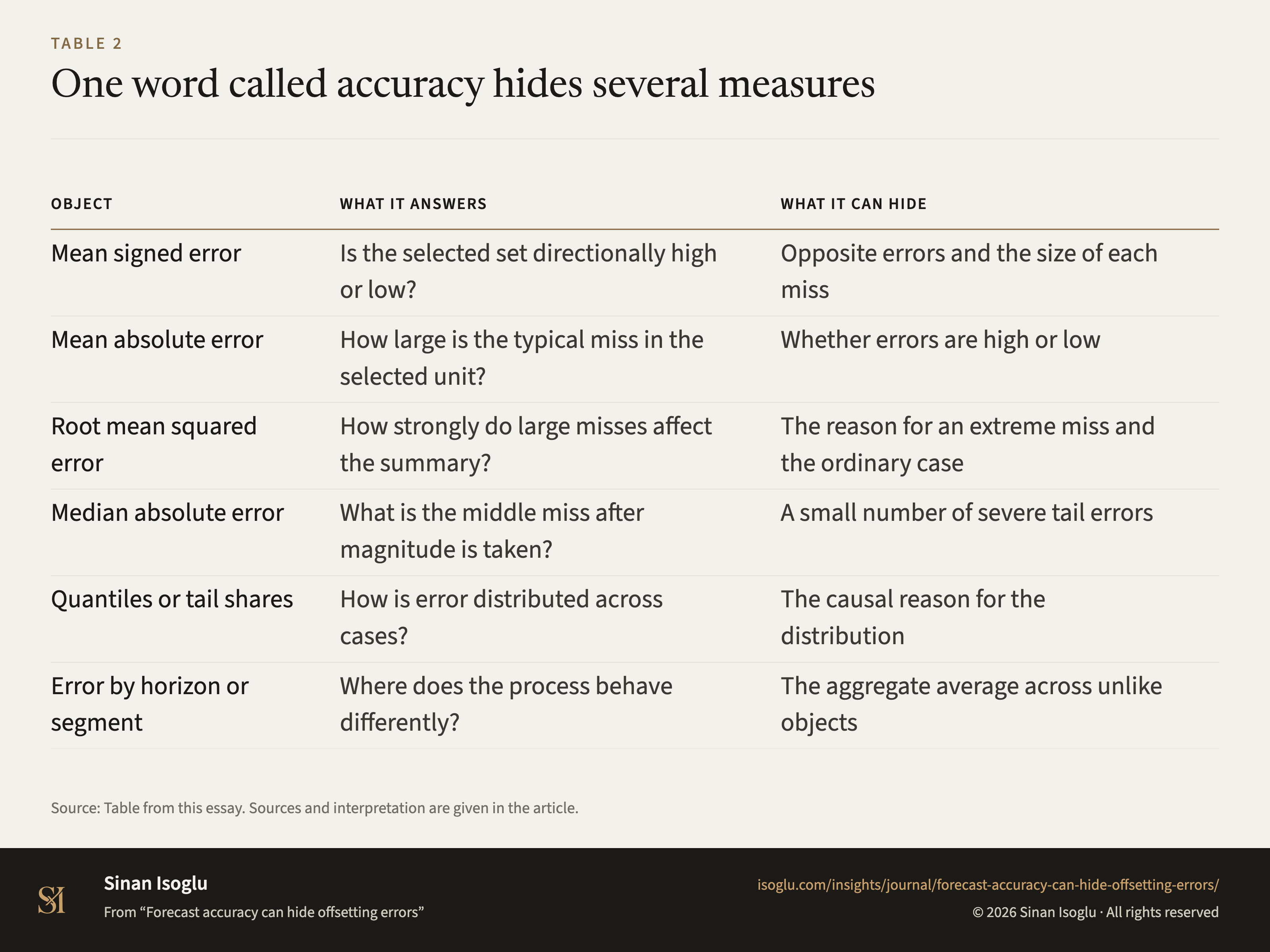
Table 1Table
The forecast-error cancellation trap
Forecast accuracy can hide offsetting errors
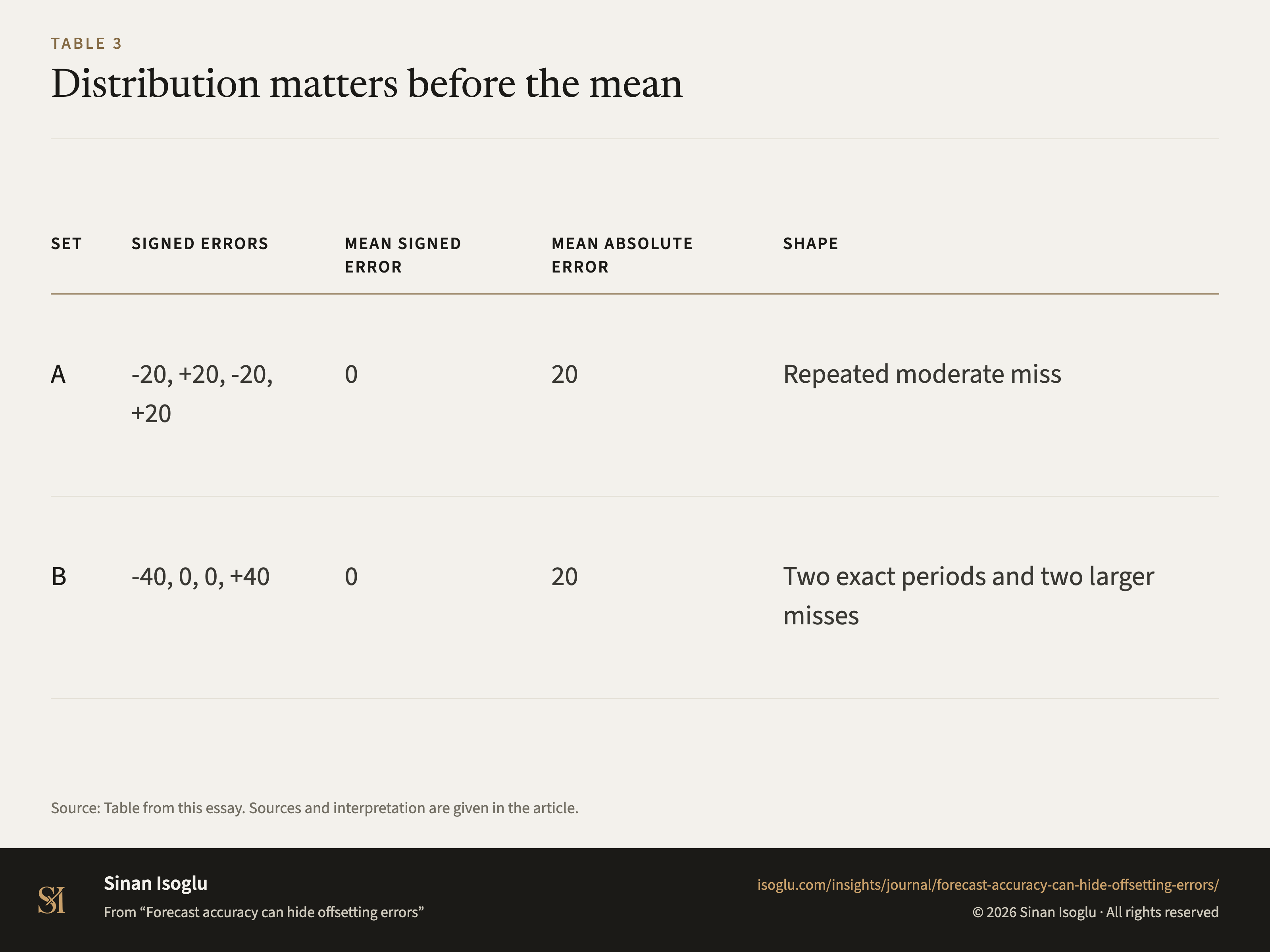
Table 3Table
One word called accuracy hides several measures
Forecast accuracy can hide offsetting errors
Contact
Bring the question you're working on.
Research, a guest lecture, or a commercial question.